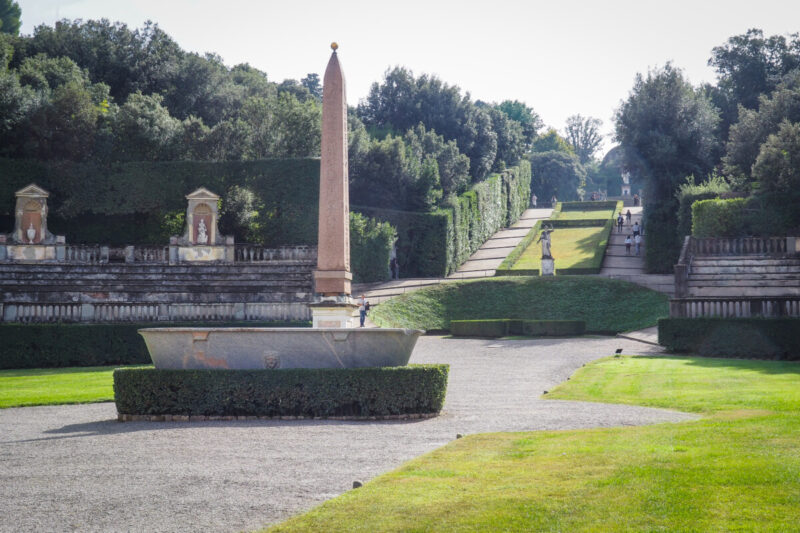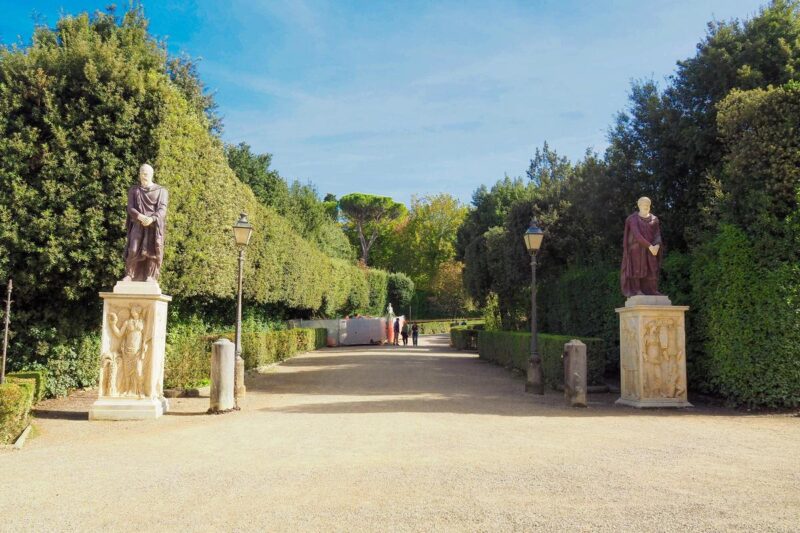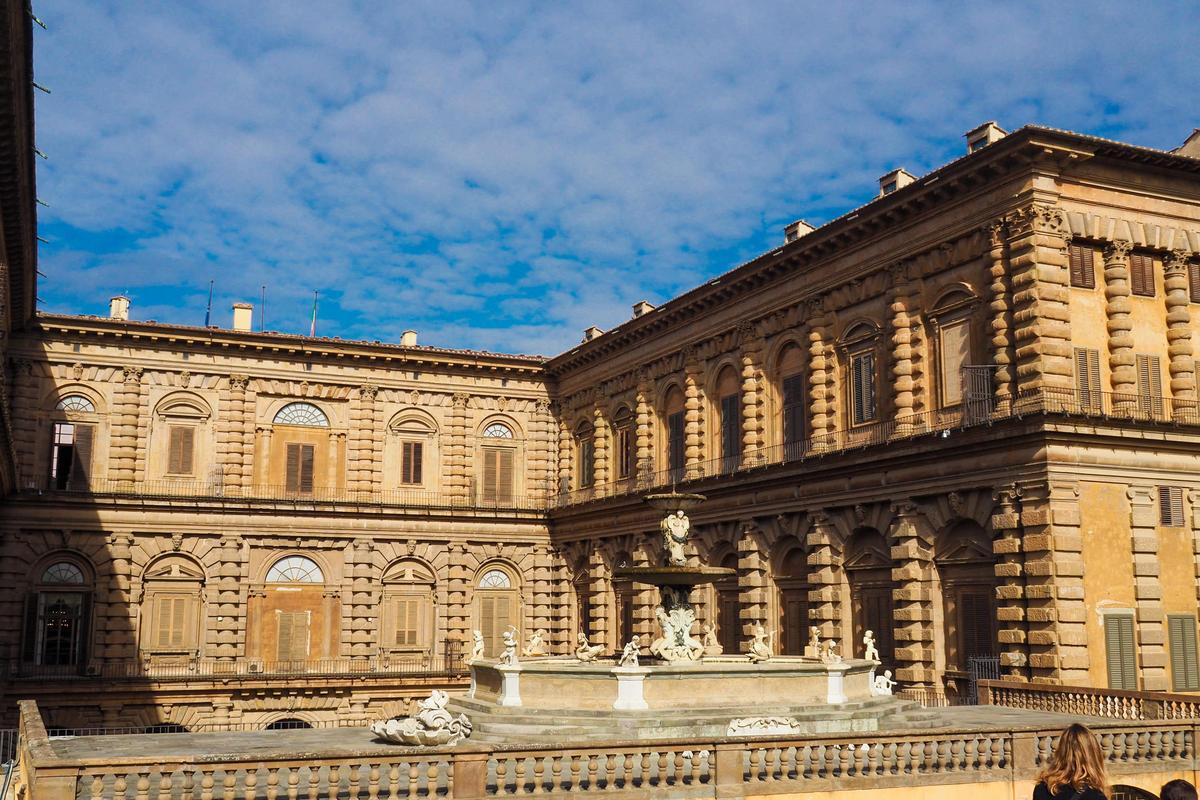
Dominating Florence‘s Oltrarno district with Renaissance grandeur, Palazzo Pitti stands as one of Italy’s most imposing architectural achievements and a monument to the city’s shifting power dynamics. Originally commissioned by banker Luca Pitti in 1458 to outshine his Medici rivals, the palace became the Medici residence when they purchased it a century later, then housed the Habsburg-Lorraine dynasty and briefly served as residence for Italy’s kings. Today, this vast cultural complex houses seven specialized museums, including the magnificent Palatine Gallery with its unparalleled collection of High Renaissance masterpieces by Raphael, Titian, and Rubens displayed in ornate gilded frames against richly frescoed walls. Behind the palace stretch the Boboli Gardens, one of Europe’s earliest formal gardens and a model for royal grounds across the continent, where Renaissance geometric precision gives way to fountains, grottoes, and over 30,000 potted citrus trees. The palace’s monumental rusticated stone facade, designed to convey both strength and refinement, continues to define Florence’s southern skyline, while its extraordinary collections provide an intimate glimpse into the tastes and daily lives of the powerful families who shaped Florentine and European history.
Cultural Context
Pitti Palace holds a profound place in Florentine cultural identity, symbolizing the city’s Renaissance heritage and the evolution of its artistic patronage. Originally constructed for the Pitti family in the mid-15th century, the palace later became the principal residence of the powerful Medici family, who shaped much of Florence’s cultural and political landscape. The palace is intertwined with local customs, particularly through its gardens and the art collections that reflect the tastes and values of Florentine society over centuries. Today, it serves as a cultural hub where traditional Florentine art and craftsmanship are celebrated, and it hosts exhibitions that connect contemporary audiences with the city’s rich artistic legacy. Annual events and exhibitions often highlight the palace’s role in preserving Tuscan heritage, making it a living monument where history and modern cultural expression coexist. The palace’s Oltrarno district location also situates it within a vibrant neighborhood known for artisan workshops, maintaining a strong link between Florence’s historical and contemporary cultural practices. Thus, Pitti Palace remains a vital cultural symbol that continues to inspire both locals and visitors alike through its embodiment of Florence’s enduring artistic spirit.
Historical Context
Pitti Palace was originally commissioned in 1458 by Luca Pitti, a wealthy Florentine banker, as a statement of wealth and influence rivaling the Medici family. Its history is deeply connected to the Medici dynasty, who purchased the palace in 1549 and expanded it significantly under the guidance of Eleonora di Toledo, wife of Cosimo I de’ Medici. The palace became the primary residence of the Grand Dukes of Tuscany, marking its transition from a private family home to a symbol of political power. Over the centuries, the palace witnessed critical historical events, including the Medici’s rise and fall, the Napoleonic occupation, and the unification of Italy, when it served as the royal residence for the House of Savoy during Florence’s brief tenure as Italy’s capital from 1865 to 1871. Each ruling family left architectural and artistic imprints, reflecting their tastes and political ambitions. The palace’s evolution from a Renaissance residence to a public museum in the 20th century marks its transformation into a monument preserving centuries of Florentine history and power dynamics. This layered historical narrative makes Pitti Palace a key site for understanding Florence’s political and social development from the Renaissance to the modern era.