
MenuClose

A place worth knowing

Christiansholm Fortress

Historical landmarks · Fortress in NorwayUpdated

  • Google rating4.3/5 (2,200 reviews)
  • Typical visit1-2 hours (longer if attending concerts or theatrical performances during summer months)
  • EntranceAdmission required — check https://www.kristiansand.kommune.no/ for tickets
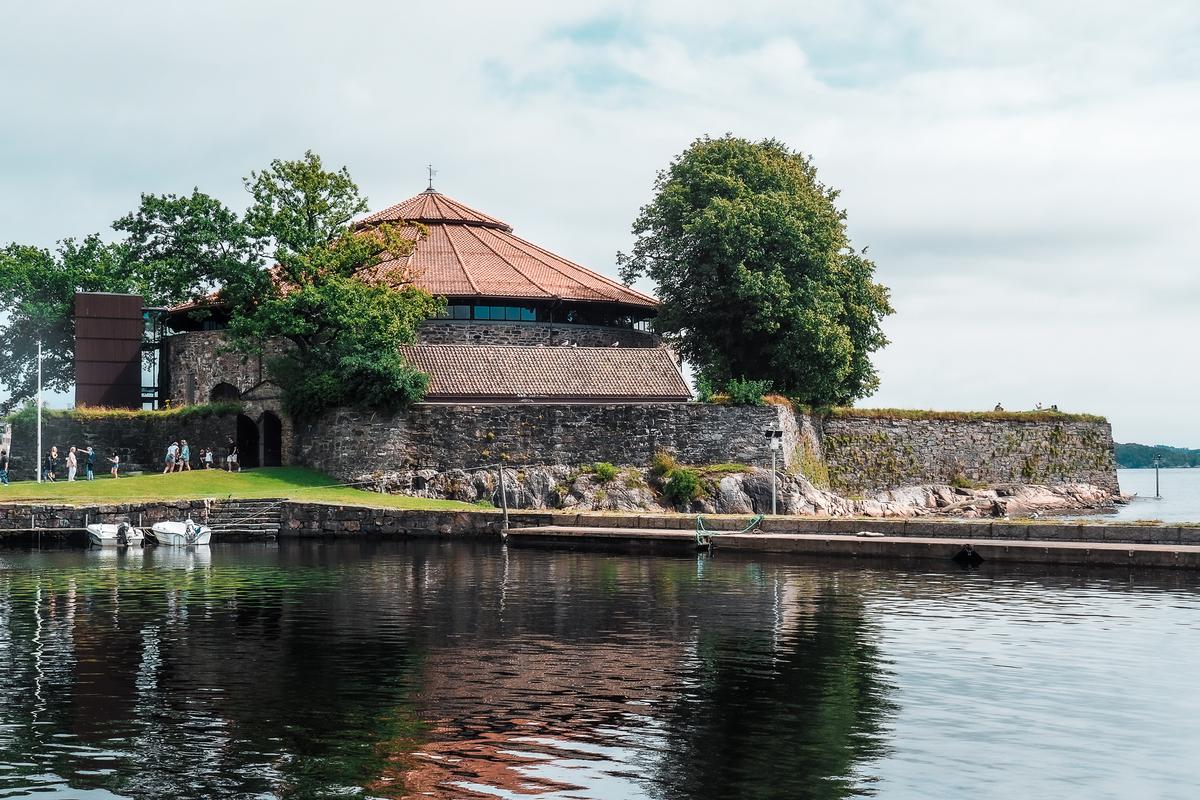
Christiansholm Fortress on waterfront in Kristiansand, Norway - Historical Landmark
Christiansholm Fortress in Kristiansand Kyle Kroeger / ViaTravelers
  • Today (Thursday)Open 24 hours
  • Typical visit1-2 hours (longer if attending concerts or theatrical performances during summer months)
  • EntranceAdmission required — check https://www.kristiansand.kommune.no/ for tickets
  • Google rating4.3/5 2,200 reviews
  • WebsiteOfficial site ↗
Opening hours all week
Monday
Open 24 hours
Tuesday
Open 24 hours
Wednesday
Open 24 hours
Thursday
Open 24 hours
Friday
Open 24 hours
Saturday
Open 24 hours
Sunday
Open 24 hours
The short answer

Why it matters

A 17th-century circular fortress on the Kristiansand waterfront offering free access, harbour views, and rotating art exhibitions.

Guarding the entrance to Kristiansand’s harbor, the star-shaped Christiansholm Fortress stands as Norway‘s best-preserved example of 17th-century Danish-Norwegian military architecture and a tangible reminder of the strategic importance of southern Norway’s maritime trade routes. Commissioned in 1672 by Danish King Christian IV to protect his namesake town and vital shipping lanes between the North and Baltic Seas, the fortress’s geometric perfection reflects Renaissance military engineering principles with five symmetrical bastions designed to eliminate vulnerable blind spots in defensive fire. The fortress’s robust construction—walls up to 4.5 meters thick with gun ports for 32 cannons—remains largely intact despite 350 years exposed to harsh North Sea elements, proving the durability of period construction techniques that combined local granite with imported Dutch brick. Unlike many European fortifications, Christiansholm never fired shots in anger despite centuries as an active military installation, with its cannons serving ceremonial rather than combat functions into the modern era with traditional salutes for royal visitors and national holidays. Today’s visitors navigate the same geometrically precise pathways once patrolled by garrison soldiers, with casemates (bombproof chambers) now housing historical exhibitions rather than ammunition. The fortress plaza provides a unique vantage point for understanding Kristiansand’s development—from the original grid-pattern town visible from the ramparts to the modern cruise terminal servicing vessels incomparably larger than the sailing ships the fortress was designed to protect. During summer months, the fortress transforms into Kristiansand’s principal cultural venue hosting outdoor concerts and theatrical performances, demonstrating how military structures can evolve from defensive installations into civic gathering spaces while maintaining historical authenticity.

Cultural Context

Built as part of King Christian IV Danish defense strategy for new city of Kristiansand, representing Norwegian coastal military heritage

Historical Context

Commissioned 1672 as maritime defense against naval attacks, famous for 1807 successful resistance against British HMS Spencer during Napoleonic Wars


Context

Story and significance

About

Christiansholm Fortress (Christiansholm Festning) is a 17th-century circular stone fortress on a small island in the harbour of Kristiansand, southern Norway. Built between 1662 and 1672 under King Frederick III of Denmark-Norway, it guarded the harbour entrance alongside the larger Fredriksholm fortress across the channel. The compact round tower with thick cannon-ported walls is now used as an art gallery and cultural venue, connected to the mainland by a short bridge just steps from the fish market.

Historical significance

Christiansholm Fortress represents Norway’s coastal defense system and the strategic importance of Kristiansand as a port town. It is significant to military historians and local heritage as a surviving example of 17th–18th century harbor fortifications that shaped regional security and maritime commerce.

Historical context

Commissioned 1672 as maritime defense against naval attacks, famous for 1807 successful resistance against British HMS Spencer during Napoleonic Wars

Cultural context

Built as part of King Christian IV Danish defense strategy for new city of Kristiansand, representing Norwegian coastal military heritage

Architecture

Classic star fortress design with five bastions following Italian military architecture principles. Built on rocky island maximizing defensive position over harbor entrance. Thick walls and cannon positions remain intact. Well-preserved example of 17th-century military engineering adapted for Nordic conditions.

Local significance

Christiansholm Fortress sits on an islet at the entrance to Kristiansand’s harbor and acts as a visible link to the town’s maritime past. Locals know it as a familiar backdrop for waterfront festivals, weekend walks and school outings, and it figures in civic identity as a historic coastal defense that helped shape the town’s development. Though its military role is long past, the fort remains a place for leisure, photography and community memory of Kristiansand’s relationship with the sea.

Updated Data: Editorial research · Google Places ratings · Verified coordinates

