MenuClose

A place worth knowing

Dragon’s Mouth Spring

Natural attractions · Hot spring in Yellowstone National ParkUpdated

  • Google rating4.5/5 (3,000 reviews)
  • Typical visit1-2 hours
  • EntranceFree
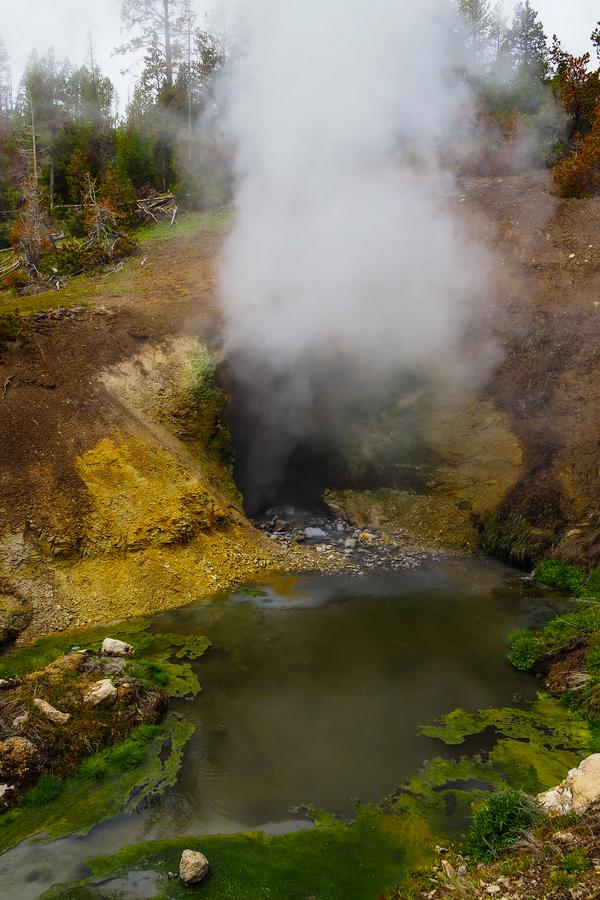
Dragon's Mouth Spring vertical view, steaming thermal feature in Yellowstone near Mud Volcano
Steaming Dragon’s Mouth Spring Kyle Kroeger / ViaTravelers
  • Today (Friday)Open 24 hours
  • Typical visit1-2 hours
  • EntranceFree
  • Google rating4.5/5 3,000 reviews
  • WebsiteOfficial site ↗
Opening hours all week
Monday
Open 24 hours
Tuesday
Open 24 hours
Wednesday
Open 24 hours
Thursday
Open 24 hours
Friday
Open 24 hours
Saturday
Open 24 hours
Sunday
Open 24 hours
The short answer

Why it matters

A cave-mouth hot spring in Yellowstone's Mud Volcano area that belches steam, mud, and sulfurous gas with a rhythmic roaring sound, accessible via a short 0.3-mile boardwalk loop off Grand Loop Road.

Dragon’s Mouth Spring emerges from a mysterious cave-like opening in Yellowstone National Park‘s Mud Volcano area, where superheated water and steam create a rhythmic thumping and roaring that eerily mimics a dragon’s breath. This dynamic geothermal feature forces scalding water through a narrow opening, producing dramatic spurts accompanied by deep, resonant sounds that echo across the hillside. Native American tribes, including the Shoshone and Bannock, considered this spring sacred, incorporating it into creation stories and healing traditions long before Western documentation. The spring’s continuous action has shaped its cave-like chamber over thousands of years, with mineral deposits creating otherworldly formations around its mouth. While smaller than Yellowstone’s famous geysers, Dragon’s Mouth Spring offers a more intimate and atmospheric encounter with the park’s volatile underground forces, captivating visitors with its primordial sounds and mystical appearance that perfectly match its mythological name.

Cultural Context

Named by unknown European American replacing previous names Gothic Grotto Blowing Cavern and The Belcher, Crow tribe saw steam as snorts of angry bull bison, iconic Yellowstone thermal feature inspiring fantasy and dragon mythology, captivating otherworldly geothermal wonder showcasing natures raw power for park visitors since early exploration

Historical Context

Named 1912 for dramatic water surges resembling dragons lashing tongue, located in Mud Volcano area featuring most acidic hydrothermal features in Yellowstone, part of geological activity zone with resurgent dome monitoring and earthquake frequency, historical exploration revealed diverse thermal landscape contrasting with pine forest surroundings

Context

Story and significance

About

Dragon’s Mouth Spring in Yellowstone National Park offers visitors a captivating and otherworldly experience. This geothermal wonder, named in 1912 for its dramatic water surges resembling a dragon’s lashing tongue, showcases nature’s raw power and beauty.

The spring’s allure lies in its mesmerizing display of geothermal activity. Visitors can witness periodic eruptions of water, steam, and gases from hidden underground caverns, creating a spectacular show of nature’s forces at work. The violent splashing against cave walls produces rumbling sounds, adding an auditory dimension to the visual spectacle.

This unique geological feature invites travelers to marvel at Yellowstone’s diverse thermal landscape. The barren, rocky surroundings dotted with pine trees starkly contrast to the dynamic spring, emphasizing its otherworldly qualities.

Historical significance

Dragon’s Mouth Spring matters as an example of Yellowstone’s hydrothermal diversity that informed early geological understanding of supervolcanic systems and national conservation values. It contributes to the park’s status as a site of scientific interest and ongoing study of geothermal activity and landscape change.

Historical context

Dragon’s Mouth Spring formed as part of Yellowstone’s extensive geothermal landscape created by volcanic and tectonic processes over thousands of years, with features documented by early park explorers and later scientific surveys. It has been part of Yellowstone National Park since the park’s establishment and has been observed, monitored and interpreted by park staff and scientists.

Cultural context

Dragon’s Mouth Spring is a notable geothermal feature in Yellowstone that draws visitors interested in the park’s volcanic and hydrothermal phenomena; its distinctive steaming vent and audible subterranean activity contribute to the sense of wild, active geology. For many visitors it exemplifies the park’s unique natural spectacles and the power of geothermal systems.

Architecture

As a natural geothermal vent, the spring has no human architecture; its significance is geological and visual, with sinter and mineral deposits shaping the immediate pool rim and vents. Park-made boardwalks, viewing areas and signage are the human interventions that enable safe visitor observation while protecting fragile ground.

Local significance

Dragon’s Mouth Spring is one of many geothermal features in Yellowstone that locals and park staff regard as emblematic of the park’s volatile, living landscape. While the site itself is a point of interest, its greater significance is as part of the park’s network of hot springs and geysers that shape local stewardship, scientific study and visitor expectations about safety and conservation. For gateway communities and park employees it contributes to Yellowstone’s identity as a globally important natural area that requires careful management.

Updated Data: Editorial research · Google Places ratings · Verified coordinates