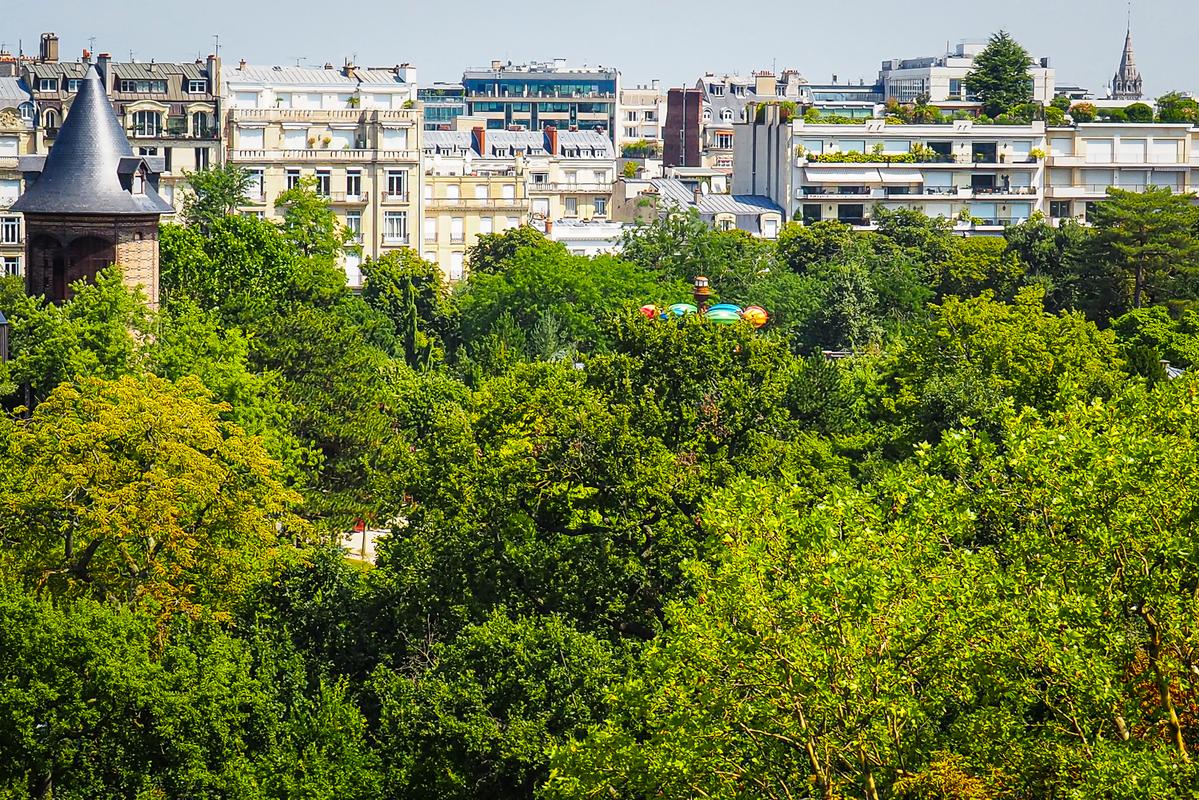

Nestled in Paris‘s verdant Bois de Boulogne, the Jardin d’Acclimatation represents a fascinating evolution from imperial scientific enterprise to contemporary leisure destination while maintaining its distinctive Belle Époque charm. Founded in 1860 under Napoleon III as France’s first acclimatization garden—designed to introduce exotic plants and animals to Europe—the 49-acre park has transformed across three centuries while preserving its original ornamental buildings and landscape design. The garden’s elegant 19th-century structures, including the Orientalist aviary and Chinese pagoda, reflect Second Empire fascination with global cultures, while contemporary additions integrate seamlessly with historical elements following LVMH’s sensitive 2018 renovation. Today’s visitors enjoy over 40 attractions—from the meticulously restored 1900 carousel to cutting-edge digital experiences—all connected by a miniature railway dating from 1878 that transports guests around the perimeter. Beyond amusements, the garden maintains its original scientific education mission through interactive workshops on biodiversity and sustainable agriculture, while the recently redesigned water gardens showcase aquatic ecosystems. The park’s complex history—including its troubling mid-19th century ethnological exhibitions of indigenous peoples—is now thoughtfully contextualized through educational installations examining colonialism’s problematic legacy. The adjacent Fondation Louis Vuitton, Frank Gehry’s sculptural contemporary art museum, creates an architectural dialogue across centuries, with the garden serving as both cultural landscape in its own right and transitional space between urban Paris and the wilder Bois de Boulogne. Unlike Paris’s more formal gardens, the Jardin d’Acclimatation remains a primarily family-oriented space where Parisian children have created generational memories since the Second Empire, making it both historical artifact and living element of Parisian social fabric.
Cultural Context
The Jardin d’Acclimatation holds a unique place in Parisian cultural life as a site where leisure, education, and nature converge, reflecting broader French values of blending enjoyment with intellectual curiosity. Originally conceived in the 19th century as a zoological and botanical acclimatization garden, it was intended to introduce exotic species to French territories and study their adaptation. Today, it functions as a family-oriented amusement park that preserves this legacy by fostering a connection between urban residents and the natural world. The garden is a venue for traditional French leisure activities, including picnics, promenades, and seasonal festivities such as spring flower exhibitions and autumn harvest events, which draw both locals and tourists. It also hosts cultural workshops and exhibitions that emphasize environmental awareness and biodiversity, aligning with contemporary French commitments to sustainability. The park’s role in Parisian society extends beyond recreation; it serves as a living classroom where children and adults alike can engage with nature in a historically rich setting. The Jardin d’Acclimatation thus embodies a cultural tradition of integrating scientific curiosity with public enjoyment, a practice deeply rooted in French Enlightenment ideals. Its continued popularity underscores the local community’s appreciation for accessible green spaces that nurture both cultural heritage and ecological education. The park remains a cherished cultural landmark where generations of Parisians celebrate the harmonious coexistence of nature, history, and leisure.
Historical Context
The Jardin d’Acclimatation was established in 1860 by Napoleon III and the famed landscape architect Jean-Charles Adolphe Alphand as part of a broader initiative to modernize Paris and promote scientific advancement. Originally designed as an acclimatization garden, its primary purpose was to introduce and study exotic plants and animals from French colonies and other parts of the world, reflecting the imperial ambitions and scientific interests of the Second Empire. Over the decades, the garden evolved from a strictly scientific institution into a popular public park, incorporating amusement rides, playgrounds, and cultural events by the early 20th century. The site witnessed significant transformations during the two World Wars, serving at times as a refuge and a symbol of resilience for Parisians. Post-war modernization efforts in the 1950s and 1960s introduced new attractions, aligning the park more closely with family entertainment trends while still respecting its scientific origins. In recent years, the Jardin d’Acclimatation has undergone extensive renovations to restore historical features and improve ecological sustainability, reaffirming its dual identity as a heritage site and a contemporary recreational space. The garden’s history is intertwined with Paris’s urban development, colonial history, and evolving public attitudes toward nature and leisure, making it a living testament to the city’s complex past and dynamic present. Its continuous adaptation over more than 160 years illustrates the enduring importance of green spaces in the social and cultural fabric of Paris.