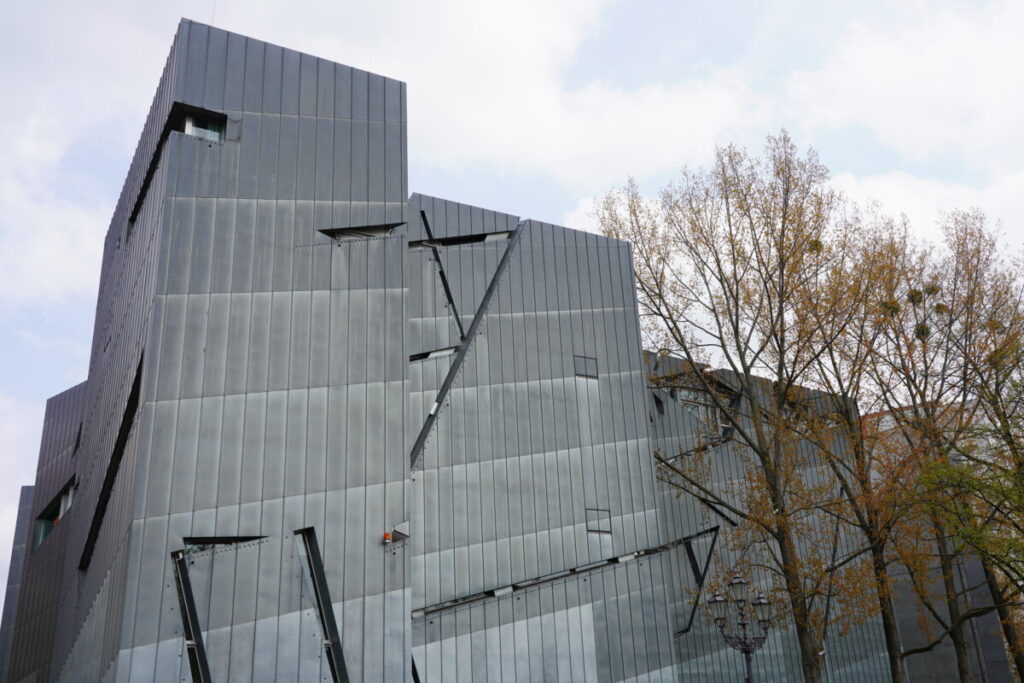
The Jewish Museum Berlin stands as one of Europe’s most powerful architectural statements about memory, loss, and renewal, designed by Daniel Libeskind to physically embody the fractured history of German-Jewish relations. The building’s dramatic zinc-clad exterior features sharp angles and void spaces that create disorienting pathways, forcing visitors to physically experience displacement and fragmentation. The museum’s permanent exhibition traces 2,000 years of German-Jewish history through personal stories, artifacts, and interactive installations that illuminate both everyday life and extraordinary achievements. The Holocaust Tower, a cold concrete void reached through a heavy door, provides a haunting space for contemplation, while the Garden of Exile’s tilted columns create physical unease that mirrors historical displacement. The museum goes beyond tragedy to celebrate Jewish contributions to German culture in science, arts, business, and philosophy, presenting complex narratives about identity, belonging, and resilience. Contemporary exhibitions address current issues of migration, diversity, and cultural identity, making connections between historical persecution and modern challenges of integration. The Learning Center offers educational programs that combat antisemitism through dialogue and understanding, while the museum’s restaurant serves traditional Jewish cuisine in a welcoming atmosphere. Whether confronting difficult history in the underground axes or discovering Jewish traditions in the interactive exhibits, the Jewish Museum Berlin transforms abstract historical concepts into visceral experiences that resonate with visitors long after they leave.
Cultural Context
Transforms abstract Holocaust history into visceral architectural experience while celebrating 2,000 years of German-Jewish cultural contributions
Historical Context
Opens 2001 on site representing German-Jewish relations from medieval times through Holocaust to modern integration challenges
Plan your visit with our complete Germany travel guide featuring top sights, itineraries, and local travel tips.