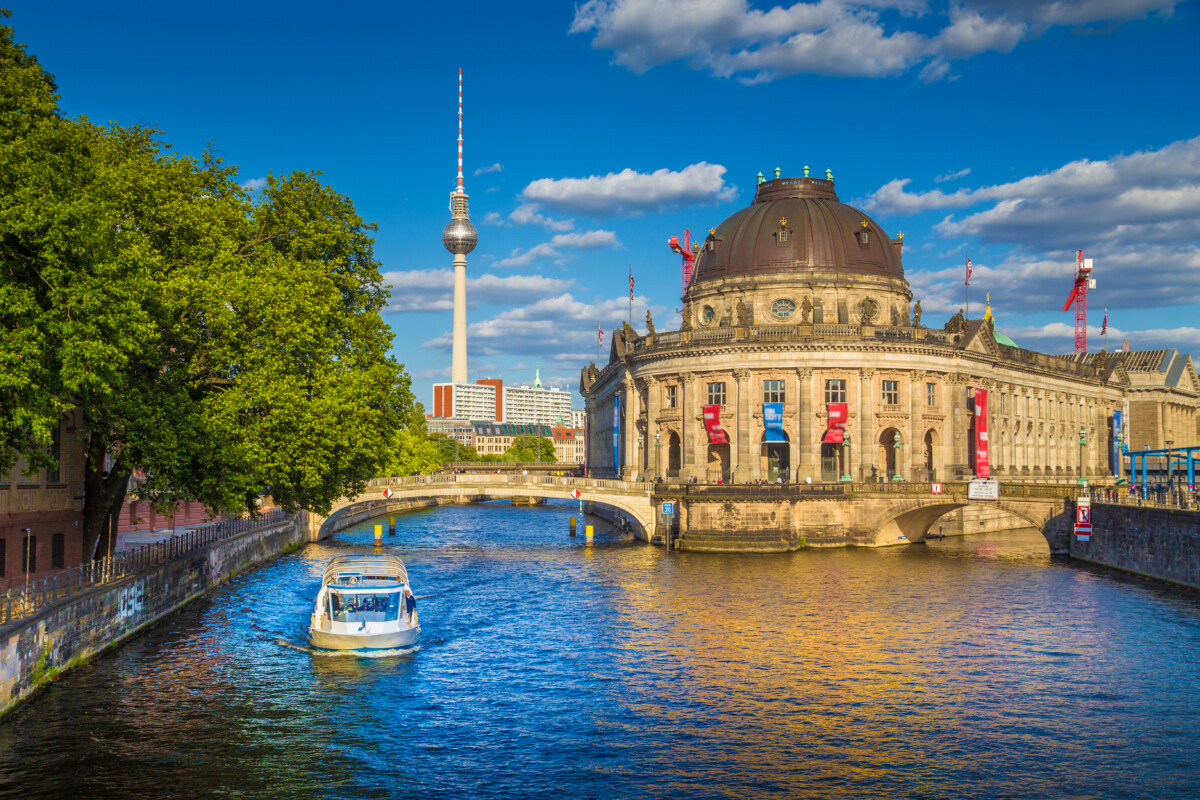
Embark on a journey through time and culture at Museum Island, where five world-class museums house a rich tapestry of art, artifacts, and historical treasures. Uncover the authentic traditions and artistic value while engaging with the community in this UNESCO World Heritage Site.
Cultural Context
Museum Island, dating back to 1830, represents an extraordinary achievement in museum architecture and cultural preservation. Established by Prussian Kings, this UNESCO World Heritage Site showcases the evolution of museums as social and cultural institutions through five magnificent museums:
1. The Altes Museum (completed 1830): Karl Friedrich Schinkel’s neoclassical masterpiece was Germany‘s first public museum, embodying Enlightenment ideals of making art accessible to all citizens.
2. The Neues Museum (1859): Designed by Friedrich August Stüler and reconstructed by David Chipperfield after WWII damage, it houses the Egyptian Museum including the famous bust of Nefertiti.
3. The Alte Nationalgalerie (1876): This temple-like structure displays 19th-century art and was built to house banker Joachim H.W. Wagener’s donated collection.
4. The Bode Museum (1904): Featuring Byzantine art and sculpture collections, it stands at the island’s northern tip.
5. The Pergamon Museum (1930): Houses monumental reconstructions including the Pergamon Altar and Ishtar Gate of Babylon.
Originally part of residential Spree Island, the area was dedicated to “art and science” by King Frederick William IV in 1841. The complex represents both Prussian cultural ambitions and Germany’s tumultuous history, having survived empire, two world wars, division during the Cold War, and reunification. A master plan for renovation has been underway since 1999, including the James Simon Gallery (2019) as a visitor center, and the Archaeological Promenade connecting the museums underground.
Historical Context
Museum Island, located in Berlin, Germany, is a UNESCO World Heritage site that represents a unique cultural and historical ensemble dating back to the 19th century. The island’s development began in 1824 with the construction of the Altes Museum, designed by Karl Friedrich Schinkel under the patronage of King Frederick William III of Prussia. This marked the beginning of a visionary project to make art and cultural heritage accessible to the public. Over the next century, four additional museums were built: the Neues Museum (1855-1859), the Alte Nationalgalerie (1867-1876), the Bode Museum (1904), and the Pergamon Museum (1910-1930). Each institution was established to house specific collections ranging from classical antiquities and ancient Egyptian artifacts to 19th-century art and Islamic art. The island has witnessed significant historical events, including damage during World War II and subsequent restoration efforts during the Cold War and reunification of Germany. Today, Museum Island stands as a testament to the evolving cultural identity of Berlin and Germany, reflecting centuries of artistic, political, and social change. Its layered history encapsulates the ambitions of Prussian kings, the devastation of war, and the resilience of cultural preservation efforts, making it a vital historical landmark in Europe.