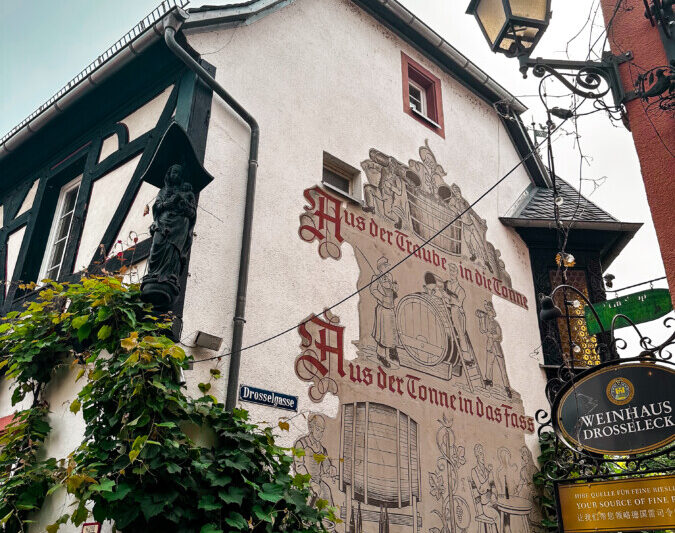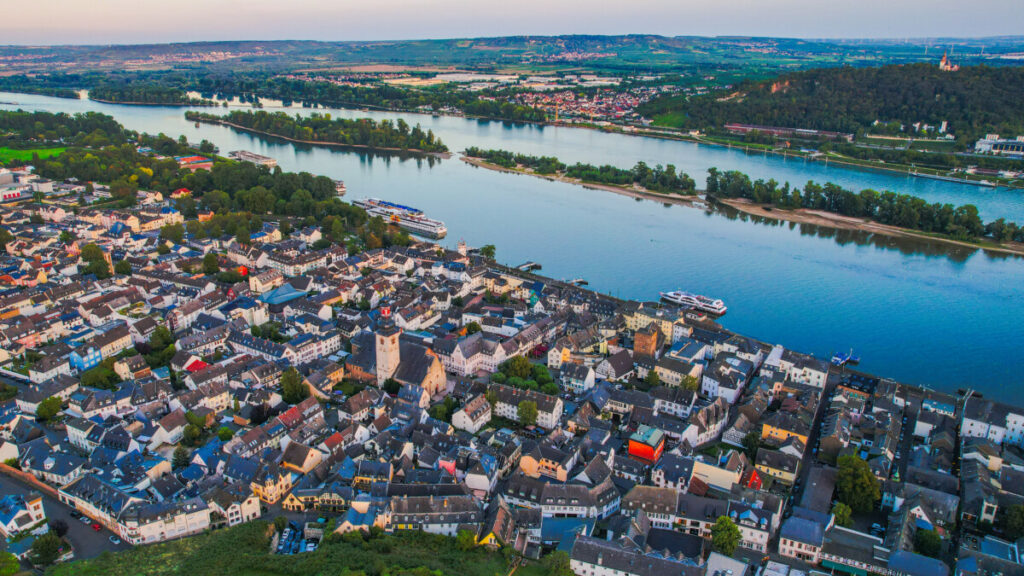
Rüdesheim am Rhein is a picturesque wine town in Germany‘s UNESCO-listed Upper Middle Rhine Valley, famous for its narrow Drosselgasse alley lined with wine taverns, historic half-timbered buildings, and panoramic cable car rides over terraced vineyards. This charming Rhine riverside destination offers visitors a perfect blend of German wine culture, medieval architecture, and stunning valley views.
Cultural Context
Rüdesheim am Rhein is deeply rooted in the cultural traditions of the Middle Rhine Valley, a region celebrated for its viticulture and folklore. The town is renowned for its wine culture, particularly the cultivation of Riesling grapes on its steep terraced vineyards, which have shaped local customs for centuries. Annual festivals such as the Rüdesheimer Weinfest celebrate the harvest and the town’s winemaking heritage, featuring traditional music, dance, and regional culinary specialties. The local population maintains customs linked to the Rhine River, including boat processions and celebrations of the Rhine’s historical significance to trade and transportation. Additionally, Rüdesheim’s Drosselgasse, a narrow cobblestone street lined with taverns and wine bars, serves as a cultural hub where visitors and residents alike enjoy live folk music and communal festivities. The town also embraces the romanticism associated with the Rhine, which has inspired numerous artists and writers, embedding Rüdesheim within a broader cultural narrative of German Romanticism. This blend of viticultural tradition, riverine heritage, and artistic influence continues to define the town’s cultural identity and enrich the experience of visitors seeking an authentic encounter with the region’s living traditions.
Historical Context
Rüdesheim am Rhein’s history dates back to at least the 10th century, with its first documented mention in 1074. The town’s development is closely tied to its strategic position along the Rhine River, which made it a vital point for trade and transport during the medieval period. Throughout the Middle Ages, Rüdesheim was part of the Electorate of Mainz and benefited from the protection and economic opportunities provided by the archbishops. The town’s fortified walls, some remnants of which survive today, reflect its historical role in regional defense. In the 19th century, Rüdesheim gained prominence as a spa town and tourist destination, attracting figures from the Romantic movement who were inspired by the dramatic landscape of the Rhine Gorge. The construction of the Niederwalddenkmal monument in the late 19th century commemorated the unification of Germany and symbolized national pride. Over time, Rüdesheim evolved from a medieval trading post into a cultural landmark, preserving its historical architecture and vineyards while adapting to modern tourism. Its designation as part of the UNESCO World Heritage Middle Rhine Valley underscores its historical significance as a landscape shaped by centuries of human activity and cultural exchange.