Discover history and breathtaking views at Rheinstein Castle!
Global Influence
- Rheinstein Castle has gained global recognition as a prominent historical site in Rhineland-Palatinate, Germany.
- The castle attracts a significant number of international visitors, contributing to the tourism industry in the region.
- Its influence on global culture and art is evident through its portrayal in literature, paintings, and other forms of artistic expression.
- Rheinstein Castle has been involved in international events and collaborations to promote cultural exchange and historical preservation.
Historical Impact
- The castle has witnessed significant historical events, including its construction between 1306 and 1320 as a residential fortress.
- Rheinstein Castle holds architectural and archaeological significance, showcasing medieval construction techniques and design elements.
- It has substantially contributed to local and national history, serving as a strategic fortress and a tourist attraction.
- Notable historical figures associated with the castle include the original builders and subsequent owners, contributing to its rich historical narrative.
Preservation Efforts
- Current preservation projects focus on maintaining Rheinstein Castle’s structural integrity and historical authenticity, ensuring its longevity for future generations.
- Organizations such as the Hecher Family have owned the castle since 1975 and are actively involved in preservation initiatives.
- Funding and support for preservation are sourced from a range of entities, including government grants, private donations, and revenue generated from tourism.
- The local community actively engages in preservation efforts through volunteer programs, educational initiatives, and advocacy for historical conservation.
Historical Significance
Rheinstein Castle, also known as Burg Rheinstein, is historically crucial. It was initially established as a customs castle under the Archbishopric of Mainz in the 14th century. It played a crucial role in collecting tolls and maintaining regional order. Notable figures associated with the castle include the first Archbishop of Mainz, who commissioned its construction.
Cultural Importance
Rheinstein Castle is a cultural icon not only within Trechtingshausen but also in the broader Rhineland-Palatinate region. Its imposing presence and rich history have influenced local traditions, arts, and community activities, inspiring literature, art, and folklore. The castle’s enduring legacy has also contributed to preserving medieval heritage within the vicinity.
Architectural Style
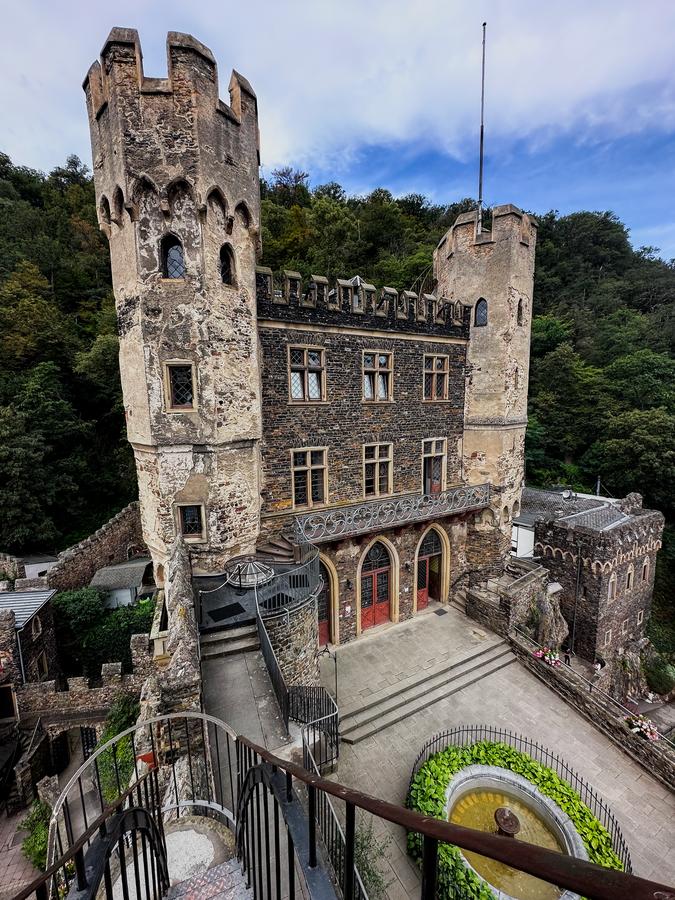
The castle, perched on a rocky ridge, showcases a mix of architectural styles, including elements of medieval and romantic architecture. Its strategic location above the River Rhine provides awe-inspiring views, and its design elements reflect defensive and aesthetic considerations. Visitors can admire the imposing towers, fortified walls, and the intricate detailing of the interior spaces.
Visitor Experience
Visitors to Rheinstein Castle can expect a captivating experience, with guided tours offering insights into the castle’s history, legends, and architectural features. The ambiance is steeped in medieval charm, and special exhibitions often provide deeper context into the castle’s role in regional history. Interactive activities, such as medieval reenactments and themed events, further engage visitors of all ages.
Accessibility and Amenities
Rheinstein Castle is generally accessible to a range of groups of people, including families and individuals with disabilities. The castle provides amenities such as restrooms and informative signage to enhance the visitor experience. Additionally, a gift shop offers a selection of souvenirs, and a café provides a relaxing space to enjoy refreshments while taking in the castle’s surroundings.
Best Time to Visit
- Weekdays in Spring and Fall: Visiting during the weekdays in spring (April-May) and fall (September-October) ensures milder weather and fewer crowds, providing a more relaxed experience. These seasons also offer vibrant natural scenery that enhances the beauty of the castle and its surroundings.
- Early Morning or Late Afternoon: Arriving either at opening time (10 AM) or a few hours before closing (around 3:30 PM) allows you to avoid peak visitor times, ensuring a more peaceful visit. The lighting during these times is also ideal for photography, capturing the castle’s stunning views and architectural details.
- Off-Peak Tourist Seasons: Avoid the busy summer months (June-August) when the castle can be crowded and parking is in high demand. Visiting during the off-peak seasons allows for a more enjoyable exploration of the castle and its amenities without the hassle of large crowds.
Ratings and Reviews
Visitors and reviewers commonly praise Rheinstein Castle’s captivating historical narrative, stunning views, and engaging guided tours. However, some have noted that the castle’s accessibility for individuals with mobility challenges could be further improved. Overall, Rheinstein Castle is highly regarded and often compared favorably to similar attractions in the area.
Photographic Opportunities
Rheinstein Castle offers numerous photogenic spots, including the picturesque views of the Rhine River from the castle grounds and the well-preserved interior spaces featuring medieval architecture. For the best photos, visitors are recommended to explore the castle at different times of the day to capture the changing light and ambiance.
- Historical Significance: Rheinstein Castle holds immense historical value dating back to the 14th century. Initially built as a customs castle under the Archbishopric of Mainz, it played a crucial role in regional trade and order.
- Cultural Importance: The castle is a cultural icon in Trechtingshausen and the broader Rhineland-Palatinate region. It has influenced local arts, literature, and folklore, preserving the area’s medieval heritage.
- Architectural Style: Rheinstein Castle offers an aesthetically pleasing and strategically fortified experience by blending medieval and romantic architectural styles. The views from its rocky ridge overlooking the River Rhine are breathtaking.
- Visitor Experience: Visitors deeply appreciate the engaging self-guided tours, which provide detailed insights into the castle’s history and legends. The castle also hosts interactive activities, such as medieval reenactments.
- Accessibility and Amenities: While the castle offers various amenities, including restrooms, signage, and a café, accessibility remains challenging, especially for those with mobility issues due to steep paths and narrow stairs.
- Ratings and Reviews: Rheinstein Castle has an overall rating of 4.7 out of 5 from 3325 reviews. It is highly praised for its historical narrative, scenic views, and visitor engagement. However, improved accessibility could enhance the experience further.
- Photographic Opportunities: The castle is a photographer’s haven, offering picturesque views of the Rhine River and stunning medieval architecture. Different times of day provide unique lighting and ambiance for memorable photos.
- Global Influence: Rheinstein Castle enjoys global recognition as a historic site, attracting international tourists and influencing global culture through its depiction in literature, paintings, and collaborative events focused on cultural heritage.
- Historical Impact: It’s witnessed significant historical events and notable figures, contributing profoundly to local and national history through its architectural and strategic importance.
- Preservation Efforts: Since 1975, the Hecher Family has actively preserved the castle’s historical authenticity, supported by government grants, private donations, and local community engagement in various preservation initiatives.
Perched dramatically 90 meters above the Rhine River on a rugged outcrop, Burg Rheinstein epitomizes the romantic medieval castle that has defined the cultural landscape of Germany’s UNESCO-listed Rhine Gorge since the 13th century. Originally built as a customs outpost around 1316, this robber-baron fortress fell into disrepair before Prince Friedrich Wilhelm Ludwig of Prussia purchased and meticulously restored it between 1825-1829, transforming it into one of the earliest and finest examples of Rhine Romanticism architecture. Visitors approach via a drawbridge crossing a deep dry moat before entering its compact but beautifully preserved rooms featuring authentic period furnishings, intricate Gothic window tracery, and a noted collection of stained glass spanning five centuries. The castle’s terraced gardens offer breathtaking panoramas of the Rhine’s serpentine path, with the hanging Burgundy Garden (Burgundergarten) suspended dramatically over the cliff edge, showcasing a 500-year-old rose vine still producing flowers each summer. The atmospheric Knight’s Hall with its minstrels’ gallery and collection of medieval weapons, vaulted chapel with ancestral tombs, and working mechanical drawbridge provide visitors an immersive journey into Rhineland’s chivalric past. Unlike more commercialized castles, Rheinstein maintains an authentic medieval ambiance, allowing intimate exploration of virtually all areas of this remarkably intact fortress and offering a tangible connection to the historical period when these stone sentinels controlled commerce along Europe’s most important waterway.
Cultural Context
Rheinstein Castle holds a deep cultural resonance as a symbol of the Romantic revival in 19th-century Germany, reflecting the era’s fascination with medieval history and folklore. Situated along the Rhine River, an area steeped in legends and myths, the castle is intertwined with local traditions that celebrate the Rhine’s historical importance as a lifeline for trade and cultural exchange. The castle often serves as a venue for cultural events, including medieval festivals and concerts that highlight traditional German music and storytelling, fostering a connection between contemporary communities and their heritage. The castle’s preservation and restoration efforts echo a broader German cultural movement that values historical authenticity and regional identity, particularly within the Rhineland-Palatinate region. Rheinstein Castle also embodies the romantic idealization of the Middle Ages, which has influenced German literature and art, inspiring poets and painters who sought to capture the mystique of the Rhine Valley. Local customs often include guided tours that emphasize the castle’s role in regional folklore, such as tales of knights, feuding noble families, and the Rhine Maidens, connecting visitors to the cultural fabric of the area. The castle’s presence on the Rhine Gorge, a UNESCO World Heritage Site, further underscores its cultural significance as part of a landscape celebrated for its natural beauty and historical depth. Rheinstein Castle continues to be a focal point for cultural education and heritage tourism, enriching the understanding of Germany’s medieval past and its enduring influence on modern cultural identity.
Historical Context
Rheinstein Castle was originally constructed in the early 14th century, around 1316, as a strategic fortress designed to oversee and protect the vital Rhine River trade routes. Over the centuries, it experienced periods of decline and ruin, particularly during the Thirty Years’ War and the Napoleonic Wars, reflecting the turbulent history of the Rhineland region. In 1823, the castle gained renewed historical significance when it was purchased and meticulously restored by Prince Frederick of Prussia, a key figure in the 19th-century Romantic movement. His restoration efforts transformed Rheinstein into a picturesque example of medieval revival architecture, aligning it with the broader trend of castle restorations across Germany that sought to reclaim national heritage after years of political upheaval. Throughout its history, Rheinstein Castle has witnessed the shifting power dynamics of the Holy Roman Empire, the rise of Prussian influence, and the eventual unification of Germany. The castle’s strategic location made it a focal point during regional conflicts, serving as both a military stronghold and a noble residence. Its history is also marked by the changing functions it served—from a defensive fortress to a symbol of romantic nationalism and a site of cultural preservation. Today, Rheinstein Castle stands as a testament to the historical layers that have shaped the Rhineland, reflecting the complex interplay of warfare, nobility, and cultural revival that defines much of Germany’s medieval and modern history.
Plan your visit with our complete Bonn travel guide featuring top sights, itineraries, and local travel tips.