MenuClose

A place worth knowing

DDR Museum

Museum · History museum in GermanyUpdated

  • Google rating4.3/5
  • Typical visit2-3 hours average visit (longer if engaging deeply with interactive exhibits)
  • EntranceAdmission required — check https://www.ddr-museum.de/de for tickets
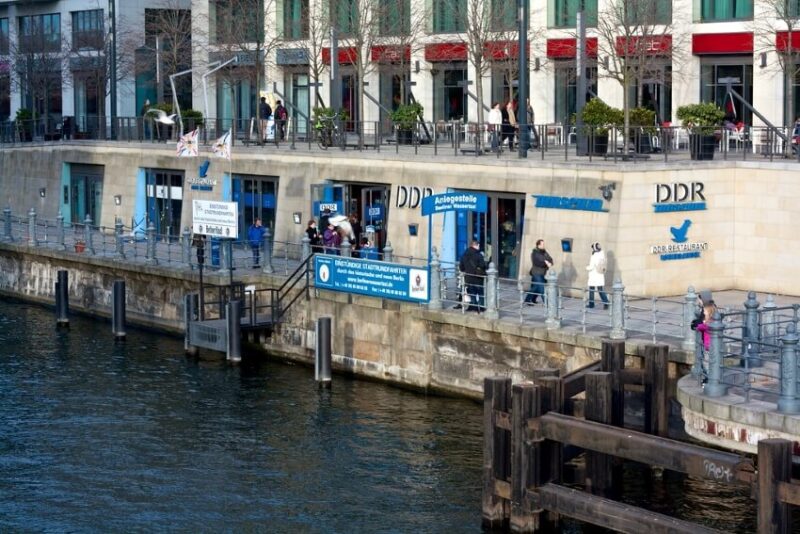
Building by the River
  • Today (Thursday)9 AM–9 PM
  • Typical visit2-3 hours average visit (longer if engaging deeply with interactive exhibits)
  • EntranceAdmission required — check https://www.ddr-museum.de/de for tickets
  • Google rating4.3/5
  • WebsiteOfficial site ↗
  • TicketsCheck availability ↗
Opening hours all week
Monday
9 AM–9 PM
Tuesday
9 AM–9 PM
Wednesday
9 AM–9 PM
Thursday
9 AM–9 PM
Friday
9 AM–9 PM
Saturday
9 AM–9 PM
Sunday
9 AM–9 PM
Features
  • Interactive Exhibits: Hands-on experiences
  • including a Trabant driving simulator and recreated living spaces.
  • Focus on Daily Life: Explore work
  • leisure
  • and family life in East Germany.
  • Authentic Artifacts: Original items from GDR
  • like fashion
  • technology
  • and household goods.
  • Political Context: Insights into the Stasi
  • surveillance
  • and the GDR political system.
Building by the River
The short answer

Why it matters

Interactive gateway into East Germany's lived reality.

  • The DDR Museum provides a deep dive into East Germany’s everyday life, focusing on cultural and domestic aspects rather than political ideologies. This unique focal point enhances its appeal and authenticity by allowing visitors to experience history from a personal and interactive perspective.
  • The museum effectively educates and engages its audience with interactive exhibits, including over 200 objects that visitors can physically interact with. Such features contribute significantly to the educational value, helping visitors understand the era’s material culture and social practices.
  • Located in East Germany’s historic governmental district, the DDR Museum’s setting adds an authentic layer to its narrative, enhancing its preservation and integrity. Visitors gain a spatial and historical connection to the subjects explored within its walls by situating the museum within this context.
  • The museum’s design as one of the world’s most interactive museums ensures high visitor engagement. Accessibility is broad, catering to various international tourists, and detailed exhibits like the recreated East Berlin apartment provide immersive experiences that captivate visitors’ interest and curiosity.
Is the DDR Museum Worth Visiting? Everything You Need to Know Berlin is one of the best cities in the world for museums. The German capital has around 170, all vying for visitors’ attention. One of the most popular is the DDR Museum, located in the city’s heart. Twice nominated for the European Museum of the Year award, This article and brief review will tell you everything you need to know about Germany’s 11th most visited museum. Don’t miss our Berlin Travel Guide for extra tips and tricks to help you get the most out of your stay in the German capital. Things to Know
  • Address: Vera Britain Ufer, Karl-Liebknecht-Str. 1, 10178 Berlin, Germany
  • Opening Hours: Doors are open from 9 AM to 9 PM daily.
  • Cost of Entry: Adults: €13.50. Concessions: €8.00. Groups of ten or more are charged €8.00 per person, and school groups are €5.00 per person.
  • Allocated Time: You can walk around the museum in 30 minutes, but I recommend at least 1.5 hours to get the most out of it.
  • Wheelchair Access: An elevator from the Spreepromenade can take wheelchair users directly into the museum. Call the phone number provided to alert museum staff.
Top Tip: The Berlin WelcomeCard offers discounts on the museum entrance fee and on transport around the city. You can pick up your card here before you go.

What Does DDR Stand For?

In German, DDR stands for Deutsche Demokratische Republik. In English, it translates to GDR – the German Democratic Republic, otherwise known as East Germany. The country existed between 1949 and 1990 and was dissolved in November 1989 following the fall of the Berlin Wall. The former East German state was very different from the West, and Berlin’s interactive museum offers ways to experience what life was like behind the Iron Curtain during this time.

How to Get to the DDR Museum

The DDR Museum is located in the center of Berlin, right on the River Spree, opposite the stunning Berlin Cathedral – also one of the best things to see in Berlin. It was a nice spring evening, so we took the U-Bahn to Alexanderplatz and walked there. But if you’d rather get a little closer, you can alight at Klosterstraße or Spittelmarkt stations. If you’re driving, the parking complex CityQuartier DomAquarée is the best place to leave your vehicle. You can also take the tram or bus to the Spandauer Straße stop or the S-Bahn to Hackescher Markt station.

The DDR Museum – What to Expect

The DDR Museum’s permanent exhibition encourages visitors to touch, feel, see, and listen to better understand the past. You won’t find stuffy rooms with roped-off areas, glass cases, and endless blurbs here. The museum showcases everyday life in the GDR from 1949 to 1990 via interactive exhibits, hands-on displays, games, and reconstructions. You must open many cupboards and drawers to access information panels, models, artifacts, and more. The museum’s blurbs are written in German and English. The themed areas, including a children’s room, a tower block apartment, and prison cells, are designed to help you get a representation of life in East Berlin and East Germany. Relax in an East German living room, try on the fashions of the day, find out what was in typical East German kitchen cupboards, sit in the much-loved Trabant car, and learn about the design and technology of the era. You’ll undoubtedly come away with a better understanding of life in the former DDR. The question is – would you have liked to live there?

The DRR Museum – Who Is It For?

The DDR Museum is for everyone, especially families with children or anyone who learns best through interactive, hands-on displays and artifacts. But if you’re not a fan of crowds or kids, you might have to plan your visit more carefully. It gets hectic at peak times, and identifying them can be challenging. School groups might be in during the weekday, and the weekends can be packed with locals and residents. To that end, staff recommends visiting after 5 PM during the week if you can. Many exhibits and interactive displays are “one-in-one-out,” you can face a long wait when the museum is busy or if visitors are hovering over a specific cupboard or drawer. And if you’re here during the school holidays, you might not even get close – especially to popular attractions like the Trabi driving simulation. I was gutted, but I never got to have a go!

Exit Through the Gift Shop – Is the DDR Museum Worth It?

Whatever you think of the DDR, you can’t say the artwork, design, and style weren’t on point. As such, one of the things I was most looking forward to at the DDR Museum was the gift shop. And it didn’t disappoint. I bought myself one of those iconic chicken-shaped egg cups, which now has pride of place in my kitchen. But is it worth it overall? Thanks to its content, range of topics, layout, and interactive exhibits, I think it’s a contender for the best museum in Berlin. And it’s certainly not to be missed if you have curious young minds to impress. It’s easily one of the best things to do in Berlin with kids.  But some visitors might find it a little too frivolous and kitschy. Running, screaming children aren’t for everyone, and waiting to access draws and cupboards might try your patience. And with more than half a million visitors annually, some displays have suffered from excessive handling and traffic. For alternatives, I recommend the Deutsches Historisches Museum or the Stasi Museum. You can also try the less-known Museum at the Kulturbrauerei, which covers GDR life and is free to enter. Overall, though, I highly recommend visiting the DDR Museum in Berlin. Be sure to put it on your itinerary when you visit Germany.
Situated on Berlin’s River Spree opposite the Berlin Cathedral, the DDR Museum provides an immersive, tactile journey into everyday life in the former German Democratic Republic beyond Cold War clichés. Unlike traditional history museums, this interactive space invites visitors to physically engage with the material culture of East German socialism—from opening kitchen cabinets stocked with authentic food packaging to sitting in an original Trabant car simulation complete with driving experience through prefabricated housing blocks. The museum’s meticulous recreation of a standard Plattenbau apartment allows visitors to rifle through wardrobes, turn on the television, and listen to state-approved music, creating a sensory understanding of daily life under surveillance. Thought-provoking exhibits balance mundane domesticity with explorations of the Stasi security apparatus, examining how these realms interconnected in citizens’ lives. By focusing on lived experience rather than political narratives alone, the museum illuminates the complex reality of a vanished society where scarcity coexisted with social security, repression with community solidarity. For Berliners who lived through division, the museum can trigger nostalgia and critical reflection in equal measure, while for younger visitors, it transforms abstract history into tangible experience, making the DDR Museum a crucial space for understanding not just German division but how political systems shape intimate aspects of everyday existence.

Cultural Context

Interactive museum preserving East German communist history 1949-1990, balances nostalgia Ostalgie with critical examination of SED dictatorship, 11th most visited Berlin museum educating about life behind Iron Curtain, founded 2006 filling historical documentation gap

Historical Context

Depicts German Democratic Republic (GDR/DDR) daily life under Soviet-backed socialist state, contrasts propaganda claims with lived reality of shortages surveillance and restrictions, preserves material culture of vanished political system, opened after reunification to document 40-year communist experience

Plan your visit with our complete Germany travel guide featuring top sights, itineraries, and local travel tips.

Context

Story and significance

About

The DDR Museum offers an immersive plunge into pre-unified Germany’s daily existence. Rather than a mere repository of artifacts, it stands as an interactive tableau, inviting visitors to touch, explore, and engage. You can experience the stark contrast of East German life through meticulously reconstructed settings, from a typical DDR household to a Stasi surveillance room.

Such hands-on encounters shed light on the era’s cultural significance and stir deep reflections on freedom and resilience. Each exhibit, rich in authenticity and historical depth, makes the DDR Museum a compelling journey through time, revealing the textures of a society hidden behind the Iron Curtain.

Historical significance

The DDR Museum is significant for preserving and presenting the everyday realities of East German society, complementing political and diplomatic histories of the Cold War. By documenting material culture and popular experience, it contributes to public understanding of how the GDR affected millions of citizens and how memory of division continues to shape contemporary Germany.

Historical context

Founded in the early 21st century, the museum collects and interprets everyday objects, media and recreated interiors to tell the social history of the German Democratic Republic (GDR). Its displays trace the development of the state’s institutions, consumer culture, work and leisure practices from postwar reconstruction through the late Cold War period.

Cultural context

The DDR Museum offers an interactive, hands-on presentation of everyday life in former East Germany and serves as a focal point for reflection on German division and reunification. It attracts visitors interested in social history, material culture and the lived experience of life under the socialist state, often prompting personal memories and discussion among Germans of different generations.

Architecture

Housed in a central Berlin building near Museum Island, the museum’s significance lies more in its exhibition design than in monumental architecture: immersive reconstructions of apartments, shops and workplaces use period fixtures, signage and audio-visual elements. The layout emphasizes tactile and multimedia installations that recreate domestic and public spaces of the GDR for visitors.

Local significance

The DDR Museum plays an important role in Berlin’s engagement with its East German past by presenting everyday life under the GDR in an interactive, approachable format. Locals and former East Germans often visit to reflect, compare memories, and discuss how public and private life were shaped by the state; the museum encourages personal encounters with objects and reconstructions rather than solely political narratives. It has become a focal point in the city’s broader effort to confront and educate about Cold War history while keeping the conversation accessible to younger generations.

Editorial scores

How we rate it

Universal appeal & authenticity10/10
Cultural richness & educational value10/10
Preservation & integrity10/10
Accessibility & visitor engagement10/10

Editorial scores on a 10-point scale, judged against places of the same kind.

Bookable experiences

Worth booking ahead in Germany

Hand-picked from the operators our guides already send readers to. Prices and availability are live on the partner site.

We earn a commission if you book through these links, at no extra cost to you. It is how we keep the guides free and independent.

Updated Data: Editorial research · Google Places ratings · Verified coordinates