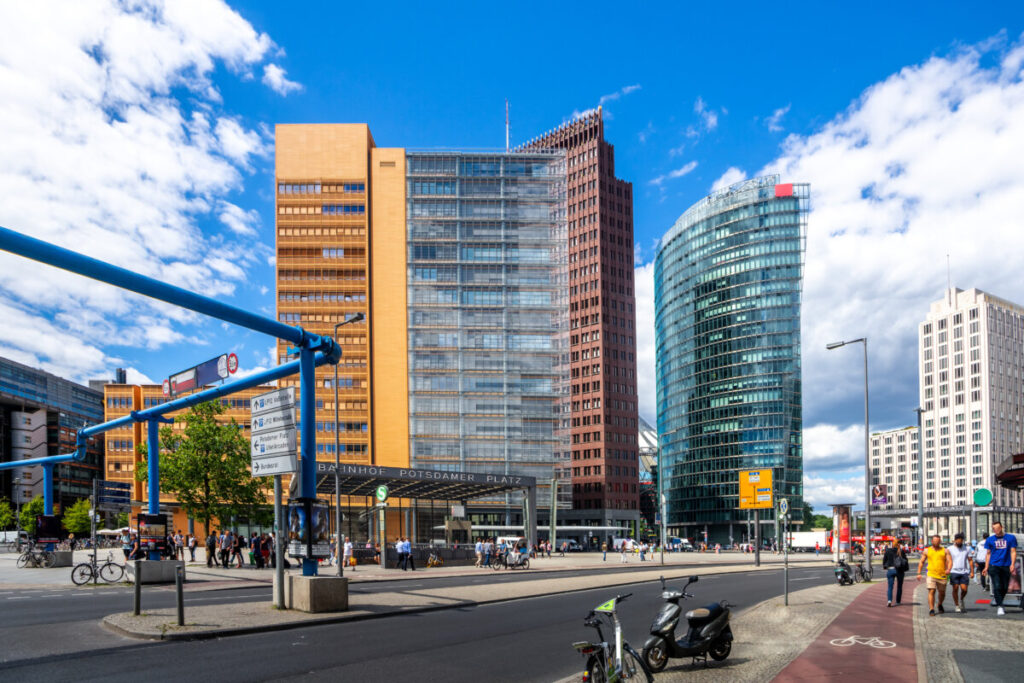
Potsdamer Platz stands as Berlin’s most dramatic example of urban transformation, rising from Cold War wasteland to become Europe’s busiest commercial and entertainment district. Once split by the Berlin Wall and reduced to rubble during World War II, this dynamic square now showcases cutting-edge architecture through iconic structures like the Sony Center’s futuristic glass dome and the towering Kollhoff Tower. The plaza seamlessly blends shopping, dining, and entertainment within ultramodern complexes housing everything from luxury boutiques to IMAX theaters and Michelin-starred restaurants. Visitors can experience Berlin’s rapid evolution through the contrast between preserved wall remnants and gleaming skyscrapers, while the bustling atmosphere reflects the city’s emergence as a major European capital. Historical information panels and the nearby Topography of Terror museum provide context for understanding this remarkable transformation from divided city symbol to unified Germany‘s economic powerhouse.
Cultural Context
Potsdamer Platz holds a unique place in Berlin’s cultural landscape, serving as a vibrant hub where history and modernity intersect. Traditionally, the square was a bustling center for commerce, entertainment, and social life in pre-World War II Berlin, reflecting the cosmopolitan spirit of the city. After decades of division during the Cold War, the site has evolved into a symbol of reunification and cultural renaissance. Today, it hosts numerous cultural events, including film festivals, art exhibitions, and open-air concerts, attracting both locals and international visitors. The area blends contemporary urban culture with a remembrance of its past, embodying Berlin’s resilience and creativity. Local customs often involve gathering at the square’s cafes and public spaces to engage in lively discussions, reflecting the city’s reputation for intellectual openness and artistic experimentation. The square’s proximity to theaters, museums, and galleries further enhances its role as a cultural crossroads, where the legacy of German history meets the dynamic expressions of modern European art and culture. This cultural fusion makes Potsdamer Platz a microcosm of Berlin’s broader identity as a city that honors its complex heritage while embracing innovation and diversity in its cultural practices.
Historical Context
Potsdamer Platz has a layered and tumultuous history that mirrors Berlin’s own transformations over the centuries. Established in the early 19th century, it quickly became one of Europe’s busiest traffic intersections and a focal point of urban life in Berlin. The square was renowned for its vibrant nightlife, cinemas, and department stores during the Weimar Republic era. However, World War II inflicted severe damage on the area, leaving it largely in ruins. In the post-war period, Potsdamer Platz found itself at the heart of Cold War tensions, situated directly adjacent to the Berlin Wall after its construction in 1961. This division rendered the square a desolate no-man’s-land for nearly three decades. Following the fall of the Berlin Wall in 1989, Potsdamer Platz became a major site for redevelopment, symbolizing Germany’s reunification and the city’s rebirth. The redevelopment, initiated in the 1990s, involved international architects and planners who transformed the area into a modern urban center. Key historical figures associated with the site include architect Hans Kollhoff and developer Daimler-Benz, who played pivotal roles in its reconstruction. The evolution of Potsdamer Platz from a pre-war cultural hotspot to a Cold War symbol of division, and finally to a 21st-century urban landmark, encapsulates Berlin’s complex historical narrative.