Cultural Context
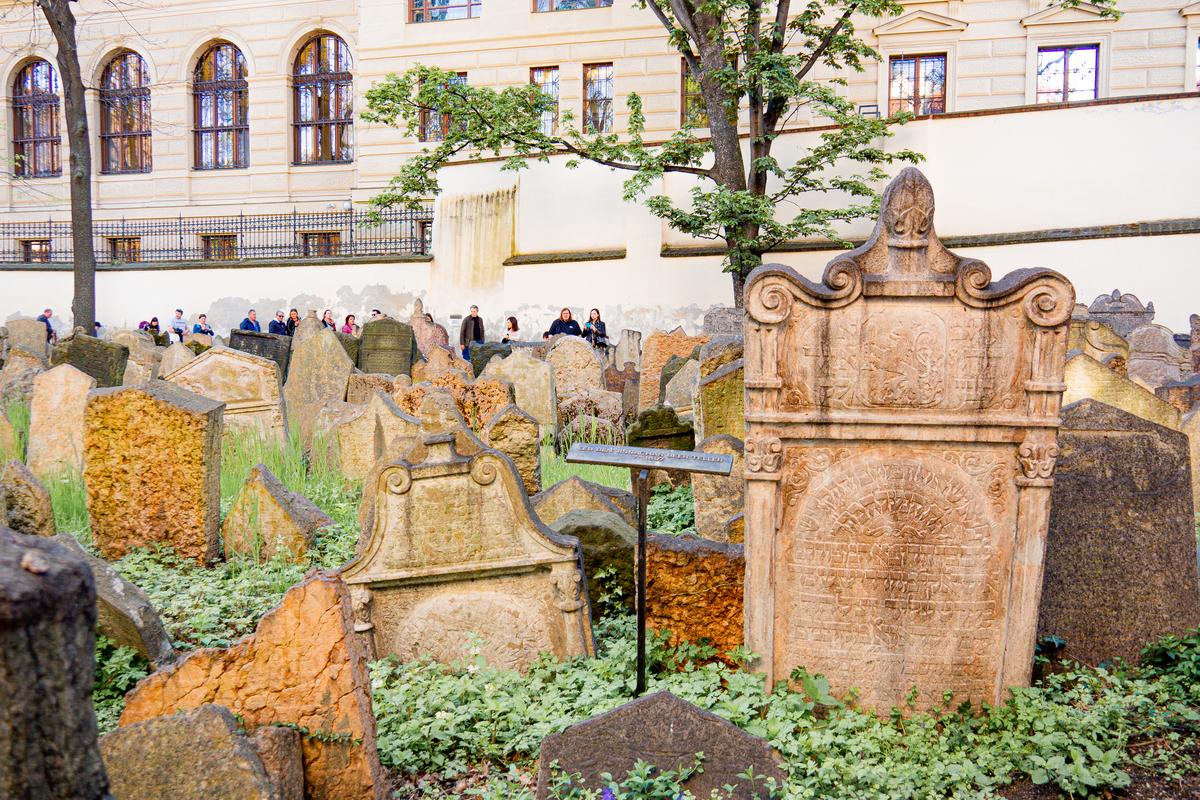
The Old Jewish Cemetery in Prague is a profound cultural symbol reflecting the resilience and traditions of the Jewish community in Bohemia. It serves as a sacred space where generations of Jewish families have honored their ancestors according to Jewish burial customs, which emphasize respect for the dead and the sanctity of the grave. The cemetery is a testament to the community’s adherence to religious laws such as the prohibition against disturbing graves and the practice of placing small stones on tombstones as a sign of remembrance. Throughout the centuries, the cemetery has been a site for commemorative rituals during Jewish holidays like Yom Kippur and Tisha B’Av, when families gather to remember the deceased. Despite historical adversities, including periods of persecution and restrictions under various regimes, the cemetery has remained a vital cultural landmark, preserving the memory of Prague’s once-thriving Jewish population. Today, it continues to foster a connection between contemporary Jewish residents and their ancestors, embodying a living heritage that honors Jewish identity and cultural continuity in the heart of Prague.Historical Context
Established in the early 15th century, the Old Jewish Cemetery in Prague is one of the oldest surviving Jewish burial grounds in Europe, with its oldest tombstone dating back to 1439. The cemetery was in use until 1787, constrained by the limited space within the Jewish ghetto, which led to the unique practice of layering graves up to twelve deep. This overcrowding reflects the demographic growth and the restrictive conditions imposed on the Jewish community by municipal authorities. The cemetery witnessed significant historical events, including the expulsion of Jews from Prague in the late medieval period and the gradual emancipation of Jews in the 19th century. Notable figures buried here include Rabbi Judah Loew ben Bezalel, the legendary 16th-century mystic and philosopher associated with the Golem of Prague folklore. The cemetery’s history encapsulates the complex relationship between Prague’s Jewish community and the broader city, marked by both cultural flourishing and episodes of marginalization. Its preservation through centuries of political upheaval highlights its importance as a historical record of Jewish life and death in Central Europe.Plan your visit with our complete Czech Republic travel guide featuring top sights, itineraries, and local travel tips.