A historic orchard in Oak Creek Canyon; swim areas are closed until October 1, 2026.
Global Influence
- Slide Rock State Park is recognized internationally as one of the most iconic natural water slides in North America, drawing visitors from across the globe to experience its unique Coconino sandstone chute on Oak Creek in Arizona’s famed red rock country.
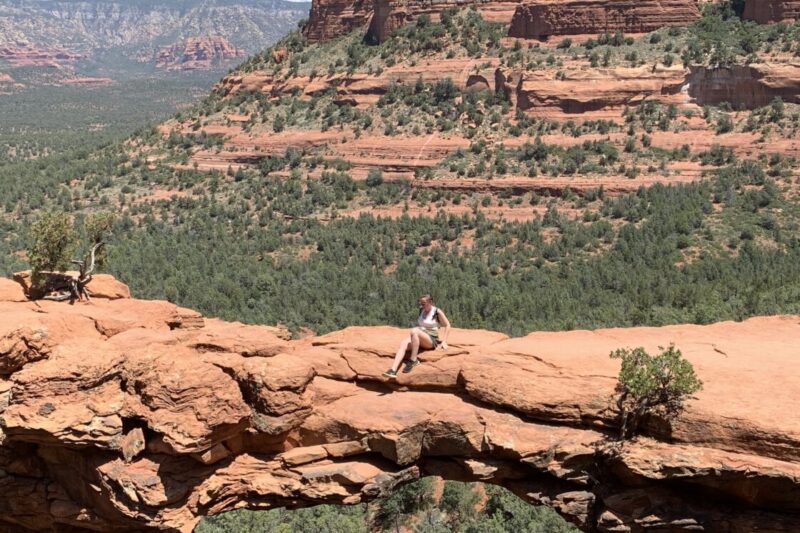
- The park’s striking visual landscape — red sandstone canyon walls, crystal-clear creek waters, and lush riparian vegetation — has been featured in travel publications, social media, and tourism campaigns worldwide, elevating Sedona’s profile as a premier destination.
- The preservation of the Pendley Homestead as a working example of early 20th-century irrigated agriculture in the American Southwest has attracted heritage tourism enthusiasts and scholars from multiple countries.
- Oak Creek Canyon’s geological formation, of which Slide Rock is the most visited segment, serves as a globally referenced example of erosional water features in sedimentary rock environments.
Historical Impact
- Frank L. Pendley’s acquisition of the land under the Homestead Act in 1910 represents a defining chapter in Arizona’s agricultural settlement history, demonstrating how pioneering families transformed remote canyon lands into productive farms.
- Pendley’s 1912 apple orchard — enabled by his hand-engineered irrigation system drawing from Oak Creek — became a model of agricultural innovation in the arid Southwest, establishing apple cultivation as a viable enterprise in a region better known for desert landscapes.
- The construction of rustic tourist cabins on the property in 1933, capitalizing on the scenic highway through Oak Creek Canyon completed in 1914, illustrates the early development of leisure tourism in Arizona decades before Sedona became a mainstream destination.
- The park’s designation as an Arizona State Park in 1987 formalized government recognition of the site’s dual significance: as a natural recreational treasure and as a tangible remnant of homestead-era agricultural enterprise.
Preservation Efforts
- Arizona State Parks acquired the Pendley Homestead in 1985, preventing private redevelopment and securing the property’s historic structures, original orchards, and natural water features for permanent public benefit and stewardship.
- The park maintains both the original heritage apple orchards and a newer planting of semi-dwarf apple trees, ensuring the agricultural tradition established by Pendley in 1912 continues as a living legacy accessible to visitors.
- The Apple Packing Shed has been preserved as a working museum space, housing original equipment from 1933 and 1946 that interprets the commercial apple farming operation and connects modern visitors to the property’s productive agricultural past.
- Pendley’s hand-built irrigation system, which channels water from Oak Creek to the orchard, remains operational within the park — a remarkable feat of preservation that allows visitors to observe functioning 1910s-era agricultural engineering in its original context.
Historical Significance
Slide Rock State Park occupies a unique position in Arizona’s historical narrative as a place where pioneer agricultural history and geological wonder converge. Frank L. Pendley’s Homestead Act claim in 1910 came at a pivotal moment in the settlement of the American Southwest, and his decision to establish an apple orchard in a remote canyon — sustained by an irrigation system of his own design — reflects the extraordinary resourcefulness of the era’s settlers. The property remained a working farm and tourist destination through successive decades, and its acquisition by Arizona State Parks in 1985 ensured that this layered history would be preserved rather than erased by development.
Cultural Importance
Beyond its agricultural heritage, Slide Rock State Park holds deep cultural significance for Arizona residents as a generational gathering place. Families have visited the natural water slide for decades, creating a shared recreational memory that transcends demographic and geographic boundaries. The park’s location within Oak Creek Canyon — a landscape of extraordinary beauty that has long been sacred to the Yavapai-Apache Nation — situates it within a broader cultural geography that predates European settlement by centuries.
Visitor Experience
Visitors encounter an experience that balances active outdoor recreation with interpretive heritage exploration. The natural 80-foot water chute worn into Coconino sandstone is the park’s primary draw, offering thrilling slides and cool swimming in Oak Creek’s clear waters against a backdrop of towering red canyon walls. The Pendley Homestead Trail provides a paved interpretive route through the historic orchard and past the preserved farm structures, including the Apple Packing Shed with its vintage equipment. Standard admission is US$20 per vehicle (1–4 people) from August 22, 2026 through April 2027; see the official fee schedule for additional-person charges and changes.
Tips for Visitors
Arrive early, particularly on summer weekends and holidays, as the park enforces capacity limits and the parking area fills quickly by mid-morning. Water shoes with traction are strongly recommended for navigating the slippery sandstone chute and creek bed. The creek water temperature is cold year-round. Bring exact cash or Visa/MasterCard as no other payment forms are accepted. Annual Arizona State Parks passes offer significant savings for those planning multiple park visits.
Accessibility
The Pendley Homestead Trail is paved and accessible, offering a genuine interpretive experience for visitors with mobility limitations. However, the creek, water slide, and fishing areas involve uneven, wet, and slippery terrain that is not wheelchair accessible. The park’s terrain — canyon creek environment with natural rock surfaces — presents inherent accessibility challenges for the primary water recreation areas, though the historic farm and orchard areas are more navigable.
Best Time to Visit
Late spring through early summer (May-June) offers the optimal combination of warm air temperatures, high creek flow from snowmelt, and manageable crowd levels before peak summer holiday weekends. The historic orchard can be visited in autumn, but the park is not offering apple picking during the 2026 season. Summer (July-August) brings the highest visitor volumes and can result in capacity closures at peak times.
Overall Impressions
Slide Rock State Park delivers one of Arizona’s most distinctively layered experiences: the visceral thrill of a natural water slide carved by geological time, set within a canyon landscape of stunning beauty, on land that carries a century of human agricultural history. It is simultaneously a natural wonder, a heritage site, and a beloved community recreation space — a combination that is genuinely rare and that rewards visitors who engage with all of its dimensions.
- Universal Appeal and Cultural Authenticity (90/100)
- The 80-foot sandstone water chute is a geological formation of remarkable character, worn smooth by millennia of flowing water and offering a uniquely tactile connection to the natural forces that shaped Oak Creek Canyon.
- The surrounding red rock canyon scenery provides one of the most visually spectacular settings of any state park in the American Southwest.
- Check the park’s current water-quality and closure notices before planning a swim.
- Cultural Richness and Educational Value (88/100)
- The Pendley Homestead is one of the best-preserved examples of Homestead Act agricultural settlement in Arizona, with intact structures, original equipment, and a functioning irrigation system.
- The park’s dual identity as working orchard and natural park creates an interpretive richness rarely found in state park settings.
- Seasonal apple production in the heritage orchards provides a living connection to the property’s agricultural past.
- Preservation and Integrity (85/100)
- Arizona State Parks has maintained the property’s historic integrity while making it genuinely accessible to the public.
- The continuation of Pendley’s original irrigation system as a functional element of the park demonstrates an unusual commitment to living preservation.
- Capacity management policies reflect responsible stewardship of a natural resource facing significant pressure from Sedona’s growing tourism economy.
- Accessibility and Visitor Engagement (80/100)
- High summer demand can result in capacity closures and crowded creek conditions that diminish the quality of the experience without adequate planning.
- The parking area is limited relative to peak-season demand, making early arrival essential on summer weekends.
- Ongoing wastewater treatment construction has temporarily reduced restroom facility quality.