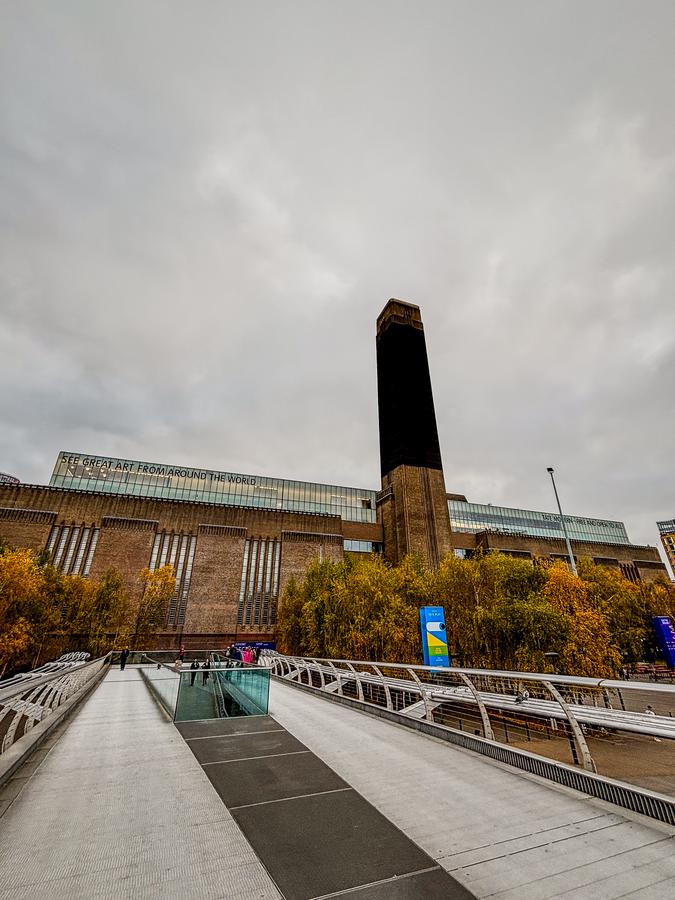
Britain's national gallery of modern and contemporary art, housed in the former Bankside Power Station on the Thames, with free-admission permanent collections spanning Picasso to Rothko and the 10th-floor Blavatnik Building viewing terrace.
Expansion and Renovation
Tate Modern opened in 2000 and quickly became popular. It welcomed over 5 million visitors in its first year. This success led to plans for growth. In 2009, work began on a new building.
The Blavatnik Building, also designed by Herzog & De Meuron, opened in 2016. This 10-story twisted pyramid added 60% more display space. It features a panoramic viewing terrace on the top floor.
The expansion included a new south entrance, making the museum accessible from the neighborhood. Tate Modern now offers even more ways to experience modern and contemporary art in the heart of London.
Architecture and Space
Tate Modern’s striking architecture blends industrial heritage with modern design. The museum’s unique spaces offer visitors diverse experiences, from vast exhibition halls to intimate galleries.
Turbine Hall
The Turbine Hall is Tate Modern’s most iconic space. This massive area spans 35 meters high and 152 meters long. Artists use the hall to create large-scale installations that wow visitors. Its raw concrete walls and steel framework show the space’s industrial past.
Natural light floods through a glass roof, giving the hall a bright, airy feel. The hall’s size lets visitors see art from different angles and distances. It’s become a favorite spot for both artists and guests.
The Switch House
The Switch House is Tate Modern’s newest addition. It opened in 2016 and added 60% more display space to the museum. This 10-story twisted pyramid sits behind the main building. Its brick exterior matches the old power station.
Visitors find new galleries, performance spaces, and a viewing terrace. The Switch House focuses on showing live art and film. Its rooms vary in size and shape, allowing curators to create different moods for each exhibit. The top floor offers stunning 360-degree views of London’s skyline.
Collections and Exhibits
Tate Modern boasts an impressive array of modern and contemporary art. The museum’s vast collection spans British and international works, complemented by rotating temporary exhibitions that showcase innovative artists and movements.
British and International Modern Art
Tate Modern’s permanent collection is a treasure trove of artistic wonders. Visitors can explore works by famous British artists like David Hockney and Tracey Emin. The museum also features international stars such as Pablo Picasso and Andy Warhol.
The galleries are organized by theme rather than chronology. This unique approach helps visitors make connections between different art styles and periods. Popular areas include the Materials and Objects gallery, which showcases sculptures and installations, and the Media Networks gallery, focusing on how artists use technology in their work.
Tate Modern’s collection is constantly growing. The museum regularly adds new pieces to keep the displays fresh and exciting for repeat visitors.
Temporary Exhibitions
Tate Modern’s temporary exhibitions are a major draw for art lovers. These shows often feature cutting-edge contemporary artists or in-depth explorations of influential modern art movements.
Past exhibitions have included retrospectives of iconic artists like Picasso and Matisse. The museum also highlights emerging talents, allowing visitors to discover new artistic voices.
Temporary exhibitions at Tate Modern are known for their immersive experiences. Many shows incorporate interactive elements or large-scale installations that transform the gallery spaces. This approach makes the art more engaging and accessible to many visitors.
Artists and Artworks
Tate Modern showcases a diverse range of influential artists and groundbreaking artworks. The museum’s collection spans modern and contemporary art, featuring iconic figures and emerging talents.
Influential Figures
At Tate Modern, Pablo Picasso stands out as a giant of 20th-century art. His bold, innovative paintings and sculptures pushed boundaries and changed the course of art history. Henri Matisse, another key figure, dazzles visitors with his vibrant use of color and simplified forms.
The museum also highlights more recent innovators. Mike Kelley’s provocative installations challenge viewers’ perceptions of art and culture. His works often incorporate found objects and explore themes of memory and identity.
Małgorzata Mirga-Tas, a contemporary Roma artist, brings fresh perspectives to Tate Modern. Her textiles and paintings shed light on Roma culture and history, adding important diversity to the museum’s lineup.
Notable Pieces
Tate Modern houses many iconic artworks that draw crowds from around the world. Yayoi Kusama’s immersive installations, with their mesmerizing patterns and colors, offer unforgettable experiences for visitors.
Large-scale sculptures and installations dominate the museum’s massive Turbine Hall. These ever-changing exhibits push the boundaries of what’s possible in a gallery space.
The museum’s painting collection includes masterpieces that shaped modern art. Visitors can see Cubist works that revolutionized perspective, abstract pieces that broke away from realism, and Pop Art that blurred the lines between high art and popular culture.
Tate Modern also showcases cutting-edge digital and video art. These pieces reflect how technology shapes our world and our understanding of art.
Educational Programs and Events
Tate Modern offers a wide range of educational activities and special events. These programs aim to make art accessible to diverse audiences and encourage public engagement with modern and contemporary art.
Workshops and Talks
Tate Modern hosts many workshops and talks throughout the year. These events give visitors chances to learn about art from experts. Artists often lead hands-on workshops where people can try new art techniques. Art historians and curators give talks about exhibitions and art movements.
The museum has spaces set aside for education. These include studios for making art and rooms for discussions. School groups can book special tours and activities. Families can join in weekend workshops designed for all ages.
Tate Modern also offers online resources, including videos about artists and art-making tips. Virtual tours let people explore exhibitions from home.
Special Exhibitions
Tate Modern presents major temporary exhibitions several times a year. These shows focus on famous artists or important art movements, and the museum designs special programs to accompany each.
Guided tours help visitors understand the artworks on display. Curators sometimes give talks to explain the ideas behind the shows. The museum creates activity sheets for kids to use while looking at the art.
For some exhibitions, Tate Modern invites artists to perform live. These events let visitors see art being made. The museum also hosts film screenings related to exhibition themes.
Visitor Information
Tate Modern welcomes visitors with a range of facilities and easy access options. The gallery aims to make art accessible to everyone, offering support for diverse needs and convenient transport links.
Accessibility and Facilities
Tate Modern strives to be inclusive for all visitors. The gallery provides ear defenders at ticket desks for those who need them. Accessible parking spots are available for disabled visitors but must be booked by email or phone at least 24 hours in advance.
Visual stories and accessibility guides help autistic and neurodiverse people plan their visits. These guides include photos and info about what to expect at the gallery. Tate Modern also offers £5 exhibition tickets for visitors aged 16-25 through the Tate Collective program.
Getting to Tate Modern
Tate Modern sits in a prime spot on London’s South Bank. You can easily reach it by various transport methods. The gallery is a short walk from several Tube stations and bus stops.
Visitors can also arrive by boat at nearby Bankside Pier. The Tate to Tate boat service links Tate Modern with Tate Britain, offering a scenic river trip between the two museums.
Some parking is available for those driving, but public transport is often easier in central London. The gallery’s central location makes combining with other nearby attractions easy.
Tate Modern boldly reimagines what an art museum can be, housed within the monumental shell of the former Bankside Power Station on London‘s South Bank. Opened in 2000 after architects Herzog & de Meuron transformed the industrial cathedral into one of the world’s most visited contemporary art museums, the space retains dramatic industrial elements including the cavernous Turbine Hall—a five-story void that hosts ambitious, site-specific installations challenging artists to work at previously impossible scales. Unlike traditional chronological museums, Tate Modern organizes its vast collection thematically, placing works from different eras and movements in dialogue with each other to reveal unexpected connections and contemporary relevance. The 2016 addition of the twisted brick Switch House (now Blavatnik Building) expanded the museum’s capacity while adding panoramic viewing terraces that frame St. Paul’s Cathedral across the Thames. Beyond marquee exhibitions featuring globally renowned artists, the museum actively champions overlooked creators, particularly women and artists from outside Western Europe and North America, rewriting conventional art historical narratives through its acquisition and display choices. Free entry to the permanent collection ensures democratic access, creating an unusually diverse visitor demographic where art students, international tourists, and families comfortably coexist in a space that balances serious artistic inquiry with approachable presentation, collectively establishing a model for making contemporary art genuinely accessible without compromising curatorial ambition.
Cultural Context
Tate Modern stands as a vibrant cultural beacon within London, representing the dynamic evolution of contemporary and modern art in the United Kingdom and beyond. It serves as a critical platform for cultural exchange, showcasing works that challenge traditional narratives and embrace diverse global perspectives. The gallery frequently hosts exhibitions that explore social, political, and environmental themes, reflecting the complexities of the 21st century. Local cultural events, artist talks, workshops, and community outreach programs foster an inclusive atmosphere where visitors engage deeply with art as a living dialogue. Tate Modern also participates in London’s rich tradition of celebrating creativity through events like the annual Thames Festival, where the museum’s riverside location becomes a hub of artistic activity. The institution’s commitment to accessibility and education ensures that it remains a vital space for both Londoners and international visitors to experience contemporary culture, making it a cornerstone of the city’s artistic identity and a catalyst for cultural conversations worldwide.
Historical Context
The Tate Modern occupies the former Bankside Power Station, an industrial structure designed by Sir Giles Gilbert Scott and constructed between 1947 and 1963. This power station was a key part of London’s post-war industrial infrastructure, supplying electricity to the city until its closure in 1981. The transformation of this site into a modern art gallery was spearheaded by architects Herzog & de Meuron, with the museum opening in 2000 as part of a broader cultural regeneration of the South Bank area. The conversion preserved much of the original building’s industrial character, symbolizing a shift from industrial production to cultural production in post-industrial London. Over the past two decades, Tate Modern has expanded with the addition of the Blavatnik Building in 2016, further enhancing its capacity and architectural presence. The museum’s history is intertwined with London’s urban development and the global art world’s increasing emphasis on contemporary artistic innovation. Tate Modern’s evolution reflects broader historical trends in urban renewal, cultural policy, and the redefinition of public space.
Context
Story and significance
About
Tate Modern has transformed from a power station into a world-renowned art gallery. Its journey spans decades of planning, renovation, and expansion.
The story of Tate Modern began in 1992 when the Tate Trustees announced plans for a new gallery. In 1994, they chose the former Bankside Power Station, designed by Sir Giles Gilbert Scott, on the south bank of the Thames. It had stood empty since 1981.
Swiss architects Herzog & De Meuron won the job of converting the building. They kept the power station’s industrial character while creating spaces for art. The turbine hall became a dramatic entrance and exhibition space, and the boiler house became a gallery.
Historical significance
Tate Modern is historically significant for transforming industrial infrastructure into cultural facility and catalyzing urban regeneration. It has played an important role in shaping public engagement with modern art in the UK and internationally, hosting exhibitions that have influenced contemporary art appreciation and museum practice.
Historical context
The museum opened in the early 21st century after converting a disused power station into a gallery, part of a broader regeneration of the South Bank and Bankside area. Its establishment expanded public access to 20th- and 21st-century art and stimulated further cultural development along the river.
Cultural context
Tate Modern is a major international modern and contemporary art museum on London’s South Bank, serving as a cultural hub for exhibitions, performances and public programs. It attracts a broad audience of local residents, students, and international visitors and functions as a focal point for contemporary artistic discourse in the city.
Architecture
The museum occupies a large brick former power station with an iconic central turbine hall and a prominent brick chimney; its conversion retained industrial features and introduced minimalist gallery spaces and a modern extension. The adaptive reuse showcases how raw, monumental industrial volumes can be repurposed for large-scale contemporary art installations and public circulation.
Local significance
Tate Modern is an important cultural hub for Londoners and an accessible gateway to modern and contemporary art, offering free collection displays alongside ticketed exhibitions that draw a broad local audience. The converted power station on the South Bank has become a regular weekend and evening destination for families, students and art communities, hosting workshops, performances and late openings that integrate into local cultural life. Its expansive Turbine Hall and riverside location also function as public gathering spaces, contributing to regeneration of the surrounding neighbourhoods.
Editorial scores
How we rate it
Universal appeal & authenticity10/10
Cultural richness & educational value10/10
Preservation & integrity10/10
Accessibility & visitor engagement10/10
Editorial scores on a 10-point scale, judged against places of the same kind.
Bookable experiences
Worth booking ahead in London
Hand-picked from the operators our guides already send readers to. Prices and availability are live on the partner site.