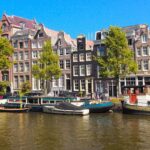
Tucked behind an unassuming 17th-century façade just steps from Amsterdam‘s Dam Square, Wynand Fockink preserves the authentic experience of a traditional Dutch proeflokaal (tasting house) and distillery that has operated continuously since 1679. The establishment’s time-capsule interior features original wooden barrels, antique bottles, and a centuries-old bar worn smooth by generations of patrons participating in the distinctive Dutch drinking ritual still practiced today: bending forward without using hands to take the first sip from a traditional tulip glass filled to the brim with house-made jenever (Dutch gin) or one of over 70 traditional liqueurs and bitters. These spirits are still produced on-site using recipes dating back to the Golden Age, when Wynand Fockink supplied the Dutch East India Company with medicinal alcohols and festive liqueurs. The proeflokaal maintains its authentic character through deliberate preservation decisions—no seats, no music, no modernization—creating an environment where visitors experience Dutch drinking traditions exactly as they existed centuries ago. The master distiller continues the practice of crafting seasonal liqueurs based on available local ingredients, with distinctive varieties like “Bridal Tears” (rose and cinnamon) and “Half and Half” (bitter and sweet orange) reflecting traditional Dutch flavor profiles. Beyond its spirits, Wynand Fockink represents a living museum of Amsterdam’s relationship with alcohol, from the Golden Age when jenever fueled global Dutch trading ventures to its current status as a cultural landmark where local liqueur traditions are preserved through daily practice rather than mere historical display.
Cultural Context
Representing the heart of Nederland’s food culture, this restaurant serves as a cultural bridge through its traditional regional cuisine and authentic preparation methods.
Historical Context
Wynand Fockink is a historic tasting room and distillery that dates back to 1679, making it one of Amsterdam’s oldest family-run businesses. Founded by Wynand Fockink, it originally served as a producer and seller of traditional Dutch liqueurs, bitters, and genevers, a juniper-flavored national spirit. Throughout its history, the establishment has remained in the hands of the Fockink family for over three centuries, preserving its artisanal methods and recipes. This continuity offers a rare glimpse into the Dutch Golden Age’s social and commercial life, where such tasting rooms were central to local trade and social gatherings. The business survived significant historical events, including the Napoleonic Wars and both World Wars, adapting while maintaining its traditional character. Today, Wynand Fockink stands as a living museum of Dutch distilling heritage, offering visitors an authentic experience of 17th-century Dutch drinking culture and craftsmanship. Its endurance and unbroken family lineage underscore its importance as a cultural and historical institution in Amsterdam.