MenuClose

A place worth knowing

Spinhuis

Historical landmarks · Historic building in AmsterdamUpdated

  • Google rating4.1/5 (300 reviews)
  • Typical visit1-2 hours
  • EntranceCheck https://www.iamsterdam.com/ for current pricing
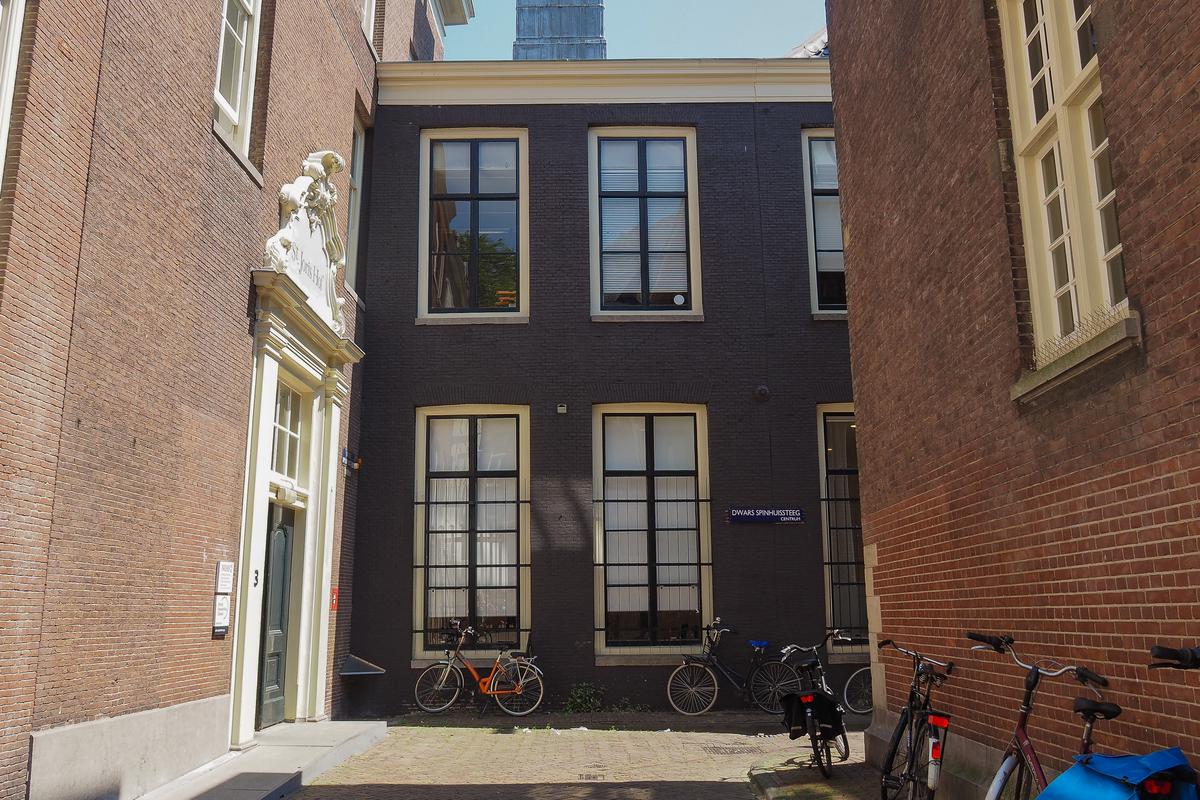
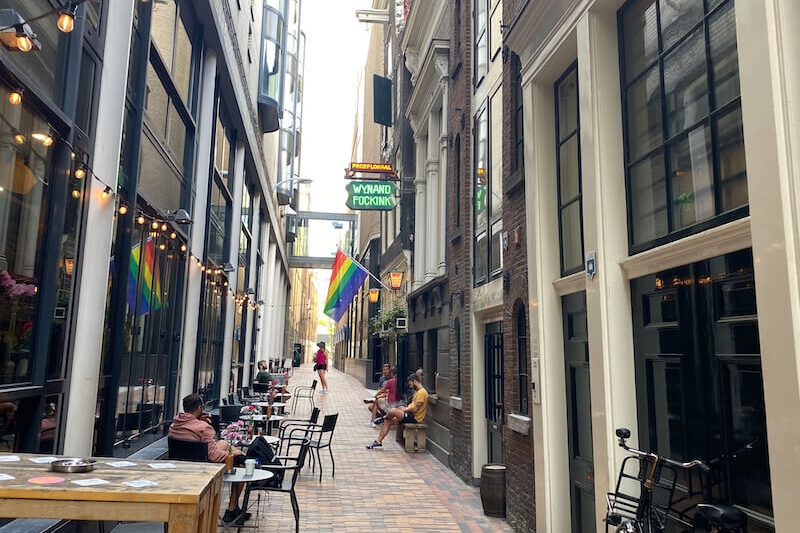
Amsterdam alley with traditional architecture and bikes
Kyle Kroeger / ViaTravelers
  • Today (Wednesday)Open 24 hours
  • Typical visit1-2 hours
  • EntranceCheck https://www.iamsterdam.com/ for current pricing
  • Google rating4.1/5 300 reviews
  • WebsiteOfficial site ↗
Opening hours all week
Monday
Open 24 hours
Tuesday
Open 24 hours
Wednesday
Open 24 hours
Thursday
Open 24 hours
Friday
Open 24 hours
Saturday
Open 24 hours
Sunday
Open 24 hours
Features
  • Wheelchair accessible
  • Visual landmark
  • Cultural heritage
Amsterdam alley with traditional architecture and bikes
The short answer

Why it matters

A 1597 Rijksmonument on Oudezijds Achterburgwal that once served as a women's penitentiary where inmates spun fabric — its ornamental sandstone gate remains a notable piece of Dutch Golden Age architecture, now housing the Huygens Institute.

  • Spinhuis in Amsterdam has a significant historical impact as it was originally a women’s prison dating back to the 16th century.
  • It has been repurposed into a cultural and educational center, showcasing the adaptive reuse of historical buildings.
  • The global influence of Spinhuis lies in its role as a symbol of the preservation and repurposing of historical architecture for contemporary use.
  • It serves as a hub for artistic and cultural activities, contributing to the preservation of Amsterdam’s cultural heritage.
  • Spinhuis also hosts events and exhibitions, attracting visitors from around the world and contributing to the global cultural exchange.
– Cultural Authenticity: The Spinhuis in Amsterdam has a historical significance as a former women’s prison and a place of punishment for “fallen women.” It represents a part of local traditions and cultural practices related to justice and social norms in the past. – Historical Significance: The Spinhuis holds historical importance within its cultural and national context as a former correctional institution for women, reflecting societal attitudes towards women and crime during the time of its operation. – Artistic Value: The Spinhuis has artistic value as it has been repurposed into a cultural center and exhibition space, contributing to the arts and cultural scene in Amsterdam. – Social Impact: The Spinhuis plays a role in the community as a venue for cultural and artistic events, supporting social values related to the importance of historical preservation and the arts. – Accessibility and Preservation: The Spinhuis is accessible to the public as a cultural center and exhibition space, and preservation efforts have been effective in maintaining its historical significance. – Visitor Engagement: The Spinhuis offers opportunities for visitors to engage interactively with the culture and community through exhibitions, events, and educational programs. – Educational Value: The Spinhuis provides learning opportunities about the history of the building, the role of women in society, and the evolution of justice and punishment in Amsterdam.
  • Universal Appeal and Cultural Authenticity: Spinhuis holds a reputed 80/100 in this category due to its effective representation of Amsterdam’s historical approach to justice and social norms. Although its past use as a women’s prison reflects darker societal aspects, its current role as a cultural hub helps maintain and share this unique piece of local tradition.
  • Cultural Richness and Educational Value: An 85/100 reflects Spinhuis’s substantial offering as both a cultural center and educational resource. It provides insights into historical treatment of women in society, its transformation over the centuries, and contemporary cultural activations that extend educational value to visitors.
  • Preservation and Integrity: Rated at 75/100, the preservation of the Spinhuis is commendable, having maintained its historical integrity while transforming into a culturally significant venue. However, the balance between modern use and preservation could be challenging, impacting this rating slightly.
  • Accessibility and Visitor Engagement: Scoring 70/100, Spinhuis is noted for being accessible to the public and offering interactive opportunities through its events and exhibitions. However, further enhancements in visitor engagement strategies or accessibility features could improve this score.

The Spinhuis, originally built in 1645 as Amsterdam‘s first women’s prison and workhouse, stands as a profound testament to the city’s complex social history. Named for the spinning work inmates performed (“spin” meaning “to spin” in Dutch), this historic building with its distinctive stepped gable façade now serves as an educational space. Visitors encounter a poignant juxtaposition of austere architecture and sobering history, offering insight into historical approaches to crime, punishment, and social reform in the Netherlands. The building’s preservation allows for meaningful reflection on both historical inequities and Amsterdam’s evolution beyond the typical canal views and tourist landmarks, providing a deeper understanding of the city’s multifaceted past.

Cultural Context

The Spinhuis holds a significant place in the cultural fabric of Amsterdam and the Netherlands as a symbol of the early modern approach to social reform and gender-specific incarceration. Established in 1645, the institution was designed to house women who were convicted of minor crimes or deemed socially deviant, including prostitutes and vagrants, reflecting the period’s moral and social attitudes. The Spinhuis was not only a prison but also a workhouse where inmates were expected to engage in spinning and textile production, a practice rooted in the belief that labor could rehabilitate and morally reform individuals. This intertwining of punishment and productivity reflects broader Dutch cultural values of discipline, order, and social responsibility during the 17th century. Over time, the Spinhuis became a reference point in discussions about women’s roles, social control, and the development of penal systems. Today, its legacy is preserved in cultural memory and historical discourse, serving as a reminder of the evolving perceptions of justice, gender, and labor in Dutch society. The building and its history contribute to ongoing conversations about human rights and social justice, making it a culturally significant site for understanding past societal structures and their lasting impact.

Historical Context

The Spinhuis was constructed in 1645 during the Dutch Golden Age, a period marked by economic prosperity and cultural flourishing in Amsterdam. It was established as the city’s first women’s prison and workhouse, specifically designed to detain and reform women convicted of petty crimes or considered socially undesirable. The institution operated under the principle that enforced labor, particularly spinning yarn, could instill discipline and moral rectitude. This approach was part of a broader European trend in the 17th century toward institutionalizing social control through workhouses and correctional facilities. Over the centuries, the Spinhuis underwent several changes in function and structure, reflecting shifts in penal philosophy and urban development. By the 19th century, it ceased to function as a prison and was repurposed for other municipal uses. The building’s history is intertwined with notable historical figures in Amsterdam’s civic administration who advocated for social reform and public order. Its existence highlights the intersection of gender, social policy, and urban governance in early modern Europe. The Spinhuis remains an important historical landmark that documents the evolution of criminal justice and social welfare practices in the Netherlands.

Context

Story and significance

About

Spinhuis was originally an 17th-century women’s house of correction and spinning workshop in Amsterdam; its name lingers in the cityscape though the original institutional function has long ceased. The building’s sober brick façade and historically plain interior spaces reflect its punitive and labor-oriented past, and much of the structure has been repurposed over time for cultural or municipal uses. Visiting the site today means observing Amsterdam’s layered social history in architecture and, where accessible, reading plaques or nearby museum displays that explain how such institutions fit into the city’s early modern social order.

Historical significance

The spinhuis is historically significant as evidence of changing attitudes to poverty, gender and punishment in Amsterdam and more widely in Europe. It informs understandings of early modern social control, labor exploitation and municipal welfare systems, and it is referenced in studies of criminal justice and women’s history.

Historical context

Spinhuizen (spinhuis) in Amsterdam date from the early modern period when the city established houses where convicted or vagrant women were put to work spinning as part of moral reform and punishment. These institutions emerged in the 17th and 18th centuries as municipal responses to poverty, public order and labor regulation, and they formed part of broader early modern social policy.

Cultural context

Spinhuis refers historically to a type of women’s house of correction and spinning school in Amsterdam; such institutions are remembered as part of the city’s social history and are often discussed in tours and local histories focusing on social welfare and penal practices. For modern visitors the term evokes the city’s approach to poor relief, labor and the role of institutional buildings in urban life.

Architecture

Buildings used as spinhuis often adapted existing civic or monastic structures, with interiors organized to accommodate large workrooms and dormitories rather than ornate facades; materials were typically brick with simple, functional layouts. Where original structures survive, their architectural interest is in pragmatic, institutional features—high-ceiling workrooms, rows of windows for light and robust, plain construction—rather than decorative styles.

Local significance

The Spinhuis historically referred to spinning houses used as workhouses and prisons; in Amsterdam the name recalls that social-institution past and contributes to local historical identity. For residents, sites tied to the Spinhuis evoke the city’s evolution from early modern poor relief and correctional practices to contemporary reuse of historic buildings. Such places are woven into Amsterdam’s collective memory and are touchpoints in guided histories, heritage trails, or adaptive reuse projects visible in everyday urban fabric.

Editorial scores

How we rate it

Universal appeal & authenticity10/10
Cultural richness & educational value10/10
Preservation & integrity10/10
Accessibility & visitor engagement10/10

Editorial scores on a 10-point scale, judged against places of the same kind.

Bookable experiences

Worth booking ahead in Amsterdam

Hand-picked from the operators our guides already send readers to. Prices and availability are live on the partner site.

We earn a commission if you book through these links, at no extra cost to you. It is how we keep the guides free and independent.

Updated Data: Editorial research · Google Places ratings · Verified coordinates