Edinburgh merges dramatic geography with architectural grandeur as Scotland’s cultural capital. The medieval Old Town and Georgian New Town sit on a rugged landscape of extinct volcanoes and rocky crags, earning UNESCO World Heritage status. Beyond the iconic Edinburgh Castle perched atop Castle Rock, the city houses world-class museums, theaters, and galleries alongside atmospheric pubs where literary traditions thrive. The world’s largest arts festival, the Edinburgh Fringe, transforms the city each August, while year-round, visitors discover hidden closes (alleys) off the Royal Mile, climb Arthur’s Seat for panoramic views, and explore the city’s intellectual heritage as home to enlightenment thinkers and literary giants like Robert Louis Stevenson and J.K. Rowling. Edinburgh balances its historical weight with contemporary Scottish culture, offering exceptional dining featuring local produce, a thriving whisky scene, and traditions ranging from Hogmanay celebrations to the evocative sounds of bagpipes echoing through ancient streets.
The destination guide
Edinburgh
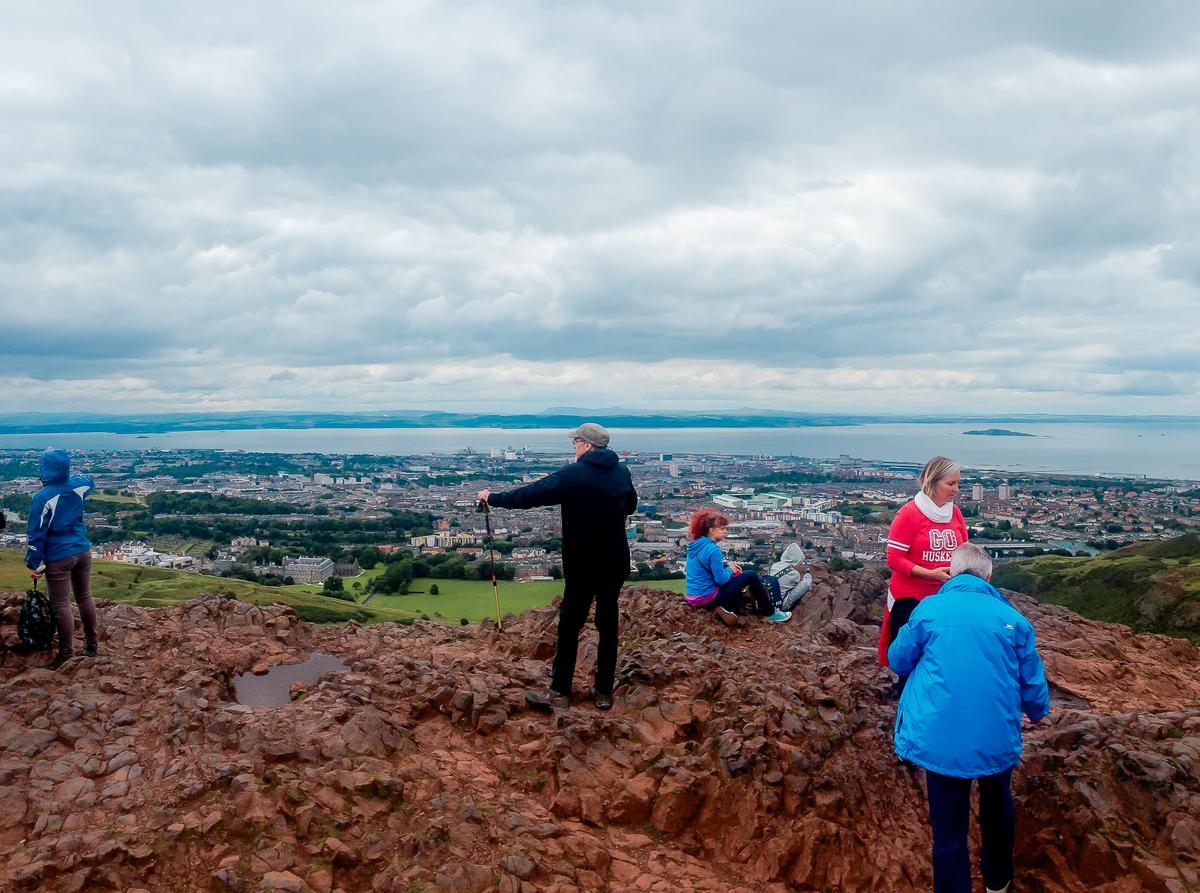
Arthur’s Seat costs nothing and outperforms every castle view in the city. Give it two hours and go early.
Travel guides for Edinburgh
More guides featuring Edinburgh (11)
At a glance
- English
- Urban cityscape
- Castle rock
- Historic old town
- Volcanic hills
How Edinburgh scores
Editorial scores on a 10-point scale, weighed against destinations of the same kind.
Travel safety snapshot
SafePlace indicators use their source 100-point scale; higher is more favourable. Planning context, not a live travel advisory — check official government guidance before you go.
When to go
Best months to visit: April, May, June, July, August, September and October.
- January: 2.3 to 6.4 degrees Celsius, 73.8 millimetres of rain, best-time score 2 out of 5.
- February: 2.8 to 7.5 degrees Celsius, 75.1 millimetres of rain, best-time score 2 out of 5.
- March: 3.3 to 8.9 degrees Celsius, 73.2 millimetres of rain, best-time score 3 out of 5.
- April: 4.3 to 10.9 degrees Celsius, 52.1 millimetres of rain, best-time score 4 out of 5.
- May: 7.7 to 14.4 degrees Celsius, 69.5 millimetres of rain, best-time score 5 out of 5.
- June: 10.4 to 16.9 degrees Celsius, 79.1 millimetres of rain, best-time score 5 out of 5.
- July: 12.3 to 18.6 degrees Celsius, 88.6 millimetres of rain, best-time score 5 out of 5.
- August: 12.2 to 18.2 degrees Celsius, 81.3 millimetres of rain, best-time score 5 out of 5.
- September: 10.4 to 16.2 degrees Celsius, 78.2 millimetres of rain, best-time score 5 out of 5.
- October: 8 to 12.8 degrees Celsius, 100.8 millimetres of rain, best-time score 4 out of 5.
- November: 4.7 to 9 degrees Celsius, 82.1 millimetres of rain, best-time score 2 out of 5.
- December: 3.4 to 7.4 degrees Celsius, 92.1 millimetres of rain, best-time score 3 out of 5.
Month-by-month conditions and packing advice
- January
- Cold, some rain Cold winter weather, few tourists. Crowds: January in Edinburgh is workable with normal seasonal planning; build in layers, weather checks, and a mix of indoor and outdoor activities. Pack: Pack warm layers, a coat, and comfortable shoes for cold mornings and evenings. Add a rain jacket or compact umbrella.
- February
- Cold, some rain Chilly and quiet, good for museums. Crowds: February in Edinburgh is workable with normal seasonal planning; build in layers, weather checks, and a mix of indoor and outdoor activities. Pack: Pack warm layers, a coat, and comfortable shoes for cold mornings and evenings. Add a rain jacket or compact umbrella.
- March
- Cold, some rain Beginning to warm up, spring blossoms. Crowds: March in Edinburgh is workable with normal seasonal planning; build in layers, weather checks, and a mix of indoor and outdoor activities. Pack: Pack layered clothing and comfortable walking shoes. Add a rain jacket or compact umbrella.
- April
- Cool to mild, occasional rain Pleasant spring weather, great for walking. Crowds: April in Edinburgh is workable with normal seasonal planning; build in layers, weather checks, and a mix of indoor and outdoor activities. Pack: Pack layered clothing and comfortable walking shoes.
- May
- Cool to mild, occasional rain Excellent weather before the summer crowds. Crowds: May in Edinburgh is workable with normal seasonal planning; build in layers, weather checks, and a mix of indoor and outdoor activities. Pack: Pack layered clothing and comfortable walking shoes.
- June
- Cool to mild, some rain Warm, sunny, and lively. Crowds: June in Edinburgh is workable with normal seasonal planning; build in layers, weather checks, and a mix of indoor and outdoor activities. Pack: Pack layered clothing and comfortable walking shoes. Add a rain jacket or compact umbrella.
- July
- Cool to mild, some rain Peak summer heat and peak tourist season. Crowds: July in Edinburgh is workable with normal seasonal planning; build in layers, weather checks, and a mix of indoor and outdoor activities. Pack: Pack layered clothing and comfortable walking shoes. Add a rain jacket or compact umbrella.
- August
- Cool to mild, some rain Very warm, many festivals and outdoor dining. Crowds: August in Edinburgh is workable with normal seasonal planning; build in layers, weather checks, and a mix of indoor and outdoor activities. Pack: Pack layered clothing and comfortable walking shoes. Add a rain jacket or compact umbrella.
- September
- Cool to mild, some rain Perfect shoulder season with great weather. Crowds: September in Edinburgh is workable with normal seasonal planning; build in layers, weather checks, and a mix of indoor and outdoor activities. Pack: Pack layered clothing and comfortable walking shoes. Add a rain jacket or compact umbrella.
- October
- Cool to mild, some rain Crisp autumn air and beautiful colors. Crowds: October in Edinburgh is workable with normal seasonal planning; build in layers, weather checks, and a mix of indoor and outdoor activities. Pack: Pack layered clothing and comfortable walking shoes. Add a rain jacket or compact umbrella.
- November
- Cold, some rain Cooling down rapidly, often rainy. Crowds: November in Edinburgh is workable with normal seasonal planning; build in layers, weather checks, and a mix of indoor and outdoor activities. Pack: Pack layered clothing and comfortable walking shoes. Add a rain jacket or compact umbrella.
- December
- Cold, some rain Cold but festive holiday atmosphere. Crowds: December in Edinburgh is workable with normal seasonal planning; build in layers, weather checks, and a mix of indoor and outdoor activities. Pack: Pack layered clothing and comfortable walking shoes. Add a rain jacket or compact umbrella.
- December
- January
- February
- March
- May
- June
- July
- September
- October
Know before you go
Neighbourhoods
Old Town, New Town, Leith, Stockbridge
Best time to visit
May through September for warm weather and the Edinburgh Festival Fringe in August. December-January for Hogmanay celebrations and festive markets.
Season by season
Summer (Aug):
Weather: 15-20°C, busy
Highlights: THE FRINGE FESTIVAL (world’s largest arts fest)
Best For: Culture, comedy
Winter (Dec-Jan):
Weather: 0-7°C, dark/windy
Highlights: Hogmanay (massive New Year street party)
Best For: Festive atmosphere
Spring/Fall:
Weather: Unpredictable
Highlights: Cherry blossoms (Spring), Golden light (Fall)
Best For: Sightseeing without crowds
Crowds
Edinburgh is busiest during the Festival and Fringe in August and also sees strong summer tourism (June–August); quietest in January–February and late autumn, with central Royal Mile and Old Town extremely crowded during August festival season.
Getting there and around
Getting there
United Kingdom is accessible via multiple international airports with London Heathrow (LHR), Gatwick (LGW), and Stansted (STN) serving as primary gateways for intercontinental flights. Manchester (MAN), Birmingham (BHX), and Edinburgh (EDI) provide additional regional access. The Channel Tunnel connects London to Paris and Brussels via high-speed Eurostar rail service. Ferry services link the UK to Ireland, France, Netherlands, and Scandinavia. Post-Brexit, EU citizens require passports for entry, while visa requirements vary by nationality and purpose of visit.
Getting around
Getting around Edinburgh is refreshingly straightforward thanks to its compact city layout and reliable public transport. Lothian Buses operate an extensive network that covers nearly every corner of the city, including night buses, and the sleek Edinburgh Trams connect the airport to the city center and onward to Leith. While there’s no underground metro, the city’s historic core is highly walkable—especially the Old Town and New Town—so bring comfortable shoes and be prepared for some hilly terrain and cobblestone streets. For convenience, purchase a Ridacard or use a contactless payment card for capped fares across buses and trams, and while rideshare services like Uber are available, local black cabs are more plentiful and can be flagged down easily or found at designated ranks.
Top experiences in Edinburgh
Edinburgh Castle
Dominating the city from atop an extinct volcano, this fortress has shaped Scotland’s history. It houses the Crown Jewels (Honours of Scotland) and the Stone of Destiny. Every day at 1 pm (except Sundays), the One O’Clock Gun is fired. The views over the city to the Firth of Forth are commanding.
The Royal Mile
The historic spine of the Old Town, running downhill from the Castle to Holyrood Palace. It is actually a succession of streets (Castlehill, Lawnmarket, High Street, Canongate). It’s lined with narrow ‘closes’ (alleyways), pubs, kiltmakers, and historic sites like The Real Mary King’s Close (an underground plague street).
Arthur's Seat
A dormant volcano sitting right in the city center within Holyrood Park. Hiking to the summit (251m) takes about 45 minutes and offers the best panoramic views of the city. It’s a slice of wild highlands in the middle of the capital. Legend says it might be the site of Camelot.
Palace of Holyroodhouse
The King’s official residence in Scotland, located at the bottom of the Royal Mile. Visitors can explore the State Apartments and the ruins of Holyrood Abbey. It is most famous for its association with Mary, Queen of Scots—you can see the room where her secretary Rizzio was murdered.
St Giles' Cathedral
The High Kirk of Edinburgh on the Royal Mile. Its distinctive crown spire helps define the skyline. It was the focal point of the Scottish Reformation under John Knox. The Thistle Chapel, home to the Order of the Thistle (Scotland’s highest order of chivalry), is an exquisite example of gothic woodcarving.
Editor-curated picks carried over from our original guide. Where a full place guide exists, the card links to it.
Worth booking ahead in Edinburgh
Hand-picked from the operators our guides already send readers to. Prices and availability are live on the partner site.
BrowseViator
Tours and tickets in Edinburgh on Viator (opens Viator in a new tab)
Viator's full list of bookable tours and tickets in Edinburgh.
BrowseGetYourGuide
Experiences in Edinburgh on GetYourGuide (opens GetYourGuide in a new tab)
Everything GetYourGuide sells in Edinburgh, with the cancellation terms on each listing.
Where to stayBooking.com
Stays in Edinburgh (opens Booking.com in a new tab)
Live rates and availability for Edinburgh on Booking.com; filter by neighbourhood once you know where your days start.
We earn a commission if you book through these links, at no extra cost to you. It is how we keep the guides free and independent.
Where to stay
The Balmoral
1 Princes St, Edinburgh EH2 2EQ, UK
A landmark hotel at No. 1 Princes Street, where J.K. Rowling finished writing Harry Potter. The clock tower is a city icon (set 3 minutes fast so people don’t miss their trains). It offers grand Victorian rooms, a Michelin-starred restaurant (Number One), and a whisky bar with over 500 malts. It is the address in Edinburgh.
The Witchery by the Castle
352 Castlehill, Edinburgh EH1 2NF, UK
Located at the gates of Edinburgh Castle, The Witchery is essentially a gothic fantasy. The suites are theatrical, filled with antiques, velvet drapes, and roll-top baths. It feels like staying in a luxurious vampire’s lair. The restaurant is legendary for its Scottish seafood and romantic, candlelit atmosphere.
Waldorf Astoria Edinburgh – The Caledonian
Princes St, Edinburgh EH1 2AB, UK
Known locally as ‘The Caley,’ this former railway hotel at the west end of Princes Street offers unobstructed views of the Castle. It retains its Edwardian grandeur but with Waldorf Astoria luxury. The Peacock Alley lounge (formerly the station platform) is the perfect spot for afternoon tea.
Editor-curated stays carried over from our original guide. Where we have reviewed the hotel, the card links to the review.
Tips from the field
Highlights
- Edinburgh Castle – Iconic fortress
- Royal Mile – Historic heart
- Arthur's Seat – Urban hiking
- Calton Hill – Best views
- Dean Village – Picturesque river walk
- National Museum – Dolly the Sheep
- Grassmarket – Historic pubs
- Harry Potter spots – Victoria St, Greyfriars
- Whisky – Scotch Whisky Experience
Best activities
- Climb Arthur's Seat for sunrise. Wander down Victoria Street (the inspiration for Diagon Alley). Take a ghost tour into the underground vaults
- Edinburgh is famously haunted. Drink a dram of single malt whisky at a cozy pub like The Bow Bar. During August, simply walking the streets involves seeing world-class buskers and theater.
Practical tips
- Currency: British Pound Sterling (GBP). Cards/contactless accepted everywhere.
- Getting There: Edinburgh Airport (EDI) via Airlink 100 bus (£4.50, 30 minutes) or tram (£7, 35 minutes).
- Transportation: Lothian Buses (£1.80/ride, day ticket £4.50). Tram connects airport to city center. Walking is the best way to explore — most attractions are central. Edinburgh is hilly — comfortable shoes essential.
- Dining: Scottish cuisine: haggis, neeps and tatties, Cullen skink. Café culture in Stockbridge and Bruntsfield. Pub meals £10-15. Fine dining from £30+.
- Free Attractions: Royal Mile walking, Arthur's Seat hike, Scottish National Gallery, National Museum of Scotland, Calton Hill, Princes Street Gardens, Dean Village.
- Tipping: 10% at restaurants
- Electricity: 230V/50Hz, Type G plugs
Photography tips
- Golden Hour: The view from Calton Hill at sunset (Dugald Stewart Monument with the city behind).
- Iconic Shots:
- The Vennel steps looking up at the Castle.
- Victoria Street's colorful curved facades.
- The reflection of the castle in the Ross Fountain.
- Dean Village's storybook scenery.
- Technique: Edinburgh is built on hills (volcanoes). Use a telephoto lens to compress the layers of the city.
Timing
- Peak Season (Aug, Hogmanay):
- Insanely busy, expensive
- Shoulder Season (May-June, Sept):
- Best weather, manageable crowds
- Low Season (Nov, Feb-March):
- Cheapest, likely rain/wind
Keeping it authentic
- The 'Old Town' and 'New Town' are both UNESCO sites. The New Town isn't new
- it's 18th-century Georgian. Locals are reserved but witty. 'Haar' is the sea mist that rolls in. Haggis is actually delicious—try it at a good restaurant, not a chip shop deep-fried.
Culture, customs and safety
Cultural heritage
Edinburgh embodies Scottish cultural identity and intellectual achievement, where Highland clan traditions, Enlightenment philosophy, and Presbyterian religious heritage created the Athens of the North and center of Scottish cultural expression. The city preserves medieval Scottish architecture, literary traditions, and festival culture while maintaining its role as Scotland political and cultural capital. Edinburgh cultural heritage encompasses everything from ancient Celtic traditions to contemporary Scottish arts, making it the guardian of Scottish cultural identity and the global center of Scottish cultural celebration through the world largest arts festival.
Local customs & etiquette
In Edinburgh, politeness and a degree of reserve are common, though Scots are known for their dry humor and friendliness. A handshake is a standard greeting in formal or business situations. Queuing (forming a line) is a strict social rule, and it is considered very rude to jump the queue.
Safety notes
Edinburgh is one of the safest capitals in Europe.
General Safety:
• The Old Town, New Town, and Leith are safe
• Standard awareness on busy nights (Grassmarket, Cowgate pubs)
• Festival season (August) brings crowds — watch valuables
Weather:
• Edinburgh is windy and rainy — always carry layers and waterproof jacket
• “Four seasons in one day” is accurate
Emergency number: 999 or 112