
Ha Long Bay, often searched as Halong Bay, is one of the easiest natural landmarks to add to a northern Vietnam itinerary. The simplest way to visit is to book a cruise from Hanoi or Ha Long City, choose the bay area that fits your travel style, and give yourself enough time for weather delays, kayaking, caves, and the slow parts that make the trip worthwhile.
For most first-time visitors, the best Ha Long Bay plan is a 2-day, 1-night cruise departing from Tuan Chau International Marina or Ha Long International Cruise Port. A day trip works if your schedule is tight, but it gives you more time in a vehicle than on the water. A 3-day, 2-night cruise is better if you want quieter corners of Bai Tu Long Bay, Lan Ha Bay, or the Cat Ba side of the heritage area.
This guide explains how to visit Ha Long Bay without picking the wrong cruise, route, month, or base. It covers the current UNESCO context, official route fees, best months, Hanoi transfers, where to stay, what to pack, and how to travel more responsibly in a heavily visited marine landscape.

Quick Answer: The Best Way to Visit Ha Long Bay
The best way to visit Ha Long Bay is to book a 2-day, 1-night cruise that includes round-trip transport from Hanoi, meals, entrance fees, a verified route, and weather-cancellation terms. Choose central Ha Long Bay if you want the famous caves and islets, Lan Ha Bay if you want easier access to Cat Ba Island and kayaking, and Bai Tu Long Bay if you prefer a quieter route with fewer boats.
- Best length for first-timers: 2 days and 1 night.
- Best day-trip option: A long cruise day from Hanoi only if you have no overnight time.
- Best months: April to May and September to November for a balance of weather, visibility, and comfort.
- Most scenic classic stops: Sung Sot Cave, Luon Cave, Ti Top Island, Thien Cung Grotto, and Cua Van Floating Cultural Center, depending on your official route.
- Biggest planning mistake: Booking only on price without checking the route, boat age, group size, port, refund policy, and whether kayaking or cave stops are actually included.
If Ha Long Bay is part of a larger Vietnam bucket list, build the rest of your route around Hanoi, Ninh Binh, Cat Ba Island, or central Vietnam instead of treating the bay as a rushed half-day add-on.
What Is Ha Long Bay?
Ha Long Bay is a marine karst landscape in northeastern Vietnam, within Quang Ninh Province and the Gulf of Tonkin. The wider UNESCO-listed property is now known as Ha Long Bay–Cat Ba Archipelago. Ha Long Bay was first recognized by UNESCO in 1994 and 2000, and Cat Ba Archipelago was added through a significant boundary modification in 2023.
The exact island count depends on what boundary is being counted. UNESCO’s current property listing covers 65,650 hectares and includes 1,133 islands and islets, while older descriptions of Ha Long Bay often refer to roughly 1,600 islands and islets. Either way, the main feature is the same: limestone towers, caves, arches, lagoons, and forested islands shaped by long-term tropical karst processes and sea erosion.

The name “Ha Long” is commonly translated as “descending dragon.” The local legend tells of dragons sent to protect the Vietnamese people, with the scattered islands becoming the stones or jewels left behind. The legend is memorable, but the real reason to visit is simpler: few places make geology feel this immediate.
How Many Days Do You Need in Ha Long Bay?
Most travelers should spend at least one night on the water. You can do Ha Long Bay as a day trip from Hanoi, but the round-trip transfer makes it a long day, and the bay feels different after the day boats leave.
| Trip length | Best for | What you get | Main tradeoff |
|---|---|---|---|
| Day trip from Hanoi | Travelers with only one spare day | A short cruise, lunch, quick cave or island stop, and views of central Ha Long Bay | Long transfer day and limited quiet time on the water |
| 2 days, 1 night | Most first-time visitors | Sunset, sunrise, meals onboard, kayaking or bamboo boat ride, one or two cave/island stops | Still follows a fixed route and schedule |
| 3 days, 2 nights | Travelers who want less-crowded areas | More time for Bai Tu Long Bay, Lan Ha Bay, Cat Ba, lagoons, longer kayaking, and quieter anchorages | Higher cost and more weather exposure |
| Cat Ba Island base | Independent travelers, hikers, budget travelers | Lan Ha Bay access, Cat Ba National Park, beaches, local restaurants, flexible day cruises | More logistics and less classic “sleep on the bay” atmosphere |
How to Get to Ha Long Bay from Hanoi
Most travelers reach Ha Long Bay from Hanoi by cruise shuttle, limousine van, private car, or organized tour. Road transfers commonly take about 2.5 to 3.5 hours, depending on pickup location, traffic, rest stops, and port. Trains are slower and less convenient for most cruise passengers.
- Cruise shuttle: The easiest option. Many overnight cruises include pickup from Hanoi’s Old Quarter or offer it as an add-on.
- Private car: Best for families, groups, travelers with luggage, or anyone connecting from the airport.
- Limousine van or bus: Usually good value if you are comfortable with shared pickup and a fixed schedule.
- Seaplane: Fast and scenic, but expensive and weather-dependent.
- Train: Usually not the best choice for cruise timing. It can work for slow travel, but most visitors save time by going by road.
Before booking, confirm your exact port. Cruises may depart from Tuan Chau International Marina, Ha Long International Cruise Port, or the Cat Ba/Lan Ha side, and the wrong port can create an expensive morning mistake.
International travelers should also check the official Vietnam e-visa portal before departure. Vietnam’s official immigration information states that e-visas can be valid for up to 90 days, single or multiple entry, but visa rules and eligible ports can change.
Ha Long Bay vs. Lan Ha Bay vs. Bai Tu Long Bay
Many “Ha Long Bay cruises” actually operate across three neighboring bay areas: central Ha Long Bay, Lan Ha Bay, and Bai Tu Long Bay. They all share limestone scenery, but the feel and logistics differ.
| Area | Best for | Typical highlights | Watch out for |
|---|---|---|---|
| Central Ha Long Bay | First-time visitors who want the classic UNESCO scenery | Sung Sot Cave, Thien Cung Grotto, Luon Cave, Ti Top Island, iconic islets | More boats, especially on popular day routes |
| Lan Ha Bay | Kayaking, Cat Ba Island stays, active travelers | Cat Ba access, quiet coves, kayaking, Viet Hai village, beaches | Some cruises market themselves as Ha Long Bay while spending most time in Lan Ha Bay; that can be fine, but know what you are buying |
| Bai Tu Long Bay | Travelers who want a calmer cruise route | Vung Vieng area, Cong Dam, Cap La, less-crowded scenery, longer overnight routes | Fewer departures and fewer budget options |
| Cat Ba Island | Budget travelers, hikers, independent travelers | Cat Ba National Park, Lan Ha Bay day cruises, beaches, local seafood | More ferry/transfer planning and seasonal crowding on weekends |

Ha Long Bay Routes and Entrance Fees
Ha Long Bay cruises operate on official sightseeing routes. This matters because no single cruise “covers all of Ha Long Bay.” Route choice affects which caves, islands, floating cultural stops, beaches, and kayaking areas you can visit.
The official Ha Long Bay Management Board lists day-visit routes and overnight fees on its entrance ticket page. As last checked in June 2026, common day route fees listed on the official site range from VND 200,000 to VND 250,000 per person for Routes 1–5, while overnight route fees are higher. The board also lists additional routes VHL6, VHL7, and VHL8 on a separate route-fee update.
| Route or ticket type | Official fee listed | Typical use | Examples of stops listed by the official route pages |
|---|---|---|---|
| Daily Route 1 | VND 250,000 per person | Short classic day route | Thien Cung Grotto, Dau Go Cave, Ba Hang Cave, Dinh Huong Islet |
| Daily Route 2 | VND 250,000 per person | Popular cave and island route | Sung Sot Cave, Ti Top Island, Luon Cave, Soi Sim Beach |
| Daily Route 3 | VND 200,000 per person | Cultural and quieter route | Cua Van Floating Cultural Center, Tien Ong Cave, Ba Ham Lake, Ba Men Temple |
| Daily Route 4 | VND 200,000 per person | Sea recreation and less-central route | Cong Do, Cap La, Vong Vieng area, ecological park areas |
| Daily Route 5 | VND 250,000 per person | Ha Long to Cat Ba/Gia Luan connection route | Cho Da Islet, Ba Hang Cave, Dinh Huong Islet, Gia Luan Harbor |
| Overnight routes | VND 500,000 to VND 750,000 per person, depending on route and nights | 1-night or 2-night cruise itineraries | Overnight areas vary by route |
| VHL6, VHL7, VHL8 | VND 70,000 to VND 600,000 per person, depending on route | Additional or combined routes | Route-specific; confirm with operator before booking |
Many cruise prices already include these fees, but not always. Ask the operator to confirm what is included in writing: entrance ticket, kayaking, bamboo boat ride, transfer, water, drinks, tips, port surcharge, single supplement, and holiday surcharge.
Best Things to Do in Ha Long Bay
Cruise Through the Limestone Karsts
The main reason to visit Ha Long Bay is the water-level view of limestone towers. A good cruise route gives you time on deck, not just a checklist of stops. Look for itineraries that include sunrise or sunset cruising, quieter anchorages, and enough buffer time that you are not rushed through every viewpoint.
Visit the Caves and Grottoes
Ha Long Bay’s caves are part of the landscape’s geological story. The most popular cave is Sung Sot Cave, also called Surprise Cave, on Bo Hon Island. The official Ha Long Bay site describes it as a large typical karst cave with stalactites and stalagmites. Thien Cung Grotto is another classic stop, especially on shorter routes close to Tuan Chau.
If caves are a major reason you travel, compare Ha Long Bay with the Marble Caves in Da Nang or Thailand’s Phraya Nakhon Cave when planning the rest of your Southeast Asia route.
Go Kayaking or Take a Bamboo Boat
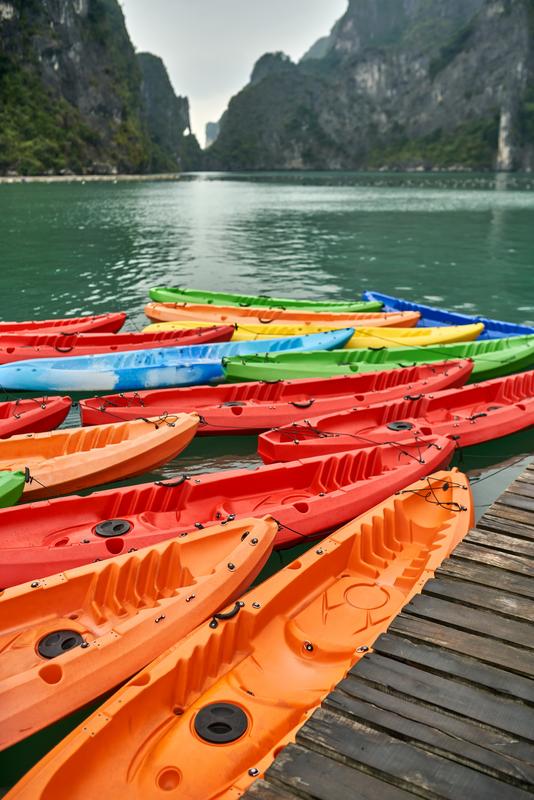
Kayaking is one of the best ways to feel the scale of the bay. You move below the cliffs instead of looking at them from a sundeck. Common kayaking and bamboo-boat areas include Luon Cave, Cua Van, Ba Ham Lake, and parts of Lan Ha Bay, depending on route and weather.

Do not treat kayaking as guaranteed. Operators may cancel it in strong wind, poor visibility, lightning, or rough water. That is a safety decision, not a customer-service failure.
Visit Cua Van Floating Cultural Center
Ha Long Bay’s floating communities are often described too simply. Some traditional fishing life remains, but many former floating-village residents have moved to the mainland, and some stops now function partly as cultural centers or tourism experiences. That does not make them fake; it means travelers should visit with respect, ask better questions, and avoid treating residents or workers as scenery.
Route 3 includes the Cua Van Floating Cultural Center, where the official itinerary notes cultural artifacts, fishing-community heritage, bamboo boat or kayaking experiences, and nearby Tien Ong Cave, Ba Ham Lake, Du Lagoon, and Ba Men Temple.
Climb or Swim at Ti Top Island
Ti Top Island is one of the most visited stops on Route 2. The official site lists a 170-meter walking path to the top and a small beach area. It is popular for a reason: the viewpoint is one of the clearest ways to understand how the karsts spread across the water.
The downside is crowding. If you dislike busy viewpoints, ask whether your cruise visits Ti Top at peak day-trip time or later in the afternoon.

For more shoreline inspiration beyond Vietnam, see our guide to beautiful beaches around the world.
Add Cat Ba National Park
Cat Ba Island is the best add-on if you want hiking, local restaurants, and a more independent base. Cat Ba National Park lists short hiking routes such as Kim Giao Forest–Ngu Lam Peak, an environmental education trail, and Trung Trang Cave, plus longer forest routes and sea-tourism options around Lan Ha Bay.
UNESCO’s Man and the Biosphere Programme describes Cat Ba as a biosphere reserve with tropical humid forests, wetlands, mangroves, coral reef ecosystem types, and rare endemic species. That is exactly why visitors should stay on trails, avoid wildlife disturbance, and choose lower-impact bay activities where possible.
Try Local Seafood and Northern Vietnamese Dishes
Seafood is the obvious choice around Ha Long Bay. Look for grilled squid, steamed clams, prawns, crab, sea snails, and cha muc, a local squid cake associated with Ha Long. You will also find broader Vietnamese staples such as pho, bun cha, fresh rolls, and banh xeo in Ha Long City, Cat Ba town, and cruise menus.

Where to Stay for Ha Long Bay
There are four sensible places to base yourself for Ha Long Bay: on a cruise, in Ha Long City or Bai Chay, on Tuan Chau Island, or on Cat Ba Island. Skip claims about “cave hotels” in Ha Long Bay unless you can verify a specific legal property; most travelers are choosing between boats, mainland hotels, and Cat Ba accommodation.
| Base | Best for | Pros | Cons |
|---|---|---|---|
| Overnight cruise | First-time visitors, couples, families, scenery-focused trips | Sleep on the water, easiest logistics, meals and activities bundled | Higher cost, fixed route, quality varies by operator |
| Ha Long City / Bai Chay | Budget travelers, families, night markets, Sun World add-ons | More hotel choices, restaurants, lower nightly rates | Less atmospheric than sleeping on the bay |
| Tuan Chau Island | Cruise convenience | Close to many departures, useful before an early cruise | Quieter at night, fewer local-feeling food options |
| Cat Ba Island | Independent travelers, hikers, Lan Ha Bay kayaking | Better for active itineraries and budget guesthouses | Extra ferry/transfer planning |
| Hanoi | Travelers with one spare day | No need to move hotels | Long day and least relaxed version of the bay |
Disclosure: Some links in this guide are affiliate links. ViaTravelers may earn a commission if you book or buy through them, at no extra cost to you. Recommendations here are based on practical fit, safety, logistics, and value.
If you are watching costs across a longer trip, pair Ha Long Bay with our guide to cheap places to travel and spend more carefully on the cruise night rather than on an unnecessary luxury hotel before or after.
Best Time to Visit Ha Long Bay
The best time to visit Ha Long Bay is usually April to May or September to November. These months tend to offer a better balance of visibility, temperature, and cruise conditions than the hottest summer stretch.
Vietnam’s official tourism site notes that Ha Long can have clear skies from September to November, mist from December to March, sunshine and breeze in April and May, and unpredictable monsoon conditions from June to August.
| Season | What to expect | Best for | Caveat |
|---|---|---|---|
| March to May | Warmer weather, spring haze clearing, good cruise conditions | First-time visitors, kayaking, photography | Late May can start feeling hot and humid |
| June to August | Hot, humid, monsoon season, higher storm risk | Travelers who can handle heat and want possible lower rates | Cruises can be delayed or canceled for safety |
| September to November | Comfortable temperatures and often clearer skies | Best all-around timing | Early September can still carry storm risk |
| December to February | Cooler, mistier, lower visibility on some days | Atmospheric photos, travelers avoiding heat | Swimming and sunbathing may be less appealing |
Weather matters more here than in many city destinations. A storm can cancel a cruise, close kayaking areas, or change the route. Build flexibility into your Vietnam itinerary if Ha Long Bay is a priority.
How to Choose a Ha Long Bay Cruise
Price matters, but it should not be the first filter. A cheap cruise that uses a crowded route, vague inclusions, poor communication, or weak safety practices can cost more in frustration than it saves.
- Route: Ask for the exact route number or bay area, not just “Ha Long Bay cruise.”
- Port: Confirm whether departure is from Tuan Chau, Ha Long International Cruise Port, Cat Ba, or another pier.
- Boat size: Smaller boats can feel calmer; larger boats may have more facilities.
- Cabin: Check whether your room has a private bathroom, real window, balcony, air conditioning, and quiet location away from engines or karaoke.
- Inclusions: Confirm meals, entrance fees, transfer, kayaking, bamboo boat, drinking water, and guide.
- Weather policy: Ask what happens if the port authority cancels departures or changes the route.
- Safety: Look for a safety briefing, accessible life jackets, licensed boat, clear emergency procedures, and good recent reviews.
- Responsible travel: Favor operators that limit single-use plastic, manage waste properly, avoid wildlife disturbance, and respect local communities.
A practical rule: if an operator cannot clearly explain the route, port, cancellation policy, and what is included, choose another operator.
Suggested Ha Long Bay Itineraries
One-Day Ha Long Bay Trip from Hanoi
Leave Hanoi early, board a day cruise, eat lunch onboard, visit one cave or island stop, cruise past the main karsts, then return to Hanoi at night. This is the fastest way to see the bay, but it is the least relaxed.
Best for: Travelers who cannot spare an overnight.
Skip it if: Ha Long Bay is one of your top Vietnam priorities.
Two Days and One Night: Best First-Time Plan
Transfer from Hanoi in the morning, board around midday, cruise through the bay, kayak or visit a cave in the afternoon, watch sunset from deck, sleep onboard, then wake for sunrise and a final activity before returning to port.
Best for: Most first-time visitors, couples, families, and travelers who want the classic experience without spending three days.
Three Days and Two Nights: Best for Quieter Routes
A 3-day cruise gives the operator more room to reach less-busy areas, add deeper kayaking, or include Lan Ha Bay, Bai Tu Long Bay, Cat Ba, or Cua Van depending on route. It is a better fit if you dislike rushed itineraries.
Best for: Slow travelers, photographers, honeymooners, and anyone who wants more than the standard cave-and-viewpoint loop.
Cat Ba Island Add-On
Spend one or two nights on Cat Ba Island after your cruise, or use Cat Ba as your base for Lan Ha Bay. Add Cat Ba National Park, Trung Trang Cave, local seafood, and a Lan Ha Bay kayak trip.
Best for: Independent travelers, hikers, and budget-conscious visitors who want flexibility.
What to Pack for Ha Long Bay
Pack for sun, humidity, wet boat transfers, and changing weather. Even if you are booking a comfortable cruise, you will likely climb steps, board tenders, visit caves, and move between slippery surfaces.

- Water-resistant sunscreen
- Sunglasses and a brimmed hat
- Mosquito repellent, especially if staying on Cat Ba or near mangroves
- Comfortable walking shoes for caves and viewpoints
- Swimsuit and quick-dry clothing
- Light rain layer or packable raincoat, especially from June to August
- Portable battery pack
- Dry bag or waterproof phone pouch for kayaking and tender transfers
- Passport or passport copy, depending on your operator’s boarding requirements
- Small cash for drinks, tips, snacks, and port-area purchases
Safety and Responsible Travel
Ha Long Bay is a major tourism destination, but water safety deserves serious attention. Storms can arrive quickly, especially in summer. In July 2025, Reuters reported that a sudden thunderstorm capsized a tourist boat in Ha Long Bay, killing dozens of people. The point is not to scare travelers away; it is to make weather and operator quality part of the booking decision.
- Choose a licensed operator with recent, detailed reviews.
- Pay attention during the safety briefing.
- Know where your life jacket is and wear one during kayaking or small-boat transfers.
- Do not pressure crew to run kayaking, swimming, or tender transfers during unsafe weather.
- Confirm the operator’s cancellation and refund policy before paying.
- Avoid jumping from boats unless the crew explicitly approves the location and conditions.
Responsible travel also matters. UNESCO has expressed concern about development pressure around Ha Long Bay, and Reuters reported in 2024 that UNESCO planned to assess possible conservation risks from development projects. Travelers can help by choosing better-run operators, refusing litter, carrying a refillable bottle where possible, and avoiding activities that disturb wildlife or local communities.
Is Ha Long Bay Worth Visiting?
Ha Long Bay is worth visiting if you choose the right format. It may disappoint travelers who book the cheapest day trip, expect empty water, or ignore the weather. It usually rewards travelers who spend one night onboard, choose the route carefully, and treat the bay as a landscape to experience slowly rather than a box to check.
The most honest version is this: Ha Long Bay is popular, commercial, and still extraordinary. The better your route choice, the more you will notice the second part.
FAQs
How many days should I spend in Ha Long Bay?
Spend 2 days and 1 night if this is your first visit. A day trip from Hanoi works for tight schedules, but it feels rushed. Choose 3 days and 2 nights if you want more kayaking, quieter routes, or time around Lan Ha Bay, Bai Tu Long Bay, or Cat Ba Island.
What is the best month to visit Ha Long Bay?
April, May, October, and November are usually among the best months for Ha Long Bay. September can be good but may still carry storm risk early in the month. December to March can be misty and atmospheric, while June to August is hotter, wetter, and more prone to weather disruptions.
Is a Ha Long Bay day trip from Hanoi worth it?
A Ha Long Bay day trip from Hanoi is worth it only if you have no overnight time. You will see the scenery, but you will spend a large part of the day in transit. A 2-day, 1-night cruise is a better value for most first-time visitors.
Which is better: Ha Long Bay, Lan Ha Bay, or Bai Tu Long Bay?
Central Ha Long Bay is best for the classic cave-and-island route. Lan Ha Bay is better for Cat Ba Island, kayaking, and active trips. Bai Tu Long Bay is usually better for travelers who want a quieter cruise and are comfortable with fewer departure options.
Are Ha Long Bay cruises safe?
Most licensed cruises operate normally, but safety depends on weather, operator standards, and passenger behavior. Book a reputable operator, check the weather policy, listen to the safety briefing, wear life jackets during water activities, and accept route changes or cancellations when conditions are unsafe.
Can you swim in Ha Long Bay?
Swimming is possible only in approved areas and when conditions allow. Common swim stops may include Ti Top Island, Soi Sim, or beach areas on Lan Ha Bay routes, depending on cruise route and weather. Do not swim from the boat unless the crew says it is safe.
Do I need to book Ha Long Bay in advance?
Book ahead if you want a specific boat, cabin type, route, or travel date. Advance booking is especially useful during weekends, public holidays, October to April, and peak international travel periods. Last-minute options exist, but route and quality choices may be weaker.
Do I need my passport for a Ha Long Bay cruise?
Most cruise operators ask for passport details or a passport copy for registration. Requirements can vary by operator and itinerary, so confirm before leaving Hanoi. Keep your passport accessible, not buried in checked luggage.
Final Thoughts
Ha Long Bay is not a place to book blindly. Choose the right month, the right bay area, and a cruise operator that clearly explains its route and safety policy. If you have the time and budget, spend one night on the water. If you want more independence, add Cat Ba Island. If you only have one day, still go, but keep your expectations realistic.
For more nature-heavy trip ideas, see our guides to the most beautiful places in the world and other cave landscapes such as Phraya Nakhon Cave.
For more practical destination planning, subscribe to the ViaTravelers newsletter.
Related resources