A natural arch is a rock opening that passes all the way through a formation and was created by erosion, weathering, or other natural processes. Some are quick roadside stops. Others require a difficult hike, a boat, or careful timing around tides and seasonal access.
This guide compares 15 of the world’s most memorable natural arches by scenery, access, and trip value. It also separates natural arches from natural bridges, a distinction that is often blurred in popular travel writing.
Quick answer: Delicate Arch is the most recognizable hike on this list, the Windows Section is the easiest place to see several major arches in one stop, Durdle Door is the best-known coastal example, and Rainbow Bridge is one of the world’s largest natural bridges—but current access is highly restricted and must be checked before a trip.
The American Southwest’s arches cluster inside some of the best national parks in America, led by Arches and Canyonlands.
| Best for | Formation | Location | Access reality |
|---|---|---|---|
| Iconic hike | Delicate Arch | Utah, United States | 3-mile round trip with 480 feet of climbing; exposed and hot in summer |
| Easy cluster | North and South Windows | Utah, United States | Short walks from a paved road and parking area |
| Coastal scenery | Durdle Door | Dorset, England | Steep walking route; beach and sea conditions matter |
| River adventure | Pont d’Arc | Ardèche, France | Road viewpoints plus paddling and swimming options |
| City-adjacent landmark | Elephant Trunk Hill | Guilin, China | Developed visitor attraction near central Guilin |
| Remote natural bridge | Rainbow Bridge | Utah, United States | Not road-accessible; current boat access is unavailable and overland access requires a permit |
Natural arch vs. natural bridge
Both terms describe a natural rock span. Geologists and park agencies often use natural bridge when running water played a major role in creating the opening, while natural arch is the broader term. The names are not applied consistently, so a formation called a bridge may still appear in a general guide to arches. State the official name and formation type rather than claiming that one example is definitively the world’s largest.
Most Beautiful Natural Arches in the World
1. Rainbow Bridge, Utah
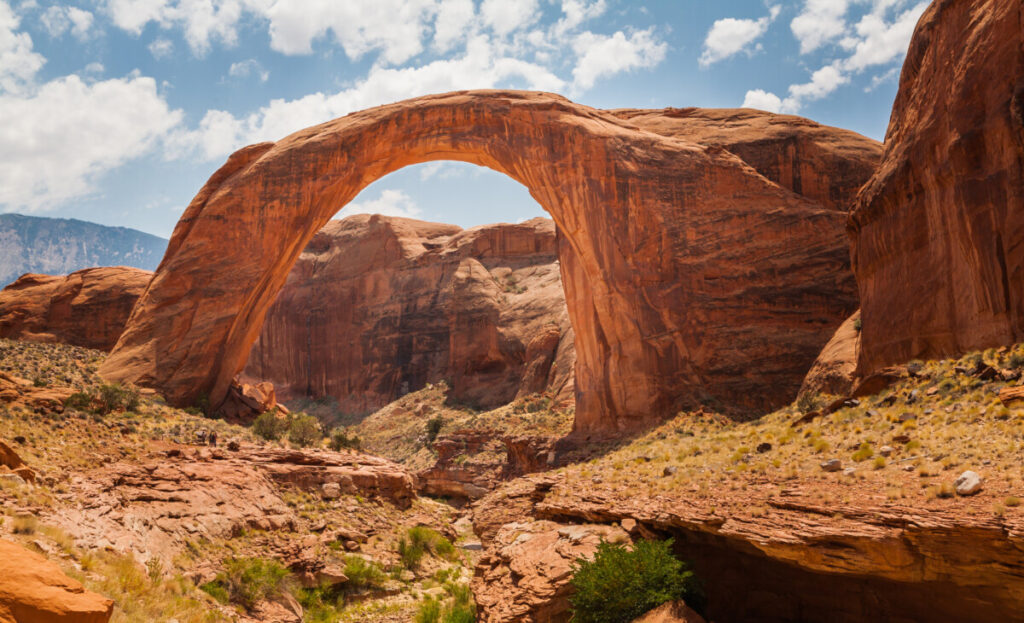
Rainbow Bridge is one of the world’s largest known natural bridges and a place of deep cultural importance to neighboring Native nations. It is not road-accessible. The National Park Service says visitors normally reach it by boat on Lake Powell or by an approximately 14-mile overland hike around Navajo Mountain, which requires a Navajo Nation permit.
Access changes with Lake Powell’s water level. As of the National Park Service update dated May 29, 2026, Rainbow Bridge National Monument was inaccessible by boat. Verify the current NPS alert and access page before treating it as an achievable stop on a Southwest itinerary.
See Related: Best Places to Visit in Utah & Things To Do
2. Elephant Trunk Hill, China
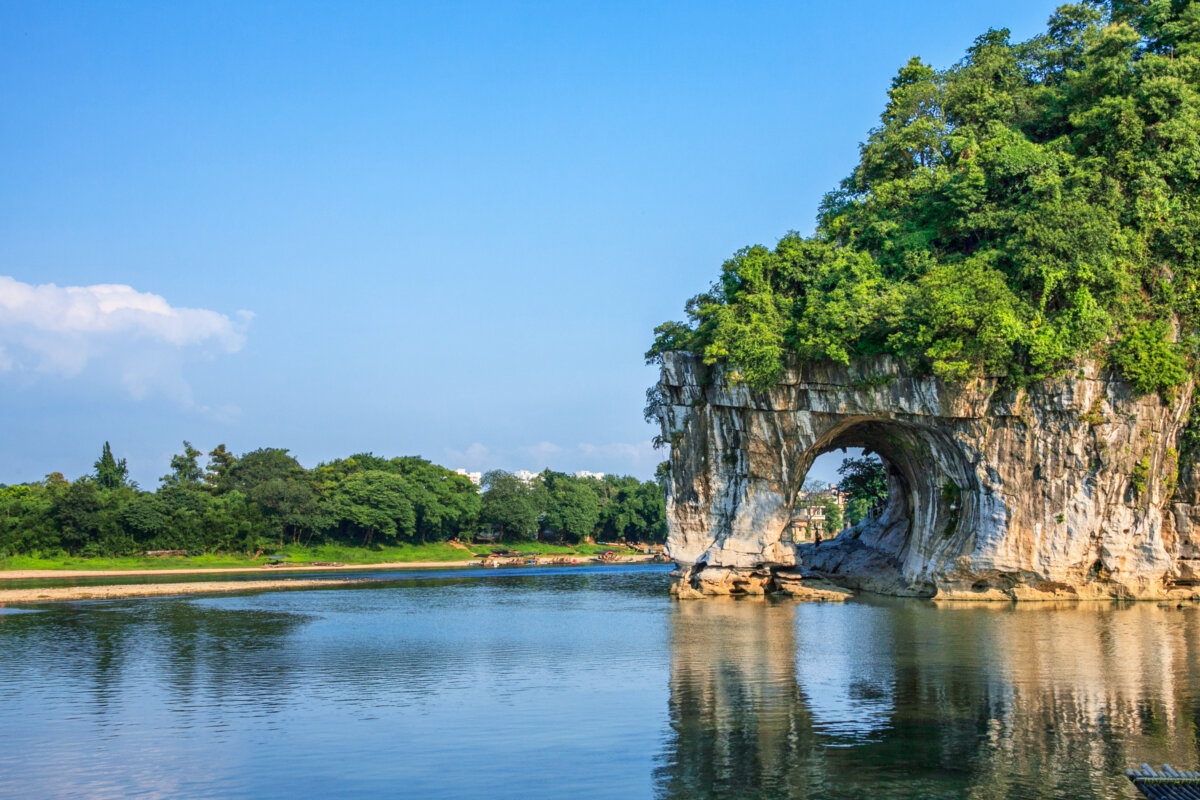
It would be a crying shame not to mention Elephant Trunk Hill in our list of top-tier natural arches worldwide. Located in Guilin, China, this unique landscape arch gives the look of an elephant and a bright full moon from the water from a distance.
Hire a local guide to travel through the arch by boat, creating a truly unique experience. Elephant Trunk Hill is accompanied by other beautiful attractions like the illuminated Reed Flute Cave, a Ming Dynast Mansion, and unbeatable views of Guilin from atop Elephant Hill’s Peak.
3. Durdle Door, U.K.
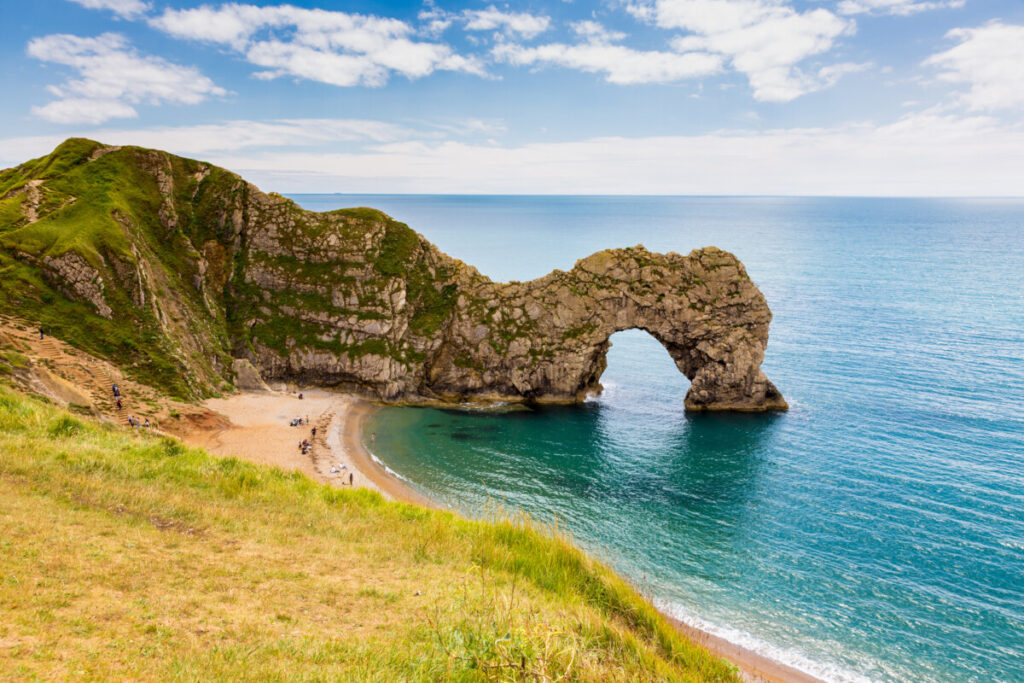
Unlike many other natural arches, Durdle Door in the United Kingdom is privately owned. Located on the Jurassic Coast, near Lulworth in Dorset, its name refers to its appearance of being drilled out from the rock.
The trail to access the beach can sometimes be steep and slippery, so you might prefer keeping your comfy walking shoes on to get down instead of flimsy flip-flops. Take extra precautions if you dip in one of the two sheltered bays here. No lifeguards are on duty, and rip tides and strong currents are prevalent here.
Durdle door is free to visit, but parking fees apply if you drive in. All-day parking (up until 9 p.m.) costs $15, and you can expect to pay just shy of $8 for up to 4 hours. You can use the JustPark app to pay or use the pay-on-arrival machine with your card.
See Related: Best Things to Do in England & Places to Visit
4. Delicate Arch, Utah

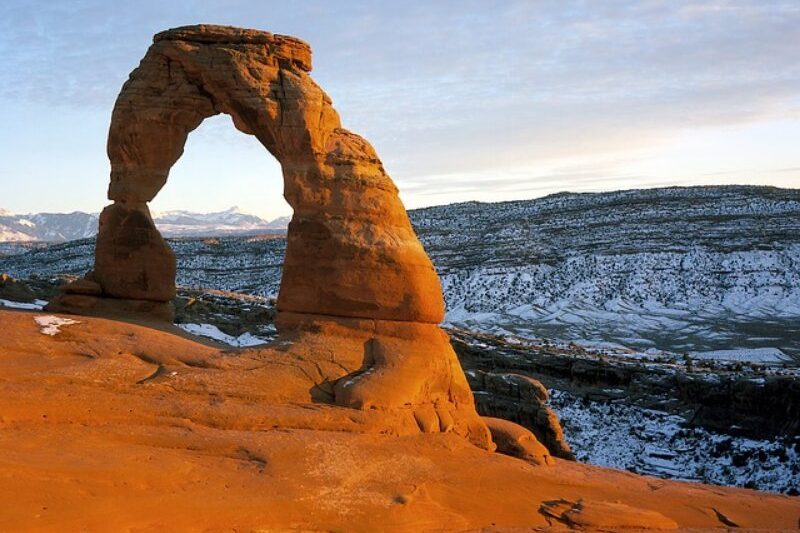
Delicate Arch is Utah’s best-known rock formation and one of the most recognizable natural arches in the world. The close-up trail is 3 miles round trip and climbs 480 feet across open slickrock with little shade. A much shorter lower viewpoint provides a distant view, while the upper viewpoint requires a steeper half-mile walk.
Start early in warm weather, carry more water than you expect to need, and do not present the main trail as an easy 2.5-mile stroll. Sunset is popular, but parking and crowding can materially change the experience.
5. Arco Naturale, Capri, Italy

Located off the island of Capri, Italy, this natural arch is considered the remains of a collapsed cavern. Its sheer bulk makes it undeniably unique.
Many arches are delicate and slender if they are above the waterline, but not Arco Naturale! With rocky points jutting out of the top of it, it looks like someone bore a hole right through the mountainside of the island.
Accessing the arch involves a reasonably short walk from the Villa Jovis, down Via Tiberio and Via Matermània. Paved local restaurants are nearby, offering Capri-inspired cuisine at prices as impressive as the view you get from your table.
See Related: Day Trip to Capri
6. Hvítserkur, Iceland

Hvítserkur (the Troll of Northwest Iceland) is a basalt rock protruding from the sea at 15 m tall. Local folklore depicts Hvítserkur as an old troll once filled with an undying determination to rip down the Þingeyraklaustur convent bells. Filled with rage, Hvítserkur failed to notice the rising sun and fell to a petrified fate for eternity.
Of course, the scientific background involves many years of sea erosion in today’s basalt rock crafting. The name Hvítserkur means “white shirt”. There is no admission to see Hvítserkur, but it does require a lengthy drive down a rugged terrain to get a glimpse of this formation.
See Related: An Arctic Traveler’s Guide to the Best Time to Visit Iceland
7. Étretat, France
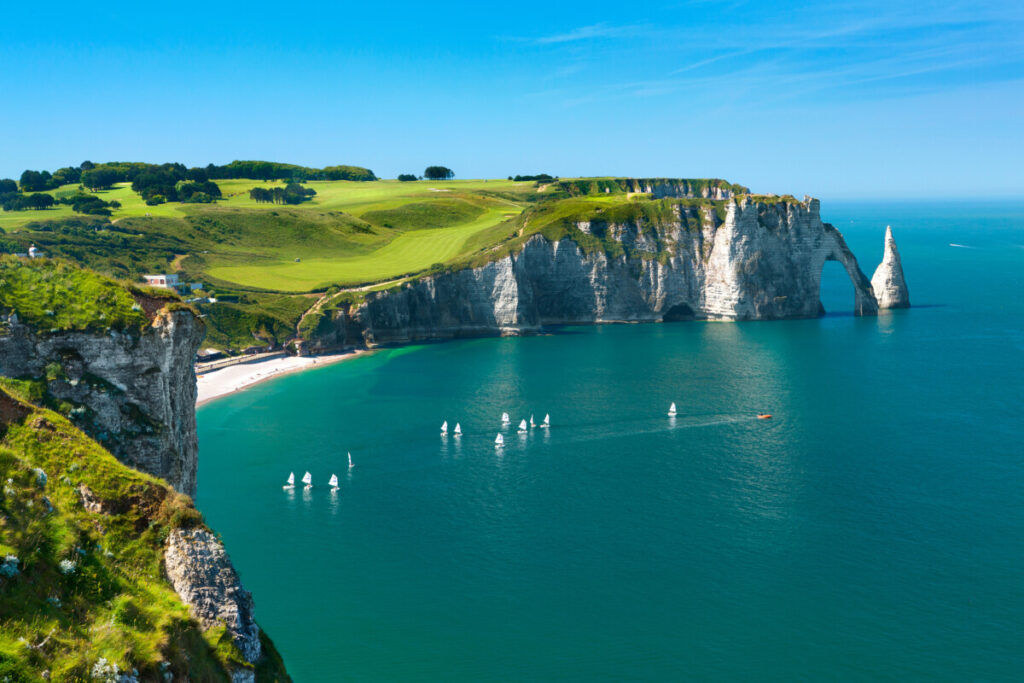
Famous for its cliffs, Etretat, France, has three unique arches. However, the most widely visited and known natural arch is called the “Manneporte.”
Featured in a painting by Claude Monet, Manneporte juts out into the sea from the end of its supporting cliff. The other two arches, Porte d’Aval and Porte d’Amont, can be seen from Etretat.
It’s easy to hike along the cliffs of Etretat, made even easier by the sophistication of the accompanying resorts. Manneporte is also accessible by boat, though the waters around the cliffs can sometimes be choppy and dangerous.
8. North Window, Utah

The North Window is one of several natural rock arches on a looping trail in Arches National Park. The trailhead is easily accessible and unrestricted. Get that Instagram-perfect shot standing underneath this colossal rock arch, with spectacular panoramic beauty surrounding you.
Expect to spend around three hours to visit the North Window. If visiting on a particularly hot day, visit as early as possible to beat the mid-day heat for the Delicate Arch hike.
See Related: Where to Stay in Utah to Visit National Parks
9. Pont d’Arc, France
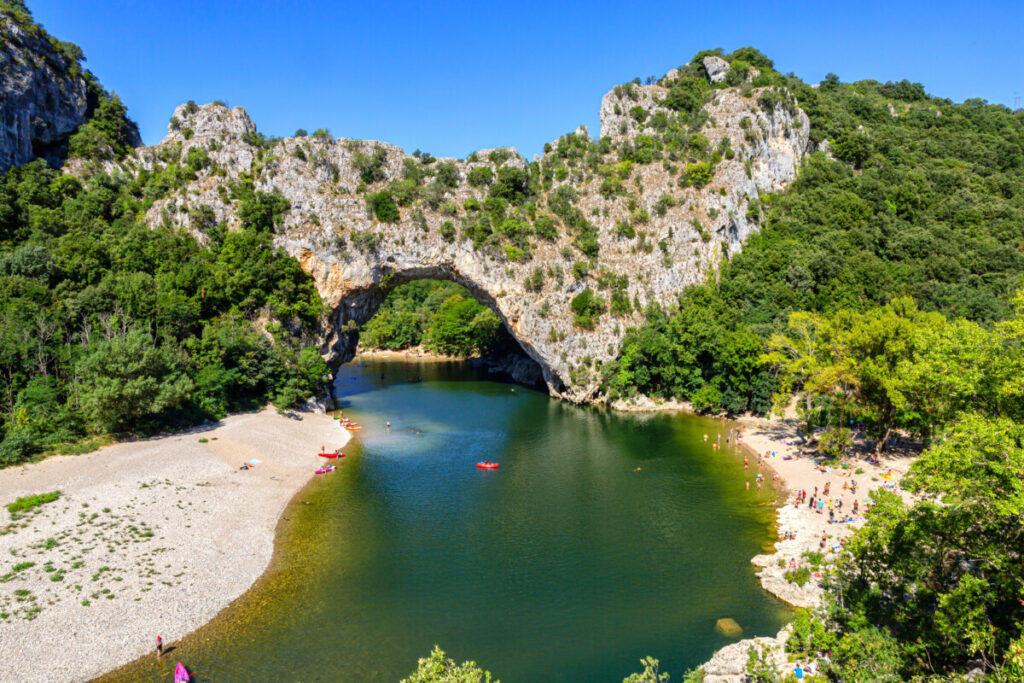
Stretching over the Ardeche River of the Rhone-Alpes is another beauty of a natural arch, Pont d’Arc, in the South of France. Standing as a dramatic entrance to the gorges de l’ardeche, Pont d’Arc towers 50 m high and 60 m wide.
The arch is a popular tourist attraction with two small river beaches on either side. Visitors can enjoy lounging around with lush greenery surrounding them or head into the water for a bit of a paddle or explore via kayak.
Set your sights around Vallon Pont d’Arc to visit the area. Four-star Rives d’Arc is just over 3km away from the arch. The hotel provides convenient access to the Ardeche River for idyllic summers, where you can explore the arch and its surroundings by day and then enjoy the lively and welcoming town by night.
10. Natural Bridges State Beach, California

Natural Bridges State Beach is not too far from Santa Cruz. A pass to access the beach costs a fee, but you get access to many great fun activities for the whole family.
There is a guided tour around the tide pools, a picnic area, and a visitors’ station, to name a few. So many graceful Monarch butterflies often surround the natural arch that the area has been listed as a Monarch Preserve! The arch is a monolith, jutting out from the ocean; a trip here is the perfect day trip for everyone!
See Related: Things to Do in Santa Cruz, California
11. El Arco de Cabo San Lucas, Mexico

When visiting Mexico, you’ll want to visit the white-washed beaches of El Arco de Cabo in San Lucas. These beaches feature a must-see, iconic landscape arch. You’ll see the incredible rock formations and enjoy the area’s top-tier snorkeling and scuba diving activities.
El Arco juts out from the land, stretching out the tip of the Baja Peninsula, where the Sea of Cortez and the Pacific Ocean meet. Commercial sunset cruises are readily available to experience the majesty of this unique vista. At low tide, it is a wonderful experience to step off the boat at Lover’s Beach and enjoy the area.
12. Perce Rock, Canada
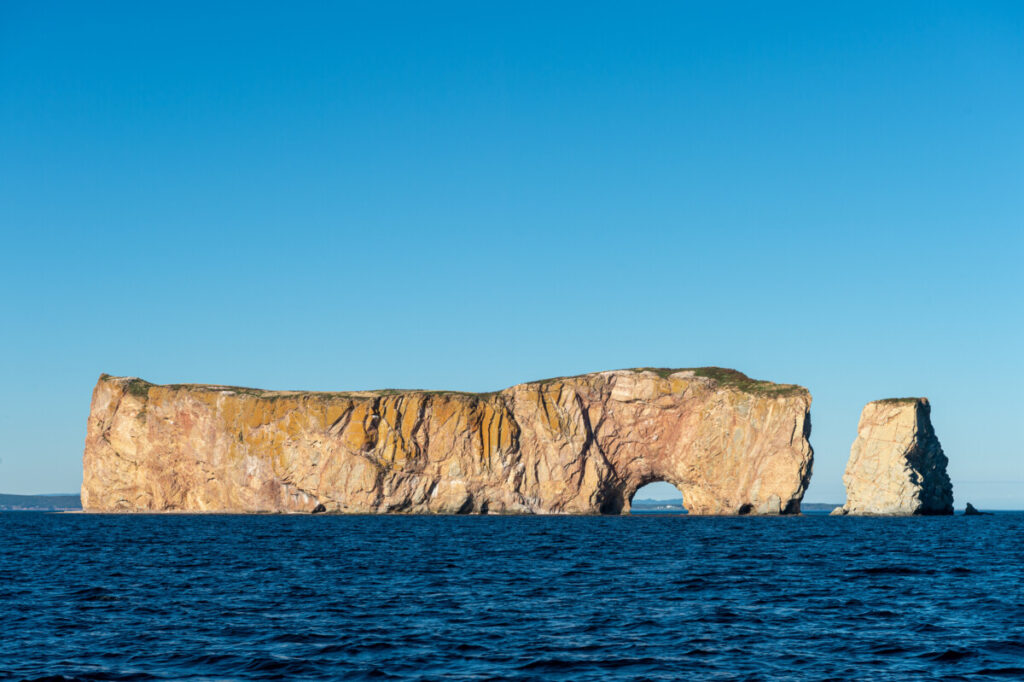
Perce Rock is one of the largest arches immersed in water in Quebec. Many describe seeing Perce Rock as a ship getting ready to set sail.
Made from limestone, it also acts as a nature preserve for many local birds that call the Perce area home. It weighs nearly 5 million tons and juts majestically out into the Gulf of St. Lawrence.
One of the great activities accompanying a trip out to see Perce Rock is climbing up the lighthouses and getting pictures of the fantastic countryside. During low tide, getting out and exploring the area for a few hours is possible.
13. Ear of the Wind Arch, Arizona
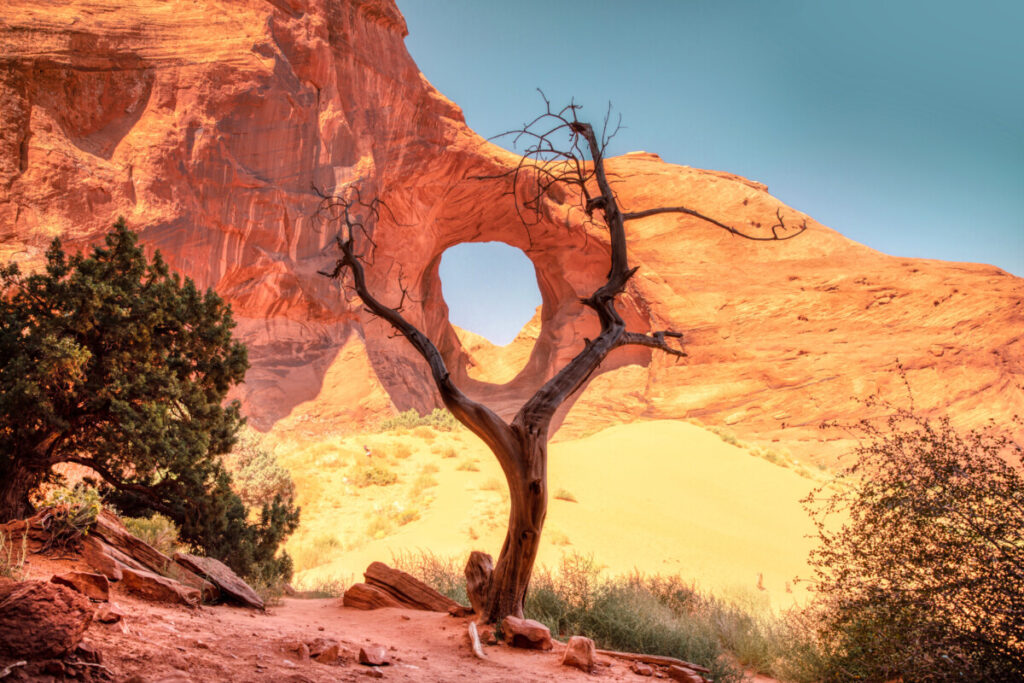
Ear of the Wind Arch is one of Monument Valley’s best examples of a pothole arch. However, it is also one of the more difficult arches to get to, given its remote location in Central Monument Valley, away from the self-guided loop drive. So, you’ll need a Navajo guide to visit.
This natural wonder stands 40 m tall and was created from chemical weathering over the years. It is one of the best times to see it in the off-season. On your trek, watch out for desert wildlife that might be sunning themselves.
14. London Bridge, Australia

Located in Port Campbell National Park, the London Bridge Arch is a miniature example of what Perce Rock is for Canada. Unfortunately, the double-arch natural bridge collapsed in 1990.
But the area is still stunning and most definitely worth a visit. Several arch-view paths are easy to hike within the park, though the primary path does have a bit of a drop at the end.
Take a scenic drive along the Great Ocean Road during your visit for one of the best drives you’ve ever had! I picked up my hire car from Melbourne Airport and made it straight for Torquay, which marks the beginning of this epic road trip.
I stretched out my drive to three days, although two is plenty to visit most of the area’s beautiful beaches, hiking trails, and the London Arch!
15. Wied il-Mielaħ Window, Gozo, Malta

Gozo’s famous Azure Window collapsed during a storm in 2017 and should not be listed as a standing natural arch. Replace it with the Wied il-Mielaħ Window, a limestone sea arch on Gozo’s northwest coast that can be approached by road and viewed from the cliffs or from the water when conditions permit.
The Azure Window is now an underwater dive site near Dwejra after its collapse in 2017.
How to choose which natural arch to visit
Choose by the experience around the formation, not the photograph alone:
- For a short scenic stop: North Window, Elephant Trunk Hill, or a roadside coastal viewpoint.
- For a destination hike: Delicate Arch or Landscape Arch.
- For a beach day: Durdle Door or Natural Bridges State Beach, subject to local conditions.
- For paddling: Pont d’Arc or El Arco, using a reputable local operator.
- For a remote expedition: Rainbow Bridge only after confirming legal and physical access.
Before publishing, add one practical line to every entry: nearest base, access method, typical time needed, and the official conditions page readers should check.
FAQs
What is the difference between a natural arch and a natural bridge?
Both are natural rock spans. “Natural bridge” is commonly used when flowing water contributed substantially to the opening, while “natural arch” is the broader term. Naming conventions vary.
What is the most famous natural arch in the world?
Delicate Arch in Utah is one of the most recognizable because of its isolated shape, accessible national-park setting, and frequent use in photography and tourism imagery.
Is Rainbow Bridge the world’s largest natural arch?
No single claim is reliable without defining height, span, thickness, and formation type. The National Park Service describes Rainbow Bridge as one of the world’s largest known natural bridges.
Does the Azure Window in Malta still exist?
No. The Azure Window collapsed in 2017. Its remains are now an underwater dive site near Dwejra on Gozo.
Related Resources