Berlin’s most famous landmarks trace the city’s transformation from a Prussian capital through dictatorship, wartime destruction, Cold War division, and reunification. For a first visit, prioritize the Brandenburg Gate, Reichstag Building, Memorial to the Murdered Jews of Europe, Berlin Wall Memorial, East Side Gallery, Museum Island, Berlin Cathedral, and Berlin TV Tower.
Many of these places are free and close enough to combine on foot. Others require timed tickets or advance registration. The list below explains what each landmark represents, how long to allow, and the practical details that can determine whether a visit goes smoothly.
For neighborhood advice, public transportation basics, seasonal planning, and more itinerary ideas, use this article alongside our complete Berlin travel guide.
Visitor-information note: Opening hours, prices, closure status, and reservation requirements were checked against official sources on July 22, 2026. Recheck ticketed attractions before traveling because temporary closures and prices can change.
Disclosure: ViaTravelers may earn a commission when you book through selected tour or accommodation links. This does not affect the price you pay or the editorial criteria used in this guide.
Key takeaways
- Best first-time sightseeing cluster: Reichstag Building, Brandenburg Gate, and the Memorial to the Murdered Jews of Europe.
- Best place to understand the Berlin Wall: Berlin Wall Memorial on Bernauer Strasse. East Side Gallery is strongest for art, while Checkpoint Charlie is a symbolic but heavily reconstructed site.
- Reservation to make first: The Reichstag dome. Admission is free, but advance registration is required.
- Major closure: The Pergamonmuseum is completely closed. A large section is scheduled to reopen on June 4, 2027.
- Best free landmarks: Brandenburg Gate, Holocaust Memorial, Berlin Wall Memorial, East Side Gallery, Kaiser Wilhelm Memorial Church, Topography of Terror, and the Soviet War Memorial in Treptower Park.
- Important access limitation: The Berlin TV Tower and Victory Column viewing platforms are not barrier-free.
Berlin landmarks at a glance
| Landmark | Best for | Current cost or status | Suggested time |
|---|---|---|---|
| Brandenburg Gate | Berlin’s defining symbol | Free; accessible at all times | 20–30 minutes |
| Reichstag Building | Architecture, government, city views | Free; advance registration required | 60–90 minutes |
| Holocaust Memorial | Remembrance and historical context | Free; Field of Stelae open 24 hours | 45–90 minutes |
| Berlin Wall Memorial | Detailed Cold War history | Free; outdoor grounds 8 a.m.–10 p.m. | 60–90 minutes |
| East Side Gallery | Berlin Wall murals and photography | Free; open around the clock | 45–60 minutes |
| Checkpoint Charlie | Cold War orientation | Exterior free; current structures are replicas | 20–30 minutes |
| Museum Island | Art, archaeology, and architecture | Individual museums €12–€14; island ticket €24; most closed Monday | Half or full day |
| Berlin Cathedral | Imperial architecture, crypt, dome views | Standard admission €15 | 60–90 minutes |
| Pergamonmuseum and Panorama | Major archaeological collections | Museum closed; Panorama €14 and closed Monday | 60–90 minutes |
| Berlin TV Tower | High panoramic views | Adults from €28.50; timed entry | 60–90 minutes |
| Gendarmenmarkt | Formal city architecture | Square free; individual attractions vary | 30–60 minutes |
| Charlottenburg Palace | Prussian royal history and gardens | Combined ticket €19; palace closed Monday; garden free | 2–4 hours |
| Kaiser Wilhelm Memorial Church | War damage and reconciliation | Free; donations welcome | 30–45 minutes |
| Victory Column | Tiergarten views | €4.50 cash; 285 stairs | 45–60 minutes |
| Topography of Terror | Nazi institutions and persecution | Free; daily 10 a.m.–8 p.m. | 90–120 minutes |
| Humboldt Forum | Global collections and Berlin Palace architecture | Some areas free; day ticket €14; closed Tuesday | 90 minutes–3 hours |
| Soviet War Memorial | Battle of Berlin remembrance | Free; located in a public park | 45–90 minutes |
| Berlin Zoological Garden | Families, historic zoo architecture | Dynamic adult prices from €16 online | 3–5 hours |
18 famous Berlin landmarks
1. Brandenburg Gate
Address: Pariser Platz, 10117 Berlin
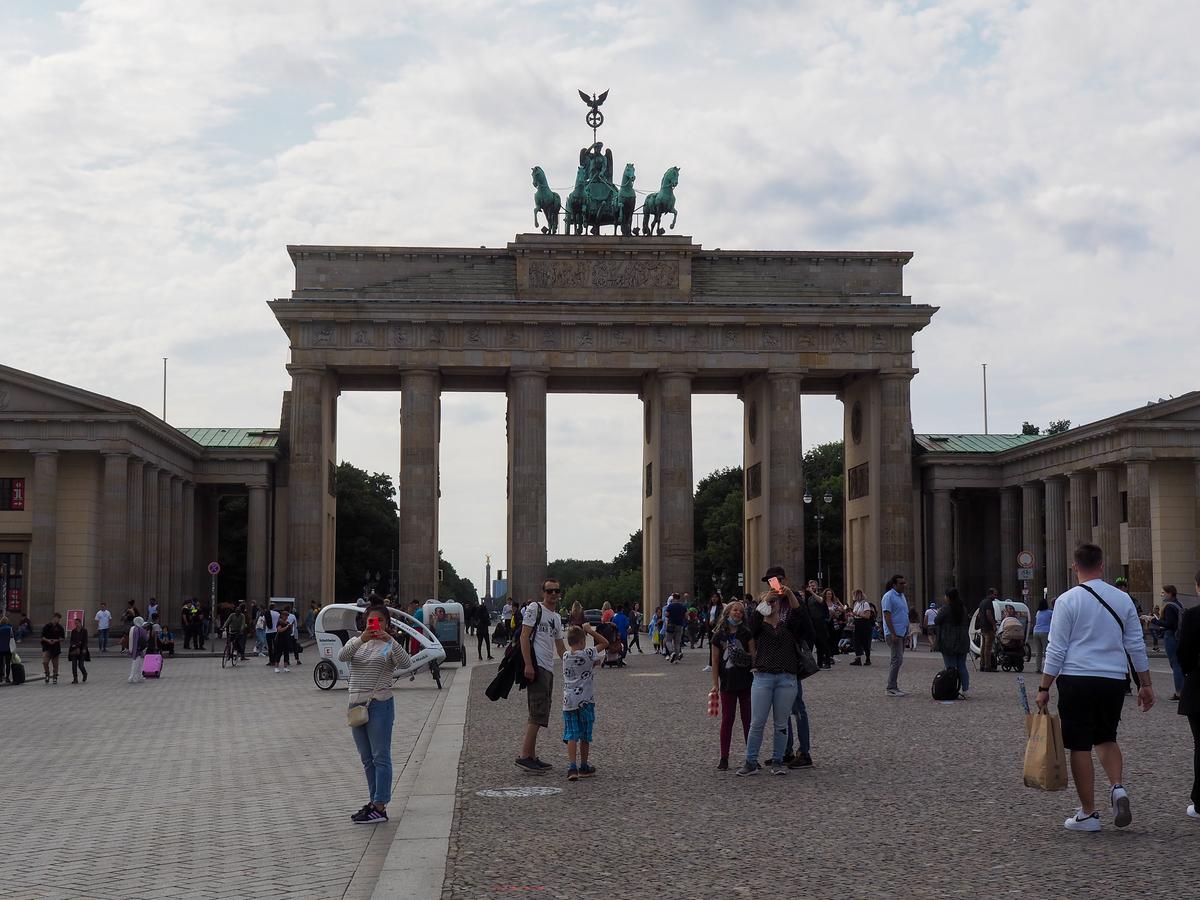
The Brandenburg Gate is Berlin’s clearest visual symbol and the logical place to begin a first sightseeing route. King Frederick William II commissioned the neoclassical sandstone gate, which was built between 1788 and 1791 from plans by Carl Gotthard Langhans. The Quadriga was placed above it in 1793.
The gate was not physically part of the Berlin Wall. After the Wall went up in 1961, however, it stood inside the restricted border zone and was inaccessible to ordinary residents on both sides. That location gave the gate its later role as a symbol of division and, after 1989, German reunification.
Plan your visit: The monument is free, barrier-free, and accessible at any time. Arrive early for a quieter Pariser Platz or return after dark when the gate is illuminated. The Brandenburg Gate S-Bahn and U-Bahn station is immediately nearby. Confirm current city information on the official Berlin visitor page.
2. Reichstag Building and glass dome

Address: Platz der Republik 1, 11011 Berlin
The Reichstag Building is the meeting place of Germany’s federal parliament, the Bundestag. The original building was constructed between 1884 and 1894. It survived the 1933 Reichstag fire but was severely damaged during World War II. Architect Norman Foster led the post-reunification redesign, and the restored building became the Bundestag’s home in 1999.
Foster’s glass dome places visitors above the parliamentary chamber. Its spiral ramps provide views across the government district while natural light reaches the debating chamber below. The design makes democratic transparency a visible architectural idea rather than merely a decorative claim.
Plan your visit: Dome and roof-terrace admission is free, but advance registration through the Bundestag is required. Each participant must submit a full name and date of birth. Bring the original official photo identification associated with the booking. Maintenance and parliamentary operations can close the dome, so check the official closure calendar before finalizing the day.
3. Memorial to the Murdered Jews of Europe

Address: Cora-Berliner-Strasse 1, 10117 Berlin
Germany’s central Holocaust memorial stands one block south of the Brandenburg Gate. Designed by architect Peter Eisenman and officially opened in 2005, the memorial consists of 2,711 concrete stelae arranged across uneven ground.
The shifting heights, narrow passages, and changing sightlines create an intentionally unsettling physical experience. Avoid reducing the design to one definitive symbolic explanation; the memorial is deliberately open to reflection. The underground Information Centre provides the essential historical and personal context through family histories, places, documents, and individual biographies.
Plan your visit: The Field of Stelae is free and open 24 hours a day. The Information Centre is generally open Tuesday through Sunday from 10 a.m. to 6 p.m., with a security check at entry. Allow approximately one hour for the exhibition. Treat the site as a place of remembrance rather than a backdrop for staged or playful photographs. Review current information on the memorial foundation’s website.
4. Berlin Wall Memorial

Address: Documentation Center at Bernauer Strasse 111; Visitor Center at Bernauer Strasse 119, 13355 Berlin
The Berlin Wall Memorial is the strongest place in the city to understand how the border system actually worked. Its outdoor exhibition extends for 1.4 kilometers along Bernauer Strasse and incorporates preserved Wall sections, the former border strip, foundations, escape-tunnel locations, a watchtower, and the Chapel of Reconciliation.
Unlike Checkpoint Charlie, the memorial preserves both physical evidence and the stories of residents whose homes, streets, and families were divided. An observation platform at the Documentation Center provides a clear view across the reconstructed border zone.
Plan your visit: Admission is free. The outdoor grounds are open daily from 8 a.m. to 10 p.m.; the Visitor Center and Documentation Center are normally open Tuesday through Sunday from 10 a.m. to 6 p.m. The core visitor buildings are barrier-free, and most of the outdoor route is accessible. Check the Berlin Wall Foundation visitor information before traveling.
5. East Side Gallery
Address: Mühlenstrasse, 10243 Berlin
The East Side Gallery occupies the longest surviving section of the Berlin Wall. After the border opened, 118 artists from 21 countries transformed approximately 1.3 kilometers of the former Wall into an open-air gallery. The murals address freedom, political change, violence, hope, and the experience of reunification.
This is a different experience from the Berlin Wall Memorial. Bernauer Strasse explains the mechanics and human cost of the border; East Side Gallery shows how artists responded to its fall. Seeing both gives a more complete understanding than substituting one for the other.
Plan your visit: The gallery is free and open around the clock. The visitor information center at Mühlenstrasse 73 is normally open daily from 10 a.m. to 5 p.m. Begin near Ostbahnhof and walk toward Oberbaum Bridge, or reverse the route if you want to finish near public transportation and restaurants in Friedrichshain. Current information is available from the Berlin Wall Foundation.
6. Checkpoint Charlie
Address: Friedrichstrasse 43–45, 10117 Berlin
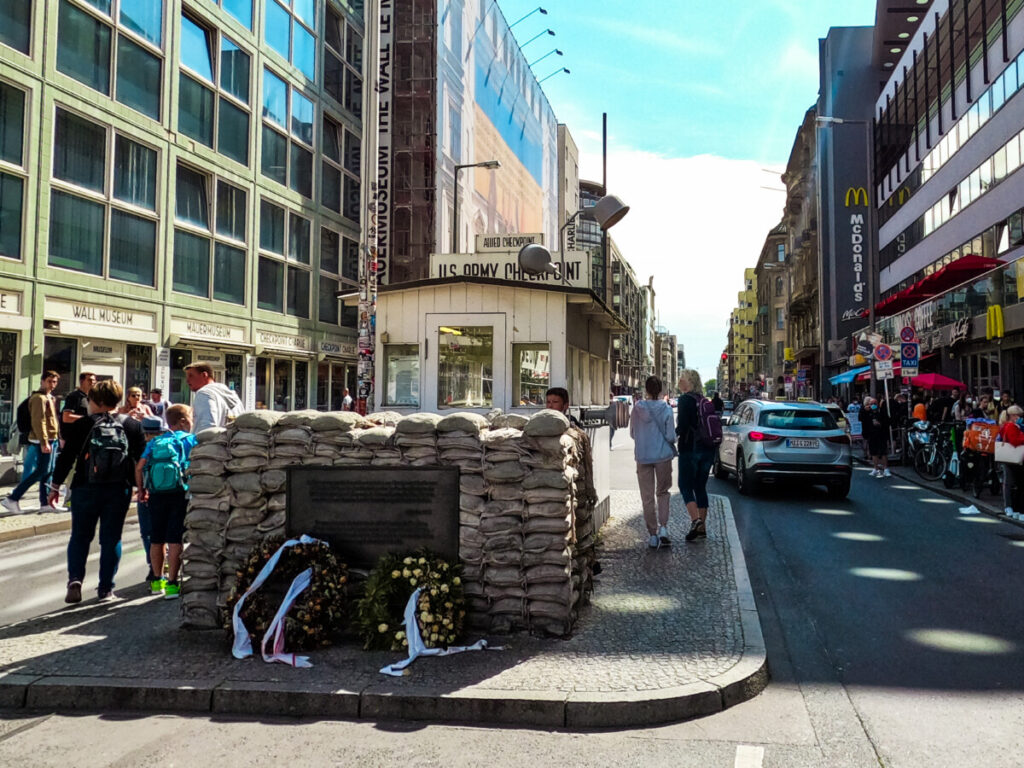
Checkpoint Charlie was the best-known Allied crossing between East and West Berlin. In October 1961, American and Soviet tanks faced one another here during one of the Cold War’s most dangerous confrontations.
The location is historically authentic, but the guardhouse, barriers, flags, and sandbags seen today are reconstructions or replicas. The original Wall and border installations were removed after reunification. That distinction matters: the site is useful as a geographic reference point, but the Berlin Wall Memorial provides a more complete surviving border landscape.
Plan your visit: The street display is free and visible at any time. Visit early to avoid the largest crowds, then walk about ten minutes to Topography of Terror. The nearby Wall Museum is separately operated and ticketed. The official Berlin page provides additional historical background.
7. Museum Island

Address: Bodestrasse 1–3, 10178 Berlin
Museum Island is a UNESCO World Heritage ensemble of five museums constructed between 1824 and 1930. The Altes Museum, Neues Museum, Alte Nationalgalerie, Bode-Museum, and Pergamonmuseum were conceived as related institutions rather than unrelated buildings. The James-Simon-Galerie now serves as a central visitor and access building.
Choose the museum that matches your interests rather than trying to rush through every collection:
- Neues Museum: Egyptian collections, the bust of Nefertiti, prehistory, and early history.
- Altes Museum: Greek, Roman, and Etruscan antiquities inside Karl Friedrich Schinkel’s neoclassical building.
- Alte Nationalgalerie: Nineteenth-century painting and sculpture, including Romantic, Impressionist, and early modern works.
- Bode-Museum: Sculpture, Byzantine art, and the Numismatic Collection.
- Pergamonmuseum: Completely closed for reconstruction; see the next section for the alternative Panorama exhibition.
Plan your visit: The main Museum Island museums are closed on Mondays. Current individual tickets generally cost €12–€14, while the Museum Island ticket costs €24 and covers participating venues for one day. Check the official museum hours and use our guide to the best Berlin museums to compare other collections across the city.
8. Berlin Cathedral

Address: Am Lustgarten, 10178 Berlin
Berlin Cathedral, or Berliner Dom, anchors the southern side of Museum Island. The current monumental church was completed in 1905 as an expression of imperial Protestant power. Its visitor route includes the main sanctuary, the Sauer organ, imperial staircases, a cathedral museum, the Hohenzollern Crypt, and a panoramic dome walkway.
The Hohenzollern Crypt reopened on March 1, 2026, after extensive renovation. It contains the burial monuments of members of the Brandenburg-Prussian ruling dynasty and provides important context for the royal history encountered at Charlottenburg Palace and elsewhere in Berlin.
Plan your visit: Standard admission is €15 and includes an audio guide. General visiting hours are Monday through Friday from 9 a.m. to 6 p.m., Saturday from 9 a.m. to 5 p.m., and Sunday from noon to 5 p.m., with later summer closing times. Last admission is one hour before closing. The cathedral is an active church, so services and concerts can affect access. Check the official visitor service.
9. Pergamonmuseum and Pergamonmuseum. Das Panorama

Address: Pergamonmuseum at Bodestrasse 1–3; Panorama at Am Kupfergraben 2, 10117 Berlin
Closure alert: The Pergamonmuseum is completely closed for renovation. A large part of the museum is scheduled to reopen on June 4, 2027.
This closure means the Pergamon Altar, Ishtar Gate, Market Gate of Miletus, and other monumental displays cannot currently be visited inside the museum. Older articles and tour listings that promise regular Pergamonmuseum entry are outdated.
The nearby temporary venue Pergamonmuseum. Das Panorama remains open. It combines original works from the Collection of Classical Antiquities with Yadegar Asisi’s large 360-degree reconstruction of ancient Pergamon.
Plan your visit: The Panorama is normally open Tuesday through Sunday from 10 a.m. to 6 p.m. and costs €14 for a standard ticket. It is also included in the €24 Museum Island ticket, but not in the standard three-day Museum Pass Berlin. Confirm the renovation schedule through the official Pergamonmuseum page and check current Panorama tickets.
10. Berlin TV Tower

Address: Panoramastrasse 1A, 10178 Berlin
The Berlin TV Tower, or Berliner Fernsehturm, was constructed between 1965 and 1969 by the East German government. At 368 meters, it remains Germany’s tallest structure and one of the most visible remnants of GDR-era monumental planning.
The observation deck is approximately 203 meters above ground, with the revolving Sphere restaurant above it. Visibility varies significantly with cloud, haze, and weather, so the most expensive ticket does not guarantee a clear panorama.
Plan your visit: The observation deck is normally open daily from 10 a.m. to 11 p.m. Adult tickets start at €28.50 and use timed admission. The TV Tower is not barrier-free; for evacuation reasons, visitors with substantially limited mobility cannot enter. Berlin.de recommends Panorama Point at Potsdamer Platz as an accessible alternative. Review the official visitor details before booking.
11. Gendarmenmarkt and the French Cathedral

Address: Gendarmenmarkt 7, 10117 Berlin
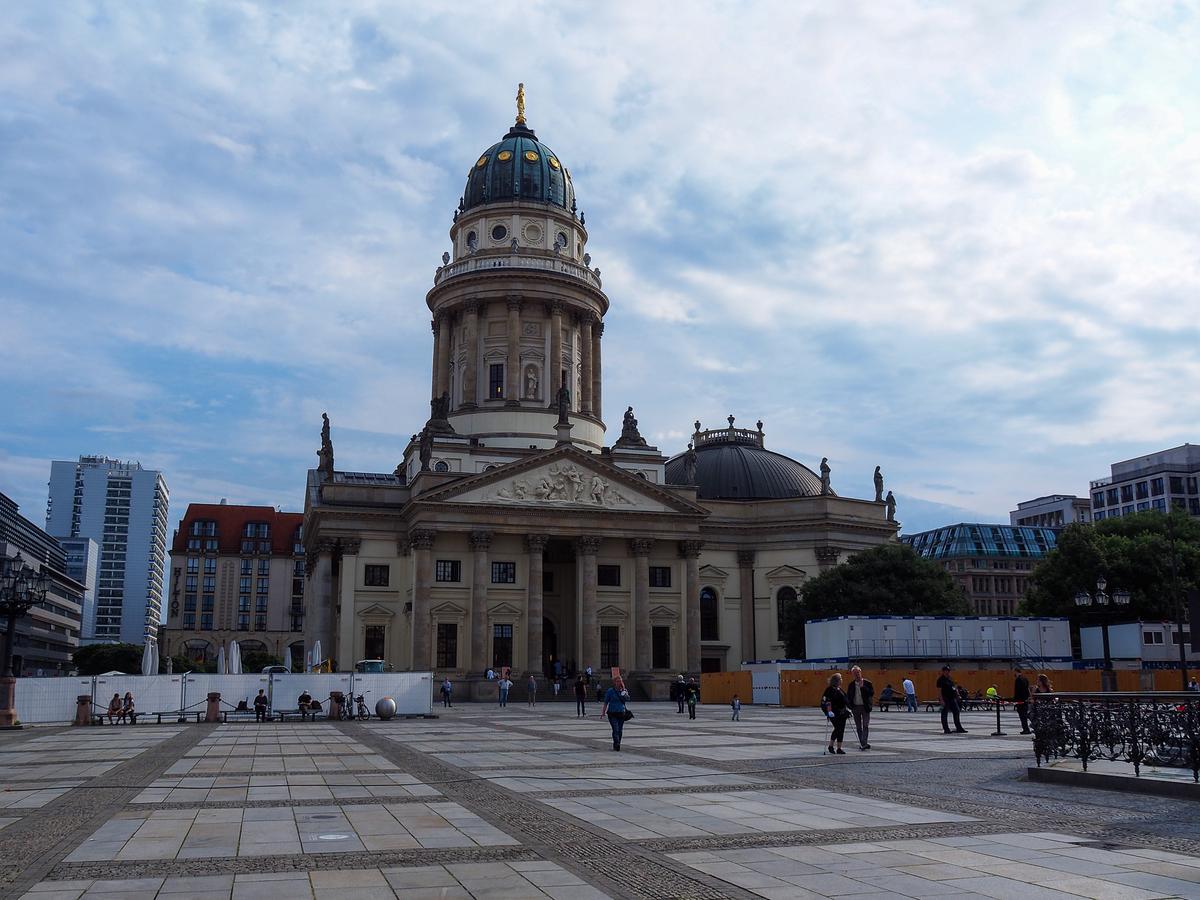
Gendarmenmarkt is defined by three coordinated buildings: the Französischer Dom, Deutscher Dom, and Konzerthaus Berlin. The French and German “cathedrals” are not episcopal cathedrals. Their names refer to the prominent domed towers that complete the square’s symmetrical composition.
The French Church was built for Berlin’s Huguenot community, while the later tower contains an observation platform and the Huguenot Museum. The German Cathedral’s exhibition focuses on the development of parliamentary democracy in Germany. The Konzerthaus occupies the center of the ensemble.
Plan your visit: Walking through the square is free. Museum, tower, concert, and seasonal-event admission varies. Gendarmenmarkt fits naturally between Checkpoint Charlie and Museum Island. Confirm tower and museum access through the official French Cathedral website.
12. Charlottenburg Palace and Gardens

Address: Spandauer Damm 10–22, 14059 Berlin
Charlottenburg Palace is Berlin’s largest surviving royal palace complex. Its Old Palace and New Wing record changing Hohenzollern tastes from Baroque ceremony through Rococo interiors and later royal apartments. Major rooms include the Porcelain Cabinet, Palace Chapel, White Hall, and Golden Gallery.
The palace was heavily damaged during World War II and extensively reconstructed. Its restored rooms should therefore be understood as both historical interiors and a major postwar conservation project.
Plan your visit: The palace is closed on Mondays. From April through October, the main interiors normally open Tuesday through Sunday from 10 a.m. to 5:30 p.m.; November and December hours are generally 10 a.m. to 4:30 p.m. The charlottenburg+ ticket costs €19 and covers the palace-garden museum buildings open that day. The gardens are free and open daily from 8 a.m. until dark. Review current details on the official palace page.
13. Kaiser Wilhelm Memorial Church

Address: Breitscheidplatz, 10789 Berlin
Emperor Wilhelm II commissioned the original neo-Romanesque church in memory of his grandfather, Wilhelm I. It was built between 1891 and 1895 and suffered severe bombing damage in 1943.
Rather than reconstructing the original church completely, Berlin preserved the damaged west tower and paired it with Egon Eiermann’s modern church, consecrated in 1961. The ruined tower, octagonal sanctuary, and blue-glass walls form a deliberate postwar ensemble focused on destruction, remembrance, and reconciliation.
Plan your visit: The church is normally open daily from 10 a.m. to 6 p.m.; the memorial hall opens later on Sunday. Entry is free, although donations support the church. Services, prayers, concerts, and commemorative events can temporarily restrict tourist access. Check the official visitor information.
14. Berlin Victory Column

Address: Großer Stern 1, 10557 Berlin
The Victory Column was designed by Heinrich Strack and constructed between 1864 and 1873 to commemorate Prussian military victories. Its gilded Victoria statue rises above the Großer Stern traffic circle in Tiergarten and has become one of Berlin’s most recognizable skyline features.
The viewing platform sits directly below the statue. Reaching it requires climbing 285 steps through the column’s narrow interior, but the reward is an open view across Tiergarten toward Bellevue Palace, Brandenburg Gate, and the government district.
Plan your visit: Summer hours are generally 9:30 a.m. to 7 p.m.; winter hours are 9:30 a.m. to 5:30 p.m. Adult admission is €4.50 and payment is cash only. The ascent is not wheelchair accessible and is unsuitable for visitors who cannot manage a long staircase. Confirm details on the official Berlin page.
15. Topography of Terror
Address: Niederkirchnerstrasse 8, 10963 Berlin
Topography of Terror stands on the former site of the Gestapo, SS leadership, and Reich Security Main Office. Its permanent exhibitions explain how these organizations planned, administered, and carried out persecution and mass murder under the Nazi regime.
The documentation center combines photographs, documents, biographies, institutional records, archaeological remains, and an outdoor exhibition trench. A surviving section of the Berlin Wall also runs beside the site, connecting the location’s Nazi-era history with Berlin’s later division.
Plan your visit: Admission is free. The exhibitions are normally open daily from 10 a.m. to 8 p.m., with outdoor areas open until dusk or 8 p.m. The site is a short walk from Checkpoint Charlie. Continue the broader historical theme with our guide to World War II sites in Europe, and verify current access on the official visitor page.
16. Humboldt Forum and Berlin Palace
Address: Schlossplatz, 10178 Berlin
The Humboldt Forum occupies a modern building wrapped on three sides by reconstructed Baroque facades of the former Berlin Palace. Its exhibitions address Berlin history, global cultures, art, and science, while the architecture itself raises questions about reconstruction, national memory, and which versions of the past receive monumental treatment.
The Ethnological Museum and Museum of Asian Art include objects acquired under varied circumstances, including during European colonial expansion. Provenance research, ownership, restitution, and collaboration with communities of origin are therefore central to understanding the institution—not peripheral controversies to omit from a visitor guide.
Plan your visit: Exhibitions are generally open Wednesday through Monday from 10:30 a.m. to 6:30 p.m.; Tuesday is the regular closing day. Many ground-floor and public areas are free. The primary day ticket costs €14, while roof-terrace admission costs €3. Review current admission information and the institution’s own discussion of colonialism and collection history.
17. Soviet War Memorial in Treptower Park

Address: Puschkinallee, 12435 Berlin
The Soviet War Memorial in Treptower Park is Germany’s largest memorial to fallen Red Army soldiers. Constructed between 1946 and 1949, it includes a military cemetery containing approximately 7,000 graves, monumental stone banners, reliefs, a mourning figure, and a central statue of a Soviet soldier holding a child.
The complex commemorates Soviet soldiers killed during the Battle of Berlin. Its scale and state-sponsored visual language also make it an important example of postwar Soviet memorial architecture. Approach it as a military cemetery and site of remembrance, not simply as a monumental photo location.
Plan your visit: The memorial is free and located within a public park. Parts of the site are accessible, but the large complex includes long walking distances, steps, and uneven surfaces. Allow additional time for the River Spree paths and other areas included in our guide to the best parks in Berlin. Historical information is available from the official Berlin page.
18. Berlin Zoological Garden

Address: Hardenbergplatz 8, 10787 Berlin
Berlin Zoo is the least conventional landmark on this list, but its 1844 founding, historic Elephant Gate, central Tiergarten setting, and institutional prominence make it a recognizable part of the city. It is Germany’s oldest zoo and houses approximately 20,000 animals across an unusually broad range of species.
The adjacent Aquarium requires a zoo-and-aquarium combination ticket or separate admission. Current scheduled activities include commented feedings and animal training sessions rather than the dolphin and butterfly attractions incorrectly described in older versions of this article.
Plan your visit: Zoo Berlin is open 365 days a year, with seasonal closing times. Adult zoo-only tickets use dynamic pricing and currently start at €16 online, rising to as much as €25. Travelers who do not support captive-animal attractions may prefer Tiergarten, Museum für Naturkunde, or another non-zoo activity. Check current ticket prices and seasonal hours.
How to plan your Berlin landmark route
Berlin is too large to treat all 18 landmarks as one continuous walking route. Grouping sights by district reduces unnecessary transit and gives historically related places enough time.
| Sightseeing cluster | Landmarks | Realistic time | Planning note |
|---|---|---|---|
| Government and remembrance | Reichstag, Brandenburg Gate, Holocaust Memorial | 2.5–4 hours | Build the route around your Reichstag reservation. |
| Historic center | Gendarmenmarkt, Humboldt Forum, Museum Island, Berlin Cathedral, TV Tower | Half to full day | Choose one museum rather than rushing through several. |
| Berlin Wall and dictatorship history | Berlin Wall Memorial, Checkpoint Charlie, Topography of Terror, East Side Gallery | Full day with transit | The sites are not all adjacent; use S-Bahn, U-Bahn, or tram connections. |
| Western Berlin | Charlottenburg Palace, Kaiser Wilhelm Memorial Church, Berlin Zoo | Full day | Visit the palace first because it closes earlier than the church district. |
| Tiergarten and Treptow | Victory Column or Soviet War Memorial | Half day for either area | These landmarks are in different parts of Berlin and should not be combined as a short walk. |
A practical one-day route
- Start with a reserved morning visit to the Reichstag dome.
- Walk to Brandenburg Gate and the Memorial to the Murdered Jews of Europe.
- Continue along Unter den Linden toward Gendarmenmarkt.
- Walk to Humboldt Forum, Museum Island, and Berlin Cathedral.
- Finish at the TV Tower for a timed evening view, or remain at ground level and explore Alexanderplatz.
This route covers the strongest first-time landmarks without pretending that every Berlin historical site belongs in one day. Add Checkpoint Charlie only when Cold War history is a priority; otherwise, reserve a separate half day for the Berlin Wall Memorial and East Side Gallery.
Plan around Monday closures
Museum Island museums, Pergamonmuseum. Das Panorama, and Charlottenburg Palace are closed on Mondays. Strong Monday alternatives include Brandenburg Gate, the Reichstag dome with a reservation, the Holocaust Memorial, Berlin Wall Memorial outdoor grounds, East Side Gallery, Topography of Terror, Berlin Cathedral, TV Tower, Kaiser Wilhelm Memorial Church, and Berlin Zoo.
Reserve these landmarks in advance
- Reichstag dome: Reserve first because admission is free but capacity is controlled.
- Berlin TV Tower: Book a timed slot when a sunset or evening visit matters.
- Charlottenburg Palace: A combined ticket assigns an Old Palace time slot and reduces uncertainty during busy periods.
- Museum Island: Buy online when visiting during weekends, school holidays, or a major temporary exhibition.
Accessibility considerations
Brandenburg Gate is barrier-free. The Holocaust Memorial’s Information Centre and marked routes through the Field of Stelae are wheelchair accessible. The Berlin Wall Memorial’s visitor buildings are barrier-free, and most of its outdoor exhibition is accessible. Berlin Cathedral’s principal visitor areas became substantially more accessible after the 2026 renovation.
The TV Tower does not admit visitors with significantly limited mobility because of evacuation restrictions. The Victory Column requires 285 stairs and has no accessible viewing-platform route. Confirm individual accommodations before booking, especially when historic buildings or observation platforms are central to the day.
For broader practical context, review our Berlin safety guide and complete list of the best things to do in Berlin.
When a guided tour is worthwhile
A guided walking tour is most useful when you want historical connections between sites rather than a sequence of exterior photographs. Before booking, compare the group size, guide credentials, walking distance, cancellation terms, and whether museum admission is included. A general highlights tour should not replace a dedicated visit to the Berlin Wall Memorial or Topography of Terror when twentieth-century history is your priority.
Accommodation near Friedrichstrasse, Unter den Linden, Alexanderplatz, or a well-connected S-Bahn station makes the central landmarks easier to reach. Compare neighborhoods in our guide to where to stay in Berlin before choosing a hotel solely because it appears close on a map.
Frequently asked questions
What are the five most famous landmarks in Berlin?
The five strongest choices for a first visit are the Brandenburg Gate, Reichstag Building, Berlin Wall Memorial, Museum Island, and Berlin TV Tower. The Memorial to the Murdered Jews of Europe should also be included when planning the government-district route.
Which Berlin landmarks are free to visit?
Major free landmarks include the Brandenburg Gate, Reichstag dome with advance registration, Memorial to the Murdered Jews of Europe, Berlin Wall Memorial, East Side Gallery, Checkpoint Charlie exterior, Kaiser Wilhelm Memorial Church, Topography of Terror, and Soviet War Memorial in Treptower Park.
Can you visit the Reichstag dome without a reservation?
Advance registration is required. Limited same-day or future spaces may be available through the visitor service near the Reichstag, but availability is not guaranteed. Every participant must provide a full name and date of birth, and adults should carry original official photo identification.
Is the Pergamon Museum open in 2026?
No. The Pergamonmuseum is completely closed for renovation. A large section is scheduled to reopen on June 4, 2027. Pergamonmuseum. Das Panorama remains open nearby and displays original antiquities with a 360-degree reconstruction of ancient Pergamon.
How many days do you need to see Berlin’s main landmarks?
Two full days cover the principal landmarks at a reasonable pace. Use one day for the Reichstag, Brandenburg Gate, Holocaust Memorial, Gendarmenmarkt, Museum Island, and TV Tower. Use the second for Berlin Wall history, East Side Gallery, or western Berlin. Three or four days allow museums and palace interiors without rushing.
Which Berlin landmarks are close enough to walk between?
The Reichstag, Brandenburg Gate, Holocaust Memorial, Gendarmenmarkt, Humboldt Forum, Museum Island, Berlin Cathedral, and TV Tower form a walkable central corridor. Checkpoint Charlie and Topography of Terror are also close to each other. Berlin Wall Memorial, East Side Gallery, Charlottenburg Palace, and Treptower Park require public transportation from the central cluster.
Final planning advice
Berlin’s landmarks are most useful when treated as connected evidence rather than isolated photo stops. The Brandenburg Gate and Reichstag explain national symbolism and government. The Holocaust Memorial and Topography of Terror document dictatorship and persecution. The Berlin Wall Memorial, Checkpoint Charlie, and East Side Gallery show different parts of division and reunification. Museum Island, Berlin Cathedral, Charlottenburg Palace, and Humboldt Forum reveal how royal, imperial, and contemporary Berlin presents its cultural inheritance.
Choose fewer sites, allow time for their exhibitions, and verify the places that require reservations. Once the central landmarks are planned, compare Berlin hotels, extend the itinerary with the best day trips from Berlin, or continue exploring famous landmarks across Germany.