If you are going to Germany, visit Checkpoint Charlie in Berlin. It is one of the top tourist attractions because it is one of the few lingering symbols of the Cold War.
It is thought to be one of the most powerful symbols of the division in Germany and the world’s political situation during the second half of the Twentieth Century.
History of Checkpoint Charlie

In 1961, the wall was constructed by the government of East Germany. Soon after that, JFK (John F. Kennedy) who was President of the United States at the time) determined that US troops in Berlin needed to create three checkpoints in the wall.
These checkpoints allowed entrance and exit for members of the diplomatic corps and allied forces. They were dubbed Checkpoint Alpha, Checkpoint Bravo, and Checkpoint Charlie.
These were also called checkpoints A, B, and C. The most famous of these three checkpoints was Checkpoint Charlie. Here is a before and after map of the Berlin Wall and a marking of the location of Checkpoint Charlie.

What Makes Checkpoint Charlie Special?

Several historic events occurred at Checkpoint Charlie during the Cold War. For example, Soviet and American tanks had a standoff at Checkpoint Charlie in 1961.
Additionally, JFK and Nikita Khrushchev, the Soviet president, visited this checkpoint in person. By 1962, Checkpoint Charlie was the sole gate for foreigners visiting East and West Germany. Since then, it has appeared in numerous spy films and symbolized Cold War history.
Who manned Checkpoint Charlie?

Checkpoint Charlie was manned by American soldiers from the United States Army and members of the East German Border Police. East Germans required a visa to travel to East Berlin, which could be obtained from any of the four Allied powers, including the United States Army.
Checkpoint Charlie was the main crossing point for East Germans wishing to emigrate to the West. On August 13, 1961, East German soldiers began constructing the wall, which cut off West Berlin from East Berlin.
Checkpoint Charlie became the only way for people to cross from East to West Berlin. American soldiers manned the checkpoint 24 hours a day, 365 days a year. Members of the East German Border Police assisted them. In addition to controlling movement between
East and West Berlin, Checkpoint Charlie also served as a military outpost. It was among the most important contact points between the US Army and the East German Guards.
The Checkpoint Charlie standoff

The Checkpoint Charlie standoff was a confrontation that occurred on October 27, 1961, between American and Soviet tanks in Berlin.
It began when Soviet and East German officials demanded that the US remove its tanks from the checkpoint, which they claimed violated the post-World War II agreement that granted the four Allied powers (the US, UK, USSR, and France) joint control over Berlin.
The US refused to remove its tanks, leading to a nearly two-hour stand-off before both sides backed down. The incident heightened tensions between the US and USSR during the early years of the Cold War.
JFK’s visit to Checkpoint Charlie

In June 1963, US President John F. Kennedy made a historic visit to Checkpoint Charlie. He was the first sitting US president to visit East Germany. His visit came just two months after Soviet leader Nikita Khrushchev’s trip to the checkpoint.
During his visit, JFK met with East German officials and toured Berlin. He also used the opportunity to reaffirm the US commitment to West Berlin’s safety and freedom.
The fall of the Berlin Wall

On November 9, 1989, the wall fell, marking the end of the Cold War. Checkpoint Charlie was no longer needed and was eventually dismantled. Today, a replica of the original checkpoint booth stands in its place. The site has become a popular tourist destination and a reminder of the city’s Cold War history.
How many people attempted to cross Checkpoint Charlie?
It is estimated that over 5,000 people attempted to cross Checkpoint Charlie during its 28 years of operation. However, due to the barbed wire fence, only around 200 were successful.
Take a Checkpoint Charlie Tour

If you want to learn more about this historical landmark and its history, be sure to take a tour. Several tour operators offer excursions to this landmark, and it’s worth learning more about what happened there during this time.
Exploring the checkpoint independently is an option, yet it’s advisable to delve into its historical context beforehand. Several nearby museums, including the Berlin Wall Museum, provide extensive insights into that era. Certainly, a visit to Checkpoint C is essential for those keen on understanding the intricacies of the Cold War.
Checkpoint Charlie Museum Exhibits

The museum has various exhibits focusing on different Cold War aspects. One such exhibit is “BERLIN,” which tells the city’s story during the wall’s construction.
This exhibition uses images, objects, and texts from the period to give visitors a glimpse into what life was like in Berlin during this time. “BERLIN” shows the two sides of a divided city and how the people lived very different lives on either side.
Another exhibit at the Checkpoint Charlie Museum is “THE COLD WAR.” This exhibit focuses on the tensions between the United States and the Soviet Union.
It includes various artifacts, such as a piece of the wall, that help tell the story of this period. “THE COLD WAR” is a great exhibit for those interested in learning more about history.
Is the real Checkpoint Charlie still standing after all these years?

The original checkpoint structure was preserved. It can be seen at the Allied Museum, which is located in Zehlendorf. The site checkpoint is centrally located in Berlin. In a neighborhood known as Friedrichstadt. It can be found at the intersection of Friedrichstrasse, Zimmerstrasse, and Mauerstrasse.
The latter was known as “Wall Street” before the Cold War. Germany reunified, and the Berlin Wall fell in 1989. At that time, the checkpoint was removed.
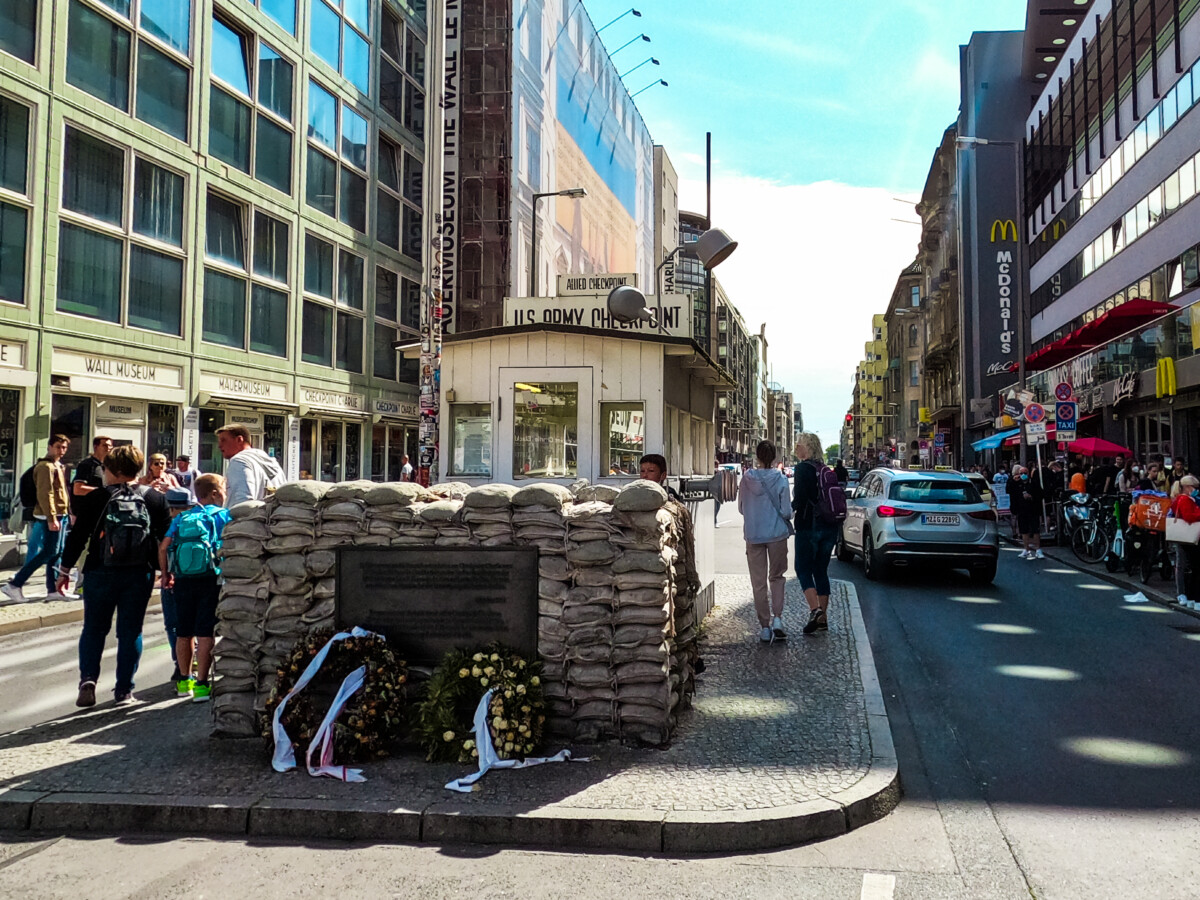
As you can see, the reconstructed checkpoint is located near the site of the former landmark. It’s been reproduced on the original ground with its arch and trench but lacks all its mechanisms. For this reason, tourists to the region are limited to a replica erected in place of the renowned crossing.
A line of bricks also shows where the visible Berlin Wall checkpoint once stood. Until the turn of the 21st century, the original Checkpoint C watch tower remained nearby. Shortly after the new century was rung in, the watchtower was removed.
Office buildings and shops now occupy its space. Also, near the original site, you will find the Checkpoint Charlie Museum, Haus am Checkpoint Charlie, built just after the wall was built. The museum has remained in place and even expanded through the years. It is intended to symbolize a call for freedom.
East Berlin before the unification of Germany
East Germans were walled off from the world when the East German government erected the Berlin Wall in 1961. It was an automobile barrier, a concrete wall, and a no-man’s land all in one, and it completely cut off East Berlin from the rest of West Germany.
East German authorities claimed the wall was necessary to keep Western “fascists” from entering East Germany and ruining their socialist utopia. Still, it was built to halt the border crossing of refugees from East to West.
Western Berliners could still pass through East German territory to get to West Berlin, but East Berliners were not allowed to leave without special permission.
The wall remained standing until 1989, when a series of reforms in the Soviet Union led to a wave of protests in East Germany. The East German government tried to quell the protests violently, but they only worsened the situation.
On November 9, 1989, the East German government announced that citizens would be allowed to cross the border freely, and the next day, people began tearing down the Berlin Wall with their bare hands.
The fall of the Berlin Wall marked the end of the Cold War and the beginning of a new era for Germany. The country was reunified in 1990, and Berlin again became the capital.
See Related: Best Hotels in Berlin, Germany
West Berlin before the unification of Germany
Western Berlin became an enclave within East Germany during the Cold War. It did not have access to NATO forces but still had a small contingent of British and French troops.
The Berlin Wall went up in 1961 and immediately posed a problem for the Western forces in West Berlin. If they tried to cross over into East Berlin, they would be arrested by East German border guards.
However, if they stayed in West Berlin, the Soviet Union could argue that they were illegally occupying German territory.
Border Crossing Checkpoint Charlie

The border crossing point of Checkpoint Charlie was the most famous of the three checkpoints between East and West Berlin during the war. It was located in Friedrichstadt, at the intersection of Friedrichstrasse, Zimmerstrasse, and Mauerstrasse- which was known as “Wall Street” before the war.
The checkpoint became a symbol of the Cold War era. It was the famous border crossing point for foreigners with travel documents.
Checkpoint Charlie Today
Checkpoint Charlie is now a tourist attraction in Berlin. The original checkpoint has been removed, but a replica has been built. The Checkpoint Charlie Museum, Haus am Checkpoint Charlie, stands and expands. The checkpoint is a reminder of the Cold War era and symbolizes freedom between East and West Berlin.
Other Cold War Museums in Berlin
The Berlin Wall is not the only symbol of the Cold War era in Berlin. Several other landmarks and museums commemorate this period in history. The Cold War Museum, located in Potsdam, is dedicated to the history of the Cold War. It houses several exhibits on the topic, a library and archives.
German Spy Museum, located in Berlin-Mitte, is another museum dedicated to this historical period. It focuses on the history of espionage during this period and includes several interactive exhibits.
DDR Museum is dedicated to life in East Germany during the Cold War. The Brandenburg Gate is a symbol of Berlin that dates back to the 18th century. However, it also played a role in the Cold War as it was near the wall.
Other landmarks from the Cold War era include the Kaiser Wilhelm Memorial Church, which was badly damaged in a bombing raid during World War II, and Potsdamer Platz, a busy square in Berlin completely cut off by the wall. These landmarks are just a few of Berlin’s many historical sites and museums.
What is the Cold War?
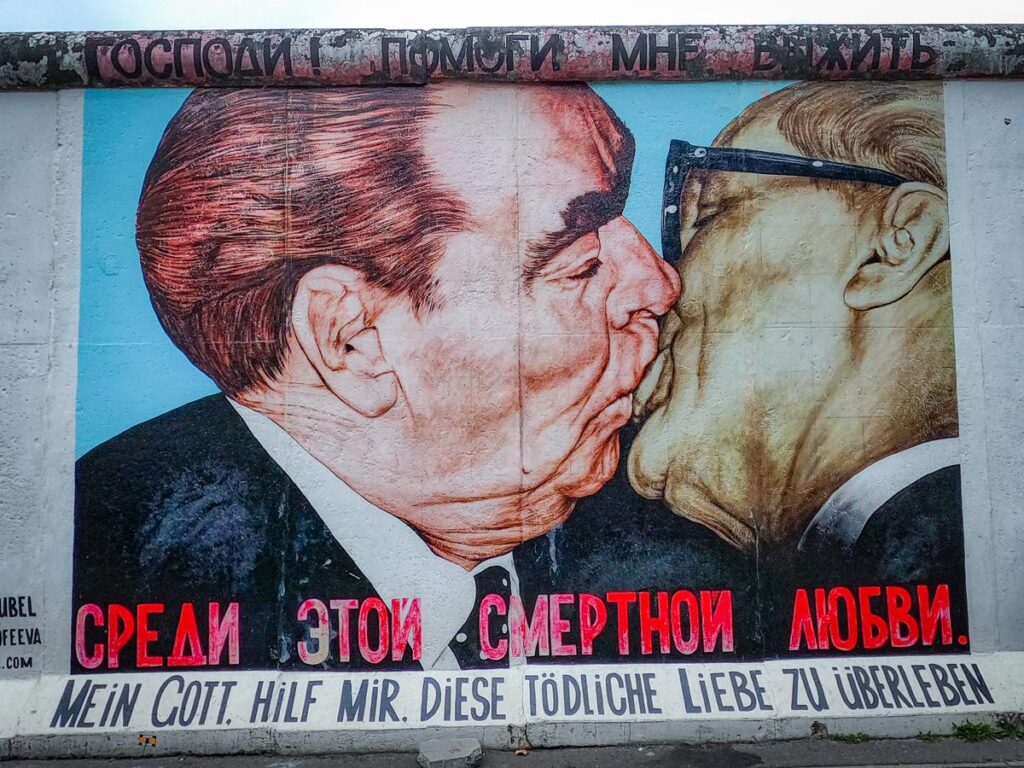
The Cold War was the period from 1945 to 1990 in which relations between the United States and its allies and the Soviet Union and its allies were hostile. There was great tension, mistrust, and hostility between these two world powers. The Berlin Wall was a physical symbol of this division during the Cold War.
The end of the Cold War
The Cold War ended in 1990 with the unification of East and West Germany. This event signaled the end of hostility between the United States and its allies and the Soviet Union and its allies.
Checkpoint Charlie is a must-see attraction in Berlin. It’s been an important landmark for decades and now symbolizes peace. The full history of this famous checkpoint should be on any traveler’s bucket list to Germany.
Don’t miss out on all the latest news and tips for your next trip. Subscribe to our free travel newsletter today and get everything you need to know in your inbox.
See Related: Best Parks in Berlin, Germany
FAQs
What is Checkpoint Charlie?
Established in 1961, Checkpoint Charlie was one of three Allied military checkpoints during the Cold War era. It was referred to as the crossing point between East and West Berlin. The other two checkpoints were known as Checkpoint Alpha and Checkpoint Bravo.
Why was it called Checkpoint Charlie?
The checkpoint’s name comes from the NATO phonetic alphabet, where the letter “C” stands for “Charlie.”
When was Checkpoint Charlie built?
Construction on Checkpoint Charlie began on August 13, 1961, just two days after the East German government began constructing the Berlin Wall.
What happened to Checkpoint Charlie after the fall of the Berlin Wall?
After the fall of the Berlin Wall in 1989, Checkpoint Charlie was dismantled, and its components were either sold as souvenirs or given to museums. The crossing point is now marked with a simple plaque and a line of cobblestones.
When was Germany unified?
The unification of Germany occurred on October 3, 1990.