The most famous landmarks in the USA range from the Statue of Liberty and Washington’s National Mall to the Grand Canyon, Yellowstone, the Golden Gate Bridge, and Niagara Falls. This editorial list covers 26 natural, historic, architectural, and cultural sites worth planning a trip around, with realistic visit times and current official planning links.
For a first U.S. trip, do not try to connect all 26. Choose a regional cluster or combine one major city with one national park. New York City, Washington, D.C., northern California, the Southwest, the Black Hills, and Oahu each offer several significant sites within a manageable route.
- For natural scenery, start with the Grand Canyon, Yellowstone, Yosemite, Niagara Falls, or the Great Smoky Mountains.
- For U.S. history, prioritize the National Mall, the Alamo, Boston’s Freedom Trail, Pearl Harbor, and Arlington National Cemetery.
- For architecture and engineering, choose the Empire State Building, Golden Gate Bridge, Space Needle, Hoover Dam, or Gateway Arch.
- Several high-demand sites require advance planning, including the Statue of Liberty’s crown and pedestal, White House tours, the Washington Monument, Alcatraz, the USS Arizona Memorial, and Walt Disney World.
If national parks are your priority, compare the best national parks in the USA. You can also use this bucket-list template to organize destinations by region, season, and available time.
Disclosure: ViaTravelers may earn a commission when you book through some links in this article, at no additional cost to you. Official sources are included for current rules and reservations. Hours, prices, access, and operating conditions were last verified in August 2026 and can change.
On this page
- Famous U.S. landmarks at a glance
- Best landmarks by trip type
- 26 famous landmarks in the USA
- How landmark designations differ
- Frequently asked questions
Famous U.S. landmarks at a glance
| Landmark | Location | Type | Typical visit | Main planning requirement |
|---|---|---|---|---|
| Statue of Liberty | New York City | National monument | 4–6 hours | Reserve ferry access; crown and pedestal require separate advance tickets |
| Washington Monument | Washington, D.C. | National memorial | 45–90 minutes | Timed ticket required |
| White House | Washington, D.C. | Presidential residence | About 45 minutes | Request a tour 7–90 days in advance |
| Grand Canyon | Arizona | National park | Half-day to 2 days | Check rim access, weather, and shuttle schedules |
| Mount Rushmore | South Dakota | National memorial | 1.5–3 hours | No entry reservation; parking fee applies |
| Empire State Building | New York City | Skyscraper | 1–2 hours | Timed ticket recommended |
| Golden Gate Bridge | San Francisco | Suspension bridge | 1–2 hours | Check pedestrian and bicycle schedules |
| National Mall and memorials | Washington, D.C. | Memorial park | 3–6 hours | Wear walking shoes; individual sites have different rules |
| Brooklyn Bridge | New York City | Suspension bridge | 1–2 hours | Visit early to avoid the busiest pedestrian period |
| Hollywood Sign | Los Angeles | Cultural landmark | 1–4 hours | The letters are restricted; use authorized viewpoints and trails |
| Niagara Falls | New York and Ontario | Natural landmark | Half-day to 1 day | Boat operations are seasonal; bring border documents if crossing to Canada |
| Yellowstone | Wyoming, Montana, and Idaho | National park | 2–4 days | Book lodging early and allow for long driving distances |
| Space Needle | Seattle | Observation tower | 1–2 hours | Timed ticket recommended |
| Hoover Dam | Nevada and Arizona | Federal dam | 2–4 hours | Tours have capacity and security restrictions |
| Monument Valley | Navajo Nation, Arizona and Utah | Tribal park | 2–4 hours | Entry and vehicle fees apply; the loop road is rough |
| The Alamo | San Antonio, Texas | Historic mission | 1–3 hours | General entry is free; reserve the church time slot |
| Yosemite | California | National park | 2–4 days | No entrance reservation in 2026; lodging and campsites still book early |
| Gateway Arch | St. Louis, Missouri | National monument | 2–3 hours | Reserve the paid tram ride |
| Alcatraz Island | San Francisco | National historic site | 3–4 hours | Reserve the official ferry well ahead |
| Times Square | New York City | Public square | 30–90 minutes | No ticket; visit after dark for the full visual effect |
| Bunker Hill and Freedom Trail | Boston | Historic trail and monument | 3–5 hours | The monument has 294 steps and no elevator |
| Great Smoky Mountains | Tennessee and North Carolina | National park | 1–3 days | Parking tag required for stops longer than 15 minutes |
| Pearl Harbor National Memorial | Oahu, Hawaii | National memorial | 3–6 hours | Reserve the USS Arizona program and follow the bag policy |
| Badlands | South Dakota | National park | 3–6 hours | Check weather and road conditions |
| Walt Disney World | Florida | Theme-park resort | 1 or more days | Buy a date-based ticket and confirm current park rules |
| Arlington National Cemetery | Arlington, Virginia | Military cemetery | 2–4 hours | Allow time for security screening |
Best landmarks by trip type
- A first-time visitor who wants the broadest introduction to the country should combine the Statue of Liberty, National Mall, and Grand Canyon.
- Travelers focused on national parks will get the strongest contrast from Yellowstone’s geothermal basins, Yosemite’s granite cliffs, the Grand Canyon’s scale, and the forested Great Smoky Mountains.
- History-focused trips work particularly well in Washington, D.C., Boston, San Antonio, Pearl Harbor, and Arlington.
- Families who prefer a mix of views and structured attractions can consider the Space Needle, Niagara Falls, the Empire State Building, Hoover Dam, and Walt Disney World.
How these landmarks were selected
This is an editorial selection rather than an official attendance or popularity ranking. The list weighs national and international recognizability, historical or cultural significance, quality of the visitor experience, geographic variety, and practical public access. No list of 26 places can represent every region or community in the United States, but these sites provide a useful cross-section of the country’s natural features, civic history, engineering, entertainment, and public memory.
26 famous landmarks in the USA
1. Statue of Liberty National Monument

Dedicated in 1886, the Statue of Liberty was designed by French sculptor Frédéric Auguste Bartholdi and presented by France to the United States. The copper statue rises 305 feet from the ground to the tip of the torch and became a national monument in 1924. Its association with liberty, migration, and New York Harbor has made it one of the country’s most recognizable symbols.
Statue of Liberty National Monument includes Liberty Island and part of Ellis Island. The immigration museum on Ellis Island adds important context to the monument, particularly for travelers interested in the experiences of people who entered the United States through New York Harbor.
Plan your visit: Statue City Cruises is the only operator authorized to land at Liberty and Ellis islands. A standard ferry ticket includes access to the island grounds and museums, while the pedestal and crown require limited advance reservations. Allow four to six hours for both islands and check the National Park Service ticket guidance before buying from another seller. For hotel logistics, compare where to stay in New York for sightseeing.
2. Washington Monument
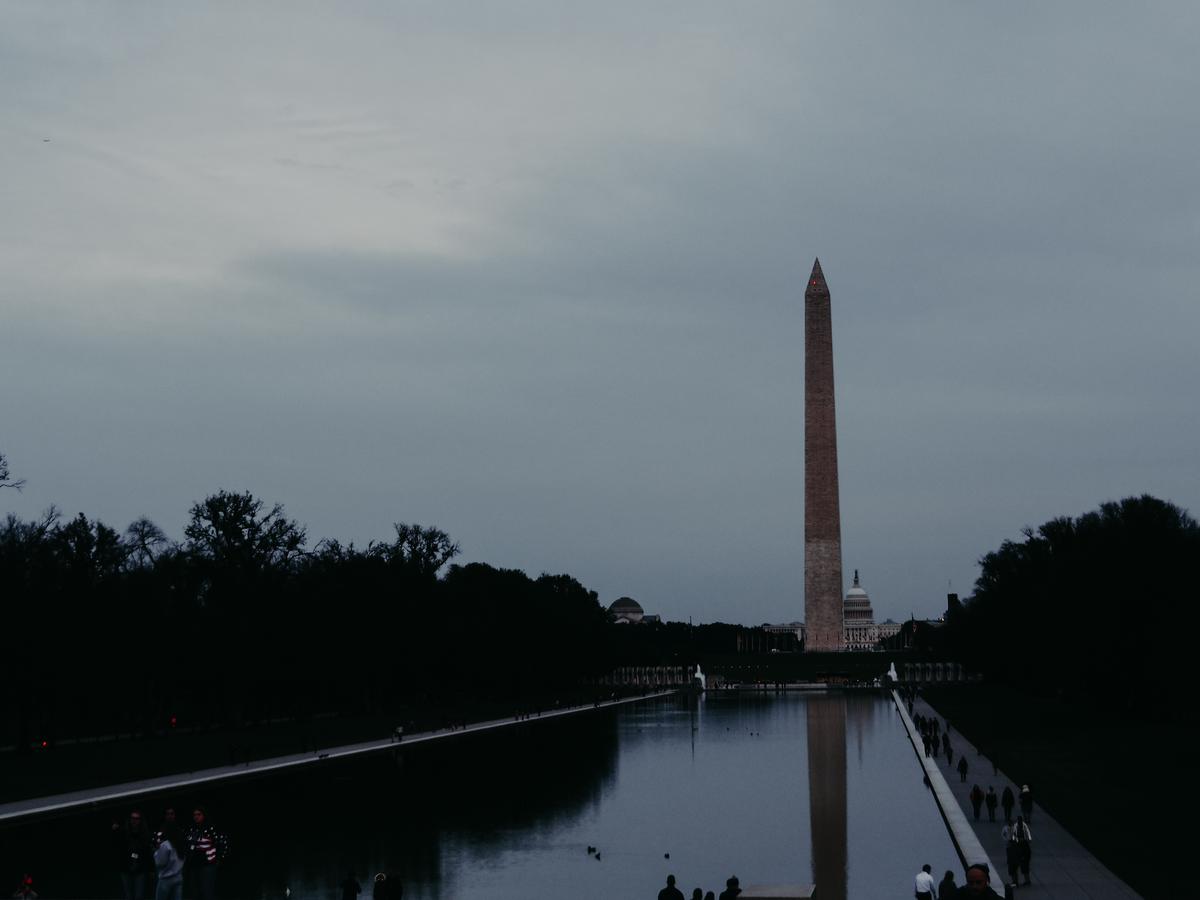
The Washington Monument is a marble, granite, and bluestone-gneiss obelisk honoring George Washington. Construction began in 1848, stopped for more than two decades, and was completed in 1884. At 555 feet, 5⅛ inches, it was the world’s tallest structure until the Eiffel Tower surpassed it in 1889.
An elevator carries visitors to the observation level near the top, where windows look across the National Mall, White House, U.S. Capitol, Potomac River, and surrounding city. The difference in the color of the stone is visible from the ground and marks the long pause in construction.
Plan your visit: Entry is free, but every visitor needs a timed ticket. Advance reservations carry a small Recreation.gov service charge, while a limited number of same-day tickets may be available. Review the official Washington Monument ticket rules. Build the rest of the day with these best things to do in Washington, D.C.
3. The White House
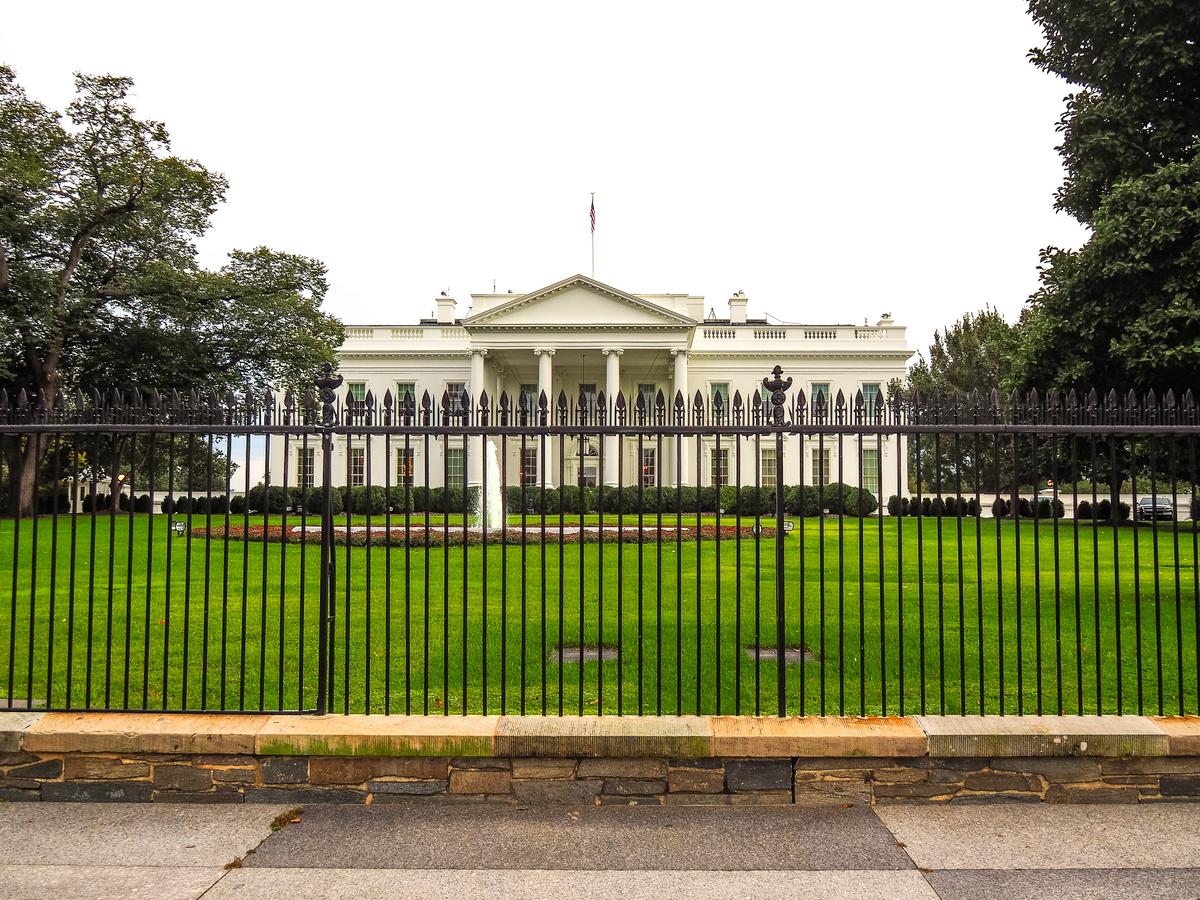
The White House has been the official residence and workplace of every U.S. president since John Adams moved into the unfinished building in 1800. Irish-born architect James Hoban designed the neoclassical residence for a site selected by George Washington.
Public tours normally pass through a selection of ceremonial rooms rather than presidential living quarters or working offices. Access can be altered or canceled because the building remains an active government residence and workplace.
Plan your visit: U.S. citizens should request a free public tour through a member of Congress between 7 and 90 days before the visit. International travelers are directed to contact their embassy in Washington. Review identification requirements, prohibited items, and current schedules on the official White House visit page. Travelers without a tour can still view the building from Lafayette Square and combine it with one of the city’s Washington, D.C. walking tours.
4. Grand Canyon National Park

The Colorado River cuts through 277 miles of northern Arizona at Grand Canyon National Park. The canyon reaches up to 18 miles across and more than a mile deep, exposing layers of rock that record an immense span of geological time. It became a UNESCO World Heritage Site in 1979.
The South Rim is the most accessible part of the national park and operates year-round, subject to weather and temporary closures. The North Rim has a shorter season and may have reduced services. Sunrise and late afternoon bring softer light, but temperatures below the rim can be much hotter than conditions at the viewpoints.
Plan your visit: Allow at least half a day for the main overlooks and one or two nights if you want to hike, watch both sunrise and sunset, or explore multiple sections. The glass Skywalk is at Grand Canyon West on Hualapai land; it is not inside Grand Canyon National Park. Check current conditions through the National Park Service planning page, then use this Grand Canyon itinerary to organize your route.
5. Mount Rushmore National Memorial

Mount Rushmore depicts 60-foot portraits of George Washington, Thomas Jefferson, Theodore Roosevelt, and Abraham Lincoln. Sculptor Gutzon Borglum directed most of the work from 1927 until his death in 1941, after which his son Lincoln oversaw the project’s final months.
The memorial also sits within a history that cannot be separated from the Black Hills’ importance to Lakota, Nakota, and Dakota peoples or from treaty violations and dispossession. The Presidential Trail and the Lakota, Nakota and Dakota Heritage Village add useful context beyond the primary viewing terrace. Nearby Crazy Horse Memorial is a separate, privately operated project rather than a National Park Service site.
Plan your visit: Mount Rushmore does not charge an entrance fee, but the concession-operated parking area charges a vehicle fee that federal recreation passes do not cover. No entry reservation is required. Confirm current access on the official fee and planning page, and add nearby stops from this guide to things to do in South Dakota.
6. Empire State Building

Completed in 1931, the Empire State Building is a 102-story Art Deco skyscraper in Midtown Manhattan. It rises 1,454 feet to the top of its antenna and held the title of the world’s tallest building for nearly four decades.
The main experience includes exhibits on the lower observation floors and the open-air deck on the 86th floor. A separate ticket can add the smaller indoor observatory on the 102nd floor. The 86th-floor deck offers the classic unobstructed view across Manhattan.
Plan your visit: Ticket prices vary by date, time, and observation level. Early morning usually brings shorter waits, while sunset is one of the first periods to sell out. Allow one to two hours and buy through the official Empire State Building ticket page. Travelers visiting several paid attractions should compare New York CityPASS vs. New York Pass.
7. Golden Gate Bridge

The Golden Gate Bridge opened in 1937 and connects San Francisco with Marin County across the strait between San Francisco Bay and the Pacific Ocean. Its 4,200-foot main span and International Orange paint make the suspension bridge immediately recognizable, even when coastal fog obscures part of the structure.
Walking or cycling across the bridge is free, although sidewalk access and bicycle directions vary by time and day. Fort Point, Crissy Field, Battery Spencer, and the Marin Headlands provide different perspectives without requiring a full crossing.
Plan your visit: Parking near the bridge is limited, so public transit, a bicycle, or a rideshare is often easier than driving. Review current sidewalk schedules and transportation guidance on the official Golden Gate Bridge visitor page. A ferry-and-bicycle excursion can combine the crossing with Sausalito. See more of the best places to visit in San Francisco.
8. National Mall and Memorials
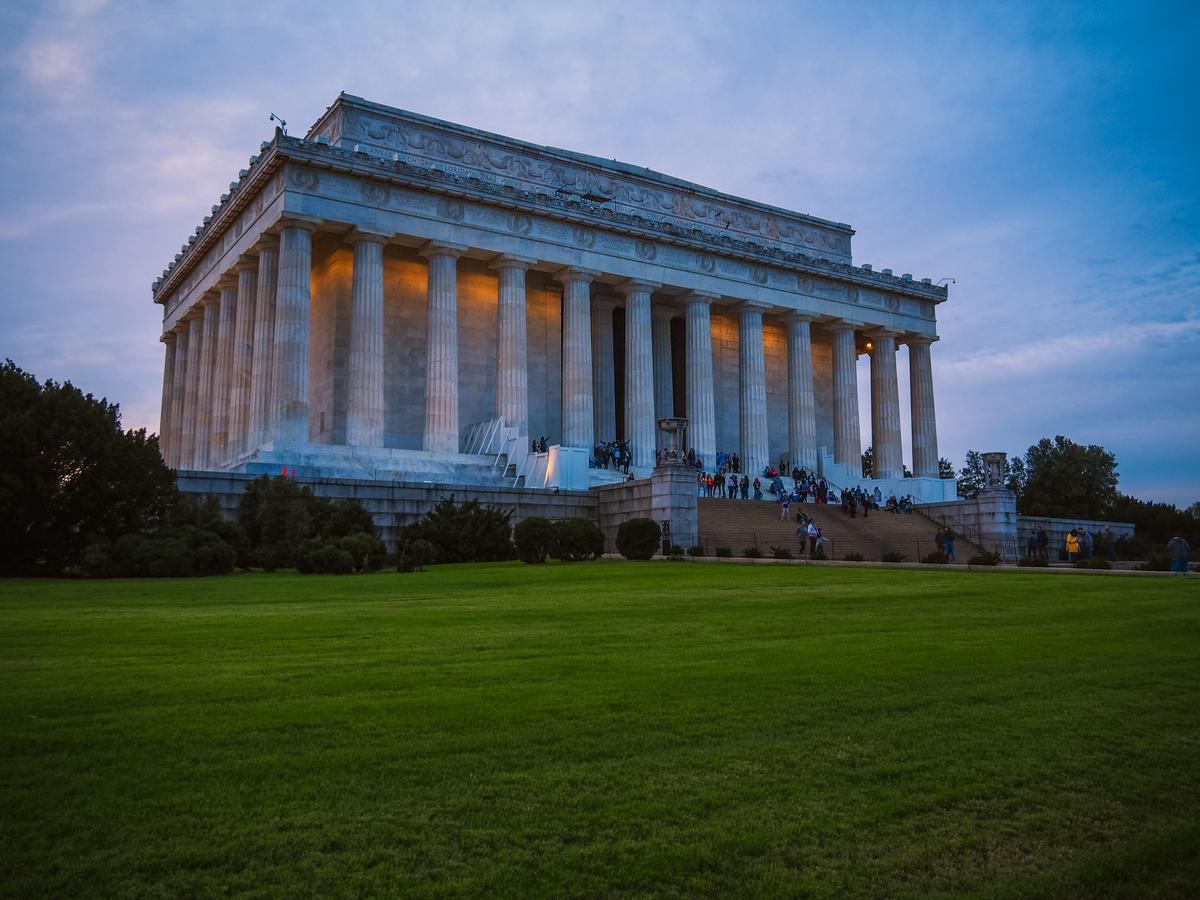
The National Mall concentrates many of the country’s most significant civic monuments within central Washington, D.C. Major sites include the Lincoln Memorial, Vietnam Veterans Memorial, Korean War Veterans Memorial, World War II Memorial, Martin Luther King, Jr. Memorial, Washington Monument, and nearby Smithsonian museums.
The outdoor memorials are generally accessible around the clock, making early morning and evening good times for cooler temperatures, softer light, and fewer large groups. A complete walk can cover several miles, and each memorial deserves more than a hurried photograph.
Plan your visit: Set aside three to six hours, use Metro rather than relying on central parking, and check individual closures through the National Mall and Memorial Parks planning page. Paid museums and tours are separate from the free outdoor memorials; this Washington, D.C. Sightseeing Pass review explains one commercial option.
9. Brooklyn Bridge

Opened in 1883, the Brooklyn Bridge linked the then-separate cities of New York and Brooklyn across the East River. Its stone towers, pointed arches, steel cables, and elevated pedestrian promenade made it both an engineering milestone and an enduring part of the New York skyline.
The pedestrian crossing is roughly a mile and works well in either direction. Walking from Brooklyn toward Manhattan gives the strongest skyline view, while the reverse direction finishes near DUMBO and Brooklyn Bridge Park. Cyclists use a protected lane at roadway level rather than the pedestrian promenade.
Plan your visit: Go early in the morning for more walking space and pause outside the active traffic lanes when taking photographs. Review current construction or access notices on the NYC Department of Transportation page. Staying across the river can be convenient; compare where to stay in Brooklyn.
10. Hollywood Sign

The Hollywood Sign began in 1923 as a temporary advertisement reading “HOLLYWOODLAND” for a housing development. The final four letters were removed in 1949, and the remaining sign became a shorthand symbol for Los Angeles and the entertainment industry.
The letters stand in a restricted and monitored area on Mount Lee. Visitors cannot touch or walk directly beside the front of the sign, but authorized routes lead to viewpoints above and behind it. Griffith Observatory, Lake Hollywood Park, and the Ovation Hollywood complex provide easier distant views.
Plan your visit: Hiking routes are exposed to sun and have limited shade, so carry water and avoid the hottest part of the day. Use the Hollywood Sign Trust trail guidance rather than following unofficial directions through residential streets. A guided Hollywood Sign hike can add film history and route support. Continue with these things to do in Los Angeles.
11. Niagara Falls

Niagara Falls consists of Horseshoe Falls, American Falls, and Bridal Veil Falls on the Niagara River between New York and Ontario. The American side provides direct access to the river, Goat Island, observation areas, and trails within Niagara Falls State Park, while the Canadian side offers the widest frontal panorama.
The park remains open year-round, but boat cruises and some close-access experiences operate seasonally. Winter brings ice formations and fewer visitors; summer offers the widest range of activities and the largest crowds.
Plan your visit: Admission to Niagara Falls State Park is free, although parking and individual attractions cost extra. The Maid of the Mist operates seasonally and supplies a poncho, but clothing and shoes can still get wet. Check the official state-park information before traveling. This Maid of the Mist and Cave of the Winds tour combines several U.S.-side experiences. Use the full Niagara Falls travel guide for border and seasonal planning.
12. Yellowstone National Park

Established in 1872, Yellowstone was the first national park in the United States. Its roughly 3,472 square miles extend across Wyoming, Montana, and Idaho and protect geothermal basins, rivers, lakes, mountains, and major wildlife habitat.
Old Faithful, Grand Prismatic Spring, Mammoth Hot Springs, Yellowstone Lake, and the Grand Canyon of the Yellowstone are among the best-known stops. Old Faithful does not erupt on a fixed 90-minute schedule; park staff publish updated predictions based on recent activity.
Plan your visit: Two to four days is a practical minimum because roads connect enormous areas and wildlife traffic can slow travel. Stay at least 100 yards from bears, wolves, and cougars and 25 yards from other wildlife, including bison and elk. Review alerts on the official Yellowstone planning page. A guided Lower Loop day tour from Jackson can work for travelers who do not want to drive. Prepare for changing conditions with this Yellowstone packing guide.
13. Space Needle

The 605-foot Space Needle was built for Seattle’s 1962 World’s Fair. Its observation level sits at approximately 520 feet, while the lower Loupe level contains a rotating glass floor. Views can extend across downtown, Puget Sound, the Olympic Mountains, the Cascades, and Mount Rainier when the weather is clear.
The tower stands in Seattle Center beside Chihuly Garden and Glass, the Museum of Pop Culture, and the Pacific Science Center. That concentration makes the area easy to visit without a car.
Plan your visit: Admission is timed, and prices vary by date and ticket package. Sunset periods tend to fill first, but visibility can matter more than the time of day. Check forecasts and reserve through the official Space Needle visitor page. Build a full day with these things to do in Seattle.
14. Hoover Dam
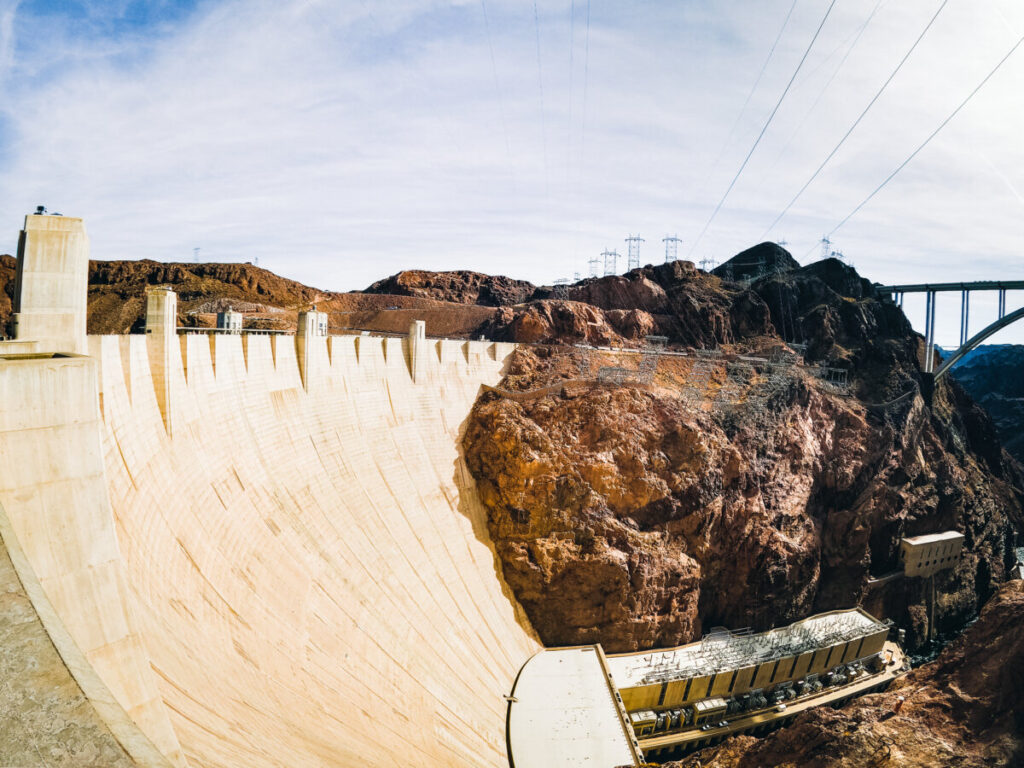
Hoover Dam is a concrete arch-gravity dam in Black Canyon on the Nevada-Arizona border. Dedicated in 1935 and completed in 1936, it impounds Lake Mead and produces hydroelectric power for Nevada, Arizona, and California while supporting water storage and river management.
The dam rises more than 700 feet above its foundation. Visitors can walk across the top, view the structure from the Mike O’Callaghan–Pat Tillman Memorial Bridge, enter the visitor center, or join a power plant or dam tour when operating.
Plan your visit: Visitor facilities reopened on July 31, 2026, after a temporary summer closure, but capacity, maintenance, and security rules can change. Tours involve screening and may restrict bags, weapons, food, and other items. Confirm current hours and ticket options through the Bureau of Reclamation visitor page. This Hoover Dam tour from Las Vegas removes the need to drive. See the full Hoover Dam visitor guide for more detail.
15. Monument Valley Navajo Tribal Park

Monument Valley, known in Navajo as Tsé Biiʼ Ndzisgaii, is a Navajo Tribal Park spanning the Arizona-Utah border. Its sandstone buttes, mesas, and desert floor have appeared in generations of films and photographs, but the valley is also a living cultural landscape within the Navajo Nation.
The public Valley Drive is a 17-mile dirt loop that passes major formations and overlooks. Navajo-guided tours can enter areas that independent visitors cannot access and add cultural, geographic, and historical interpretation.
Plan your visit: In August 2026, the official site listed a $10 per-person entry fee plus a $15 vehicle fee, both subject to change. The road has rough terrain and deep sand; a suitable SUV or truck is preferable, while RVs, camper vans, motorcycles, and some large vehicles are restricted. Climbing, drones, unauthorized backcountry travel, and leaving designated routes are prohibited. Confirm current rules through Navajo Nation Parks and Recreation. A Navajo-guided backcountry tour provides broader access. Continue through more landmarks in the Southwest.
16. The Alamo
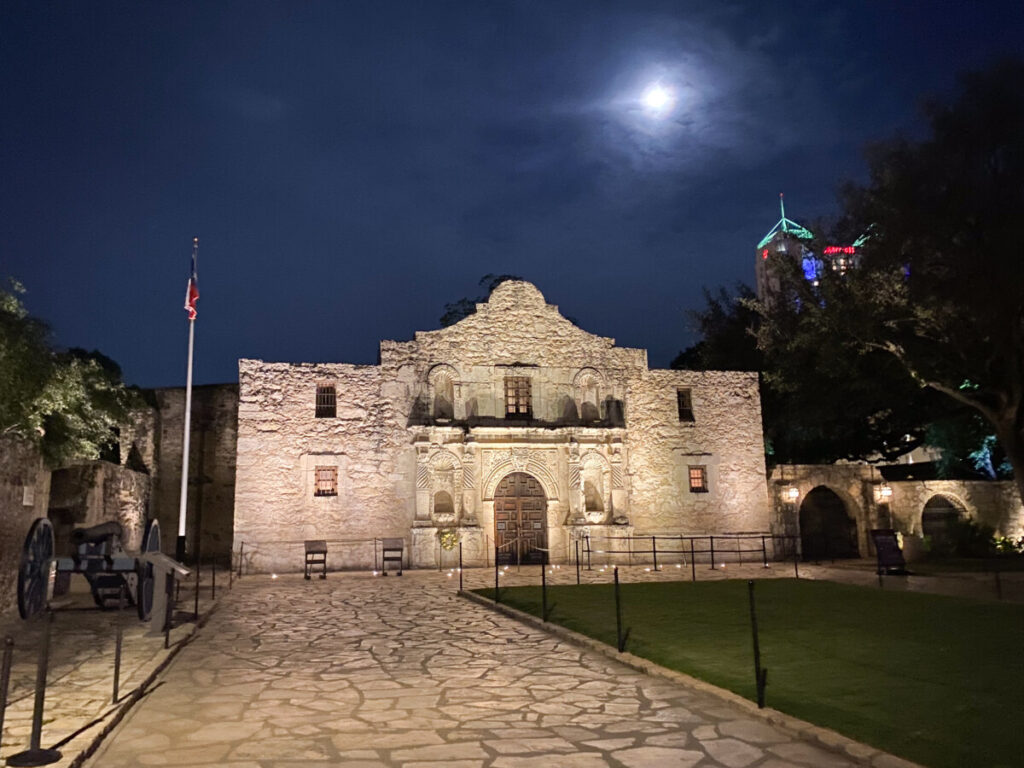
The Alamo began as Mission San Antonio de Valero in 1718 and later became a military compound. The 1836 Battle of the Alamo made it central to the story of the Texas Revolution, but the site’s history also includes Indigenous mission communities, Spanish colonialism, Mexican Texas, and the growth of San Antonio.
The surviving church and Long Barrack sit within a larger historic district undergoing substantial interpretation and preservation work. Exhibits now address more of the site’s 300-year history rather than treating the battle as its only significant period.
Plan your visit: General admission is free, but entry to the church requires a timed reservation. Current hours were 9 a.m. to 5:30 p.m. when checked in August 2026, with holiday closures and occasional special-event changes. Reserve through the official Alamo calendar. The nearby San Antonio River Walk guide helps connect the mission with the city’s other central sights.
17. Yosemite National Park

Yosemite protects nearly 1,200 square miles of California’s Sierra Nevada, including granite cliffs, giant sequoia groves, high-country meadows, and waterfalls. Yosemite Valley contains many of the park’s best-known features, including El Capitan, Half Dome, Bridalveil Fall, and Yosemite Falls.
Yosemite Falls drops 2,425 feet in three sections and is commonly described by the National Park Service as North America’s tallest waterfall. Its flow is usually strongest in spring and may diminish substantially by late summer or autumn.
Plan your visit: Yosemite does not require a vehicle entrance reservation in 2026, but campsites, lodging, wilderness permits, and some activities still require advance booking. Traffic and parking are difficult during peak periods, so use park shuttles where possible. Check alerts on the official Yosemite planning page. Travelers without a car can consider a two-day Yosemite excursion from San Francisco. Use this guide when planning a Yosemite trip.
18. Gateway Arch

The stainless-steel Gateway Arch stands 630 feet tall and 630 feet wide on the Mississippi Riverfront in St. Louis. Architect Eero Saarinen designed the monument, which was completed in 1965 as a memorial to U.S. westward expansion.
The national park also interprets the Indigenous peoples, explorers, migrants, enslaved people, and legal conflicts connected to westward expansion. The free museum below the arch adds necessary context to a monument that can otherwise be treated as a simple photo stop.
Plan your visit: The park grounds and museum are free, but the compact tram ride to the observation area requires a paid timed ticket. The tram cars can feel confined, and the top is reached without stairs or an open viewing platform. Check current fees and access through the National Park Service fee page. Add other things to do in St. Louis while you are downtown.
19. Alcatraz Island

Alcatraz Island has served as a military fortification, military prison, federal penitentiary, lighthouse station, and site of Native American political activism. The federal prison operated from 1934 to 1963 and held inmates including Al Capone and Robert Stroud.
From 1969 to 1971, Indians of All Tribes occupied the island during a major campaign for Native American rights. Graffiti and interpretation from the occupation remain essential parts of the island’s story alongside the prison cellhouse and military structures.
Plan your visit: A ferry is required, and Alcatraz City Cruises is the National Park Service’s official concessioner. Standard tickets include the round-trip ferry and Cellhouse Audio Tour. Reserve well ahead, especially for night tours, through Alcatraz City Cruises. San Francisco Bay can be colder and windier than the city shoreline, so bring a layer. The Alcatraz Island visitor guide covers the experience in more depth.
20. Times Square

Times Square occupies the junction of Broadway and Seventh Avenue around West 42nd to 47th streets. Its theaters, digital billboards, pedestrian plazas, transit connections, and constant foot traffic make it one of New York City’s most recognizable public spaces.
The square is free and accessible at any hour, but the full visual effect comes after dark. Most travelers need only 30 to 90 minutes unless they are attending a Broadway performance, shopping, dining, or joining a scheduled event.
Plan your visit: Keep moving when paths are crowded, agree to any price before accepting a commercial photograph or street interaction, and use established pedestrian areas rather than stopping in active crossings. The Times Square Alliance publishes current events and visitor information. Travelers planning December 31 should use the separate New Year’s Eve ball drop guide.
21. Bunker Hill Monument and Freedom Trail

The 221-foot Bunker Hill Monument commemorates the first major battle of the American Revolutionary War, fought primarily on nearby Breed’s Hill in June 1775. Visitors can climb 294 steps to the top; there is no elevator.
The monument is the final stop on Boston’s 2.5-mile Freedom Trail, which links 16 sites associated with colonial Boston and the American Revolution. The route includes churches, burying grounds, meeting houses, government buildings, Paul Revere’s house, and the USS Constitution area.
Plan your visit: Allow three to five hours for the full trail and longer if you enter several museums. Check monument access through the National Park Service Bunker Hill page. A guided Freedom Trail walk helps distinguish documented history from later legends. Compare more of the best tours in Boston.
22. Great Smoky Mountains National Park

Great Smoky Mountains National Park straddles Tennessee and North Carolina and protects forested ridges, waterfalls, mountain streams, historic structures, and unusually high biological diversity. It consistently records more recreation visits than any other U.S. national park.
Cades Cove, Newfound Gap Road, Clingmans Dome, Roaring Fork, and the park’s extensive trail network offer different ways to explore. The Blue Ridge Parkway connects the Smokies region with Shenandoah National Park in Virginia, creating one of the country’s longest scenic mountain routes.
Plan your visit: The park does not charge an entrance fee, but vehicles parked for more than 15 minutes require a parking tag. As of August 2026, tags cost $5 daily, $15 weekly, or $40 annually. A tag does not guarantee a parking space. Confirm details on the official fee page, and connect the park with more of the country’s best scenic road trips.
23. Pearl Harbor National Memorial

Pearl Harbor National Memorial interprets the December 7, 1941, attack that brought the United States into World War II. The USS Arizona Memorial spans the sunken battleship and commemorates the ship’s crew and others killed during the attack.
The visitor center grounds and National Park Service museums are free. Separate nearby organizations operate the Battleship Missouri Memorial, Pacific Fleet Submarine Museum, and Pearl Harbor Aviation Museum, each with its own admission.
Plan your visit: The USS Arizona Memorial program is free, but Recreation.gov charges a $1 non-refundable reservation fee. Reservations are released eight weeks and 24 hours ahead at 3 p.m. Hawaii Standard Time. Arrive about an hour before departure. Bags are tightly restricted, although approved clear bags and very small wallets are allowed; paid storage is available. Parking was $7 per day when checked in August 2026. Review the current USS Arizona program instructions and combine the memorial with other things to do in Oahu.
24. Badlands National Park

Badlands National Park protects roughly 244,000 acres of eroded buttes, pinnacles, mixed-grass prairie, wildlife habitat, and one of the world’s significant fossil records. The 30-mile paved Badlands Loop Road crosses the most accessible North Unit and connects overlooks and short trailheads.
The South Unit lies entirely on Tribal Trust land within the Pine Ridge Indian Reservation and is managed through cooperation between the National Park Service and the Oglala Sioux Tribe. The seasonal White River Visitor Center is the strongest starting point for learning about the landscape’s Lakota history and cultural meaning.
Plan your visit: The park is open 24 hours, but roads can close during severe winter weather or storms. Carry water, remain at least 100 feet from large wildlife, and leave fossils, rocks, plants, and artifacts where they are. Check current conditions through the National Park Service planning page. Lodging is limited, so decide in advance where to stay near Badlands National Park.
25. Walt Disney World Resort

Walt Disney World opened in 1971 near Orlando and now contains four theme parks: Magic Kingdom, EPCOT, Disney’s Hollywood Studios, and Disney’s Animal Kingdom. Cinderella Castle at Magic Kingdom is the resort’s best-known structure and one of the most recognizable entertainment landmarks in the United States.
A full resort trip normally requires several days, but travelers with only one day should choose a single park rather than trying to move among all four. Magic Kingdom offers the classic castle and attraction mix, while the other parks have distinct themes and experiences.
Plan your visit: Walt Disney World uses date-based pricing, and ticket products, park-hopping rules, special offers, event schedules, and reservation requirements can change. Review the official Walt Disney World ticket page before buying from a reseller. ViaTravelers also explains legitimate approaches to finding discounted Disney World tickets.
26. Arlington National Cemetery

Arlington National Cemetery is in Arlington, Virginia, directly across the Potomac River from Washington, D.C. Established during the Civil War, the cemetery now covers 639 acres and contains more than 400,000 burials of service members, veterans, and eligible family members.
Major sites include the Tomb of the Unknown Soldier, President John F. Kennedy’s gravesite, Arlington House, the Memorial Amphitheater, and sections that document the cemetery’s Civil War origins and segregated history. The changing of the guard occurs every half hour from April through September and every hour from October through March.
Plan your visit: Admission is free, and current public hours are 8 a.m. to 5 p.m. All visitors pass through physical security screening, and adults may be asked for REAL ID-compliant identification or an accepted passport. The 639-acre site has hills and long walking distances; a paid interpretive tram serves major stops. Check the official visitor guidance. A guided Arlington walking tour can provide historical context. Compare where to stay in Washington, D.C. for easy Metro access.
How U.S. landmark designations differ
“Landmark” is a broad descriptive word, not one federal classification. The National Park Service manages hundreds of units with many different legal titles, while National Historic Landmarks and National Register listings may remain under private, state, tribal, local, or other federal ownership.
| Designation | What it generally means | Example |
|---|---|---|
| Landmark | A recognizable natural or human-made place. The term does not automatically provide legal protection. | Hollywood Sign or Times Square |
| National park | A congressionally designated National Park System unit protecting significant natural and often cultural resources. There is no universal minimum size rule. | Yellowstone, Yosemite, Grand Canyon |
| National monument | A protected natural, cultural, archaeological, or historic resource established by Congress or, in eligible cases, presidential proclamation under the Antiquities Act. | Statue of Liberty National Monument |
| National memorial | A National Park System unit commemorating a person, group, or event. It does not always occupy the exact place where the event happened. | Mount Rushmore or Pearl Harbor |
| National Historic Landmark | A nationally significant historic property designated by the U.S. Secretary of the Interior. It does not have to be owned or managed by the National Park Service. | Empire State Building or Gateway Arch |
| National recreation area | A National Park System area emphasizing recreation while protecting natural or cultural resources, often around a reservoir or near a major population center. | Lake Mead National Recreation Area |
| National seashore or lakeshore | A protected coastal or Great Lakes landscape with natural, recreational, and cultural resources. | Point Reyes National Seashore or Sleeping Bear Dunes National Lakeshore |
For additional examples and planning advice, see ViaTravelers’ guide to national monuments in the United States.
Frequently asked questions
What is the most famous landmark in the USA?
There is no official ranking, but the Statue of Liberty is the strongest candidate for the most internationally recognizable U.S. landmark. The Grand Canyon is the clearest natural counterpart.
What is the most visited national park in the United States?
Great Smoky Mountains National Park consistently receives more recreation visits than any other U.S. national park. Its free entry, major road access, and location near large eastern population centers contribute to its visitation.
How many landmarks are there in the United States?
There is no single count because landmark is a general term. As of 2026, the National Park Service manages 433 park units, the National Historic Landmarks program recognizes roughly 2,600 properties, and the National Register of Historic Places contains more than 100,000 listings.
What is the largest or tallest landmark on this list?
Yellowstone is the largest listed site by area. The Empire State Building is the tallest structure at 1,454 feet to its antenna, while the 630-foot Gateway Arch is the tallest monument on the list.
Which famous U.S. landmarks are free to visit?
Free sites include the National Mall memorials, Brooklyn Bridge, Times Square, general admission to the Alamo, Arlington National Cemetery, and the Pearl Harbor visitor-center grounds. Walking the Golden Gate Bridge is also free. Reservations, parking, ferries, observation decks, or optional tours may still cost money.
Which U.S. landmarks require advance reservations?
Reserve early for White House tours, the Washington Monument, Statue of Liberty crown or pedestal access, Alcatraz ferries, the USS Arizona Memorial, Gateway Arch tram rides, major observation decks, and Walt Disney World. National-park lodging and campsites also fill months ahead even when no entrance reservation is required.
Planning a U.S. landmarks trip
The practical approach is to build around regions. New York City combines the Statue of Liberty, Empire State Building, Brooklyn Bridge, and Times Square. Washington, D.C., places the White House, Washington Monument, National Mall, and Arlington within one transit-connected area. San Francisco can combine the Golden Gate Bridge and Alcatraz, while a Black Hills route can connect Mount Rushmore with Badlands National Park.
For a longer road trip, choose one western park cluster rather than crossing the entire country. Yellowstone, Yosemite, the Grand Canyon, and Monument Valley each need substantial travel time and are better when treated as primary destinations instead of short detours.
- Balance major icons with these lesser-known places to visit in the United States.
- Reduce avoidable friction with practical stress-free travel tips.
- Compare the best credit cards for travel perks before paying for flights, hotels, or attraction tickets.