Maxvorstadt is a central Munich district bounded roughly by the English Garden to the east and Schwabing to the north, built up in the early 19th century as a planned residential and cultural quarter under King Ludwig I. Today it is internationally recognised as one of Europe’s densest concentrations of world-class museums, sitting alongside a lively university district centred on Ludwig Maximilian University (LMU) and the Technical University of Munich (TUM). The neoclassical streetscape, independent cafés, and bookshops make it equally rewarding for visitors with no museum agenda at all.
What is Maxvorstadt known for?
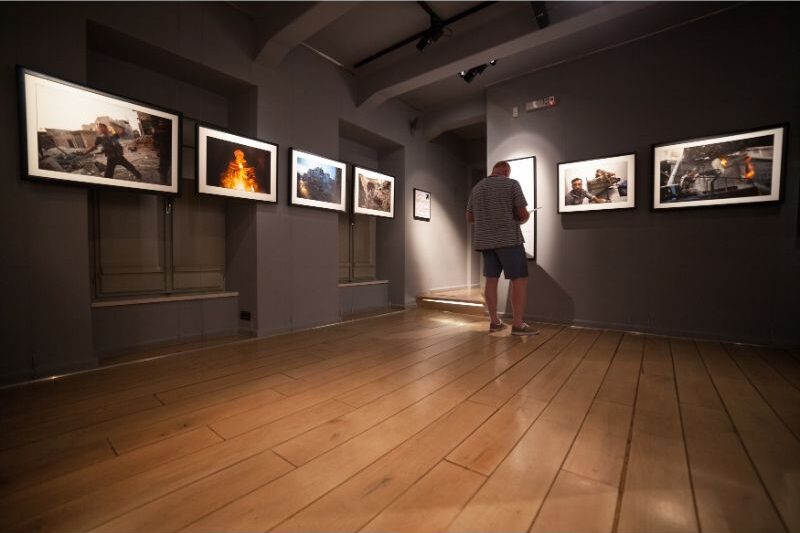
Maxvorstadt is best known for its Museumsmeile, the cluster of major state museums along and near Barer Strasse, including the Alte Pinakothek, Neue Pinakothek, Pinakothek der Moderne, and Museum Brandhorst, which together hold one of the world’s most comprehensive art collections spanning medieval masters to contemporary work. Königsplatz, the grand neoclassical square flanked by the Glyptothek and the Staatliche Antikensammlungen, anchors the western end of the district and was conceived by Leo von Klenze as a Bavarian Acropolis.
Best things to do in Maxvorstadt
Spending a morning moving between the Pinakothek trio on Barer Strasse is the single most rewarding cultural itinerary in Munich; combined entry tickets are available and Sunday admission to state museums is reduced to one euro. Beyond the museums, visitors can explore the NS-Dokumentationszentrum on Brienner Strasse for a rigorous account of Munich’s role in the rise of National Socialism, or browse the specialist art and architecture bookshops clustered around Türkenstrasse and Schellingstrasse.
- Visit the Glyptothek on Königsplatz for ancient Greek and Roman sculpture in a neoclassical setting
- Walk through the courtyard of the main LMU building on Geschwister-Scholl-Platz
- Browse Antiquariat and independent bookshops along Schellingstrasse
- Attend an evening lecture or concert at the Hochschule für Musik und Theater on Arcisstrasse
Where to eat and drink in Maxvorstadt
The streets around Schellingstrasse and Türkenstrasse form the practical eating and drinking backbone of the district, lined with student-friendly cafés, traditional Bavarian Wirtshäuser, and affordable lunch spots that serve the LMU and TUM communities daily. Café Münchner Freiheit is a short tram ride north but the immediate neighbourhood offers reliable options on Schellingstrasse itself, including long-established café-bars that open from breakfast through late evening.
- Schelling Salon on Schellingstrasse — historic billiard café open since 1872
- Traditional Bavarian lunch menus at Wirtshaus venues near Theresienstrasse
- Weekend farmer’s market produce at Elisabethmarkt in adjacent Schwabing
How to get to Maxvorstadt
Maxvorstadt is directly served by U-Bahn lines U3 and U6, with the station Universität placing visitors at the heart of the district on Ludwigstrasse, while Königsplatz station on U2 deposits passengers steps from the main museum cluster. Tram lines 27 and 28 run along Türkenstrasse and connect the neighbourhood to Schwabing and the city centre, and the district is a flat 20-minute walk north from Munich Hauptbahnhof.
- U-Bahn U3/U6 — station Universität (Ludwigstrasse)
- U-Bahn U2 — station Königsplatz
- Tram 27/28 along Türkenstrasse
Where to walk in Maxvorstadt
The most rewarding walking route in Maxvorstadt runs from Königsplatz east along Brienner Strasse, turning north onto Barer Strasse past the three Pinakotheken, then continuing to Schellingstrasse for cafés and bookshops before finishing at Geschwister-Scholl-Platz in front of LMU. The side streets between Türkenstrasse and Amalienstrasse reward slow exploration with Gründerzeit apartment facades, courtyard gardens, and independent shops.
Best time to visit Maxvorstadt
Maxvorstadt is a year-round destination, but the combination of long daylight hours, open museum courtyards, and the active student population makes late spring (May–June) and early autumn (September–October) particularly pleasant, when outdoor seating fills Schellingstrasse and Königsplatz hosts occasional open-air events. Sunday is the best single day to visit the state museums due to the one-euro admission policy, though queues at the Pinakothek der Moderne can be significant by mid-morning.