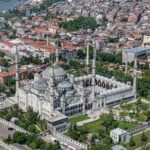
The Blue Mosque, officially the Sultan Ahmed Mosque, stands as one of Istanbul‘s most iconic architectural masterpieces. Built between 1609 and 1616 during the rule of Ahmed I, this magnificent structure combines Byzantine and Ottoman design elements to create a breathtaking place of worship that continues to function as an active mosque today. Its nickname derives from the more than 20,000 handmade blue Iznik tiles that adorn the interior walls, creating a mesmerizing azure ambiance when illuminated by natural light through 260 windows. The mosque’s distinctive exterior features six slender minarets (unusual for its time) and a cascade of domes that create a harmonious, rhythmic silhouette against Istanbul’s skyline. The vast prayer hall, illuminated by massive chandeliers, centers around a mihrab carved from fine marble and encompasses a space designed for both spiritual contemplation and community gathering. Located opposite the Hagia Sophia in Sultanahmet Square, the Blue Mosque represents the pinnacle of imperial Ottoman architecture and serves as a powerful symbol of Istanbul’s rich cultural and religious heritage.
Cultural Context
Supreme architectural achievement of the Ottoman Empire and one of Islam’s most sacred and visually stunning mosques, representing the cultural zenith of Ottoman artistic and spiritual expression. Known worldwide as the Blue Mosque for its magnificent blue Iznik tiles, it embodies the synthesis of Byzantine architectural inheritance with Islamic innovation, serving as both a functioning house of worship and a symbol of Ottoman cultural legacy in modern Turkey.
Historical Context
Commissioned by Sultan Ahmed I and constructed between 1609 and 1617 by architect Sedefkar Mehmed Ağa during the Ottoman Empire’s golden age, completed just before the Sultan’s untimely death at age 27. The mosque represents the empire’s attempt to rival the grandeur of nearby Hagia Sophia while asserting Ottoman architectural supremacy, built during a period of territorial expansion and cultural flourishing under Ahmed I’s reign.