
MenuClose

A place worth knowing

Hagia Sophia

Historical landmarks · Mosque in IstanbulUpdated

  • Google rating4.8/5 (165,000 reviews)
  • Typical visit1-2 hours average visit (longer if exploring all architectural and historical details)
  • EntranceFree (donations welcome)
  • Today (Monday)9:00 AM – 7:00 PM
  • Typical visit1-2 hours average visit (longer if exploring all architectural and historical details)
  • EntranceFree (donations welcome)
  • Google rating4.8/5 165,000 reviews
  • WebsiteOfficial site ↗
Opening hours all week
Monday
9:00 AM – 7:00 PM
Tuesday
9:00 AM – 7:00 PM
Wednesday
9:00 AM – 7:00 PM
Thursday
9:00 AM – 7:00 PM
Friday
9:00 AM – 7:00 PM
Saturday
9:00 AM – 7:00 PM
Sunday
9:00 AM – 7:00 PM
Accessibility
"{"entrance": "Ground level accessible, ramps available for wheelchairs", "interior": "Main floor fully accessible, upper galleries require stairs", "facilities": "Basic accessibility accommodations, contact site for specific needs"}"
The short answer

Why it matters

Byzantine cathedral turned Ottoman mosque, one of the world's greatest architectural marvels spanning 1,500 years of history.

Standing at the crossroads of continents and civilizations, Hagia Sophia (Ayasofya) represents one of humanity’s greatest architectural achievements and a profound symbol of Istanbul‘s multilayered cultural heritage. Originally constructed as an Eastern Orthodox cathedral in 537 CE under Emperor Justinian I, this architectural marvel with its massive 31-meter diameter dome seemingly floating 55 meters above the ground revolutionized Byzantine architecture and remained Christianity’s largest cathedral for nearly a thousand years. Following Constantinople’s fall in 1453, the building was transformed into an imperial mosque, gaining minarets, mihrab, and calligraphic medallions that harmoniously merged with existing Christian elements. The interior showcases this remarkable synthesis—gleaming gold Byzantine mosaics depicting Christ, Mary, and saints coexist with Islamic calligraphy panels and geometric patterns, while centuries of candlelight have burnished the marble columns to a soft amber glow. Natural light filters through 40 windows around the dome base, creating an otherworldly illumination that has captivated visitors for fifteen centuries. Having served as a museum for much of the 20th century before reverting to mosque status in 2020, Hagia Sophia continues to embody cultural dialogue and transition, allowing visitors to witness the literal layers of Istanbul’s evolution from Byzantium to Constantinople to its present incarnation at this physical and symbolic nexus between East and West.

Cultural Context

One of world most important architectural monuments symbolizing intersection of Christianity and Islam, East and West. Represents 1,500 years of religious and cultural transformation, embodying Istanbul role as crossroads of civilizations. Universal symbol of architectural achievement and interfaith dialogue, demonstrating how sacred spaces can transcend religious boundaries.

Historical Context

Built 532-537 AD by Byzantine Emperor Justinian I as Christian cathedral, remaining largest church in Christendom for nearly millennium. Converted to mosque after Ottoman conquest 1453 by Sultan Mehmed II. Secularized 1935 by Atatürk as museum, reconverted to mosque 2020 by Erdoğan government, reflecting modern Turkey religious-secular tensions.

Context

Story and significance

About

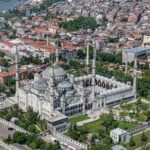
Originally built as a cathedral in 537 AD under Emperor Justinian I, Hagia Sophia served as the world’s largest enclosed space for nearly a thousand years. The central dome spans 31 metres and rises 55 metres above the floor, supported by massive pendentives — an engineering innovation at the time. After the Ottoman conquest in 1453, it was converted into a mosque; four minarets, a mihrab, and calligraphic medallions were added. It operated as a museum from 1934 to 2020 before reverting to mosque status. Interior highlights include Byzantine-era gold mosaics of Christ, the Virgin Mary, and various emperors, alongside Ottoman-era additions. Entry is free.

Historical significance

Built 532-537 AD by Emperor Justinian I as Hagia Sophia (Holy Wisdom), served as Eastern Orthodox cathedral for nearly 1,000 years. Converted to mosque in 1453 following Ottoman conquest of Constantinople. Represents unique intersection of Christian and Islamic civilizations. Architectural influence spread throughout Byzantine and Ottoman worlds. Symbol of religious and cultural transformation. UNESCO recognition acknowledges its universal importance transcending religious boundaries.

Historical context

Built 532-537 AD by Byzantine Emperor Justinian I as Christian cathedral, remaining largest church in Christendom for nearly millennium. Converted to mosque after Ottoman conquest 1453 by Sultan Mehmed II. Secularized 1935 by Atatürk as museum, reconverted to mosque 2020 by Erdoğan government, reflecting modern Turkey religious-secular tensions.
Cultural context

One of world most important architectural monuments symbolizing intersection of Christianity and Islam, East and West. Represents 1,500 years of religious and cultural transformation, embodying Istanbul role as crossroads of civilizations. Universal symbol of architectural achievement and interfaith dialogue, demonstrating how sacred spaces can transcend religious boundaries.

Architecture

Revolutionary Byzantine architecture by Anthemios of Tralles and Isidoros of Miletus that changed history of architecture. Features innovative massive dome, complex structural engineering, and synthesis of classical and Christian architectural elements. Became model for subsequent churches and mosques, influencing architectural development across Europe and Near East.

Local significance

Central Istanbul landmark and UNESCO World Heritage Site component attracting millions annually. Symbol of Turkish national identity and Islamic heritage while preserving Byzantine Christian legacy. Major tourist destination despite current religious function, representing Turkey complex relationship between secular and Islamic governance, tradition and modernity.

Experience

Make the most of it

Local tips
  • Turkish citizens enter free for worship through separate entrance
  • Avoid Fridays 12:00-14:30 when closed for Juma prayers
  • Early morning 9-11am best for photography with natural light
  • Northeast corner Visitors Area entrance for tourists only
  • Headscarves sold at entrance for 1 EUR if forgotten
Hidden gems nearby
  • Viking graffiti Halfdan carved here on second floor marble balustrade
  • Weeping Column with healing hole – spin thumb 360 degrees
  • Secret Imperial Door used only by Byzantine emperors
  • Cat Gli sleeps on Ottoman tomb – Instagram famous mosque cat
  • Deesis mosaic best preserved Byzantine art – south gallery
Special features
  • Hagia Sophia is renowned for its extraordinary architectural design and artistic features that blend Byzantine and Ottoman influences, making it a unique monument in the history of religious architecture. The building's massive central dome, approximately 31 meters in diameter and soaring 55 meters above the floor, was an engineering marvel of its time when completed in 537 AD under Emperor Justinian I. This dome appears to float above the nave, supported by pendentives that ingeniously transition the circular base of the dome to the rectangular structure below. Inside, visitors can observe a rich mosaic program that includes Christian iconography such as depictions of Christ Pantocrator, the Virgin Mary, and various saints, some of which were later covered or altered during the Ottoman conversion. The interior also features intricate marble pillars and panels sourced from across the empire, showcasing the extensive reach and wealth of Byzantium. After its conversion into a mosque in 1453 by Sultan Mehmed II, Islamic elements were added, including large medallions inscribed with Arabic calligraphy featuring names of Allah, the Prophet Muhammad, and the first four caliphs. The minarets, added during the Ottoman period, frame the structure externally, creating a distinctive silhouette on Istanbul’s skyline. The building’s layered history is physically embodied in these overlapping artistic and architectural elements, making Hagia Sophia a living museum of cultural and religious syncretism. Today, it continues to captivate visitors with its harmonious blend of Christian and Islamic art and architecture, standing as a testament to the city’s diverse heritage and its role as a bridge between East and West.
Editorial scores

How we rate it

Authenticity10/10
Accessibility score7/10
Family-friendly score8/10
Off-the-beaten-path2/10

Editorial scores on a 10-point scale, judged against places of the same kind.

Updated Data: Editorial research · Google Places ratings · Verified coordinates