
MenuClose

A place worth knowing

Cathédrale Notre-Dame de Reims

Attractions · Cathedral in ReimsUpdated

  • Google rating4.7/5
  • Typical visit1-2 hours average visit
  • EntranceFree (donations welcome)
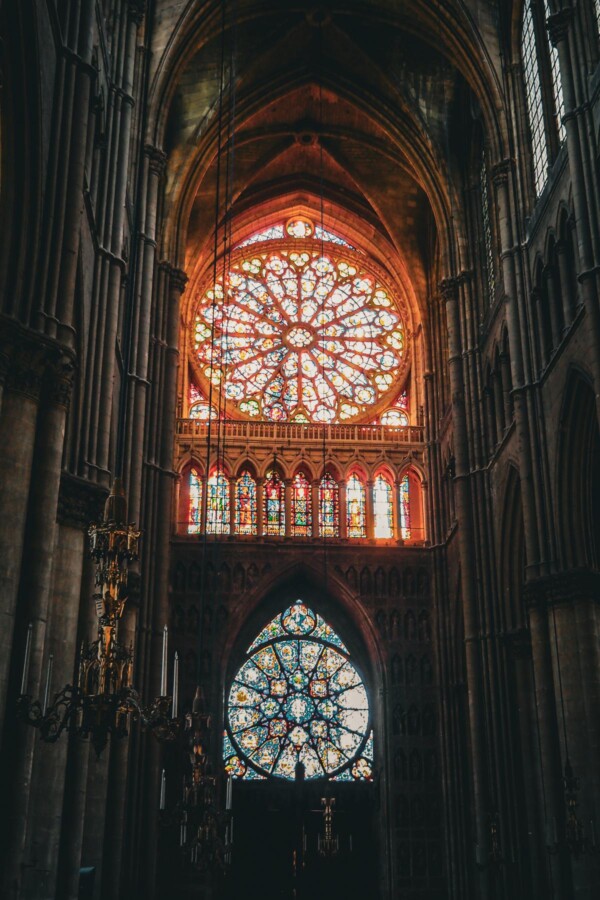
The captivating stained glass rose windows of Reims Cathedral, illuminated by sunlight within the Gothic interior.
Kyle Kroeger / ViaTravelers
  • Today (Wednesday)7:30 AM – 7:30 PM
  • Typical visit1-2 hours average visit
  • EntranceFree (donations welcome)
  • Google rating4.7/5
  • WebsiteOfficial site ↗
Opening hours all week
Monday
7:30 AM – 7:30 PM
Tuesday
7:30 AM – 7:30 PM
Wednesday
7:30 AM – 7:30 PM
Thursday
7:30 AM – 7:30 PM
Friday
7:30 AM – 7:30 PM
Saturday
7:30 AM – 7:30 PM
Sunday
7:30 AM – 7:15 PM
Quiet times
Early morning (before 9 AM), Late afternoon (after 5 PM), Weekday mornings
Busy times
10:00 AM – 4:00 PM, July and August, Weekends
Accessibility
"{"towers": "Not wheelchair accessible – 250 steps", "parking": "Disabled parking on Place du Cardinal Luçon", "seating": "Chairs available throughout nave", "assistance": "Audio guides and touch tours available", "facilities": "Accessible restrooms nearby", "wheelchair_access": "Cathedral ground floor fully accessible via ramps"}"
The short answer

Why it matters

The Gothic coronation cathedral of French kings since the 13th century, famous for its smiling angel sculpture and Chagall stained glass

Cathédrale Notre-Dame de Reims, a masterpiece of Gothic architecture in Champagne, France, is renowned as the coronation site for French kings. Built in just 60 years (starting in 1211), it stands on the site of previous cathedrals dating back to 401 CE. The cathedral features extraordinary architectural elements including flying buttresses, dramatic facades, and an abundance of sculptures—over 2,300 statues, including the famous “Smiling Angel.” At 150 meters long with towers reaching 80 meters high, its immense interior covers 6,650 square meters and is flooded with light through magnificent stained glass windows, including contemporary works by Marc Chagall. Despite suffering severe damage during World War I, the cathedral was painstakingly restored with support from American philanthropist John D. Rockefeller. Recognized as a UNESCO World Heritage Site in 1991, it remains a symbol of both religious significance and Franco-German reconciliation.

Cultural Context

UNESCO World Heritage cathedral embodying French national identity as coronation site of 32 kings over 800 years, masterpiece of Gothic architecture representing the sacred bond between French monarchy and Catholic Church

Historical Context

Built 1211-1275 on site of earlier churches, hosted coronations from Hugh Capet era through Charles X in 1825, where Saint Remi baptized Clovis establishing Christian France, severely damaged WWI but restored by 1938


Context

Story and significance

About

The Cathédrale Notre-Dame de Reims is a 13th-century Gothic masterpiece and UNESCO World Heritage Site where French monarchs were crowned for over 800 years, from Louis VIII in 1223 through Charles X in 1825. The west facade features 2,303 stone statues, including the famous Smiling Angel, while Marc Chagall’s deep-blue stained-glass windows from 1974 illuminate the interior alongside 13th-century originals. Heavily damaged during World War I, the cathedral was painstakingly restored throughout the 20th century.

Historical significance

Coronation site for French monarchs from 1223 to 1825, including Charles VII in 1429 with Joan of Arc in attendance. The cathedral was severely damaged during World War I, with over 300 direct hits from German artillery, yet was meticulously restored.

Historical context

Built 1211-1275 on site of earlier churches, hosted coronations from Hugh Capet era through Charles X in 1825, where Saint Remi baptized Clovis establishing Christian France, severely damaged WWI but restored by 1938

Cultural context

UNESCO World Heritage cathedral embodying French national identity as coronation site of 32 kings over 800 years, masterpiece of Gothic architecture representing the sacred bond between French monarchy and Catholic Church

Architecture

Pinnacle of High Gothic architecture featuring revolutionary flying buttresses, 2,303 statues including smiling angel, soaring twin towers, innovative fire-resistant cement framework by Henri Deneux replacing medieval wooden roof post-WWI

Local significance

Living cathedral hosting daily services while attracting millions of visitors, symbol of Reims identity and French heritage, economic driver for champagne region tourism, site of Franco-German reconciliation ceremonies

Experience

Make the most of it

Local tips
  • Early morning visits most peaceful
  • Respectful behavior appreciated
  • Attend a service for full experience
  • Local festivals bring special ceremonies
  • Guided tours explain symbolism
  • Lighting candles follows local customs
  • Gift shops support maintenance
Hidden gems nearby
  • Historical graves of notable figures
  • Ancient crypts open limited hours
  • Original architectural elements preserved
  • Acoustic properties for music
  • Hidden chapels with unique artwork
  • Meditation gardens for quiet reflection
  • Sacred relics in side chambers
Special features
  • Cathédrale Notre-Dame de Reims is distinguished by its exceptional Gothic architectural style, marked by an intricate façade adorned with over 2,300 statues, including the famous Smiling Angel, a symbol of the cathedral’s artistic and spiritual heritage. Constructed primarily between the 13th and 15th centuries, the cathedral is renowned for its soaring verticality, pointed arches, flying buttresses, and extensive use of stained glass windows that illuminate the interior with vibrant colors. One of its most unique features is the labyrinth embedded in the floor, historically used by pilgrims and clergy during religious ceremonies. The cathedral also houses remarkable stained glass windows from different periods, including modern additions by renowned artists such as Marc Chagall, which blend harmoniously with the medieval glass, reflecting a continuous tradition of artistic patronage. The cathedral’s role as the traditional coronation site for French kings, beginning with the crowning of King Louis VIII in 1223 and culminating with Charles X in 1825, imbues it with profound historical and cultural significance. Additionally, the cathedral’s façade displays a rare sculptural program that narrates biblical stories and the lives of saints, serving both educational and devotional purposes in the medieval era. Despite suffering extensive damage during World War I, the meticulous restoration efforts have preserved its structural integrity and artistic grandeur, making it a living testament to resilience and heritage. Its location in Reims, a city historically linked to the Champagne region, further enriches its cultural context, intertwining religious, royal, and regional identities. Overall, the Cathédrale Notre-Dame de Reims stands as a masterpiece of medieval craftsmanship and religious symbolism, drawing scholars, art lovers, and pilgrims alike to experience its unique blend of history and artistry.
Editorial scores

How we rate it

Authenticity9/10
Accessibility score9/10
Family-friendly score7/10
Off-the-beaten-path5/10

Editorial scores on a 10-point scale, judged against places of the same kind.

Bookable experiences

Worth booking ahead in Reims

Hand-picked from the operators our guides already send readers to. Prices and availability are live on the partner site.

We earn a commission if you book through these links, at no extra cost to you. It is how we keep the guides free and independent.

Updated Data: Editorial research · Google Places ratings