MenuClose

A place worth knowing

La Sagrada Familia

Attractions · Basilica in BarcelonaUpdated

  • Google rating4.8/5
  • Typical visit2-3 hours average visit (longer if exploring all facades, attending a service, or visiting during peak times)
  • Entrance€26
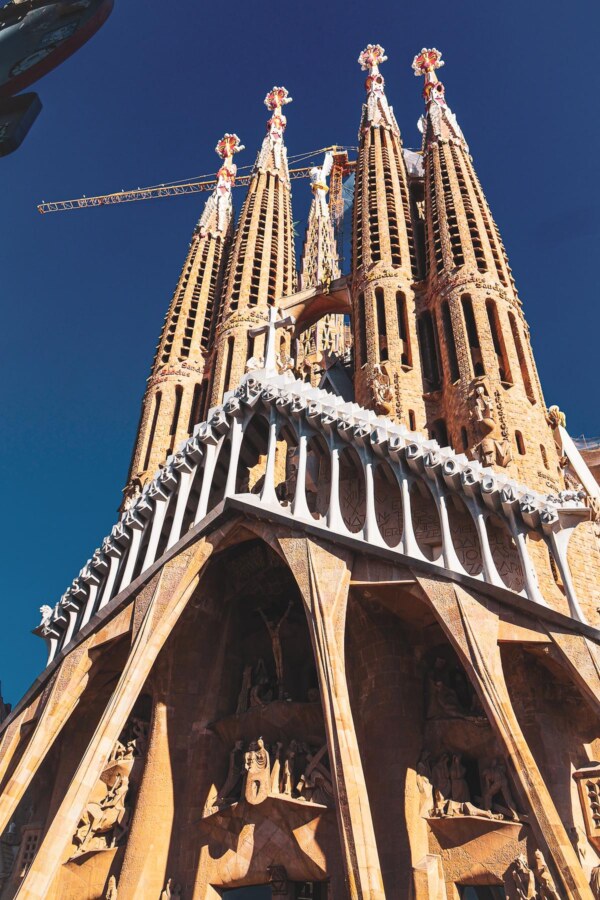
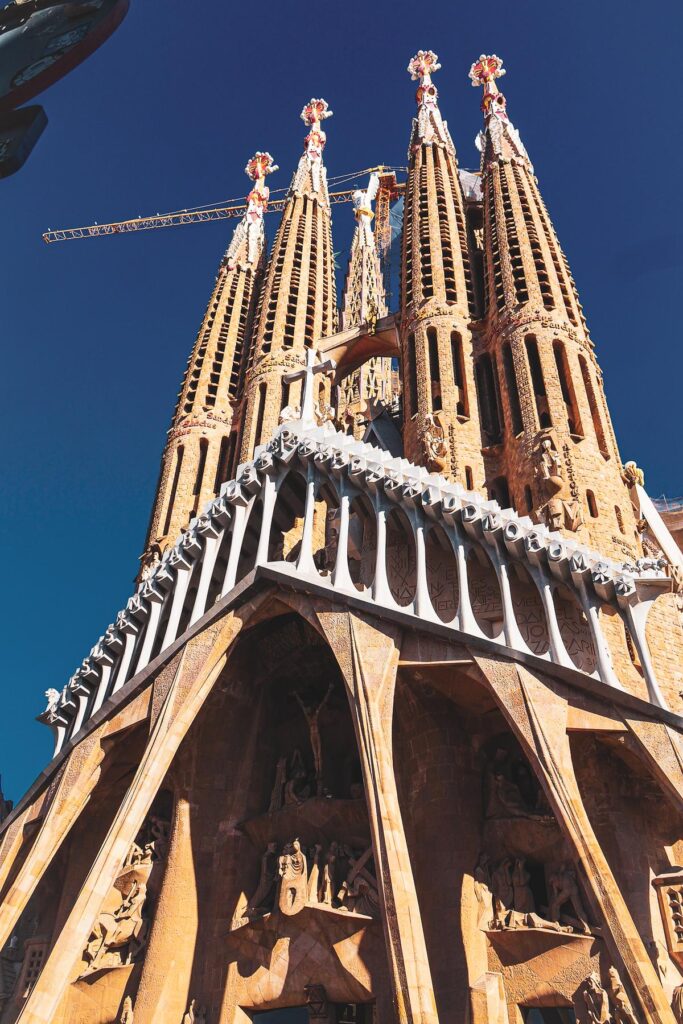
La Sagrada Familia facade with detailed sculptures and construction crane in Barcelona
Kyle Kroeger / ViaTravelers
  • Today (Thursday)9:00 AM – 8:00 PM
  • Typical visit2-3 hours average visit (longer if exploring all facades, attending a service, or visiting during peak times)
  • Entrance€26
  • Google rating4.8/5
  • WebsiteOfficial site ↗
  • TicketsCheck availability ↗
Opening hours all week
Monday
9:00 AM – 8:00 PM
Tuesday
9:00 AM – 8:00 PM
Wednesday
9:00 AM – 8:00 PM
Thursday
9:00 AM – 8:00 PM
Friday
9:00 AM – 8:00 PM
Saturday
9:00 AM – 8:00 PM
Sunday
9:00 AM – 8:00 PM
Features
  • Historical Landmark
  • Iconic Landmark
La Sagrada Familia facade with detailed sculptures and construction crane in Barcelona
The short answer

Why it matters

A transcendental fusion of divine craftsmanship and architectural innovation.

  • Cultural Authenticity: La Sagrada Familia embodies local traditions through its incorporation of Catholic symbolism, organic geometry, and Art Nouveau elements, reflecting Catalan identity and creativity as conceptualized by Gaudí.
  • Historical Significance: The ongoing construction since 1882, combined with Gaudí’s unique architectural innovation, positions La Sagrada Familia as a paramount symbol of Barcelona’s cultural and national heritage.
  • Artistic Value: La Sagrada Familia is an exemplar of artistic brilliance, primarily through Gaudí’s avant-garde approach to design and his ability to integrate natural forms into the architectural layout, enhancing its aesthetic and structural integrity.
  • Social Impact: As a major landmark and a functional place of worship, it draws millions, impacting local and global communities, enhancing cultural appreciation and fostering tourism in Barcelona.
  • Accessibility and Preservation: Despite its unfinished state, the basilica is accessible to the public with comprehensive guided tours and has robust preservation measures in place, ensuring its conservation and visitor safety.
  • Visitor Engagement: Through interactive guided tours, educational programs, and a museum detailing its history and future plans, La Sagrada Familia offers visitors deep cultural and educational engagements.
  • Educational Value: It serves as a living classroom offering insights into its prolonged construction phases, architectural styles, and Gaudí’s methodologies, enriching visitors’ understanding of art, architecture, and engineering.

Antoni Gaudí’s unfinished masterpiece, La Sagrada Familia soars above Barcelona‘s skyline as one of the world’s most extraordinary examples of Modernist architecture. Construction began in 1882 and continues today, blending Gothic and Art Nouveau influences with Gaudí’s revolutionary naturalistic designs. The basilica’s exterior features intricate façades depicting Christ’s birth, passion, and glory, while the interior dazzles with forest-like columns, kaleidoscopic stained glass, and hyperbolic vaulting that creates an otherworldly play of light. Scheduled for completion in 2026 (the centenary of Gaudí’s death), this UNESCO World Heritage site represents the pinnacle of Catalan creative expression and attracts millions of visitors who marvel at its mathematical precision and spiritual symbolism.

Cultural Context

La Sagrada Familia holds profound cultural significance as a symbol of Catalan identity and spirituality. Rooted deeply in the traditions of Barcelona and Catalonia, the basilica embodies the region’s unique blend of Catholic faith and artistic innovation. It is closely associated with the Catalan Modernisme movement, which sought to revive and celebrate Catalan culture through distinctive architecture and design during the late 19th and early 20th centuries. The basilica is not only a place of worship but also a site where religious festivals and public celebrations occur, particularly during major Catholic holidays such as Christmas and Easter. Local customs include pilgrimages and community gatherings that highlight the church’s role as a living spiritual center. The ongoing construction itself has become a cultural practice, involving generations of artisans, architects, and craftsmen who continue Gaudí’s vision with respect for traditional techniques and symbolism. The intricate facades and interior decorations reflect biblical stories and natural elements, connecting visitors to the Christian narrative and Catalan reverence for nature. La Sagrada Familia serves as a cultural beacon that bridges past and present, faith and art, making it an enduring emblem of Barcelona’s heritage and collective identity within Catalonia and Spain as a whole.

Historical Context

The historical context of La Sagrada Familia begins in 1882 when architect Francisco de Paula del Villar initially designed the church in a neo-Gothic style. However, in 1883, Antoni Gaudí took over the project, radically transforming its design into a unique synthesis of Gothic and Art Nouveau forms. Gaudí devoted over four decades of his life to the basilica, working on it until his death in 1926. During his lifetime, only a fraction of the church was completed, including the Nativity Facade and crypt. Construction was interrupted by the Spanish Civil War (1936-1939), during which parts of Gaudí’s workshop and original plans were destroyed, significantly impacting the project’s continuity. After the war, reconstruction efforts resumed, relying on surviving models, drawings, and modern technology to continue Gaudí’s vision. The basilica remains unfinished to this day, with an anticipated completion date around the late 2020s. Throughout its history, La Sagrada Familia has witnessed Barcelona’s transformation from a burgeoning industrial city to a global cultural hub. Its construction reflects broader historical themes including religious devotion, Catalan nationalism, and the evolution of architectural innovation. The church’s history is marked by perseverance and adaptation, symbolizing a dynamic dialogue between tradition and modernity.

Context

Story and significance

About

La Sagrada Familia in Barcelona is unequivocally stepping into the pages of a grand architectural fairy tale authored by the visionary Antoni Gaudí. This basilica, a masterpiece eternally in the making since the 1880s, showcases a fusion of Gothic and Art Nouveau that leaves its visitors spellbound.

Beyond its breathtaking facades and spires reaching for the heavens, it’s a spiritual beacon with stories etched in every nook – a place where the divine and earth intertwine. Its interiors, a kaleidoscope of light through stained glass, create an ethereal atmosphere, offering a glimpse into Gaudí’s unconventional genius. The accompanying museum provides profound insights into its painstaking construction and Gaudí’s enduring legacy.

With the city of Barcelona spread beneath in panoramic splendor, La Sagrada Familia stands as a monument of religious significance and a testament to unending human creativity and devotion. Visiting here is no mere sightseeing—it’s an immersion into an evolving cultural symphony.

Historical significance

La Sagrada Familia is historically significant as Gaudí’s masterpiece and as a touchstone of modernist architecture and Barcelona’s cultural identity. Its prolonged, still-unfinished construction illustrates shifts in engineering, conservation and heritage management and highlights debates about authenticity, tourism pressure and the preservation of visionary architectural projects.

Historical context

Construction began in the late 19th century as part of the Catalan modernisme movement, based on a project by architect Antoni Gaudí who transformed and devoted much of his later life to the church. Work has continued intermittently since then, funded largely by donations and visitor fees, evolving through several architects and surviving civil war interruptions and changing construction technologies.

Cultural context

La Sagrada Familia is Barcelona’s most iconic church and a focal point for both local religious life and international tourism. It functions as an active basilica for Catholic worship while drawing millions of visitors annually who come to admire Antoni Gaudí’s visionary design and to experience a central symbol of Catalan modernisme and civic pride.

Architecture

The building exemplifies Catalan modernisme fused with unique organic forms and Gothic references; Gaudí used curving stone, hyperboloid vaults, parabolic arches and richly sculpted façades. The interior features tree-like columns, extensive stained glass that washes the space with colored light, and an ambitious program of symbolic ornamentation that integrates structure and sculpture.

Local significance

La Sagrada Familia is a civic and cultural icon for Barcelonans, visible in the city skyline and tied to Catalan pride and identity. Beyond its role as a major tourist draw, locals regard it as an unfinished work still shaping neighborhood life in Eixample through construction activity, visitor management and employment. It also functions as an active basilica with religious services for residents and a focal point for debates about urban planning, preservation and the balance between mass tourism and everyday community needs.

Updated Data: Editorial research · Google Places ratings · Verified coordinates