MenuClose

A place worth knowing

Louis Armstrong Park

Attractions · City park in New OrleansUpdated

  • Google rating4.5/5 (6,850 reviews)
  • Typical visit1-2 hours (longer if attending an event or concert)
  • EntranceFree
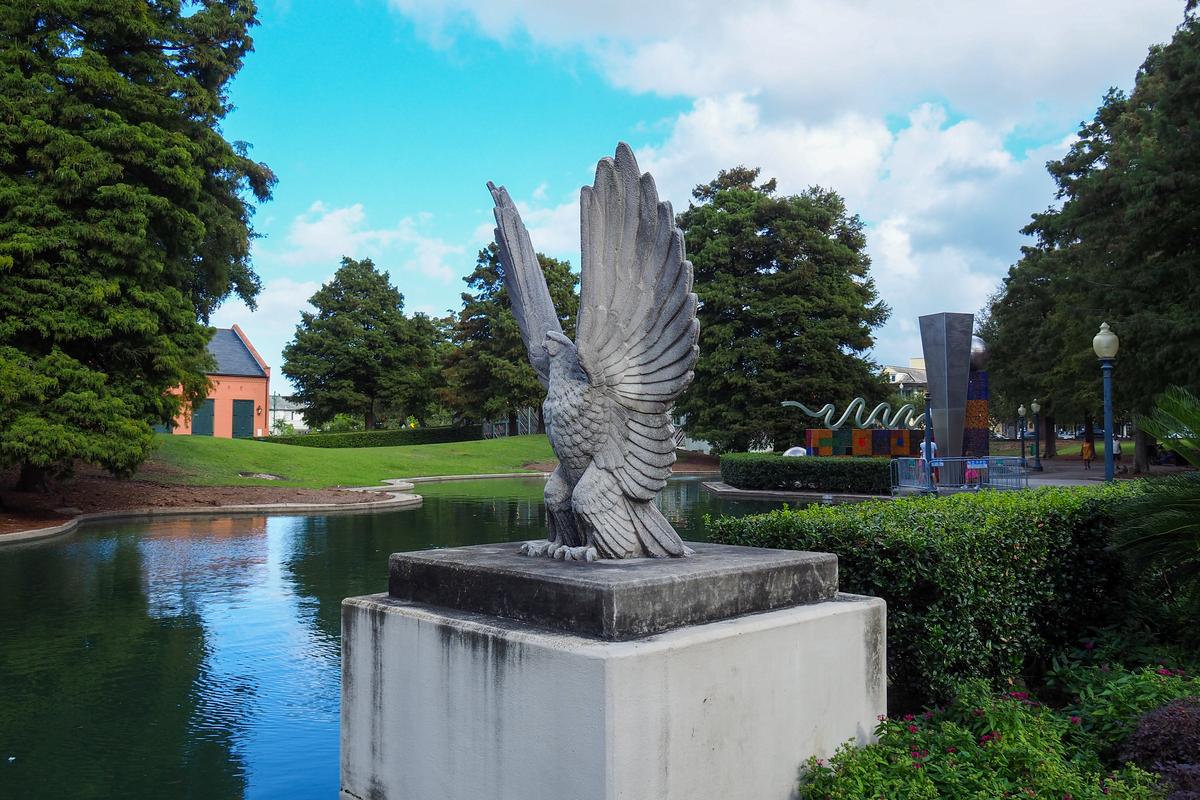
Eagle statue in Louis Armstrong Park New Orleans by pond with lush greenery in background
Eagle statue in serene park Kyle Kroeger / ViaTravelers
  • Today (Sunday)7AM-7PM
  • Typical visit1-2 hours (longer if attending an event or concert)
  • EntranceFree
  • Google rating4.5/5 6,850 reviews
  • WebsiteOfficial site ↗
Opening hours all week
Monday
7AM-7PM
Tuesday
7AM-7PM
Wednesday
7AM-7PM
Thursday
7AM-7PM
Friday
7AM-7PM
Saturday
7AM-7PM
Sunday
7AM-7PM
Rating breakdown
  • 5 stars4,602
  • 4 stars1,533
  • 3 stars548
  • 2 stars97
  • 1 star70

Based on 6,850 Google reviews and 32,493 photos.

Features
  • Good for kids
  • Dog-friendly
  • Great for music lovers
The short answer

Why it matters

A 31-acre park dedicated to Louis Armstrong.

Historical Significance

Louis Armstrong Park holds deep cultural and historical importance for New Orleans. It’s where African American traditions thrived, and jazz music blossomed, shaping the city’s unique identity.

Congo Square and African American Heritage

Congo Square, located in the park, was a gathering spot for enslaved Africans in the 1800s. On Sundays, they’d meet to dance, sing, and play music. This special place kept African traditions alive in America. The square became part of the National Register of Historic Places in 1993. For a while, it was known as Beauregard Square, but its original name stuck. Today, Congo Square hosts festivals and events that celebrate African American culture. Visitors can see a cool statue in the square. It shows people dancing and playing drums, just like in the old days. The statue reminds everyone of the square’s important history.

Jazz Evolution and Prominent Figures

Louis Armstrong Park is like a big outdoor museum for jazz music. It’s named after Louis Armstrong, a famous trumpet player born in New Orleans. But he wasn’t the only jazz star from the area. Buddy Bolden, the “first man of jazz,” played here in the early 1900s. His loud, bluesy sound helped create the New Orleans jazz style. Other musicians like King Oliver and Jelly Roll Morton also started in this neighborhood. The park has statues of these jazz greats. There’s even a cool walkway with their names on it. It’s fun to stroll around and learn about these music pioneers. Jazz bands still play in the park today. Visitors can hear the same improvisation and energy that made early jazz so exciting. It’s a great way to connect with the city’s musical roots.

Cultural Impact and Urban Renewal

Louis Armstrong Park has played a big role in shaping New Orleans’ culture. For many years, it has been a place of change, celebration, and community spirit.

The Tremé Community

The park sits in Tremé, one of the oldest Black neighborhoods in America. In the 1960s, city leaders wanted to build a “cultural complex” here. They knocked down many old buildings. This hurt the tight-knit community. Lots of families had to move away, and it was hard for them to leave their homes. The city promised to improve things, but many people felt let down. When the park opened in 1980, it tried to honor the area’s history. They kept Congo Square, an important spot for African American culture. The park also has a rec center with a pool and gym. This was the city’s way of saying sorry to Tremé residents.

Events and Festivals

Today, the park is alive with music and fun. It hosts cool events all year long. “Jazz in the Park” brings top musicians to play outside. The Creole Gumbo Fest lets people try yummy local food. During Mardi Gras, the park gets extra festive. Colorful parades and parties fill the streets. On Martin Luther King Day, folks gather to remember his dream of equality. The Red Dress Run is a quirky event where people run in red dresses. It’s silly and fun, and it shows how the park brings people together. These festivals help keep Tremé’s spirit alive. Like New Orleans itself, they mix old traditions with new ideas.

Park Attractions and Features

Louis Armstrong Park offers a mix of cultural spaces and outdoor areas for visitors to enjoy. The park’s design blends art, music, and nature to create a unique New Orleans experience.

Public Spaces and Art Installations

The park’s entrance is marked by a striking arch, welcoming guests to explore its 32 acres. You’ll find a peaceful lagoon surrounded by walking paths and benches. It’s a great spot to relax and take in the scenery. Art lovers will appreciate the Sculpture Garden. It features works that honor New Orleans’ musical heritage. The centerpiece is a statue of Louis Armstrong himself, trumpet in hand. There’s also a bust of jazz legend Sidney Bechet. Congo Square, a historic gathering place for African Americans, sits within the park. It’s now used for concerts and cultural events. The square has a special place in the city’s musical history.

Performing Arts Venues

The Mahalia Jackson Theater for the Performing Arts is a key attraction. It hosts Broadway shows, concerts, and dance performances. The theater seats over 2,000 people and has great acoustics. Another venue is the New Orleans Municipal Auditorium. While currently closed for repairs, it has a rich history of hosting concerts and events. The building’s Art Deco design makes it a standout. These spaces keep the park buzzing with activity. They bring in locals and tourists for shows and events throughout the year.

Legacy and Recognition

Louis Armstrong Park is a living tribute to the jazz legend. The 32-acre space in New Orleans’ Tremé neighborhood honors Armstrong’s huge impact on music. Opened in 1980, it keeps his spirit alive through art and nature. Visitors can see statues and plaques about Armstrong throughout the park. These tell his story and show off his big personality. The park also celebrates other jazz greats like Mahalia Jackson and Sidney Bechet. Congo Square, inside the park, has its special history. In the 1700s and 1800s, it was a gathering spot for enslaved people, free people of color, and Native Americans. They’d meet on Sundays to make music and keep their cultures alive. Louis Armstrong Park is part of the New Orleans Jazz National Historic Park today. The National Park Service helps protect this important piece of jazz history. It’s a place where people can learn about early jazz and Dixieland styles. The park hosts concerts and events that strengthen New Orleans’ jazz tradition. It’s a living, breathing space that connects visitors to the city’s rich musical heritage.

Located just north of the French Quarter in New Orleans‘ Tremé neighborhood, Louis Armstrong Park honors the legendary jazz musician in the very community where jazz was born. This 32-acre urban oasis combines cultural significance with tranquil green spaces, including the historic Congo Square where enslaved Africans gathered to practice their musical traditions on Sundays—traditions that would ultimately influence the birth of jazz. The park features the iconic arched entrance, winding lagoons, and numerous sculptures including one of Armstrong himself. Beyond its natural beauty, the park serves as a living memorial to New Orleans’ rich musical heritage and African American cultural contributions. Regular concerts, second line parades, and cultural events in the park continue Armstrong’s legacy, making it not just a place of remembrance but of ongoing cultural creation and community celebration.

Cultural Context

Louis Armstrong Park is a vibrant cultural landmark that embodies the rich musical and African American heritage of New Orleans, particularly the Tremé neighborhood where it is located. The park serves as a living tribute to jazz, a genre that originated in this city and profoundly influenced global music culture. It is a gathering place for community events, festivals, and traditional celebrations such as Mardi Gras Indian gatherings and second-line parades, which are deeply rooted in African American customs. The park’s design and programming reflect the cultural fusion of African, Caribbean, and Creole influences that characterize New Orleans. Visitors can often experience live jazz performances, cultural workshops, and art installations that celebrate the city’s diverse heritage. The park also honors the legacy of Louis Armstrong, whose music and life story symbolize the resilience and creativity of the African American community in New Orleans. Through its cultural activities and commemorations, the park fosters an ongoing dialogue about identity, history, and artistic expression within the city’s unique social fabric. The cultural vibrancy of Louis Armstrong Park makes it a crucial site for understanding the living traditions of New Orleans and the enduring impact of jazz music worldwide.

Historical Context

Louis Armstrong Park was established in 1980 on land that was once part of Congo Square, a historic site where enslaved Africans and free people of color gathered during the 18th and 19th centuries to dance, sing, and play music. This area is widely recognized as the birthplace of jazz and an essential space for African cultural retention in the Americas. The park was named after Louis Armstrong, one of the most influential jazz musicians of all time, who was born in New Orleans in 1901. The park’s creation was part of a broader effort to preserve the Tremé neighborhood’s historical significance, which is one of the oldest African American communities in the United States. Over the decades, the park has undergone renovations to enhance its role as a cultural and historical hub, including the addition of statues and monuments honoring Armstrong and other jazz legends. The park’s location north of the French Quarter places it at the heart of New Orleans’ historical narrative, connecting the city’s colonial past, African American heritage, and musical evolution. The preservation of this site ensures that the legacy of Congo Square and the origins of jazz remain prominent in the public consciousness, making Louis Armstrong Park a vital link to New Orleans’ complex and rich history.


Context

Story and significance

About

Louis Armstrong Park is a 32-acre green space in New Orleans, Louisiana. It sits just across Rampart Street from the French Quarter in the Tremé neighborhood. The park honors jazz legend Louis Armstrong, who was born in New Orleans. At the heart of the park is Congo Square. This historic spot was once a gathering place for enslaved Africans and free people of color in the 18th and 19th centuries. They’d meet here on Sundays to play music, dance, and keep their cultural traditions alive. The park has some cool features:
  • Statues and monuments
  • Duck ponds
  • Walking paths
  • Open green spaces for picnics and events
It’s also home to the New Orleans Jazz National Historical Park. This spot celebrates the city’s rich jazz heritage with exhibits and live performances. Louis Armstrong Park opened in the 1980s after a controversial urban renewal project. Sadly, this project tore down part of the historic Tremé neighborhood. But today, the park tries to honor the area’s cultural legacy. Visitors can enter the park through a striking arched entrance on N Rampart St. It’s a great place to relax, learn about jazz history, or catch an outdoor concert. The park brings a bit of nature and culture to the bustling heart of New Orleans.
Historical significance

Named for Louis Armstrong, the park recognizes the city’s central role in the birth and evolution of jazz and honors contributions of African American musicians and communities. It is historically meaningful as both a commemorative landscape and a place tied to the cultural production that shaped modern music.

Historical context

The park was developed on land with deep ties to the city’s Black and Creole communities, including sites associated with social life and music in 19th- and 20th-century Tremé. Its creation and redesigns reflect civic efforts to preserve cultural memory and provide urban open space amid redevelopment pressures.

Cultural context

Louis Armstrong Park serves as a public green space and cultural gathering place celebrating New Orleans’s jazz heritage and community life near the Tremé neighborhood. It hosts music, festivals, and everyday recreation, functioning as both a memorial to Louis Armstrong and a living venue for local cultural expression.

Architecture

The park’s design mixes landscaped lawns, pathways, and commemorative elements such as statues and a central bandstand, with urban park architecture intended for performances and gatherings. Its spatial arrangement emphasizes accessibility and sightlines for concerts while referencing the neighborhood’s historic street grid.

Local significance

Louis Armstrong Park is a communal green space that honors the city’s jazz heritage and offers a place for residents to gather, perform and remember. The park’s dedication to Armstrong and its proximity to the Tremé neighborhood make it meaningful as a site that celebrates African American musical innovation and local cultural resilience. Neighborhood festivals, informal music sessions, and everyday recreation in the park contribute to its role as a living extension of New Orleans’ musical identity.

Updated Data: Editorial research · Google Places ratings · Verified coordinates