MenuClose

A place worth knowing

Musée de l’Orangerie

Museums · Museum in ParisUpdated

  • Google rating4.6/5 (48,000 reviews)
  • Typical visit2-3 hours
  • EntranceAdmission required — check https://www.musee-orangerie.fr/ for tickets
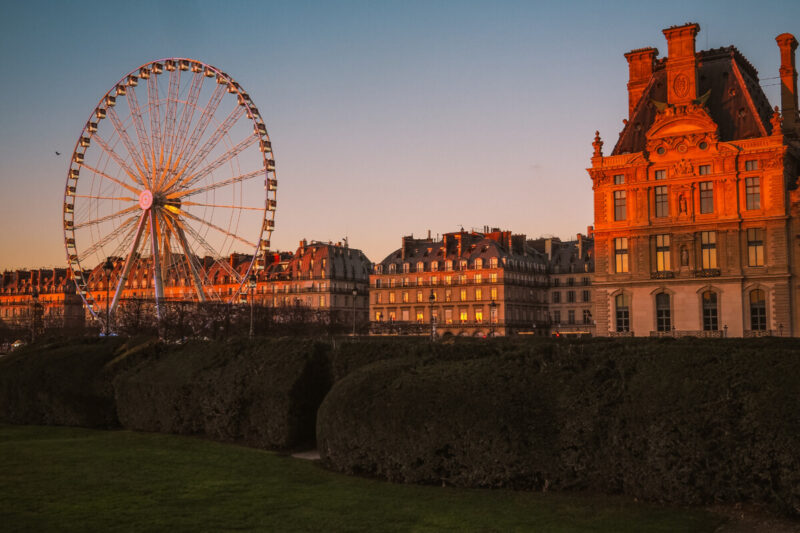
The Louvre Museum from the Tuileries Garden, Paris
  • Today (Friday)9:00 AM – 6:00 PM
  • Typical visit2-3 hours
  • EntranceAdmission required — check https://www.musee-orangerie.fr/ for tickets
  • Google rating4.6/5 48,000 reviews
  • WebsiteOfficial site ↗
Opening hours all week
Monday
9:00 AM – 6:00 PM
Tuesday
Closed
Wednesday
9:00 AM – 6:00 PM
Thursday
9:00 AM – 6:00 PM
Friday
9:00 AM – 6:00 PM
Saturday
9:00 AM – 6:00 PM
Sunday
9:00 AM – 6:00 PM
Quiet times
Opening time at 9am sharp, Last 40 minutes before 6pm closing, Tuesday-Thursday mornings, November-February (except holidays), During major events at nearby Concorde
Busy times
11am-3pm daily when tour groups arrive, First Sunday of month (free admission), Summer months June-August, Weekend afternoons, School holiday periods, Rainy days when outdoor activities canceled
Accessibility
"{"parking": "No museum parking. Accessible spaces in nearby Concorde parking. Drop-off possible at museum entrance.", "mobility_info": "Single level main galleries. Smooth floors throughout. Elevator to lower level. Benches in Water Lilies rooms for resting. Wide doorways and passages.", "public_transport": "Metro Concorde (Lines 1, 8, 12) has elevator access. Buses with wheelchair ramps stop nearby.", "wheelchair_access": "Fully wheelchair accessible with ramped side entrance. All galleries on one level or accessible by elevator.", "accessibility_services": "Wheelchairs available for loan. Accessible restrooms. Priority access for disabled visitors. Touch tours available by appointment.", "sensory_considerations": "Quiet, contemplative atmosphere. Water Lilies rooms particularly peaceful. Audio guides available."}"
The short answer

Why it matters

A Tuileries gem housing Monet's eight monumental Water Lilies murals in two purpose-built oval rooms, alongside the Walter-Guillaume collection of Renoirs, Cézannes, and Picassos.

Housed in a former orange grove greenhouse at the edge of the Tuileries Gardens, Musée de l’Orangerie offers one of Paris‘s most transcendent artistic experiences. The museum achieves worldwide renown for its permanent installation of Claude Monet’s monumental ‘Water Lilies’ (Nymphéas) series—eight massive curved panels displayed in two oval rooms precisely designed to the artist’s specifications. These luminous paintings create an immersive 360-degree meditation on light, water, and atmosphere that represents the culmination of Monet’s artistic vision. The museum’s thoughtful renovation in 2006 restored the natural light from overhead skylights, allowing visitors to experience the paintings’ subtle color shifts throughout the day, just as Monet intended. Beyond these masterworks, the lower level houses the Jean Walter and Paul Guillaume Collection featuring important works by Cézanne, Renoir, Picasso, Modigliani, Matisse, and Soutine. This intimate museum provides a perfectly calibrated space where architecture and art harmonize to create moments of genuine contemplation amid the bustle of central Paris.

Cultural Context

Musée de l’Orangerie holds a significant place within the cultural fabric of Paris, serving as a beacon for Impressionist and Post-Impressionist art appreciation. The museum is deeply intertwined with French artistic traditions, particularly through its dedication to showcasing works that capture the evolving perceptions of light, color, and natural forms. It is renowned for housing Claude Monet’s monumental Water Lilies murals, which are celebrated not only as masterpieces of Impressionism but also as immersive experiences that invite contemplation and emotional engagement. The museum’s location in the Tuileries Gardens situates it within a historic public space that has long been a site of cultural gatherings, festivals, and artistic inspiration. Visitors to the Orangerie often participate in a broader Parisian cultural practice of leisurely museum visits combined with strolls through the gardens, reflecting the French tradition of integrating art, nature, and social life. The museum also hosts temporary exhibitions and events that highlight contemporary artistic dialogues, maintaining a dynamic relationship with both local and international art communities. Through its collections and programming, Musée de l’Orangerie contributes to the preservation and celebration of French cultural heritage while fostering ongoing cultural exchange and education. It remains a vital institution for understanding the development of modern art within the unique cultural context of Parisian life and traditions.

Historical Context

The Musée de l’Orangerie’s historical roots date back to the 19th century when the building originally served as an orangery, a greenhouse for citrus trees, constructed in 1852 under the direction of architect Firmin Bourgeois. The site itself is embedded in the rich historical landscape of the Tuileries Gardens, a royal garden created in the 16th century and later redesigned by André Le Nôtre in the 17th century. The transformation of the orangery into a museum was initiated in the early 20th century by the French government to house art collections, culminating in its inauguration as a public museum in 1927. A pivotal moment in the museum’s history occurred in 1927 when the heirs of Paul Guillaume, a prominent art dealer, donated Monet’s Water Lilies murals, which had been specially designed by Monet for this space. This donation firmly established the museum’s reputation and artistic focus. Over the decades, the museum underwent several renovations, notably in the 1950s and again in the early 2000s, to enhance the display of its collections and visitor experience. The Orangerie has witnessed significant historical events, including its role during World War II when artworks were safeguarded from potential damage. Its evolution from a greenhouse to a cultural institution reflects broader trends in Parisian urban development and the democratization of art access over the 20th century. Today, it stands as a testament to the enduring legacy of French Impressionism and the historical commitment to public art education.
Context

Story and significance

About

The Musée de l’Orangerie in the Tuileries Garden houses Claude Monet’s monumental Water Lilies (Nymphéas) — eight massive oval murals displayed in two purpose-built oval rooms that Monet himself designed to give visitors ‘the illusion of an endless whole, of a wave without horizon and without shore.’ Donated to the French state as a symbol of peace the day after the November 1918 Armistice, the paintings were installed according to Monet’s plans in 1927. Often called the ‘Sistine Chapel of Impressionism,’ the immersive installation is one of the largest monumental achievements of early 20th-century painting.

Historical significance

The Musée de l’Orangerie is historically significant as a pioneering institution in the public presentation and preservation of Impressionist and Post-Impressionist art, marking a turning point in the recognition of these movements within the canon of French cultural heritage. Its establishment in 1927 coincided with a broader shift in the art world towards valuing modern art, particularly the works of Monet and his contemporaries, which had previously been marginalized. The museum’s acquisition and display of Monet’s Water Lilies, commissioned and arranged with the artist’s direct input, represent a groundbreaking moment in museum curation, emphasizing immersive and experiential art viewing. The Orangerie also played a critical role during World War II, serving as a safe haven for priceless artworks, thereby preserving essential cultural treasures during a period of great upheaval. Over the decades, the museum has influenced art historical scholarship and public appreciation, providing a dedicated space for the study and exhibition of key modern art figures such as Cézanne, Matisse, and Modigliani. Its legacy extends beyond France, as it has inspired similar museum models worldwide that prioritize the integration of art with architectural and environmental context. The Musée de l’Orangerie’s historical importance is further underscored by its continuous adaptation and modernization, reflecting changing museological practices while maintaining its foundational mission. It stands as a testament to the enduring impact of Impressionism on art history and the cultural identity of France, embodying a legacy of artistic innovation and public accessibility.

Historical context

The Musée de l’Orangerie’s historical roots date back to the 19th century when the building originally served as an orangery, a greenhouse for citrus trees, constructed in 1852 under the direction of architect Firmin Bourgeois. The site itself is embedded in the rich historical landscape of the Tuileries Gardens, a royal garden created in the 16th century and later redesigned by André Le Nôtre in the 17th century. The transformation of the orangery into a museum was initiated in the early 20th century by the French government to house art collections, culminating in its inauguration as a public museum in 1927. A pivotal moment in the museum’s history occurred in 1927 when the heirs of Paul Guillaume, a prominent art dealer, donated Monet’s Water Lilies murals, which had been specially designed by Monet for this space. This donation firmly established the museum’s reputation and artistic focus. Over the decades, the museum underwent several renovations, notably in the 1950s and again in the early 2000s, to enhance the display of its collections and visitor experience. The Orangerie has witnessed significant historical events, including its role during World War II when artworks were safeguarded from potential damage. Its evolution from a greenhouse to a cultural institution reflects broader trends in Parisian urban development and the democratization of art access over the 20th century. Today, it stands as a testament to the enduring legacy of French Impressionism and the historical commitment to public art education.

Cultural context

Musée de l’Orangerie holds a significant place within the cultural fabric of Paris, serving as a beacon for Impressionist and Post-Impressionist art appreciation. The museum is deeply intertwined with French artistic traditions, particularly through its dedication to showcasing works that capture the evolving perceptions of light, color, and natural forms. It is renowned for housing Claude Monet’s monumental Water Lilies murals, which are celebrated not only as masterpieces of Impressionism but also as immersive experiences that invite contemplation and emotional engagement. The museum’s location in the Tuileries Gardens situates it within a historic public space that has long been a site of cultural gatherings, festivals, and artistic inspiration. Visitors to the Orangerie often participate in a broader Parisian cultural practice of leisurely museum visits combined with strolls through the gardens, reflecting the French tradition of integrating art, nature, and social life. The museum also hosts temporary exhibitions and events that highlight contemporary artistic dialogues, maintaining a dynamic relationship with both local and international art communities. Through its collections and programming, Musée de l’Orangerie contributes to the preservation and celebration of French cultural heritage while fostering ongoing cultural exchange and education. It remains a vital institution for understanding the development of modern art within the unique cultural context of Parisian life and traditions.

Architecture

The architectural significance of the Musée de l’Orangerie lies in its unique adaptation of a 19th-century orangery structure into a modern museum space, blending historical and functional design elements. The original building was designed in 1852 by architect Firmin Bourgeois with a focus on light and climate control to nurture delicate citrus trees, featuring expansive windows and a low, elongated profile that harmonizes with the surrounding Tuileries Gardens. This design inherently provided an ideal environment for displaying art, particularly works that benefit from natural light. In the 1920s, architect Camille Lefèvre undertook the transformation of the orangery into a museum, carefully preserving its airy, luminous qualities while modifying the interior to accommodate large-scale paintings. The most notable architectural feature is the oval rooms specifically created to display Monet’s Water Lilies murals, designed to immerse visitors in a panoramic, almost cathedral-like experience. These rooms employ natural and artificial lighting techniques to minimize glare and enhance the colors of the paintings, demonstrating an early understanding of museum lighting principles. The building’s materials include traditional stone and glass elements, maintaining a classical yet understated aesthetic that complements the park setting. Recent renovations have focused on restoring original details while integrating modern climate control and security systems to protect the artworks. The Musée de l’Orangerie stands as a prime example of adaptive reuse in architecture, where a functional horticultural structure was thoughtfully repurposed to serve as a world-renowned art gallery without compromising its historical integrity.

Local significance

The Musée de l’Orangerie holds a cherished place in the daily life and cultural identity of Parisians, serving not only as a repository of world-class art but also as a communal space for reflection and cultural enrichment. Locally, it functions as an accessible cultural destination that complements the vibrant artistic life of Paris, providing residents with opportunities to engage deeply with France’s artistic heritage. The museum’s location in the Tuileries Gardens, a historic and beloved public park, enhances its role as a social and recreational hub where families, students, and artists converge. It is common for locals to integrate visits to the Orangerie into their routines, combining art appreciation with outdoor leisure. The museum also contributes to local education, offering workshops, lectures, and programs tailored to school groups and community members, fostering a lifelong appreciation for the arts among Parisians. It plays an important role in maintaining the cultural vibrancy of the 1st arrondissement and supports the local economy through cultural tourism. Additionally, the Musée de l’Orangerie is a site of pride for Parisians, symbolizing the city’s commitment to preserving and celebrating its artistic legacy. Its presence enriches the collective cultural memory and identity of the community, making it more than just a tourist attraction but a living part of Parisian cultural life. The museum’s integration into local customs and its accessibility ensure it continues to be a meaningful and dynamic institution within the city.

Experience

Make the most of it

Local tips
  • Members get free entry and skip lines
  • Gift shops have unique souvenirs
  • Special exhibitions require separate tickets
  • Museum cafes often serve quality local food
  • Late night openings often have special events
  • Check for combo tickets with nearby attractions
  • Visit during weekdays for fewer crowds
Hidden gems nearby
  • Free guided tours at specific times
  • Rooftop terraces often have great city views
  • Staff recommendations for must-see pieces
  • Hidden courtyards perfect for photos
  • Archive rooms sometimes open for special tours
  • Lesser-known wings have amazing collections
  • Secret passages between galleries
Special features
  • Musée de l'Orangerie offers Paris most transcendent art experience through Monet revolutionary Water Lilies installation. The artist spent 30 years perfecting these eight monumental canvases and personally designed the two oval rooms to create total immersion in light, water, and color. The 2006 renovation restored Monet original vision of natural skylight illumination, allowing visitors to experience subtle color shifts throughout the day. Beyond this masterwork, the intimate museum houses the exceptional Walter-Guillaume Collection featuring pivotal works by Impressionist and Modern masters. The building itself tells a story – from Napoleon III orange grove to modernist temple of contemplation, perfectly positioned between the Tuileries and Place de la Concorde for a complete Parisian cultural journey.
Editorial scores

How we rate it

Authenticity9/10
Accessibility score9/10
Family-friendly score8/10
Off-the-beaten-path5/10

Editorial scores on a 10-point scale, judged against places of the same kind.

Last reviewed Data: Editorial research · Google Places ratings · Verified coordinates