MenuClose

A place worth knowing

Tuileries Garden

Nature · Garden in ParisUpdated

  • Google rating4.7/5
  • Typical visit1-2 hours (longer for picnics or extended strolls)
  • EntranceFree
Tuileries Garden Christmas Market
Kyle Kroeger / ViaTravelers
Opening hours all week
Monday
7:30 AM – 7:30 PM
Tuesday
7:30 AM – 7:30 PM
Wednesday
7:30 AM – 7:30 PM
Thursday
7:30 AM – 7:30 PM
Friday
7:30 AM – 7:30 PM
Saturday
7:30 AM – 7:30 PM
Sunday
7:30 AM – 7:30 PM
Tuileries Garden Christmas Market
The short answer

Why it matters

The epitome of Parisian park and garden elegance.

As evidenced by historical and cultural research, the Tuileries Garden in Paris has a significant global influence, historical impact, and ongoing preservation efforts. It has been a direct witness to France’s history, including the uprising of 1789, during which Louis XVI and Marie Antoinette sought refuge in the garden. Created as riverside pleasure grounds for a palace, the gardens have been the playground for monarchs and emperors over their 450-year history. The Tuileries Gardens, ideally located between the Louvre Museum and Place de la Concorde, are a popular leisure destination for tourists and Parisians. Preserving the garden, which reflects its historical and cultural significance, is an ongoing effort.
  • Cultural Authenticity: The Tuileries Garden in Paris maintains and represents local traditions and cultural practices through its historical design and layout, which reflects the formal French garden style popular during the 17th century. Visitors can experience the traditional French garden aesthetic, including symmetrical patterns, carefully manicured lawns, and classical sculptures contributing to the garden’s cultural authenticity.
  • Historical Significance: The Tuileries Garden holds significant historical importance within its cultural and national context. It was originally created by Catherine de Medici in 1564 and later redesigned by André Le Nôtre in the 17th century. The garden has witnessed numerous historical events, including being the site of the Tuileries Palace, a royal residence for centuries, and playing a role in the French Revolution.
  • Artistic Value: The Tuileries Garden boasts artistic value through its extensive collection of sculptures, including works by artists such as Aristide Maillol, Auguste Rodin, and Yayoi Kusama. These artistic contributions enhance the garden’s aesthetic and cultural significance, offering visitors an opportunity to engage with significant artistic works in a natural setting.
  • Social Impact: The Tuileries Garden serves as a vital public space in Paris, offering a place for community gatherings, leisure activities, and cultural events. It has played a role in various social movements and continues to be a symbol of community engagement and enjoyment, contributing to the city’s social fabric.
  • Accessibility and Preservation: The Tuileries Garden is highly accessible to the public, located in the heart of Paris between the Louvre Museum and Place de la Concorde. Preservation efforts have effectively maintained the garden’s historical and cultural integrity, ensuring visitors can experience its timeless beauty and significance.
  • Visitor Engagement: Visitors have ample opportunities to interact with the culture and community at the Tuileries Garden by walking along its pathways, enjoying outdoor concerts and art exhibitions, and participating in seasonal events and festivities celebrating local traditions and creativity.
  • Educational Value: The Tuileries Garden provides significant educational value by offering learning opportunities about French history, landscape architecture, and the cultural significance of formal gardens. Visitors can gain insights into the garden’s historical, artistic, and environmental aspects, enriching their understanding of French heritage and horticultural practices.
 
  • The Tuileries Garden maintains and represents local traditions and cultural practices with a historical design reflecting the popular 17th-century French garden style, offering a traditional French aesthetic that highlights cultural authenticity.
  • Established by Catherine de’ Medici in 1564 and redesigned by André Le Nôtre, the garden’s rich history includes serving as the site for the Tuileries Palace and witnessing key events such as those during the French Revolution, enhancing its historical significance.
  • Home to an array of sculptures by renowned artists like Aristide Maillol and Auguste Rodin, the garden’s artistic value is prominent. It allows visitors to engage with significant artistic works in a natural setting.
  • Acting as a central public space in Paris, the Tuileries Garden is a venue for community gatherings and cultural events. It plays a vital role in social movements and contributes positively to the community’s social impact.
  • Highly accessible and effectively preserved, the garden is strategically located between major landmarks like the Louvre Museum and Place de la Concorde, ensuring its cultural and historical integrity.
  • The garden offers interactive visitor engagement through various activities, including strolls, outdoor concerts, art exhibitions, and seasonal festivities highlighting local traditions and creativity.
  • Providing educational insights into French history, landscape architecture, and the cultural importance of formal gardens, the Tuileries Garden enriches the visitor experience with its educational value.

Experience the traditional French garden aesthetic with symmetrical patterns, classical sculptures, and historical significance. Engage with artistic works and community events in this vital public space.

Cultural Context

The Tuileries Garden holds a prominent place in French cultural life as a symbol of the classical French formal garden tradition, embodying centuries of artistic and social practices. Originally designed in the 16th century and later transformed by André Le Nôtre in the 17th century, the garden reflects the French appreciation for order, symmetry, and harmony with nature, principles deeply embedded in French aesthetics. Throughout history, the garden has served as a public space for leisure, social gatherings, and cultural events, including art exhibitions and open-air performances, which continue to foster community engagement. The garden’s sculptures, fountains, and carefully manicured greenery provide a backdrop for seasonal celebrations such as Bastille Day festivities and the Christmas market, emphasizing its role as a living cultural venue. Moreover, the Tuileries Garden is intertwined with Parisian daily life as a place where locals and visitors alike enjoy promenades, picnics, and moments of reflection amid the urban environment. Its cultural resonance extends beyond France, influencing garden design worldwide and representing the enduring legacy of French landscape artistry. The garden’s ongoing maintenance and programming reflect a commitment to preserving this cultural heritage while adapting to contemporary urban needs, making it a vibrant cultural landmark in Paris today.

Historical Context

The Tuileries Garden was established in 1564 by Catherine de’ Medici, who commissioned it as the garden of the Tuileries Palace, marking the introduction of Italian Renaissance garden design to Paris. Over the centuries, the garden underwent significant transformations, most notably in the 1660s when André Le Nôtre, the famed landscape architect behind the gardens of Versailles, redesigned it into the quintessential French formal garden characterized by geometric patterns, axial paths, and carefully clipped hedges. The garden witnessed numerous historical events, including its role during the French Revolution when the Tuileries Palace became a royal residence and later a focal point of revolutionary activity. The garden also served as a public park following the fall of the monarchy, symbolizing the democratization of formerly aristocratic spaces. In the 19th century, the garden was integrated into the urban fabric of Paris by Baron Haussmann during his extensive city renovations. The destruction of the Tuileries Palace in 1871 during the Paris Commune marked a turning point, leaving the garden as a standalone public space. Throughout the 20th and 21st centuries, the Tuileries Garden has been preserved as a historical monument, reflecting the layered history of Paris from Renaissance monarchy to modern republic, making it an enduring testament to the city’s evolving identity.
Context

Story and significance

About

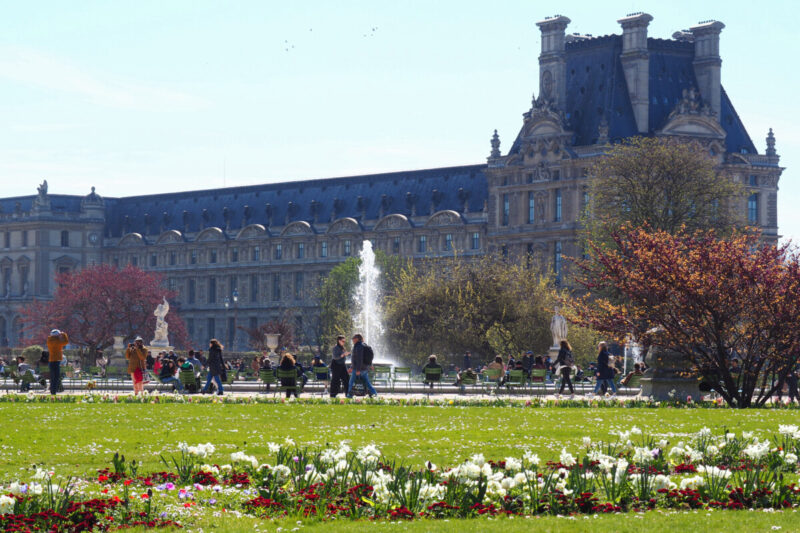
Positioned between the Louvre and Place de la Concorde, the Tuileries Garden, whose origins date back to the 17th century, is a masterpiece of classical design and natural beauty. This expansive garden bewitches visitors with its precise geometric paths, meticulous landscaping, and artistic soul, where Maillol’s 18 captivating bronzes stand as timeless sentinels amidst beautiful flower beds and stately trees.

A cultural oasis, it offers unparalleled moments of tranquility, historical reflection, and leisurely pursuits. Enjoy serene walks, cherish the ornamental basins, or observe Parisian life unfold. The Tuileries Garden is an essential chapter in Paris’s narrative, inviting all to explore its elegance and heritage.

Historical significance

The Tuileries Garden is historically significant as a surviving example of royal garden planning that has witnessed key moments in French political and cultural history, from courtly life to revolutionary demonstrations and public recreation. Its endurance and central location make it a touchstone for understanding Parisian urban design and the relationship between power, landscape, and public space.

Historical context

Created in the 16th century as royal gardens and later redesigned in the 17th century into a formal French parterre, the Tuileries evolved alongside Paris’s political transformations, from royal to public ownership during the French Revolution and into a landscaped urban park. Its layout and use have changed with successive landscape architects and urban reforms.

Cultural context

The Tuileries Garden is a central Parisian public garden that functions as a popular promenade and meeting place between the Louvre and Place de la Concorde, frequented by locals and tourists for walking, relaxation, and seasonal events. Its avenues, formal beds, and sculpture-lined promenades are integral to Paris’s culture of outdoor public life and leisure.

Architecture

The garden exemplifies French formal garden design with axial alignments, geometric flower beds, clipped trees, and long sightlines framed by alleys and statues; its integration with adjacent monumental architecture creates a unified urban composition. Pathways, terraces, and ornamental features reflect classical landscape principles emphasizing symmetry, perspective, and sculptural display.

Local significance

The Tuileries Garden forms an essential green lung and social space for Parisians between the Louvre and Place de la Concorde, used daily for strolling, resting and informal gatherings. For locals it’s a familiar setting for routines like walking children, reading on a bench or meeting friends, and it supports cultural life with seasonal exhibitions and events. The garden’s historic layout and statues also contribute to Parisian identity by preserving a visible link to the city’s royal and urban-planning history.

Editorial scores

How we rate it

Universal appeal & authenticity10/10
Cultural richness & educational value10/10
Preservation & integrity10/10
Accessibility & visitor engagement10/10

Editorial scores on a 10-point scale, judged against places of the same kind.

Bookable experiences

Worth booking ahead in Paris

Hand-picked from the operators our guides already send readers to. Prices and availability are live on the partner site.

We earn a commission if you book through these links, at no extra cost to you. It is how we keep the guides free and independent.

Updated Data: Editorial research · Google Places ratings · Verified coordinates