MenuClose

A place worth knowing

Nieuwe Kerk Delft

Churches · Church in DelftUpdated

  • Google rating4.6/5 (9,500 reviews)
  • Typical visit30-60 minutes (longer if ascending the tower for panoramic views, which is capped at 45 minutes)
  • EntranceFree (donations welcome)
Tomb of William of Orange closeup at Nieuwe Kerk in Delft, historic royal burial site
Tomb of William of Orange Kyle Kroeger / ViaTravelers
  • Today (Tuesday)10:00 AM – 5:00 PM
  • Typical visit30-60 minutes (longer if ascending the tower for panoramic views, which is capped at 45 minutes)
  • EntranceFree (donations welcome)
  • Google rating4.6/5 9,500 reviews
  • WebsiteOfficial site ↗
Opening hours all week
Monday
10:00 AM – 5:00 PM
Tuesday
10:00 AM – 5:00 PM
Wednesday
10:00 AM – 5:00 PM
Thursday
10:00 AM – 5:00 PM
Friday
10:00 AM – 5:00 PM
Saturday
10:00 AM – 5:00 PM
Sunday
Closed (services only)
The short answer

Why it matters

A Gothic church on Delft's Market Square housing the royal mausoleum of William of Orange and an 85-meter tower offering panoramic views.

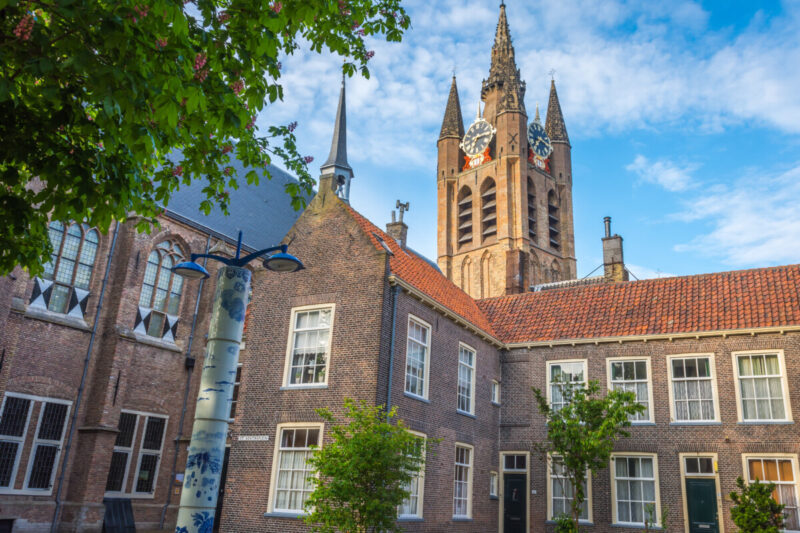
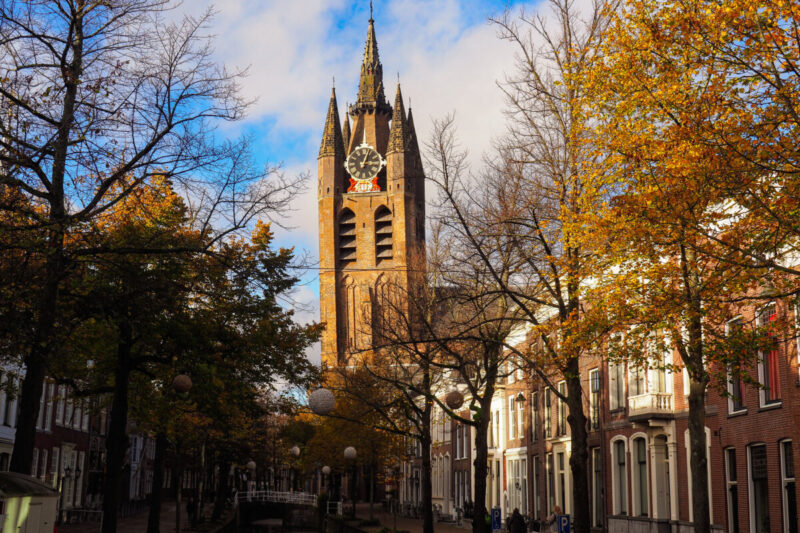
Commanding Delft‘s Market Square with its dramatic 108-meter spire—the second tallest church tower in the Netherlands—the Nieuwe Kerk (New Church) stands as a masterpiece of Dutch Gothic architecture and a monument to the nation’s complex religious and political history. Founded in 1381 and rebuilt after a devastating 1536 fire, the church contains the ornate mausoleum of William of Orange (William the Silent), considered the father of Dutch independence, who was assassinated in Delft in 1584. His tomb, crafted from black and white marble with bronze statuary by Hendrick de Keyser, established the church as the main burial place for the Dutch royal House of Orange-Nassau, with most family members interred in the royal crypt below. The church’s remarkable stained glass windows, particularly the 1936 Queen Wilhelmina window celebrating the nation’s early 20th-century development, blend religious imagery with Dutch historical themes. Though no longer used for regular worship, the Nieuwe Kerk maintains cultural relevance through hosting royal ceremonies, including inaugurations of Dutch monarchs. From its tower, accessible via 376 steep steps, visitors gain panoramic views over Delft’s distinctive red-tiled rooftops and canal system all the way to Rotterdam and The Hague—a visual reminder of the church’s central position in both the physical and historical landscape of the Netherlands.

Cultural Context

The Nieuwe Kerk in Delft holds profound cultural significance as a symbol of Dutch heritage and Protestant identity. It serves as a focal point for local traditions and religious practices, especially within the Reformed Church community. The church is deeply embedded in the cultural fabric of Delft and the Netherlands, hosting important ceremonies such as royal commemorations and civic events. The annual celebration of Prinsjesdag, the day the Dutch monarch delivers the Speech from the Throne, often highlights the church’s role in national identity, as it is closely associated with the House of Orange-Nassau. Locally, the Nieuwe Kerk is a site for communal gatherings, concerts, and exhibitions, reflecting the blend of sacred and cultural life. Its presence in the Market Square makes it a daily reminder of Delft’s historical continuity and the enduring traditions of Dutch Protestantism. The church also participates in cultural festivals and open days that invite both residents and visitors to engage with its spiritual and historical legacy, fostering a deeper appreciation of local customs and religious heritage. Thus, the Nieuwe Kerk is not only a place of worship but also a cultural landmark that embodies the collective memory and identity of Delft’s community.

Historical Context

The Nieuwe Kerk was founded in 1396 and completed in the early 15th century, marking a significant period in Delft’s medieval development. It was built to replace an older church and quickly became the primary place of worship in the city. The church’s historical prominence increased dramatically when it became the burial site of William of Orange, the founding father of the modern Dutch state, in 1584. This event transformed the Nieuwe Kerk into a national monument of immense historical importance. Over the centuries, the church witnessed pivotal moments, including the Protestant Reformation, which led to its transformation from a Catholic to a Protestant place of worship. The church tower, completed in 1872, stands 108 meters tall and is the second tallest in the Netherlands, symbolizing Delft’s historical wealth and ambition. Throughout the Dutch Golden Age, the Nieuwe Kerk was a center for religious life and civic pride. Its role evolved with the city, surviving wars, fires, and restorations, reflecting the resilience of Delft’s community. Today, it stands as a testament to the city’s layered history, from medieval origins through the rise of the Dutch Republic to its modern status as a cultural and historical beacon.
Context

Story and significance

About

Nieuwe Kerk (New Church) in Delft’s central Markt square is a late-Gothic church built between 1393 and 1496, known for its 108.75-metre tower — the second tallest in the Netherlands. The church houses the ornate marble Royal Crypt containing the remains of members of the Dutch Royal House of Orange-Nassau, beginning with William the Silent, who was assassinated in Delft in 1584. His elaborate funeral monument was designed by Hendrick de Keyser and completed in 1623.

Historical significance

Nieuwe Kerk matters as the dynastic burial place of the Dutch royal family and as a monument tied to the Netherlands’ political and religious history, reflecting shifts from medieval Catholicism to Protestant civic life. It is also significant for Delft’s urban development and for visitors tracing Dutch national heritage and the legacy of notable historical figures interred there.

Historical context

The Nieuwe Kerk was founded in 1396 and completed in the early 15th century, marking a significant period in Delft’s medieval development. It was built to replace an older church and quickly became the primary place of worship in the city. The church’s historical prominence increased dramatically when it became the burial site of William of Orange, the founding father of the modern Dutch state, in 1584. This event transformed the Nieuwe Kerk into a national monument of immense historical importance. Over the centuries, the church witnessed pivotal moments, including the Protestant Reformation, which led to its transformation from a Catholic to a Protestant place of worship. The church tower, completed in 1872, stands 108 meters tall and is the second tallest in the Netherlands, symbolizing Delft’s historical wealth and ambition. Throughout the Dutch Golden Age, the Nieuwe Kerk was a center for religious life and civic pride. Its role evolved with the city, surviving wars, fires, and restorations, reflecting the resilience of Delft’s community. Today, it stands as a testament to the city’s layered history, from medieval origins through the rise of the Dutch Republic to its modern status as a cultural and historical beacon.
Cultural context

The Nieuwe Kerk in Delft holds profound cultural significance as a symbol of Dutch heritage and Protestant identity. It serves as a focal point for local traditions and religious practices, especially within the Reformed Church community. The church is deeply embedded in the cultural fabric of Delft and the Netherlands, hosting important ceremonies such as royal commemorations and civic events. The annual celebration of Prinsjesdag, the day the Dutch monarch delivers the Speech from the Throne, often highlights the church’s role in national identity, as it is closely associated with the House of Orange-Nassau. Locally, the Nieuwe Kerk is a site for communal gatherings, concerts, and exhibitions, reflecting the blend of sacred and cultural life. Its presence in the Market Square makes it a daily reminder of Delft’s historical continuity and the enduring traditions of Dutch Protestantism. The church also participates in cultural festivals and open days that invite both residents and visitors to engage with its spiritual and historical legacy, fostering a deeper appreciation of local customs and religious heritage. Thus, the Nieuwe Kerk is not only a place of worship but also a cultural landmark that embodies the collective memory and identity of Delft’s community.

Architecture

The Nieuwe Kerk is a prime example of Brabantine Gothic architecture, characterized by its soaring vertical lines, pointed arches, and intricate tracery. Its most striking feature is the towering spire, which reaches 108 meters and is the second tallest church tower in the Netherlands, dominating Delft’s skyline. The church’s design reflects the transition from medieval to early modern architectural styles, with a spacious nave and large stained-glass windows that illuminate the interior with natural light. Constructed primarily from brick and sandstone, the church showcases advanced medieval building techniques, including flying buttresses that support the high walls and vaults. The interior features ribbed vaulting and a richly decorated choir area, emphasizing the grandeur of Gothic ecclesiastical design. Over time, the Nieuwe Kerk has undergone several restorations and modifications, including the addition of the royal crypt in the 16th century and the installation of a carillon in the tower. These elements highlight the church’s evolving function and status. The blend of original Gothic elements with later Renaissance and Baroque influences creates a unique architectural narrative that reflects Delft’s historical and cultural evolution. Overall, the Nieuwe Kerk stands as a masterpiece of Gothic architecture adapted to Dutch sensibilities and local materials.

Local significance

Nieuwe Kerk Delft is a civic landmark central to Delft’s identity, closely tied to the city’s history, civic ceremonies and the Dutch royal family through the royal burial chapel it contains. Locals regard its tall Gothic tower as a navigational and visual symbol on the skyline and a point of pride that anchors the Markt square, where markets and public gatherings have long taken place. The church also supports community life through concerts and occasional municipal events, connecting everyday city rhythms with heritage tourism.

Updated Data: Editorial research · Google Places ratings · Verified coordinates