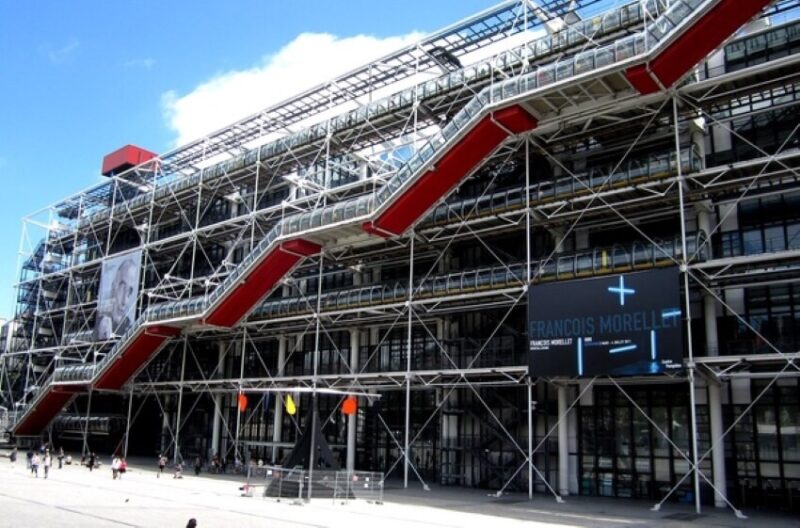
Revolutionary in both form and function, The Centre Pompidou boldly reinvented cultural architecture when it opened in 1977. Designed by Renzo Piano and Richard Rogers, the building proudly wears its structural and mechanical systems on the outside—color-coded pipes, exposed ductwork, and an exterior escalator form a striking exoskeleton that houses Europe’s largest modern art museum. This inside-out approach freed up interior space to create vast, flexible galleries that showcase over 120,000 works from the National Museum of Modern Art collection. Spanning art from 1905 to the present, the Centre features masterpieces by Picasso, Kandinsky, and Warhol alongside cutting-edge contemporary installations. Beyond its artistic treasures, the building offers panoramic views of Paris from its upper levels and a vibrant public plaza that embodies the democratization of culture at the heart of the Pompidou’s mission.
Cultural Context
The Centre Pompidou stands as a vibrant cultural hub in Paris, deeply embedded in the city’s rich artistic and intellectual traditions. Since its inauguration in 1977, it has functioned as a dynamic space where contemporary art, music, film, and literature intersect, reflecting Paris’s longstanding commitment to avant-garde culture and innovation. The institution hosts a wide range of exhibitions, performances, and workshops that engage both local residents and international visitors, fostering a dialogue between historical artistic movements and contemporary creative expressions. It also plays a pivotal role in celebrating French cultural identity by showcasing works from prominent French artists alongside global contemporaries, thereby promoting cultural exchange and diversity. The Centre Pompidou’s public spaces, including its bustling plaza and library, serve as communal gathering points, reinforcing Parisian values of accessibility and democratization of culture. Throughout the year, the center participates in national cultural events such as Nuit Blanche and Paris Art Week, further embedding itself within the city’s vibrant cultural calendar. Its commitment to education and outreach programs ensures that diverse audiences, including children and marginalized communities, can engage meaningfully with modern and contemporary art. Thus, the Centre Pompidou not only preserves but actively cultivates the cultural vitality and creative spirit that define Paris today.
Historical Context
The Centre Pompidou was conceived during a period of cultural transformation in France, reflecting the vision of President Georges Pompidou who sought to create a new kind of cultural institution. Officially opened on January 31, 1977, it was designed to break away from traditional museum formats by housing a vast public library, a modern art museum, and a center for industrial design under one roof. The project was the result of an international architectural competition won by Renzo Piano and Richard Rogers, whose radical design turned conventional architectural norms inside out. Historically, the building symbolizes the post-1968 era’s embrace of openness, innovation, and public accessibility in the arts. Over the decades, the Centre Pompidou has evolved into one of the world’s leading venues for modern and contemporary art, hosting exhibitions that have defined artistic discourse globally. It has witnessed and contributed to significant shifts in art history, from the rise of conceptual art to digital and multimedia practices. The institution also reflects Paris’s broader historical role as a center of artistic experimentation and intellectual ferment, continuing a legacy established by earlier movements such as Impressionism and Surrealism. Its establishment marked a decisive moment in the democratization of culture in France, aligning with broader societal changes during the late 20th century.