MenuClose

A place worth knowing

Van Gogh Museum

Museums · Museum in AmsterdamUpdated

  • Google rating4.6/5 (65,000 reviews)
  • Typical visit2-3 hours average visit (longer if exploring in-depth or attending special events)
  • Entrance€24
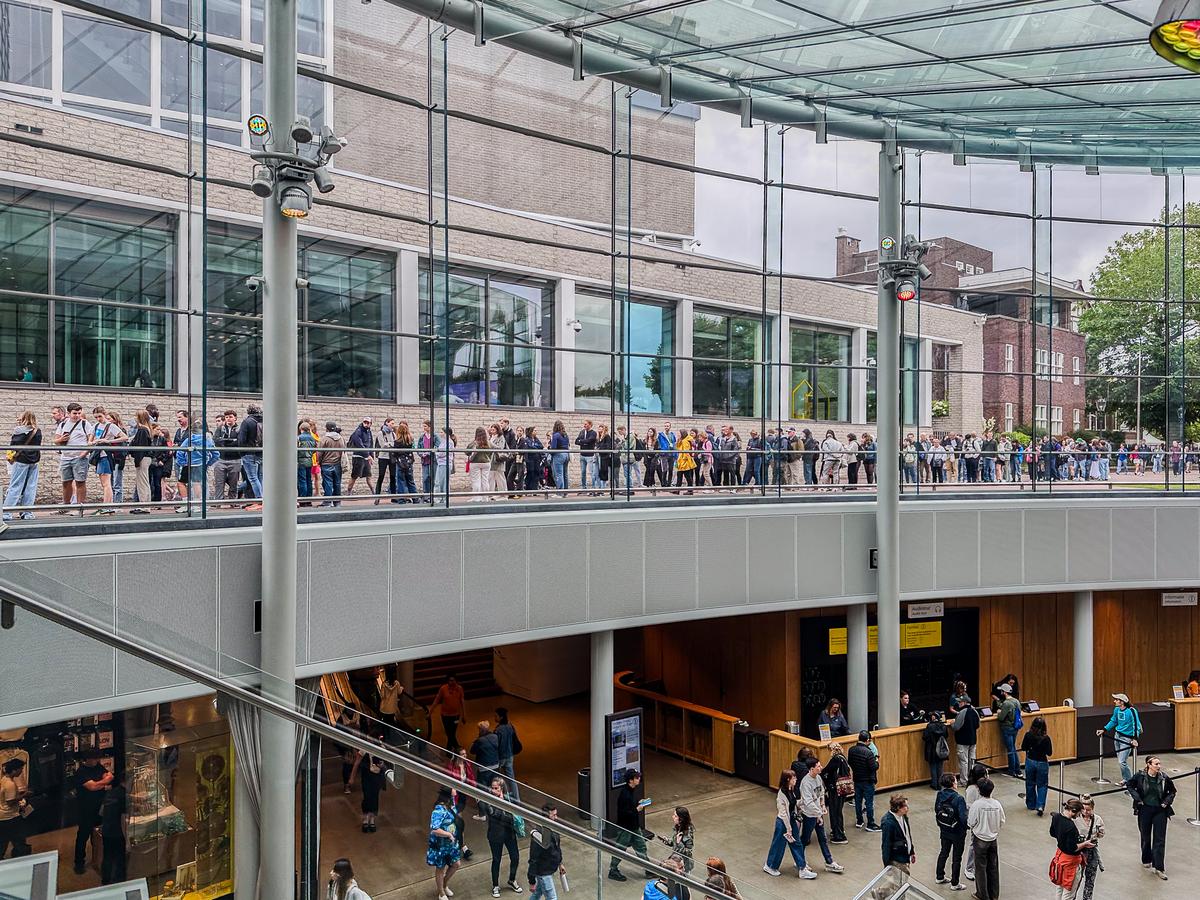
Van Gogh Museum entrance hall with visitors in Amsterdam, interior view, famous art museum
  • Today (Sunday)9:00 AM – 6:00 PM
  • Typical visit2-3 hours average visit (longer if exploring in-depth or attending special events)
  • Entrance€24
  • Google rating4.6/5 65,000 reviews
  • WebsiteOfficial site ↗
Opening hours all week
Monday
9:00 AM – 6:00 PM
Tuesday
9:00 AM – 6:00 PM
Wednesday
9:00 AM – 6:00 PM
Thursday
9:00 AM – 6:00 PM
Friday
9:00 AM – 6:00 PM
Saturday
9:00 AM – 6:00 PM
Sunday
9:00 AM – 6:00 PM
Quiet times
9:00-10:00, 19:00-21:00 on Fridays
Busy times
11:00-15:00, weekends, rainy days
Accessibility
"{"audio": "Audio guide has hearing loop option", "rentals": "Free wheelchair loan available", "entrance": "Level entrance, automatic doors", "assistance": "Touch tour for visually impaired", "facilities": "Accessible toilets on every floor", "wheelchair_access": "Fully accessible all floors via elevators"}"
The short answer

Why it matters

The world's largest collection of Van Gogh works — over 200 paintings, 500 drawings, and 700 letters — housed in a Rietveld-designed gallery on Museumplein, tracing the artist's life from Nuenen to Auvers.

The Van Gogh Museum houses the world’s largest collection of works by Vincent van Gogh, showcasing over 200 paintings, 500 drawings, and 750 letters that chronicle the artist’s extraordinary development over just one decade (1880-1890). Established in 1973 to preserve the collection inherited by his brother Theo’s family, the museum occupies two distinctive buildings: the main structure designed by Gerrit Rietveld and an exhibition wing by Kisho Kurokawa added in 1999.

Iconic masterpieces on display include “Sunflowers,” “Almond Blossom,” “The Potato Eaters,” and several haunting self-portraits. Beyond showcasing van Gogh’s artistic evolution from dark early works to vibrant, expressive later paintings, the museum contextualizes his output alongside contemporaries and those he influenced. Located in Amsterdam‘s Museum Quarter, this cultural treasure serves as both an educational institution and research center, offering visitors profound insight into the life and work of one of history’s most influential post-impressionist artists.

Cultural Context

The Van Gogh Museum stands as a profound cultural beacon in Amsterdam, reflecting the deep appreciation the Netherlands holds for its artistic heritage and the transformative power of art. Vincent van Gogh, though Dutch by birth, achieved worldwide acclaim posthumously, and the museum embodies the cultural dialogue between Dutch identity and global modern art movements. The museum not only preserves Van Gogh’s legacy but also situates his work within the broader context of 19th-century European art, highlighting influences from Impressionism and Post-Impressionism. It serves as a place where visitors can engage with the emotional intensity and innovative techniques that characterize Van Gogh’s oeuvre, fostering a greater understanding of the cultural shifts in art during his lifetime. The museum also participates in cultural events and educational programs that promote art appreciation and mental health awareness, reflecting Van Gogh’s own struggles. By celebrating Van Gogh’s artistic genius alongside his personal challenges, the museum contributes to ongoing conversations about creativity, suffering, and resilience in cultural history. It is a site where local traditions of art conservation meet global cultural exchange, reinforcing Amsterdam’s role as a vibrant center for artistic dialogue and cultural preservation. The Van Gogh Museum thus holds a vital place in both Dutch cultural identity and the international art community, inviting visitors to explore the profound cultural narratives embedded in Van Gogh’s work and life.

Historical Context

The Van Gogh Museum was established in 1973 to honor the life and work of Vincent van Gogh, one of the most influential painters of the 19th century. Born in 1853 in the Netherlands, Van Gogh’s artistic career was tragically brief, spanning just over a decade before his death in 1890. Despite his limited lifetime recognition, his posthumous fame grew exponentially, leading to the creation of the museum to house the largest collection of his works. The museum’s foundation was made possible largely through the efforts of Van Gogh’s brother Theo’s widow, Johanna van Gogh-Bonger, who preserved and promoted his art after his death. The institution chronicles Van Gogh’s artistic evolution from early somber works to his later vibrant and emotionally charged paintings. Over the decades, the museum has expanded its collection to include over 200 paintings, 500 drawings, and more than 750 letters, offering a comprehensive view of Van Gogh’s life and creative process. Its establishment coincided with a growing international interest in modern art and the reevaluation of artists who had been overlooked during their lifetimes. The museum has since become a key site for art historical research and public education, continuously updating exhibitions to reflect new scholarly insights and discoveries related to Van Gogh and his contemporaries. This historical context enriches visitors’ understanding of the artist’s enduring legacy and the museum’s role in preserving it.

Context

Story and significance

About

The Van Gogh Museum houses the world’s largest collection of Vincent van Gogh paintings and drawings, presented in a modern, museum-friendly layout that traces his artistic development. Visitors move through galleries arranged roughly chronologically, seeing iconic works alongside studies, letters and contextual pieces by contemporaries. The museum provides audio guides and multimedia displays to explain technique and biography, and timed tickets are strongly recommended to avoid long queues. The building includes a shop and a café for a relaxed break after viewing intense, colorful exhibitions.

Historical significance

The Van Gogh Museum holds considerable historical significance as the primary repository of the works and legacy of Vincent van Gogh, whose impact on art history is monumental. Van Gogh’s innovative use of color, brushwork, and emotional intensity marked a turning point in the transition from traditional to modern art, influencing countless artists and movements that followed. The museum’s establishment in 1973 marked a pivotal moment in recognizing and institutionalizing Van Gogh’s contribution to cultural heritage. It preserves not only his artistic output but also critical historical documents, including letters and personal effects, which shed light on the social and psychological conditions of late 19th-century Europe. The museum’s collection and research have contributed significantly to art historical scholarship, deepening understanding of Post-Impressionism and the broader cultural currents of Van Gogh’s time. Furthermore, the museum’s role in educating the public about Van Gogh’s life and struggles has helped humanize the artist, transforming him from a tragic figure into a symbol of artistic perseverance and innovation. By safeguarding and interpreting Van Gogh’s legacy, the museum ensures that his influence endures within the global narrative of art history, making it an indispensable institution for both historical preservation and contemporary cultural discourse.

Historical context

The Van Gogh Museum was established in 1973 to honor the life and work of Vincent van Gogh, one of the most influential painters of the 19th century. Born in 1853 in the Netherlands, Van Gogh’s artistic career was tragically brief, spanning just over a decade before his death in 1890. Despite his limited lifetime recognition, his posthumous fame grew exponentially, leading to the creation of the museum to house the largest collection of his works. The museum’s foundation was made possible largely through the efforts of Van Gogh’s brother Theo’s widow, Johanna van Gogh-Bonger, who preserved and promoted his art after his death. The institution chronicles Van Gogh’s artistic evolution from early somber works to his later vibrant and emotionally charged paintings. Over the decades, the museum has expanded its collection to include over 200 paintings, 500 drawings, and more than 750 letters, offering a comprehensive view of Van Gogh’s life and creative process. Its establishment coincided with a growing international interest in modern art and the reevaluation of artists who had been overlooked during their lifetimes. The museum has since become a key site for art historical research and public education, continuously updating exhibitions to reflect new scholarly insights and discoveries related to Van Gogh and his contemporaries. This historical context enriches visitors’ understanding of the artist’s enduring legacy and the museum’s role in preserving it.
Cultural context

The Van Gogh Museum stands as a profound cultural beacon in Amsterdam, reflecting the deep appreciation the Netherlands holds for its artistic heritage and the transformative power of art. Vincent van Gogh, though Dutch by birth, achieved worldwide acclaim posthumously, and the museum embodies the cultural dialogue between Dutch identity and global modern art movements. The museum not only preserves Van Gogh’s legacy but also situates his work within the broader context of 19th-century European art, highlighting influences from Impressionism and Post-Impressionism. It serves as a place where visitors can engage with the emotional intensity and innovative techniques that characterize Van Gogh’s oeuvre, fostering a greater understanding of the cultural shifts in art during his lifetime. The museum also participates in cultural events and educational programs that promote art appreciation and mental health awareness, reflecting Van Gogh’s own struggles. By celebrating Van Gogh’s artistic genius alongside his personal challenges, the museum contributes to ongoing conversations about creativity, suffering, and resilience in cultural history. It is a site where local traditions of art conservation meet global cultural exchange, reinforcing Amsterdam’s role as a vibrant center for artistic dialogue and cultural preservation. The Van Gogh Museum thus holds a vital place in both Dutch cultural identity and the international art community, inviting visitors to explore the profound cultural narratives embedded in Van Gogh’s work and life.

Architecture

The Van Gogh Museum is architecturally significant for its thoughtful integration of modern design with functional exhibition space, reflecting the evolving architectural trends of the late 20th century. The original building, designed by Dutch architect Gerrit Rietveld and completed in 1973, exemplifies the De Stijl movement’s principles, characterized by geometric forms, primary colors, and simplicity of design. Rietveld’s design emphasizes clarity and openness, creating a neutral backdrop that allows Van Gogh’s vibrant works to command attention without distraction. In 1999, a major expansion was completed by Japanese architect Kisho Kurokawa, who introduced a new wing featuring a distinctive curved glass facade and a more fluid spatial arrangement. This extension contrasts yet complements the original structure, blending minimalist modernism with organic architectural elements. Kurokawa’s design employs natural light strategically to enhance the viewing experience, creating an inviting atmosphere that connects the interior galleries with the surrounding urban environment. The use of high-quality materials such as glass, steel, and concrete reflects a commitment to durability and aesthetic precision. Together, the two buildings represent a dialogue between Dutch modernism and international contemporary architecture, underscoring the museum’s role as a cultural landmark. The architectural ensemble not only supports the museum’s functional needs but also symbolizes the dynamic interplay between tradition and innovation inherent in Van Gogh’s art.

Local significance

The Van Gogh Museum holds profound significance for the local community in Amsterdam and the Netherlands at large, serving as both a cultural landmark and a source of national pride. It plays a vital role in the city’s identity as a hub of artistic innovation and historical preservation, attracting millions of visitors annually who contribute to the local economy and cultural vibrancy. For Amsterdam residents, the museum is more than a tourist destination; it is a space for education, reflection, and community engagement. The museum collaborates with local schools, universities, and cultural organizations to promote art education and foster creative expression among younger generations. It also participates in city-wide cultural celebrations and events, reinforcing its connection to Amsterdam’s rich artistic traditions. The museum’s presence supports local artists by hosting exhibitions that contextualize Van Gogh’s legacy within contemporary artistic practices. Additionally, the museum’s focus on mental health and creativity resonates with local social initiatives, underscoring Van Gogh’s enduring relevance beyond the art world. The Van Gogh Museum thus functions as a cultural anchor in Amsterdam, bridging historical heritage and contemporary life, and enhancing the city’s reputation as a place where art and community thrive together.

Experience

Make the most of it

Local tips
  • Largest Van Gogh collection in world: 200+ paintings, 500 drawings, 750+ letters
  • Famous Starry Night is NOT here – its at MoMA in New York
  • Sunflowers is the most famous work on display – one of five versions painted
  • Visit Friday evenings for extended hours and special cultural events
  • Winter hours (Jan-Feb) are shorter: 9am-5pm vs peak season 9am-6pm
  • Major Anselm Kiefer exhibition Mar 7 – Jun 9, 2025 (collaboration with Stedelijk)
  • The Potato Eaters, Almond Blossom, The Bedroom among permanent highlights
  • Self-portraits show Van Goghs artistic development over time
Hidden gems nearby
  • Four complete sketchbooks show Van Goghs drawing techniques and ideas
  • 800+ letters reveal Van Goghs thoughts and artistic process
  • The Yellow House painting shows his studio in Arles, France
  • Wheatfield with a Reaper demonstrates his later bold brushwork style
  • Self-Portrait with Grey Felt Hat shows his Paris period development
  • Collection includes works from all periods: Netherlands, Paris, Arles, Saint-Paul
  • Museum building designed specifically for Van Gogh collection in 1973
  • Letters to brother Theo provide intimate insights into artistic struggles
Special features
  • The Van Gogh Museum boasts several special features that distinguish it as a premier institution dedicated to the artist’s life and work. Among its most notable assets is the extensive collection of over 200 paintings, including iconic masterpieces such as 'Sunflowers,' 'The Potato Eaters,' and 'The Bedroom.' This unparalleled collection allows visitors to trace Van Gogh’s artistic development chronologically and thematically. The museum also holds more than 500 drawings and over 750 letters, many written by Van Gogh himself, which provide intimate insights into his thoughts, struggles, and creative process. These letters are particularly valuable for understanding the personal context behind his works and his relationships with family and fellow artists. The museum’s exhibition spaces are designed to facilitate immersive experiences, often incorporating multimedia presentations and temporary thematic exhibitions that explore Van Gogh’s influence on contemporary art and culture. Additionally, the museum offers an innovative digital archive and interactive resources, enabling visitors to engage deeply with Van Gogh’s techniques and artistic legacy. The museum shop and café further enhance the visitor experience by offering art-inspired merchandise and a welcoming environment for reflection. With its combination of original artworks, personal documents, and cutting-edge interpretive tools, the Van Gogh Museum provides a uniquely comprehensive and engaging encounter with one of history’s most compelling artists.
Editorial scores

How we rate it

Authenticity9/10
Accessibility score8/10
Family-friendly score8/10
Off-the-beaten-path3/10

Editorial scores on a 10-point scale, judged against places of the same kind.

Updated Data: Editorial research · Google Places ratings · Verified coordinates