Bordeaux works best as a city-and-vineyard trip. For a first visit, give the historic center one full day, reserve two to three hours for La Cité du Vin, and add a half- or full-day vineyard outing. Two days cover the main city sights; three days let you visit wine country without compressing the rest of the trip.
On my trip, I stayed at La Maison d’Estournel, visited Cos d’Estournel, Château Smith Haut Lafitte, and Château Léoville-Poyferré, then spent a day walking central Bordeaux. Léoville-Poyferré was my favorite of the three estates, while the city’s riverfront squares and medieval gates made the urban portion easy to explore on foot.
This guide focuses on the best things to do in Bordeaux for a first trip, with realistic time requirements, route advice, reservation notes, and current access information.
Prices and access details were checked on July 23, 2026. Opening hours, church access, restoration work, and vineyard availability can change, so confirm the linked official information before your visit.
Watch the ViaTravelers Bordeaux video for a visual look at the city and surrounding wine region.
Bordeaux trip planning at a glance
| Experience | Allow | Best for | Booking advice |
|---|---|---|---|
| Historic-center walking route | One full day | First-time visitors | Reserve a tower climb; most exterior sights are flexible |
| La Cité du Vin | Two to three hours | Wine history, culture, and an indoor activity | Advance booking is sensible during busy periods |
| Bordeaux vineyard outing | Half or full day | Estate visits and guided tastings | Reserve the château and transportation in advance |
| Jardin Public and Muséum | Two to three hours | Families, slower travel, or mixed weather | Check current museum hours and exhibition pricing |
| Bastide botanical garden | One to two hours | Plant lovers and right-bank exploration | Check the separate schedules for outdoor and exhibition areas |
What should you book before visiting Bordeaux?
- Wine châteaux: reserve visits rather than arriving without an appointment.
- Tour Pey-Berland: access is capacity-controlled and uses timed tickets. The currently listed adult price is €9.
- La Cité du Vin: the base permanent-exhibition ticket is currently listed at €23, and the average visit takes two to three hours.
- Porte Cailhau: the currently listed adult price is €7, with seasonal opening hours.
- Grosse Cloche: interior visits are limited, guided, and reservation-dependent. The exterior remains easy to include on a walking route.
- Flèche Saint-Michel: the spire reopened in June 2026 after a five-year restoration. Reserve ahead if climbing it is a priority.
1. Tour a vineyard in the Bordeaux wine region

A vineyard visit is the clearest way to understand why Bordeaux wine varies so much by location, soil, grape blend, and producer. The wine region is extensive, so choose one area instead of trying to cross several appellations in a rushed day.
Which Bordeaux wine area should you choose?
- Médoc: a good fit for travelers interested in Cabernet Sauvignon-led Left Bank wines and well-known estates. Distances between properties make organized transportation especially useful.
- Saint-Émilion: combines a historic village with Right Bank estates. It is one of the easier wine areas to approach by train, although château appointments still require planning.
- Pessac-Léognan and Graves: closer to central Bordeaux and practical for a shorter outing. Château Smith Haut Lafitte is in this area.
I stayed near the Médoc vineyards at La Maison d’Estournel and toured Cos d’Estournel, Château Smith Haut Lafitte, and Château Léoville-Poyferré. Léoville-Poyferré stood out for me, but the more useful planning lesson was that each estate visit has its own schedule, tasting format, and transportation requirements.

Reservations are standard. If you do not want to drive after a tasting, use a guided excursion, private transfer, train-based plan, or a combination of tram and bicycle. The official car-free vineyard guide lists TER, bus, tram, and cycling options. Saint-Émilion’s train station is approximately one kilometer from the village, although individual estates can be farther away.
Harvest usually falls between late summer and early autumn, but timing changes with the grape variety, appellation, weather, and vintage. It can be an interesting period to visit, but it is also a working season, and some estates reduce or modify tours.

Planning advice: choose the appellation first, confirm one or two château appointments, and then solve transportation. Trying to select transportation before deciding where you want to taste usually creates an inefficient route. You can also compare reputable tour-booking platforms before committing to an operator.
For more regional context, compare Bordeaux with other wine regions in France.
2. See Place de la Bourse and the Miroir d’Eau

Place de la Bourse is the most recognizable expression of Bordeaux’s 18th-century riverfront planning. The square is part of the wider Bordeaux, Port of the Moon UNESCO World Heritage property, an inhabited historic-city ensemble recognized for its architecture and long role in international exchange.
The square itself is not a separate UNESCO property. That distinction matters because the designation covers a substantial urban landscape rather than one isolated monument.

Across the road, the Miroir d’Eau cycles between a thin, two-centimeter layer of water and artificial mist. The reflections are strongest when the water settles and the wind is light.
The Water Mirror normally operates outside winter and is generally taken out of service from November through April for maintenance. It is free and needs only 30 to 60 minutes unless you are photographing changing light or letting children play in the mist.
Pair the square with a walk along the Garonne rather than treating it as a standalone stop. Early morning is quieter; evening gives the façades and riverfront warmer light.
See how Bordeaux fits among other UNESCO World Heritage sites in Europe.
3. Walk between Porte Cailhau and the Grosse Cloche

Porte Cailhau and the Grosse Cloche are two different medieval gateways. They are close enough to combine on one walk through the old center, and seeing both makes the distinction much clearer.
Porte Cailhau
Porte Cailhau dates from 1494 and rises approximately 35 meters. It functioned as part of the city wall, a river-facing entrance, a defensive structure, and a monument to Charles VIII’s victory at Fornovo.
The interior route adds historical interpretation and an elevated view toward the Garonne and Pont de Pierre. Adult admission is currently listed at €7, with seasonal opening hours and free entry for accompanied children under 12 and Bordeaux CityPass holders.
Grosse Cloche
The Grosse Cloche is a former defensive gate and prison topped by one of France’s oldest municipal belfries. Its bell, cast in 1775 and named Armande-Louise, weighs approximately 7,750 kilograms.
Interior access is much more limited than the exterior view. The current official listing describes short guided visits by reservation, with a restricted calendar and small groups. Treat an interior tour as a bonus rather than building your day around presumed daily access.
The bell rings on designated civic dates and on the first Sunday of each month at noon. At other times, the best reason to come is the architecture and the walk along Rue Saint-James.
4. Visit Saint-André Cathedral

Saint-André Cathedral anchors Place Pey-Berland and marks the transition between old Bordeaux and the later city center. Its long building history produced a mix of architectural periods rather than one perfectly uniform Gothic composition.
The cathedral hosted the 1137 marriage of Eleanor of Aquitaine and Louis VII, the future king of France. The Royal Portal, vaulted interior, stained glass, and large pipe organ give the visit more depth than a quick exterior photograph.
The building remains an active place of worship. Entry conditions can change during services, ceremonies, or religious holidays, so visit quietly and follow posted access instructions.
The detached bell tower beside the cathedral is Tour Pey-Berland. Treat the cathedral and tower as one geographic stop, but allow separate time and a separate ticket for the climb.
5. Climb Tour Pey-Berland
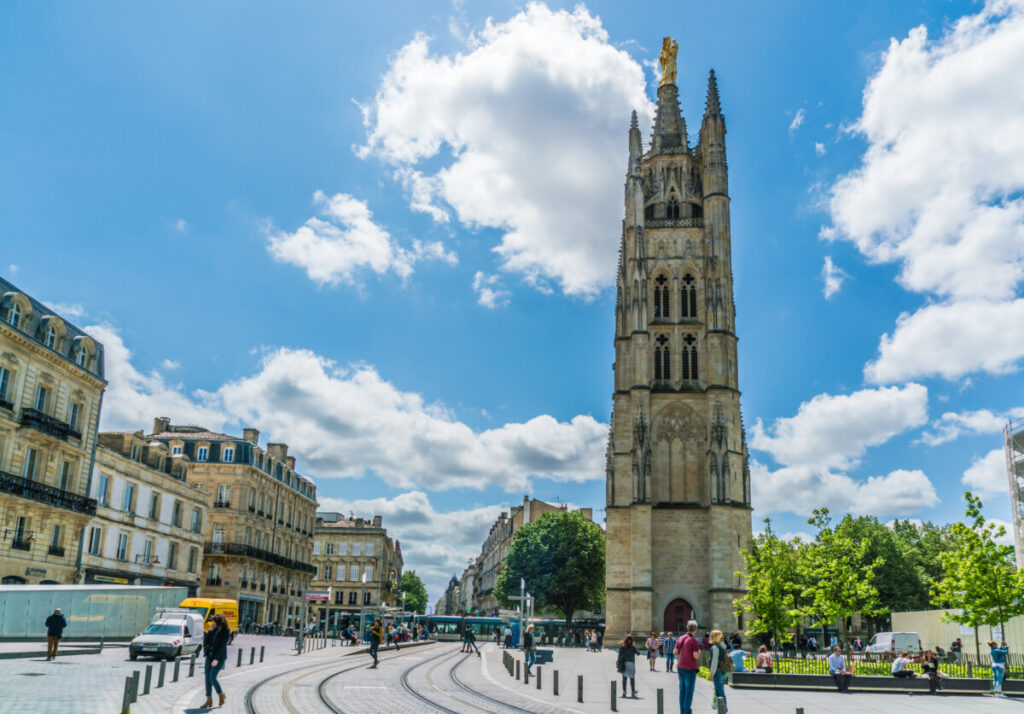
Tour Pey-Berland is the most convenient central Bordeaux viewpoint because it stands beside the cathedral and city hall. The climb uses a narrow spiral staircase with 231 steps and reaches observation terraces at approximately 40 and 50 meters.
Access is capacity-controlled, and the official tower information requires timed e-tickets. The currently listed standard ticket is €9.
Only the ground level is accessible to visitors with reduced mobility. The climb also requires reasonable health and comfort with confined staircases.
Choose Pey-Berland if: you want the most efficient tower climb during a historic-center route or want a close view over the cathedral roofs.
Choose Saint-Michel instead if: you are spending more time in the Saint-Michel quarter or want to experience the spire following its 2026 restoration. Most visitors do not need to climb both towers unless city views are a major priority.
6. Explore Saint-Michel Basilica and its restored spire

The Basilica of Saint-Michel and its freestanding bell tower form the focal point of one of Bordeaux’s most distinctive neighborhoods. The basilica is associated with the Routes of Santiago de Compostela UNESCO property and is a strong example of Flamboyant Gothic architecture.
The separate Flèche Saint-Michel reopened in June 2026 after five years of structural and stone restoration. At 114 meters, it is one of France’s tallest bell towers. Its 230 steps lead to a panoramic view over the Port of the Moon.
The spire climb and the basilica visit are separate experiences. Check service times for the church and reserve the tower independently. The climb is not suitable for travelers who cannot manage a long staircase.
Allow additional time for the surrounding Saint-Michel streets rather than leaving immediately after the monuments. The neighborhood gives a different impression of Bordeaux from the more formal 18th-century riverfront.
7. Spend two to three hours at La Cité du Vin

La Cité du Vin examines wine as a global cultural subject rather than focusing only on Bordeaux producers. Its permanent exhibition covers geography, history, trade, production, sensory perception, and wine’s place in different societies.
The museum recommends allowing two to three hours for the permanent exhibition. The current base adult price is €23, while packages that add a glass, workshop, or temporary experience can cost more. Check the inclusions rather than assuming every ticket has the same tasting component.
La Cité du Vin works particularly well on a rainy or very hot afternoon, for travelers who enjoy interactive museums, or for anyone unable to fit a château visit into the trip. Tram B provides a straightforward connection from the center.
It is less essential for travelers who dislike interpretive museums and already have a full vineyard day planned. In that case, another neighborhood, garden, or smaller wine bar may be a better use of limited time.
Disclosure: This article contains affiliate links. ViaTravelers may earn a commission if you book through them, at no extra cost to you. The recommendation is based on fit for this itinerary, not commission.
8. Have a picnic in Jardin Public
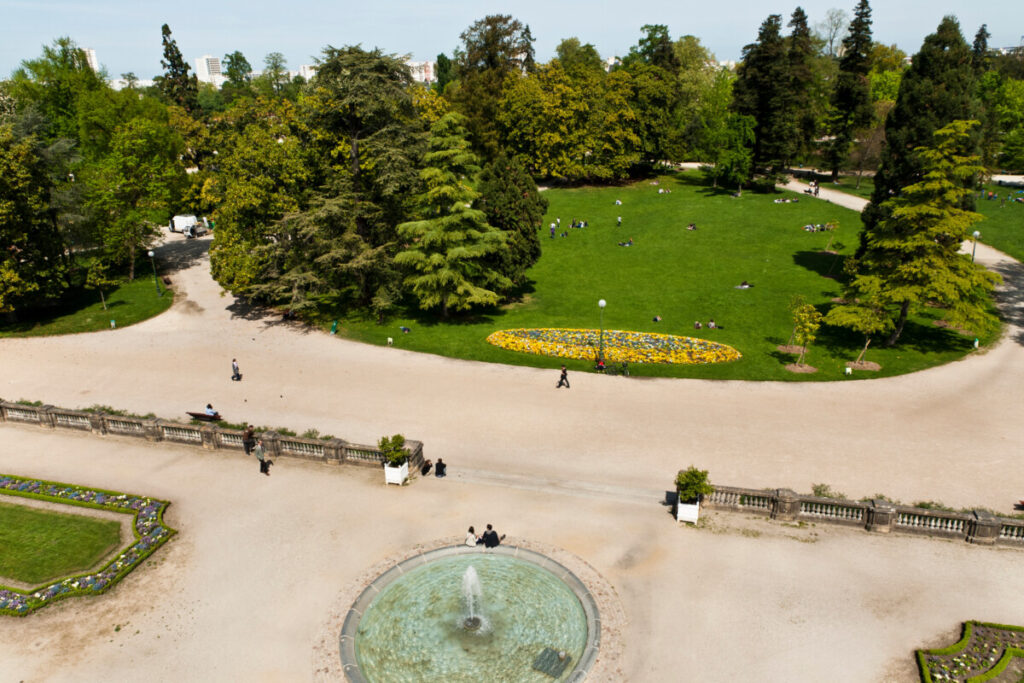
Jardin Public is an easy pause between the city center, Chartrons, and the Muséum de Bordeaux. Its lawns, pond, paths, mature trees, playground, and children’s attractions make it useful for more than a decorative walk.
Bring a picnic, use the park as a slower midday break, or pair it with the adjacent natural-history museum. The gates follow seasonal hours, staying open later during summer than winter.
The Bordeaux Botanical Garden is not inside Jardin Public. That separate attraction is across the Garonne in the Bastide district and appears later in this guide.
Jardin Public is especially practical for families because children can move around without adding another timed attraction. It also offers a useful low-cost break between museums, towers, and restaurant reservations.
Compare it with other gardens in Europe when planning a garden-focused trip.
9. Visit the Muséum de Bordeaux
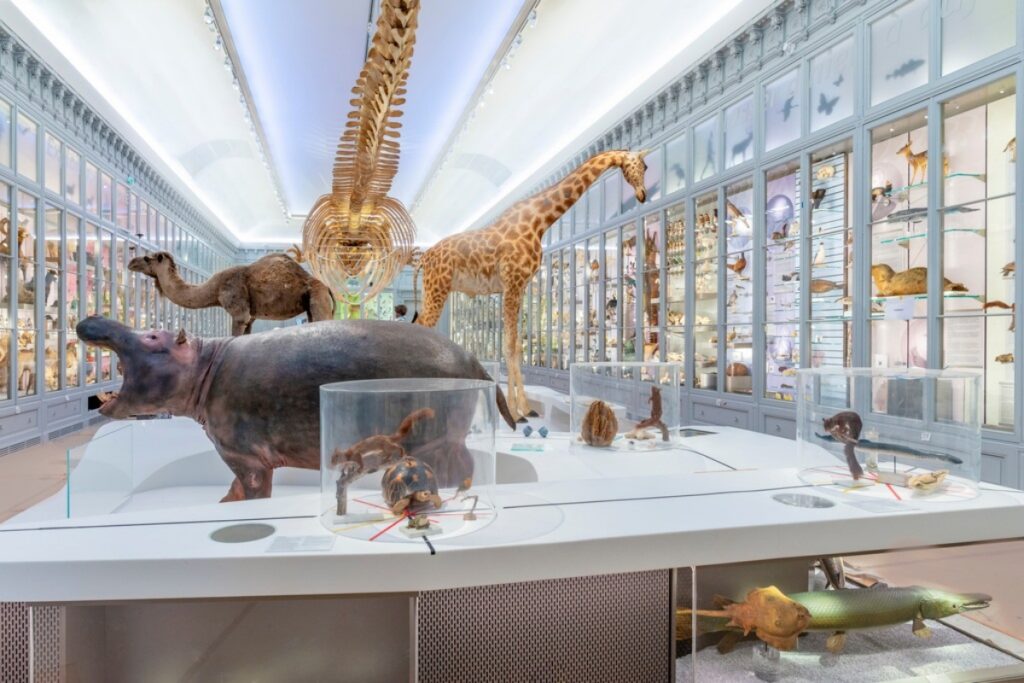
The Muséum de Bordeaux – Sciences et Nature sits beside Jardin Public and focuses on biodiversity, zoology, natural history, and the relationship between humans and the living world.
It is one of the most practical Bordeaux attractions for families and for days when the weather makes a long outdoor route less appealing. Temporary exhibitions can affect both the visit and the ticket price.
Current city information lists longer opening hours from April through September and slightly shorter winter hours. Check the official calendar for Monday closures, public-holiday changes, family activities, and temporary exhibitions.
Allow about 60 to 90 minutes for a selective visit, then continue directly into Jardin Public. This pairing gives you an indoor and outdoor activity without adding transit time.
10. Cross the river to Jardin Botanique de Bordeaux
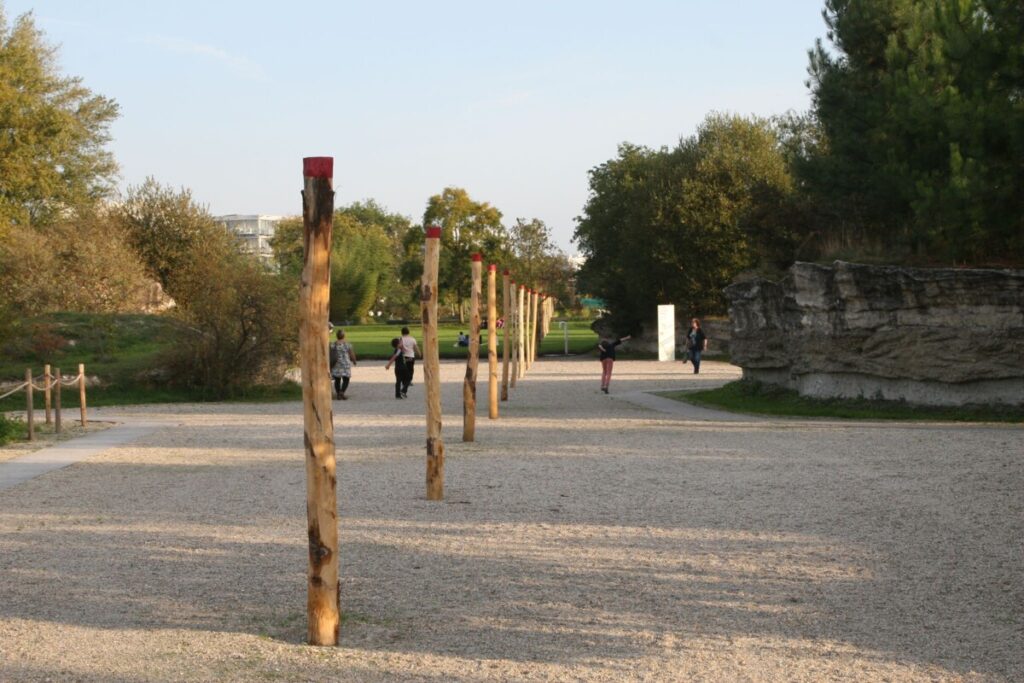
Jardin Botanique de Bordeaux is in the Bastide district on the right bank of the Garonne. It is a separate attraction from Jardin Public, despite the two names often being confused in travel guides.
The garden uses living collections, regional landscapes, cultivated plots, aquatic areas, greenhouses, and exhibition spaces to explain plant diversity and human relationships with plants. The outdoor garden generally follows longer seasonal hours than the indoor exhibition areas.
Tram A serves the Jardin Botanique area, making it straightforward to reach without a car. Pair the visit with a right-bank river walk rather than crossing the Garonne solely for a brief photograph.
This is a better choice than Jardin Public for travelers specifically interested in botany, landscape design, or educational collections. Jardin Public is the stronger option for a central picnic and an unstructured rest.
11. See the Monument aux Girondins at Place des Quinconces
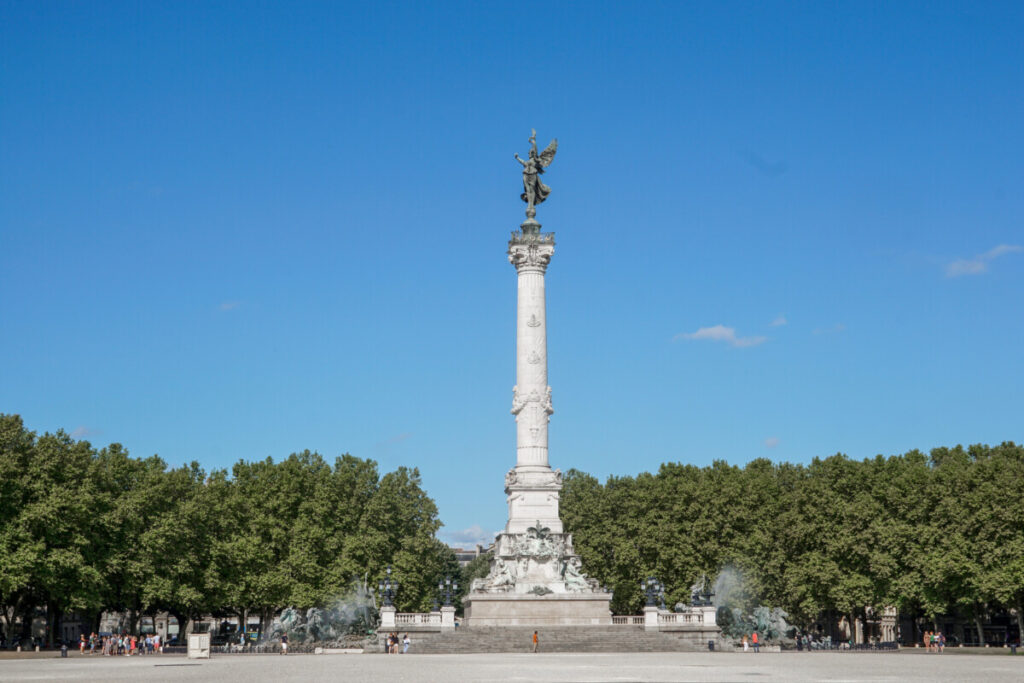
The Monument aux Girondins stands at Place des Quinconces and commemorates members of the Girondin political faction who died during the Reign of Terror. Built between 1894 and 1902, the monument rises approximately 43 meters.
A figure of Liberty breaking her chains crowns the column, while the lower fountains and bronze groups use allegorical figures to represent political ideas and historical conflict.
The monument is free to view and easy to combine with the riverfront, Grand Théâtre, Chartrons, or Jardin Public. Large fairs and public events sometimes occupy Place des Quinconces, so the immediate setting can look very different depending on the date.
I enjoyed using the monument’s steps as a place to pause in the sun. It works well near the end of a walking route because you can decide from here whether to continue toward Chartrons, Jardin Public, or the river.
How to plan one, two, or three days in Bordeaux
One day in Bordeaux
- Start at Saint-André Cathedral and climb Tour Pey-Berland if you have a timed reservation.
- Walk south through the old center to the Grosse Cloche.
- Continue to Porte Cailhau and the Garonne.
- Walk along the river to Place de la Bourse and the Miroir d’Eau.
- Finish at Place des Quinconces or continue by tram to La Cité du Vin if the museum is a higher priority than a relaxed evening in the center.
Two days in Bordeaux
Use the first day for the historic-center route. On the second day, spend two to three hours at La Cité du Vin, then choose either Jardin Public and the Muséum or a right-bank visit to Jardin Botanique. This avoids squeezing every museum and garden into the same afternoon.
Three days in Bordeaux
Give the third day to one wine area. Choose Médoc for a Left Bank château route, Saint-Émilion for a village-and-vineyard combination, or Pessac-Léognan for an outing closer to the city. A full day is more comfortable than trying to tour estates and complete the city-center sights on the same schedule.
Is the Bordeaux CityPass worth it?
The official Bordeaux CityPass currently costs €37 for 24 hours, €48 for 48 hours, €56 for 72 hours, and €62 for 96 hours. It includes unlimited urban bus and tram travel, La Cité du Vin, Bassins des Lumières, one city tour, and a selection of museums and monuments.
The 48-hour pass is most persuasive for an attraction-heavy itinerary. La Cité du Vin (€23), Tour Pey-Berland (€9), and Porte Cailhau (€7) total €39 before adding transit or another included museum. At €48, the pass becomes competitive once you use public transportation and add at least one more included attraction.
Skip the pass if your plan centers on free exterior landmarks, long meals, neighborhood walks, and a separate vineyard day. Buying a pass does not create value if it pressures you to rush through attractions you would not otherwise visit.
Frequently asked questions about visiting Bordeaux
How many days do you need in Bordeaux?
Two full days are enough for the central Bordeaux attractions and La Cité du Vin. Plan three days if you also want a half- or full-day vineyard visit without rushing the city.
Can you visit Bordeaux wineries without a car?
Yes. Guided tours are the simplest option, while regional trains, trams, buses, bicycles, and transfers can reach selected wine areas. Saint-Émilion has a train station about one kilometer from the village, but individual château visits still need reservations and onward planning.
Is Bordeaux walkable?
The historic center is highly walkable, and Saint-André Cathedral, Grosse Cloche, Porte Cailhau, Place de la Bourse, and Quinconces can be connected on foot. Use the tram for La Cité du Vin, the Bastide botanical garden, and longer cross-city journeys.
Is the Bordeaux CityPass worth buying?
It can be worth buying when you plan to visit La Cité du Vin, use public transportation, and enter several included monuments or museums. It is usually poor value for an itinerary built mostly around free walks and a vineyard day.
What should you book in advance in Bordeaux?
Reserve wine-château visits, transportation for wine country, Tour Pey-Berland, and the Saint-Michel spire. Advance La Cité du Vin tickets are also useful during busy travel periods. Most squares, gardens, churches, and exterior landmarks can remain flexible.
Plan the rest of your France trip
- Compare the major wine regions in France.
- Explore more UNESCO World Heritage sites in Europe.
- See other famous landmarks in France.
- Continue planning with the France destination guide.
The best way to prioritize Bordeaux
Start by deciding how much of the trip belongs to wine country. Once that half or full day is fixed, reserve one tower and any museum that matters to you. Keep the riverfront squares, gates, gardens, and neighborhood walks flexible.
For most first-time visitors, the strongest three-part plan is simple: one historic-center day, one La Cité du Vin and garden or museum day, and one vineyard day. That balance explains Bordeaux more clearly than racing through a longer list of disconnected attractions.