Chablis is worth visiting if you enjoy wine, compact historic towns, and countryside walks. In one full day, you can explore the old center, learn how the appellation works at the Cité des Climats et Vins de Bourgogne, walk above the Grand Cru slopes, and book one focused tasting. Add a second day for Noyers-sur-Serein, the underground cellars at Bailly-Lapierre, or Fontenay Abbey.
Chablis is in northern Burgundy, in France’s Yonne department. Its name also identifies dry white wines made only from Chardonnay under four appellation levels: Petit Chablis, Chablis, Chablis Premier Cru, and Chablis Grand Cru.
This guide retains ViaTravelers’ on-location photography and uses official visitor information checked on August 3, 2026. Opening hours, tasting formats, and admission prices can change, so confirm the details on the linked official site before setting out.
Disclosure: Some hotel and tour links are affiliate links. ViaTravelers may earn a commission if you book through them, at no extra cost to you. The recommendations below are based on fit, logistics, and reader usefulness.
Chablis quick guide
- Best first stop: the historic center and Porte Noël
- Best introduction to the wine region: Cité des Climats et Vins de Bourgogne
- Best free activity: the signed Grand Cru vineyard walk
- Best historic wine visit: Domaine Laroche’s Obédiencerie
- Best option with children or in rain: the Cité or Vinéa Passion
- Best nearby village: Noyers-sur-Serein
- Best heritage day trip: Fontenay Abbey
| Experience | Best for | Typical time | Book ahead? |
|---|---|---|---|
| Historic center | First-time visitors, architecture, photography | 60–90 minutes | No |
| Cité des Climats | Wine context, families, rainy days | 45–75 minutes | Recommended in busy periods |
| Grand Cru walk | Vineyard views and a free activity | About 70–90 minutes | No |
| Winery visit | Guided tasting and cellar history | 45–90 minutes | Yes |
| Sunday market | Local food and picnic supplies | 45–90 minutes | No |
| Noyers-sur-Serein | A non-wine half-day trip | 2–3 hours | No |
| Fontenay Abbey | Architecture and monastic history | Half day | Check guided-tour options |
Jump to: planning essentials · the 11 experiences · one-day itinerary · where to stay · frequently asked questions
What to know before visiting Chablis
How long do you need?
One full day is enough for the historic center, the Cité, one winery appointment, and a short vineyard walk. Stay one or two nights if you want an unhurried dinner, more than one producer visit, or a day trip. Trying to fit three serious tastings into a single afternoon usually leaves too little time for the town itself.
Getting to Chablis
Chablis has no railway station. The official wine-region guide identifies Auxerre, Laroche-Migennes, and Tonnerre as the nearest rail gateways, with onward travel by car. A car is the simplest option for vineyard routes and day trips, but arrange a designated driver whenever tastings are part of the plan. Travelers arriving by train should organize a rental car, taxi, or transfer before arrival rather than assuming frequent local connections.
See the official directions to Chablis for current road and rail guidance.
When to go
Spring through autumn gives you the broadest choice of vineyard walks, museums, and seasonal visitor services. Harvest time is active but can restrict estate visits, while winter is quieter and some attractions reduce their hours. Sunday is especially useful for the weekly market, although several producers limit tours or close that day. Reserve tastings before finalizing the rest of your schedule.
Accessibility and wine-tasting safety
The town center is compact, but cobbles, thresholds, cellars, and vineyard paths can be uneven. The Cité publishes accessibility information, while individual wineries vary considerably. Ask about step-free access when booking. Drivers should use tasting pours selectively, make use of spittoons, or choose a guided excursion with transportation.
11 best things to do in Chablis, France
1. Walk the historic center and pass through Porte Noël
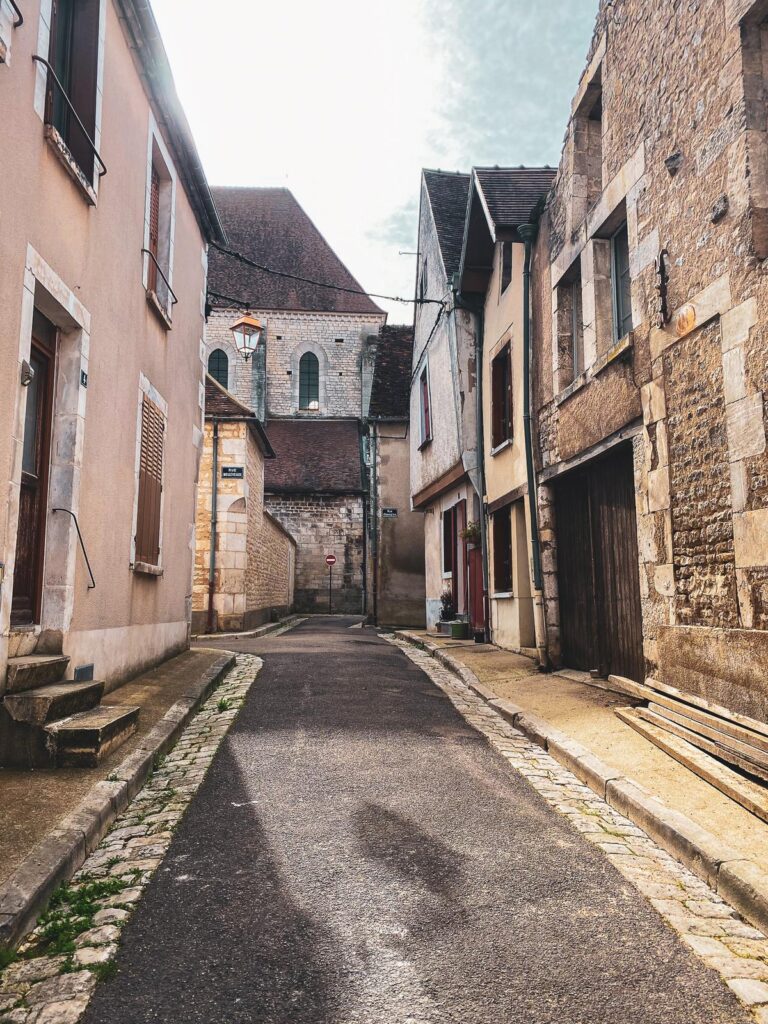
Start with a self-guided loop through central Chablis. Porte Noël’s twin towers form the most recognizable entrance, while the route through town also passes the Serein, the old washhouse, the exterior of the Obédiencerie, and lanes lined with pale stone buildings.
The tourist office promotes a discovery route marked with grape-bunch symbols. Allow at least an hour, and add time for photographs or a stop along the river. This walk gives useful context before a tasting because it shows how closely the town’s religious, commercial, and wine histories overlap.
Check the Chablis tourist office’s current activity guide for seasonal walks and guided visits.
2. Begin your wine education at the Cité des Climats
Address: 1 bis Rue de Chichée, 89800 Chablis
The Cité des Climats et Vins de Bourgogne in Chablis is the clearest first stop for understanding northern Burgundy’s vineyards. Its sensory displays explain appellations, soils, vineyard sites, aromas, and the idea of a climat without assuming that visitors already know wine terminology.
The visitor route takes about 45 minutes and the current tourism listing includes two tasting products, with grape juice available. It is family-friendly and publishes accessibility information. The Chablis site operates seasonally, generally Tuesday through Sunday during its spring-to-autumn opening period; confirm the live calendar before travel.
Because it gives the clearest orientation, the Cité belongs near the start of a first-time itinerary. Visit before your winery appointment if you want the terminology to make more sense during the tasting.
3. Follow the Grand Cru vineyard walk
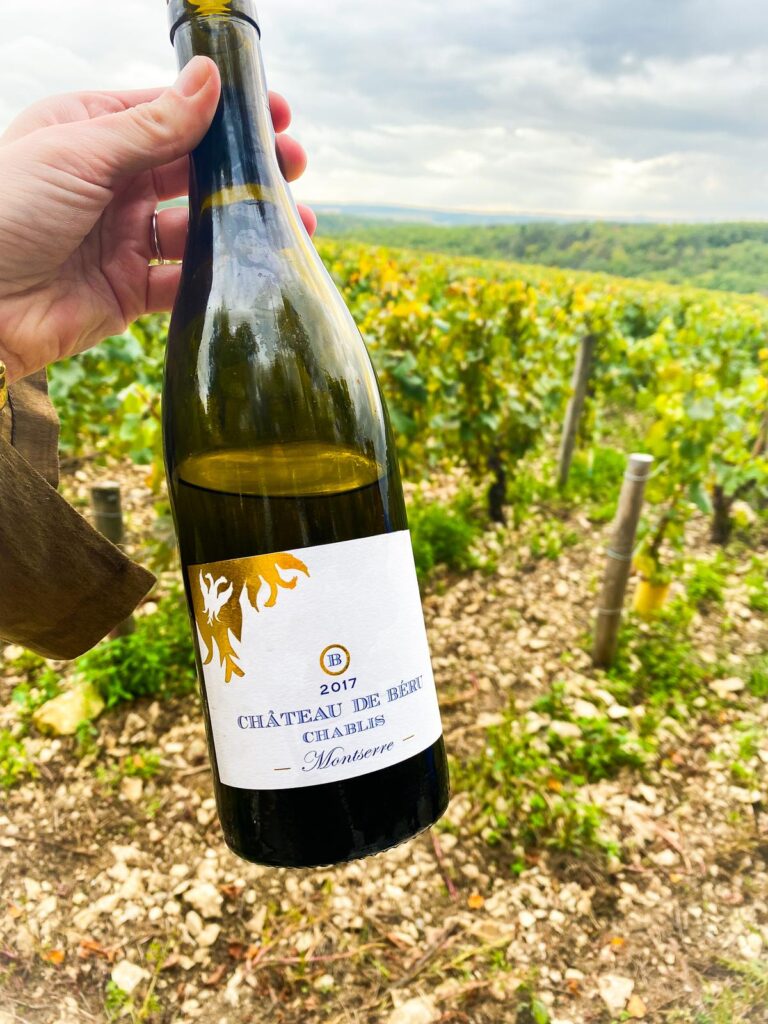
The slopes above town provide the best free overview of the Chablis landscape. The current official route map offers a 4.6-kilometer option of roughly 1 hour 10 minutes and a longer 6-kilometer option of roughly 1 hour 30 minutes. Both climb above town for broad views across the Grand Cru vineyards.
Download the official Grand Cru walk map before leaving town. Wear shoes with reliable grip, carry water in warm weather, and remain on the marked route. Vineyard rows are working agricultural land, not open shortcuts.
If wine-country walking is a priority, compare this route with other wine regions in France and plan extra time in northern Burgundy.
4. See the horseshoe-covered doors of Saint-Martin Church

Address: 2 Place du Regain, 89800 Chablis
Saint-Martin Church was built from 1160 and substantially reconstructed from 1220. Its most memorable feature is the collection of horseshoes fixed to the doors. Local tradition links them to pilgrims who sought Saint Martin’s protection or healing for their horses.
Allow 20 to 30 minutes when the church is open. Treat it as an active religious building, keep voices low, and avoid entering during services or private ceremonies. The doors alone are worth seeing even when interior access is restricted.
5. Book one well-matched Chablis wine tasting
All Chablis is dry white Burgundy made from Chardonnay, but the four appellation levels cover different sites and styles. Soil is part of the explanation, not the whole explanation: Chablis, Premier Cru, and Grand Cru vineyards are strongly associated with Kimmeridgian limestone and marl, while Petit Chablis is more often linked to Portlandian limestone. Exposure, vintage, farming, and winemaking also shape what ends up in the glass.
| Appellation | What it identifies | Why taste it |
|---|---|---|
| Petit Chablis | The broadest entry level, often from higher or outer slopes | A useful baseline for freshness and early-drinking style |
| Chablis | The core village appellation across the Serein Valley | The clearest reference point for the region |
| Chablis Premier Cru | Recognized vineyard climats with tighter production rules | Shows how site and exposure change the wine |
| Chablis Grand Cru | Seven climats on the most prestigious slope above town | Usually the most concentrated and age-worthy level |
The official Chablis wine organization provides a useful overview of the four appellations and the Chardonnay grape.
Domaine William Fèvre

Address: 10 Rue Jules Rathier, 89800 Chablis
Domaine William Fèvre is a strong choice for travelers who want a producer-focused tasting in the center of town. The domaine began in 1959 and now farms parcels across Chablis, Premier Cru, and Grand Cru sites. Visits are by appointment. Its official schedule currently lists broader hours from March through November and reduced winter hours, with a published annual closure in late December.
Check availability directly on the Domaine William Fèvre visit page.

Château Long-Depaquit

Address: 45 Rue Auxerroise, 89800 Chablis
Château Long-Depaquit, part of Albert Bichot, pairs an elegant estate setting with a practical central location. The domaine’s Orangerie opens year-round on a seasonal schedule. Sunday access is generally limited to tastings rather than full tours, so reserve the exact format you want instead of assuming cellar access.
Use the official Château Long-Depaquit visitor page for current hours and booking.
Domaine Laroche and the Obédiencerie

Address: 22 Rue Louis Bro, 89800 Chablis
Choose Domaine Laroche when history matters as much as the tasting. Its guided Obédiencerie visit covers cellars dating from the 12th through 17th centuries and a 13th-century press. The former monastic complex also helps explain the long connection between Saint-Martin, medieval religious institutions, and Chablis wine.
Book the official Obédiencerie tasting tour in advance and confirm the language offered.
How to choose: Laroche offers the strongest historic setting; Long-Depaquit suits visitors who value gardens and a central estate; William Fèvre is a good fit for a focused producer tasting. Pick one for a day trip, or two on separate days. Never plan to drive after drinking.
6. Shop the Sunday market

The Chablis market runs every Sunday from 8:00 a.m. to 1:00 p.m. along Rue Auxerroise and Rue du Maréchal de Lattre de Tassigny. It is useful for assembling a picnic or sampling Burgundy staples such as gougères, cheeses, charcuterie, and jambon persillé.
Arrive early if the market is central to your plan, then continue through the old town before your first timed reservation. If you visit on another day, use the same part of the morning for local food shops and a relaxed lunch. Our guide to French cuisine explains several regional dishes you may encounter.
Confirm market details with the official Chablis market guide.
7. Explore old vineyard tools at Vinéa Passion

Address: 22 Chemin de Montmains, 89800 Chablis
Vinéa Passion presents the collection of Chablis winegrower Alexandre Gautherin in a 700-square-meter museum. Displays cover grafting, vineyard soils, historic tools, frost protection, and the evolution of wine work. The current tourism listing estimates about 80 minutes for a visit and notes a children’s area, tasting, and grape juice.
This museum complements the Cité rather than duplicating it. The Cité gives the polished regional overview; Vinéa Passion is better for physical tools, local working methods, and families who prefer tangible exhibits. Confirm opening dates or arrange an appointment before traveling to the edge of town.
The seasonal Chablis tourist train also departs from this address for a 45-minute ride through the town and vineyard. Its schedule changes, so check directly with Vinéa Passion rather than relying on an older timetable.
8. Visit the Vine and Corkscrew Museum in Beine

Address: 4 Rue de l’Équerre, 89800 Beine
Domaine Alain Geoffroy’s museum now lists more than 9,000 wine-related objects, including about 4,900 corkscrews. That makes the collection substantially larger than the figures quoted in older travel guides. The displays also include vineyard and cellar tools that trace changes in the work over several centuries.
The current tourist-office listing estimates 30 minutes for an individual museum visit, with longer tasting formats available by appointment. It is a concise detour for design, antiques, or wine-history enthusiasts rather than an essential stop for every first-time visitor.
Check the Domaine Alain Geoffroy museum page before visiting.
9. Tour the underground cellars at Bailly-Lapierre

Address: 3 Quai de l’Yonne, Bailly, 89530 Saint-Bris-le-Vineux
Bailly-Lapierre produces Crémant de Bourgogne in a vast former limestone quarry. This is a sparkling-wine stop, not another Chablis tasting, which makes it a useful contrast after a day focused on still Chardonnay.
The official tour lasts about one hour: a 45-minute guided cellar visit followed by a tasting of two crémants. The underground temperature stays near 12°C, so bring a layer even in summer. The cellars are not served by public transportation, and the access road includes a steep section.
See current tour times and reserve through the official Bailly-Lapierre visit page.
10. Spend a half day in Noyers-sur-Serein

Noyers-sur-Serein is recognized by Les Plus Beaux Villages de France and sits within a bend of the Serein. Its strongest features are its 15th-century half-timbered houses, old market squares, stone lanes, and remnants of the fortified town.
Allow two to three hours for a slow walk, coffee or lunch, and the riverfront. It is the best nearby choice when part of your group wants a break from tastings. Pair it with Chablis rather than trying to add Fontenay Abbey on the same short day.
See the village profile from Les Plus Beaux Villages de France, then compare it with our guides to small towns in France and beautiful French villages.
11. Make a heritage trip to Fontenay Abbey

Address: Abbaye de Fontenay, 21500 Marmagne
Fontenay Abbey was founded in 1118 and is one of the best-preserved Cistercian monastic complexes in Europe. Its church, cloister, dormitory, forge, gardens, and water system make the visit broader than a single architectural stop. UNESCO added the abbey to the World Heritage List in 1981.
For 2026, the abbey lists daily opening from 10:00 a.m. to 6:00 p.m. between April 3 and November 1, with split hours of 10:00 a.m. to noon and 2:00 to 5:00 p.m. during the rest of the year. Regular high-season guided tours are in French; private tours in other languages require advance arrangements. The official admission page still displays rates labeled 2025, so verify the price rather than treating it as current.
Plan Fontenay as a half-day or full-day car excursion. Check the official Fontenay Abbey site, and see more of France’s historic landmarks.
A practical one-day Chablis itinerary
- 9:00 a.m.: Walk the historic center. On Sunday, start at the market from 8:00 a.m.
- 10:00 a.m.: Visit the Cité des Climats for the regional overview.
- 11:15 a.m.: See Saint-Martin Church and continue along the Serein.
- 12:15 p.m.: Have lunch in town. Leave enough time to arrive calmly for your reservation.
- 2:00 p.m.: Take one pre-booked winery tour or tasting.
- 4:00 p.m.: Walk the shorter Grand Cru route, weather permitting.
- 6:00 p.m.: Check in, have dinner, or depart with a sober driver.
On a rainy day, replace the vineyard walk with Vinéa Passion. If the Cité is closed for the season, move the church and historic-center walk earlier and book a longer estate tour.
Visiting Chablis from Paris without driving
A same-day independent rail trip is awkward because Chablis has no station. One practical alternative is this small-group Burgundy winery tour from Paris. Its current product page lists a 12-hour itinerary with transportation, three producer stops, multiple tastings, and time for lunch in Chablis. Review the live itinerary, mobility requirements, cancellation terms, and price before booking.
For more options and decision criteria, see our guide to wine tours in Burgundy.
Where to stay in Chablis
Staying in the center lets you walk to dinner and the main town sights, but it does not remove the need for a sober plan after tastings. Hôtel du Vieux Moulin occupies a former mill associated with Domaine Laroche and places you close to the Obédiencerie.
Frequently asked questions
Is Chablis, France, worth visiting?
Yes. Chablis is a compact Burgundy wine town with a historic center, vineyard walks, wine museums, and tasting rooms. One full day is enough for the main sights and one winery visit; stay longer for Noyers-sur-Serein, Bailly-Lapierre, or Fontenay Abbey.
How many days do you need in Chablis?
Plan one full day for the historic center, the Cité des Climats, one tasting, and a short vineyard walk. Two days are better if you want a second producer visit or a nearby village, cave, or abbey.
Can you visit Chablis without a car?
You can explore the town itself on foot, but Chablis has no railway station and public transportation is limited for vineyards and day trips. Arrive through Auxerre, Laroche-Migennes, or Tonnerre and arrange onward transport before travel, or book a guided tour with transportation.
Do Chablis wineries require reservations?
Many estates accept visitors only by appointment or offer different schedules for tastings and cellar tours. Reserve in advance, especially on weekends, during harvest, and when you need an English-language visit.
What kind of wine is Chablis?
Chablis is dry white Burgundy made only from Chardonnay. The region has four appellation levels: Petit Chablis, Chablis, Chablis Premier Cru, and Chablis Grand Cru.
What can families and non-drinkers do in Chablis?
Good options include the historic-center walk, Saint-Martin Church, the Cité des Climats with grape juice, Vinéa Passion, the seasonal tourist train, the Grand Cru walking route, Noyers-sur-Serein, and Fontenay Abbey.
Related France and Burgundy guides
- Best things to do in Burgundy
- Best places to visit in France
- France travel guide
- Wine tasting in Paris
Plan your Chablis trip around one excellent tasting
The most satisfying day in Chablis balances the wine with the place: walk the old center, learn the appellation basics, choose one producer that matches your interests, and leave time for the vineyard slopes. Add Noyers-sur-Serein or Fontenay Abbey only when you have a second day or a deliberately lighter town itinerary.