

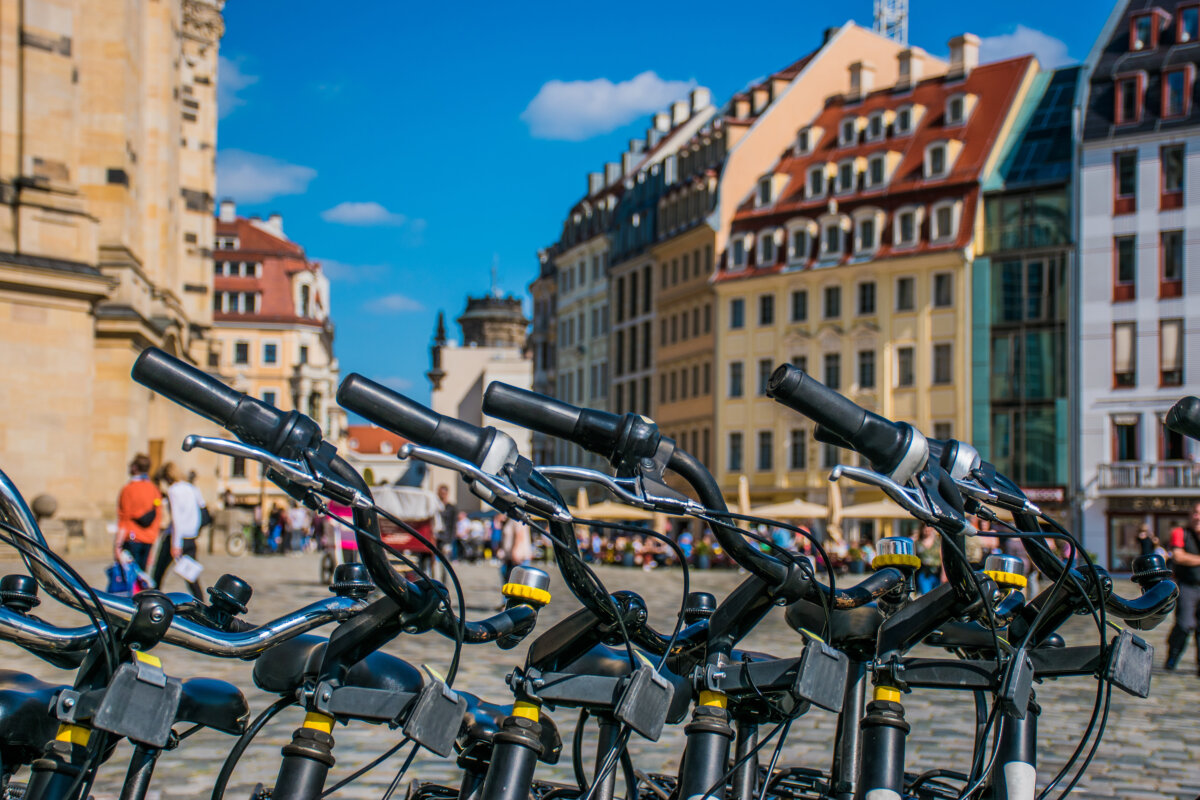
Dresden, known as the Florence on the Elbe, is a city renowned for its stunning baroque architecture and rich cultural heritage. The city’s skyline is dominated by the magnificent Frauenkirche and the Zwinger Palace, both of which showcase the artistry and history that define Dresden. Visitors can explore world-class museums, vibrant art scenes, and beautiful gardens that reflect the city’s storied past.
The destination guide
Dresden
Travel guides for Dresden
Itineraries & day trips (1)
Things to do (1)
More guides featuring Dresden (19)
At a glance
Currency€ EURCode: EUR
Time zoneCentral European Time
Languages
- German
Setting
- Elbe River valley
- Baroque architecture
- Zwinger Palace
- Saxon Switzerland nearby
Known for
- Baroque Architecture
- Art Museums
- Music & Opera
- History
- Reconstruction
- Christmas Markets
- Alternative Culture
- Saxon Wine
Population13,21513,215 residents
VisaDuration: Up to 90 days within any 180-day period in the Schengen Area · Documents: Valid passport issued within the last 10 years and valid for at least 3 months after planned departure, plus proof of accommodation, onward or return travel, and sufficient funds if requested
How Dresden scores
7/10OverallGood
Weather6/10
Value for money8/10
Safety7/10
Food & cuisine8/10
Culture & arts7/10
Cultural experience9/10
History9/10
Nature & outdoors6/10
Adventure4/10
Nightlife7/10
Shopping7/10
Family friendly5/10
Romance8/10
Character
Photography score9/10
Authenticity score10/10
Off-the-beaten-path score7/10
Editorial scores on a 10-point scale, weighed against destinations of the same kind.
Travel safety snapshot
Overall88/100High rating
Women travellers86/100
LGBTQ+ travellers85/100
Theft82/100
Medical care88/100
Physical harm90/100
Political freedom85/100
SafePlace indicators use their source 100-point scale; higher is more favourable. Planning context, not a live travel advisory — check official government guidance before you go.
When to go
Best months to visit: April, May, June, July, August, September, October and December.
- January: -1.1 to 4.3 degrees Celsius, 66.5 millimetres of rain, best-time score 2 out of 5.
- February: -0.4 to 6.7 degrees Celsius, 57.4 millimetres of rain, best-time score 2 out of 5.
- March: 1.5 to 10 degrees Celsius, 46.9 millimetres of rain, best-time score 3 out of 5.
- April: 4.5 to 14.2 degrees Celsius, 43.8 millimetres of rain, best-time score 4 out of 5.
- May: 8.8 to 18.6 degrees Celsius, 51.4 millimetres of rain, best-time score 5 out of 5.
- June: 13.9 to 24.2 degrees Celsius, 64.7 millimetres of rain, best-time score 5 out of 5.
- July: 15.1 to 24.9 degrees Celsius, 71.3 millimetres of rain, best-time score 4 out of 5.
- August: 15.2 to 25.1 degrees Celsius, 64.6 millimetres of rain, best-time score 4 out of 5.
- September: 11.6 to 20.8 degrees Celsius, 66.6 millimetres of rain, best-time score 5 out of 5.
- October: 8 to 15.2 degrees Celsius, 66.5 millimetres of rain, best-time score 4 out of 5.
- November: 2.8 to 8.5 degrees Celsius, 46.9 millimetres of rain, best-time score 3 out of 5.
- December: 0.7 to 5.6 degrees Celsius, 59 millimetres of rain, best-time score 5 out of 5.
Month-by-month conditions and packing advice
- January
- Cold, occasional rain January in Dresden: cold, quiet winter conditions make this less balanced outside festive travel. Crowds: January in Dresden is workable with normal seasonal planning; build in layers, weather checks, and a mix of indoor and outdoor activities. Pack: Pack warm layers, a coat, and comfortable shoes for cold mornings and evenings.
- February
- Cold, occasional rain February in Dresden: cold, quiet winter conditions make this less balanced outside festive travel. Crowds: February in Dresden is workable with normal seasonal planning; build in layers, weather checks, and a mix of indoor and outdoor activities. Pack: Pack warm layers, a coat, and comfortable shoes for cold mornings and evenings.
- March
- Cold, occasional rain March in Dresden: indoor culture helps, but cooler weather and shorter days narrow outdoor plans. Crowds: March in Dresden is workable with normal seasonal planning; build in layers, weather checks, and a mix of indoor and outdoor activities. Pack: Pack warm layers, a coat, and comfortable shoes for cold mornings and evenings.
- April
- Cool to mild, occasional rain April in Dresden: spring, summer, or fall visits remain rewarding with crowd and weather planning. Crowds: April in Dresden is workable with normal seasonal planning; build in layers, weather checks, and a mix of indoor and outdoor activities. Pack: Pack layered clothing and comfortable walking shoes.
- May
- Cool to mild, occasional rain May in Dresden: riverfront walks, museums, architecture, Saxon Switzerland day trips, and Christmas markets align well. Crowds: May in Dresden is workable with normal seasonal planning; build in layers, weather checks, and a mix of indoor and outdoor activities. Pack: Pack layered clothing and comfortable walking shoes.
- June
- Mild to warm, occasional rain June in Dresden: riverfront walks, museums, architecture, Saxon Switzerland day trips, and Christmas markets align well. Crowds: June in Dresden is comfortable for sightseeing, neighborhoods, food stops, day trips, and outdoor time with limited weather friction. Pack: Pack light clothing, sun protection, and comfortable walking shoes.
- July
- Mild to warm, some rain July in Dresden: spring, summer, or fall visits remain rewarding with crowd and weather planning. Crowds: July in Dresden is workable with normal seasonal planning; build in layers, weather checks, and a mix of indoor and outdoor activities. Pack: Pack light clothing, sun protection, and comfortable walking shoes. Add a rain jacket or compact umbrella.
- August
- Mild to warm, occasional rain August in Dresden: spring, summer, or fall visits remain rewarding with crowd and weather planning. Crowds: August in Dresden is comfortable for sightseeing, neighborhoods, food stops, day trips, and outdoor time with limited weather friction. Pack: Pack light clothing, sun protection, and comfortable walking shoes.
- September
- Mild to warm, occasional rain September in Dresden: riverfront walks, museums, architecture, Saxon Switzerland day trips, and Christmas markets align well. Crowds: September in Dresden is comfortable for sightseeing, neighborhoods, food stops, day trips, and outdoor time with limited weather friction. Pack: Pack layered clothing and comfortable walking shoes.
- October
- Cool to mild, occasional rain October in Dresden: spring, summer, or fall visits remain rewarding with crowd and weather planning. Crowds: October in Dresden is workable with normal seasonal planning; build in layers, weather checks, and a mix of indoor and outdoor activities. Pack: Pack layered clothing and comfortable walking shoes.
- November
- Cold, occasional rain November in Dresden: indoor culture helps, but cooler weather and shorter days narrow outdoor plans. Crowds: November in Dresden is workable with normal seasonal planning; build in layers, weather checks, and a mix of indoor and outdoor activities. Pack: Pack warm layers, a coat, and comfortable shoes for cold mornings and evenings.
- December
- Cold, occasional rain December in Dresden: riverfront walks, museums, architecture, Saxon Switzerland day trips, and Christmas markets align well. Crowds: December in Dresden is workable with normal seasonal planning; build in layers, weather checks, and a mix of indoor and outdoor activities. Pack: Pack warm layers, a coat, and comfortable shoes for cold mornings and evenings.
Peak season
- July
- August
- May
- June
- September
Off-peak
- January
- February
- November
- December
- March
- April
Know before you go
Best time to visit
The best time to visit Dresden is during the spring (April to June) and fall (September to October) when the weather is mild and the city is less crowded. The Christmas market season in December is also a magical time to experience the city’s festive spirit and traditions.
Season by season
Spring (Apr–May): 10–20 °C, gardens blooming, pleasant sightseeing. Summer (Jun–Aug): 20–30 °C, outdoor concerts, Elbe paddle steamers, long days. Autumn (Sep–Nov): 8–17 °C, Saxon wine harvest, autumn foliage, fewer tourists. Winter (Dec–Feb): -2–5 °C, Striezelmarkt magic, Semperoper season, snow on Baroque façades.
Crowds
Moderate year-round in the Altstadt; high during the Striezelmarkt Christmas market (late November–December 24); low in the Neustadt; moderate at Saxon Switzerland on weekends
Getting there and around
Getting there
Dresden Airport (DRS) is 9 kilometers from the city center with S-Bahn line S2 reaching Dresden Hauptbahnhof in 21 minutes and Dresden-Neustadt in 14 minutes. The airport also connects via bus lines 77 and 80. Dresden Hauptbahnhof serves as a major rail junction with direct trains to Berlin (2 hours), Prague (2.5 hours), Leipzig (1 hour), and Munich (5 hours). The city’s location on the Elbe River made it a historic trading crossroads. The A4 and A13 motorways provide excellent road connections to major German cities.
Getting around
Dresden’s DVB network operates 12 tram lines and numerous buses covering the city comprehensively, with single tickets at €3 valid for 1 hour. The historic center between Hauptbahnhof and Neustadt is walkable, connected by the famous Augustus Bridge. The Elbe River ferries operate year-round, providing scenic crossings. The Dresden Card includes public transport and museum entry. S-Bahn trains reach Saxon Switzerland National Park in 40 minutes. Bicycle rentals and the Nextbike sharing system utilize extensive riverside paths. The Blue Wonder Bridge area connects to hillside funiculars offering panoramic views.
Top experiences in Dresden
Zwinger Palace
Read the place guide →A masterpiece of Baroque architecture built between 1710 and 1728 as Augustus the Strong’s orangery and festival arena. The palace courtyard—enclosed by elaborately sculptured pavilions, galleries, and the Crown Gate topped with a golden Polish crown—is one of Germany’s most beautiful open spaces. Inside, the Old Masters Gallery holds Raphael’s Sistine Madonna and works by Vermeer, Rembrandt, and Canaletto. The Porcelain Collection and the Mathematical-Physical Salon occupy adjoining wings. The garden grounds are free to enter; museum tickets are ~€14. Allow 2–3 hours.
Frauenkirche
Dresden’s most powerful symbol of resilience—a striking Baroque Protestant church destroyed in the 1945 firebombing and meticulously rebuilt between 1994 and 2005 using original stones identified by their darker patina. The interior’s pastel-painted dome, soaring 67 metres above the altar, is one of the largest in Europe. Climb the inner dome for 360-degree views of Dresden’s skyline and the Elbe valley. Free entry to the nave; dome climb ~€8. Organ concerts and vespers are held regularly. The church anchors the beautifully reconstructed Neumarkt square.
Green Vault (Grünes Gewölbe)
One of Europe’s most dazzling treasure chambers, created by Augustus the Strong in 1723 inside the Dresden Residenzschloss. The Historic Green Vault displays 3,000 objects—jeweled vessels, ivory carvings, amber works, and goldsmith masterpieces—in original Baroque mirror-walled rooms designed to amplify their brilliance. The New Green Vault upstairs showcases the legendary 41-carat Dresden Green Diamond, one of the rarest natural green diamonds in existence. Timed tickets are essential (book online days ahead); entry ~€16 with audio guide. Allow 1.5–2 hours.
Semperoper
One of the world’s most renowned opera houses, originally designed by Gottfried Semper in 1841, destroyed in WWII, and rebuilt to its original plans by 1985. The neo-Renaissance façade overlooks the Theaterplatz alongside the Zwinger, creating one of Europe’s most handsome civic squares. Guided tours reveal the opulent auditorium, royal box, and portrait gallery. Attending an evening performance of the Sächsische Staatskapelle (one of the world’s oldest orchestras, founded 1548) is the ultimate Dresden cultural experience. Tours ~€13.
Kunsthofpassage & Neustadt
The creative heart of Dresden’s alternative scene, hidden in the Äußere Neustadt across the Elbe. Kunsthofpassage is a series of interconnected courtyards with wildly artistic façades—most famous is the ‘Courtyard of the Elements,’ where blue cups and funnels attached to the building turn rainfall into music. The surrounding streets are packed with independent cafés, record shops, vintage clothing stores, and street art. It’s a complete contrast to the Altstadt’s Baroque grandeur and the best place to experience modern Dresden nightlife and café culture.
Editor-curated picks carried over from our original guide. Where a full place guide exists, the card links to it.

Worth booking ahead in Dresden
Hand-picked from the operators our guides already send readers to. Prices and availability are live on the partner site.
Day tripViator
Neuschwanstein and Linderhof royal castles day tour (opens Viator in a new tab)
Both royal castles and the coach in one long day; the practical way to see them from Munich without a car.
Where to stayBooking.com
Stays in Dresden (opens Booking.com in a new tab)
Live rates and availability for Dresden on Booking.com; filter by neighbourhood once you know where your days start.
We earn a commission if you book through these links, at no extra cost to you. It is how we keep the guides free and independent.
Tips from the field
Highlights
- Zwinger Palace & Old Masters Gallery
- Frauenkirche Dome Climb
- Green Vault Treasury
- Semperoper Opera House
- Kunsthofpassage & Neustadt
- Brühl's Terrace ('Balcony of Europe')
- Striezelmarkt Christmas Market
- Saxon Switzerland Day Trip
Best activities
- Walk the Zwinger gardens and see Raphael's Sistine Madonna, climb the Frauenkirche dome for rooftop views, book timed entry to the Green Vault treasures, attend a Semperoper performance, wander Kunsthofpassage's musical façade in the rain, stroll Brühl's Terrace (the 'Balcony of Europe'), see the 102-metre Fürstenzug porcelain mural, take a paddle steamer on the Elbe, visit a Christmas market (Striezelmarkt), and day-trip to Saxon Switzerland.
Local experiences
- Visit the Zwinger at 6 AM when the gardens open quietly before the museums, climb the Frauenkirche dome at sunset for golden Elbe views, take an evening guided tour of the Semperoper's opulent interior, wander Kunsthofpassage's courtyards and listen for the rainfall music, drink a Radeberger at the original brewery in the Neustadt, shop for local cheese at Pfunds Molkerei (the world's most beautiful dairy), browse Neustädter Markthalle for street food, take an Elbe paddle steamer to Pillnitz Castle, eat Eierschecke (Saxon cheesecake) at a Neustadt café, and day-trip to the Bastei Bridge in Saxon Switzerland.
Practical tips
- Purchase a Dresden City Card for public transport and museum discounts
- Many museums are closed on Mondays
- Book Semperoper tours in advance
Photography tips
- Brühl's Terrace at sunrise delivers the classic Elbe panorama—the Frauenkirche dome, Semperoper, and Hofkirche reflected in the morning river. The Zwinger's Crown Gate is best photographed from the inner courtyard at golden hour when sidelight picks out every sculptural detail. Neustadt's Kunsthofpassage demands a rainy day for the musical-façade shot. The Fürstenzug porcelain mural reads best in even, overcast light to avoid glare on the 25,000 Meissen tiles. Saxon Switzerland's Bastei Bridge over the sandstone gorge is one of Germany's most dramatic landscapes—arrive before 7 AM to avoid crowds.
Timing
- Allow 2–3 full days: an Altstadt day (Zwinger museums, Frauenkirche dome, Brühl's Terrace, Green Vault, Semperoper tour or performance), a Neustadt day (Kunsthofpassage, Pfunds Molkerei, Neustädter Markthalle, café culture, nightlife), and a day trip to Saxon Switzerland (Bastei Bridge, Festung Königstein). Dresden is 2 hours from Berlin and 1 hour from Leipzig by ICE train.
Keeping it authentic
- Dresden's dual identity—painstaking Baroque reconstruction in the Altstadt paired with anarchic creativity in the Neustadt—makes it unlike any other German city. The Frauenkirche's darker original stones visible among the lighter new masonry are a deliberate memorial to destruction and rebirth, not a cosmetic choice. Neustadt's Kunsthofpassage and the surrounding streets are genuinely resident-driven creative spaces, not tourist installations. Pfunds Molkerei, the world's most beautiful dairy shop (Guinness-certified) with hand-painted Villeroy & Boch tiles from 1892, is a functioning shop, not just a museum. The Striezelmarkt Christmas market has been held annually since 1434—Germany's oldest.
Culture, customs and safety
Cultural heritage
Dresden embodies the cultural renaissance of Saxon royal patronage and European Baroque artistic achievement, where Augustus the Strong created one of Europe most magnificent court cultures before wartime destruction and meticulous reconstruction created a living symbol of cultural preservation. The city represents the pinnacle of German Baroque architecture, porcelain craftsmanship, and classical music tradition while embodying the complex heritage of destruction, loss, and cultural rebuilding. Dresden cultural heritage encompasses royal Saxon collections, Meissen porcelain traditions, classical music performance, and the ongoing commitment to cultural reconstruction that demonstrates the power of cultural memory and artistic restoration.
Local customs & etiquette
Dresden embraces its Saxon heritage with pride in baroque architecture and cultural traditions despite wartime destruction. The reconstructed Frauenkirche symbolizes reconciliation and renewal. Coffee and cake culture (Kaffee und Kuchen) is sacred, particularly Eierschecke cheesecake. The local Saxon dialect differs notably from standard German with softer consonants. Christmas traditions include the historic Striezelmarkt dating to 1434. Classical music remains central with the Semperoper and Dresden Philharmonic. Locals value punctuality and order while maintaining Saxon warmth (Gemütlichkeit). The Elbe meadows serve as communal gathering spaces for picnics and festivals.


Activities
