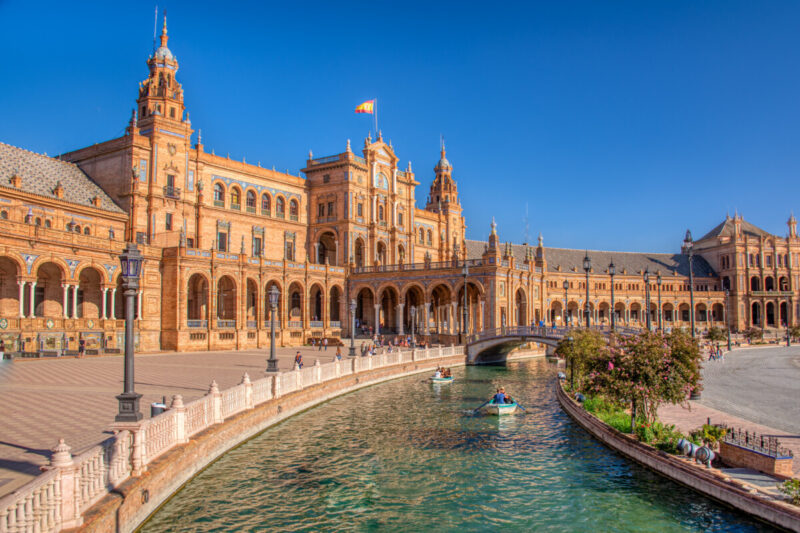
Spain enchants visitors with its passionate culture, architectural marvels, and diverse landscapes stretching from the Pyrenees to Andalusian beaches. This vibrant nation offers world-class museums, UNESCO World Heritage sites, and culinary traditions that vary dramatically by region. From Barcelona’s Gothic Quarter to Sevilla’s flamenco culture, Spain provides authentic experiences that blend historical depth with modern energy and Mediterranean warmth.
Spain
Country in Europe, Spain, EuropeUpdated
- Overall6/10
- Best forCouples, Solo travelers
- PeakJul–Aug
- CurrencyEUR
Barcelona and Madrid get all the attention, but the Spain worth your time is in San Sebastián’s pintxos bars and Sevilla’s backstreets after dark.
Travel Style
Activities
Budget

At a glance
Currency€ EURCode: EUR
Time zone WEST (UTC+1)CET (UTC+1) / CEST (UTC+2) in summer; Canary Islands: WET (UTC+0) / WEST (UTC+1)
Languages
- Spanish (Castilian)
- Catalan
- Galician
- Basque
Setting
- Mediterranean coast
- Mountain ranges
- Arid plateaus
- Island chains
Known for
- Culture
- Gastronomy
- Beaches
- Architecture
- Hiking
- Nightlife
Population47.4M47,420,000 residents
VisaDuration: Up to 90 days within any 180-day period in the Schengen Area · Documents: Valid passport issued within the last 10 years and valid for at least 3 months after planned departure, plus proof of accommodation, onward or return travel, and sufficient funds if requested
How Spain scores
6/10OverallFair
Weather3/10
Value for money4/10
Safety8/10
Food & cuisine10/10
Culture & arts6/10
Cultural experience8/10
History5/10
Nature & outdoors4/10
Adventure4/10
Nightlife4/10
Shopping8/10
Family friendly4/10
Romance8/10
Character
Photography score9/10
Authenticity score10/10
Off-the-beaten-path score5/10
Editorial scores on a 10-point scale, weighed against destinations of the same kind.
Travel safety snapshot
Overall75/100Moderate rating
Women travellers72/100
LGBTQ+ travellers80/100
Theft50/100
Medical care80/100
Physical harm78/100
Political freedom70/100
SafePlace indicators use their source 100-point scale; higher is more favourable. Planning context, not a live travel advisory — check official government guidance before you go.
When to go
Best months to visit: March, April, May, June, July, September, October and November.
- January: 1.6 to 10.5 degrees Celsius, 40.3 millimetres of rain, best-time score 3 out of 5.
- February: 2.9 to 13.7 degrees Celsius, 25.2 millimetres of rain, best-time score 3 out of 5.
- March: 4.9 to 15.6 degrees Celsius, 77.3 millimetres of rain, best-time score 4 out of 5.
- April: 7.6 to 18.9 degrees Celsius, 67.1 millimetres of rain, best-time score 5 out of 5.
- May: 11.6 to 24.1 degrees Celsius, 42.2 millimetres of rain, best-time score 5 out of 5.
- June: 16.7 to 29.9 degrees Celsius, 20.6 millimetres of rain, best-time score 5 out of 5.
- July: 20.1 to 34.3 degrees Celsius, 5.9 millimetres of rain, best-time score 4 out of 5.
- August: 20 to 33.7 degrees Celsius, 11.6 millimetres of rain, best-time score 3 out of 5.
- September: 15.1 to 27.1 degrees Celsius, 52.1 millimetres of rain, best-time score 5 out of 5.
- October: 11.1 to 21.8 degrees Celsius, 64.3 millimetres of rain, best-time score 5 out of 5.
- November: 5.9 to 14.2 degrees Celsius, 51.9 millimetres of rain, best-time score 4 out of 5.
- December: 3.2 to 11.2 degrees Celsius, 46.2 millimetres of rain, best-time score 3 out of 5.
Month-by-month conditions and packing advice
- January
- Cool to mild, occasional rain January in Spain: winter chill in the interior or August heat and closures reduce the balance. Crowds: January in Spain is workable with normal seasonal planning; build in layers, weather checks, and a mix of indoor and outdoor activities. Pack: Pack warm layers, a coat, and comfortable shoes for cold mornings and evenings.
- February
- Cool to mild, mostly dry February in Spain: winter chill in the interior or August heat and closures reduce the balance. Crowds: February in Spain is workable with normal seasonal planning; build in layers, weather checks, and a mix of indoor and outdoor activities. Pack: Pack warm layers, a coat, and comfortable shoes for cold mornings and evenings.
- March
- Cool to mild, some rain March in Spain: conditions are useful, though summer heat or late-fall weather should shape the route. Crowds: March in Spain is workable with normal seasonal planning; build in layers, weather checks, and a mix of indoor and outdoor activities. Pack: Pack layered clothing and comfortable walking shoes. Add a rain jacket or compact umbrella.
- April
- Cool to mild, occasional rain April in Spain: cities, beaches, food regions, historic towns, and rail routes balance warmth with fewer peak-season pressures. Crowds: April in Spain is workable with normal seasonal planning; build in layers, weather checks, and a mix of indoor and outdoor activities. Pack: Pack layered clothing and comfortable walking shoes.
- May
- Mild to warm, occasional rain May in Spain: cities, beaches, food regions, historic towns, and rail routes balance warmth with fewer peak-season pressures. Crowds: May in Spain is comfortable for sightseeing, neighborhoods, food stops, day trips, and outdoor time with limited weather friction. Pack: Pack light clothing, sun protection, and comfortable walking shoes.
- June
- Warm to hot, mostly dry June in Spain: cities, beaches, food regions, historic towns, and rail routes balance warmth with fewer peak-season pressures. Crowds: June in Spain is workable with normal seasonal planning; build in layers, weather checks, and a mix of indoor and outdoor activities. Pack: Pack light clothing, sun protection, and comfortable walking shoes.
- July
- Very hot, mostly dry July in Spain: conditions are useful, though summer heat or late-fall weather should shape the route. Crowds: July in Spain can be very hot, so travelers should favor early starts, shaded breaks, indoor attractions, and flexible afternoon pacing. Pack: Pack breathable clothing, strong sun protection, and a refillable water bottle.
- August
- Warm to hot, mostly dry August in Spain: winter chill in the interior or August heat and closures reduce the balance. Crowds: August in Spain is workable with normal seasonal planning; build in layers, weather checks, and a mix of indoor and outdoor activities. Pack: Pack light clothing, sun protection, and comfortable walking shoes.
- September
- Warm to hot, occasional rain September in Spain: cities, beaches, food regions, historic towns, and rail routes balance warmth with fewer peak-season pressures. Crowds: September in Spain is comfortable for sightseeing, neighborhoods, food stops, day trips, and outdoor time with limited weather friction. Pack: Pack light clothing, sun protection, and comfortable walking shoes.
- October
- Mild to warm, occasional rain October in Spain: cities, beaches, food regions, historic towns, and rail routes balance warmth with fewer peak-season pressures. Crowds: October in Spain is comfortable for sightseeing, neighborhoods, food stops, day trips, and outdoor time with limited weather friction. Pack: Pack layered clothing and comfortable walking shoes.
- November
- Cool to mild, occasional rain November in Spain: conditions are useful, though summer heat or late-fall weather should shape the route. Crowds: November in Spain is workable with normal seasonal planning; build in layers, weather checks, and a mix of indoor and outdoor activities. Pack: Pack layered clothing and comfortable walking shoes.
- December
- Cool to mild, occasional rain December in Spain: winter chill in the interior or August heat and closures reduce the balance. Crowds: December in Spain is workable with normal seasonal planning; build in layers, weather checks, and a mix of indoor and outdoor activities. Pack: Pack layered clothing and comfortable walking shoes.
Peak season
- July
- August
Off-peak
- November
- December
- January
- February
- March
Know before you go
About
Spain, occupying most of the Iberian Peninsula in southwestern Europe, is one of the world’s most popular travel destinations, prized for its beaches, architecture, cuisine, and the distinct character of its 17 autonomous regions. Its capital, Madrid, is a grand city of more than three million at the country’s center, home to world-class museums like the Prado. Spain’s landmarks span centuries and styles: Antoni Gaudí’s still-unfinished Sagrada Família in Barcelona, begun in 1882; the 13th-century Nasrid palaces of the Alhambra above Granada in Andalusia; and the Camino de Santiago pilgrimage routes converging on the cathedral of Santiago de Compostela. Travelers come for Mediterranean and Atlantic coastlines, Moorish and modernist architecture, tapas and regional wines, flamenco, and lively fiestas that fill the calendar. With sunny weather, high-speed rail linking its cities, and a deep, varied cultural heritage, Spain rewards everything from beach holidays to art-and-history journeys.
Best time to visit
Spring (March–May) and Autumn (September–November) for mild weather and fewer crowds; summer for beaches; winter for skiing and city breaks
Season by season
Spring (Mar–May): mild weather, orange blossoms in Seville, Semana Santa processions. Summer (Jun–Aug): peak beach season, extreme heat inland, festivals like San Fermín and La Tomatina. Autumn (Sep–Nov): wine harvests in La Rioja, pleasant temperatures, fewer tourists. Winter (Dec–Feb): mild on the coasts, skiing in Sierra Nevada and Pyrenees, Christmas markets.
Crowds
High in summer and Easter; moderate in spring/autumn; low in winter (except holidays)
Getting there and around
Getting there
Major international airports in Madrid (MAD) and Barcelona (BCN), with additional hubs in Málaga (AGP), Palma de Mallorca (PMI), and the Canary Islands. High-speed trains connect from Paris via France. Budget airlines offer cheap intra-European flights. As of 2025, non-EU visitors may need ETIAS authorization (€7).
Getting around
Spain’s AVE high-speed trains (up to 300 km/h) link Madrid, Barcelona, Seville, and Valencia quickly and comfortably. Renfe’s regional and commuter trains fill gaps. Bus companies like Alsa cover smaller towns affordably. Madrid, Barcelona, and Bilbao have extensive metro systems. Renting a car is best for rural areas and coastal drives.
Top experiences in Spain
Sagrada Familia, Barcelona
Gaudí’s unfinished basilica, a UNESCO World Heritage Site, featuring soaring towers, intricate façades, and light-filled interiors that have been under construction since 1882.
Alhambra, Granada
A sprawling Moorish palace-fortress overlooking Granada, renowned for its intricate Islamic architecture, the Generalife gardens, and the Nasrid Palaces.
Museo del Prado, Madrid
One of the world’s foremost art museums, housing masterworks by Velázquez, Goya, El Greco, and Bosch in a neoclassical building along Madrid’s Paseo del Arte.
Real Alcázar, Seville
A royal palace blending Mudéjar, Gothic, and Renaissance architecture, surrounded by lush gardens and featured as Dorne in Game of Thrones.
Camino de Santiago
A network of ancient pilgrimage routes converging on Santiago de Compostela’s cathedral, attracting hikers and spiritual seekers from around the world.
Editor-curated picks carried over from our original guide. Where a full place guide exists, the card links to it.
Places worth your time

Where to stay
Alhambra Palace Hotel
Plaza Arquitecto García de Paredes 1, 18009 Granada, Spain
A Moorish-inspired 5-star hotel steps from the Alhambra, with stylishly decorated rooms, panoramic views of Granada, a rooftop bar, and an on-site restaurant serving Andalusian cuisine.
Hotel Arts Barcelona
Carrer de la Marina 19-21, 08005 Barcelona, Spain
A 5-star waterfront tower on the Barcelona shoreline with 483 luxury rooms, sea-and-city views, restaurants including a two-Michelin-star dining room, and direct beach access.
Hospes Las Casas del Rey de Baeza
Plaza Jesús de la Redención 2, 41003 Seville, Spain
An 18th-century Andalusian palace turned boutique hotel near the Alfalfa quarter, with rooms finished in natural fibers and ceramics, a courtyard pool, hammam, and rooftop terrace.
Editor-curated stays carried over from our original guide. Where we have reviewed the hotel, the card links to the review.
Tips from the field
Highlights
- Sagrada Familia & Gaudí's Barcelona
- Alhambra & Granada's Moorish heritage
- Museo del Prado & Madrid's art triangle
- Real Alcázar & flamenco in Seville
- Camino de Santiago pilgrimage route
- San Sebastián pintxos & Basque Country
- Canary Islands year-round sun
Best activities
- Explore Gaudí's architecture in Barcelona, hike the Camino de Santiago, attend a flamenco performance in Seville, visit the Alhambra, stroll through Madrid's art museums, taste pintxos in San Sebastián, surf in Tarifa, walk the Caminito del Rey, wine-tour La Rioja.
Local experiences
- Join a local cooking class to learn paella in Valencia, attend a flamenco tablao in Seville's Triana quarter, explore Madrid's Rastro flea market on Sunday mornings, hike the Caminito del Rey cliffside walkway, or participate in La Tomatina tomato fight in Buñol.
Practical tips
- Restaurants rarely open for dinner before 8:30 PM—adjust your schedule.
- Learn basic Spanish phrases; smaller towns have limited English.
- Book Alhambra tickets well in advance (they sell out weeks ahead).
- Use the Menú del Día (fixed-price lunch) for affordable dining.
- Metro/bus multi-day passes save money in Madrid and Barcelona.
Photography tips
- Shoot the Sagrada Familia at golden hour for warm light through its stained glass. The Alhambra's Patio de los Leones is best early morning before crowds. Ronda's Puente Nuevo is dramatic at sunset. Andalusian white villages pop against blue skies at midday. Use a wide-angle for Gaudí interiors and a telephoto for distant mountain villages.
Timing
- Plan 10–14 days for a comprehensive tour of major regions. 3–4 days per city (Madrid, Barcelona, Seville) allows a comfortable pace. Add a few days for day trips or rural explorations.
Keeping it authentic
- Regional identity runs deep—Catalans, Basques, Galicians, and Andalusians each maintain distinct languages, festivals, and culinary traditions. Flamenco originates in Andalusia
- Castells (human towers) are uniquely Catalan
- cider culture defines Asturias. Spain's late dining schedule (lunch at 2 PM, dinner at 10 PM) reflects a way of life built around relationships and leisure.
Culture, customs and safety
Cultural heritage
A crossroads of Roman, Moorish, and Christian civilizations, Spain holds 50+ UNESCO World Heritage Sites—from the Roman aqueduct in Segovia to the Alhambra and the Altamira cave paintings. Intangible heritage includes flamenco, Catalan Castells (human towers), Valencia’s Fallas festival, and the Patum of Berga. Spain’s literary tradition spans Cervantes, Lorca, and modern Nobel laureates.
Local customs & etiquette
Greet friends with two cheek kisses (left first). Lunch is the main meal, served 2–4 PM; dinner starts at 9–10 PM. Many shops close for siesta (2–5 PM) in smaller towns. Tipping 5–10% is appreciated but not required. Cover shoulders and knees in churches. Maintain eye contact during conversation—it signals respect.
Safety notes
Spain is generally safe but pickpocketing is common in Barcelona’s La Rambla, Madrid’s metro, and other crowded tourist zones. Keep valuables secure and use an anti-theft bag. Store your passport in the hotel safe and carry a photocopy. Emergency number is 112 (multilingual). Be vigilant on overnight trains and during festival crowds.