Gràcia occupies the slope between Eixample and the Collserola foothills, retaining the layout and identity of the independent town it was before Barcelona annexed it in 1897. Its narrow streets, a dozen interlocking squares, and a high density of independent shops and restaurants make it one of the city’s most distinctly local districts. The neighbourhood draws long-term expats, students from the nearby Universitat de Barcelona faculties, and travellers seeking everyday Barcelona rather than tourist-facing attractions.
What is Gràcia known for?
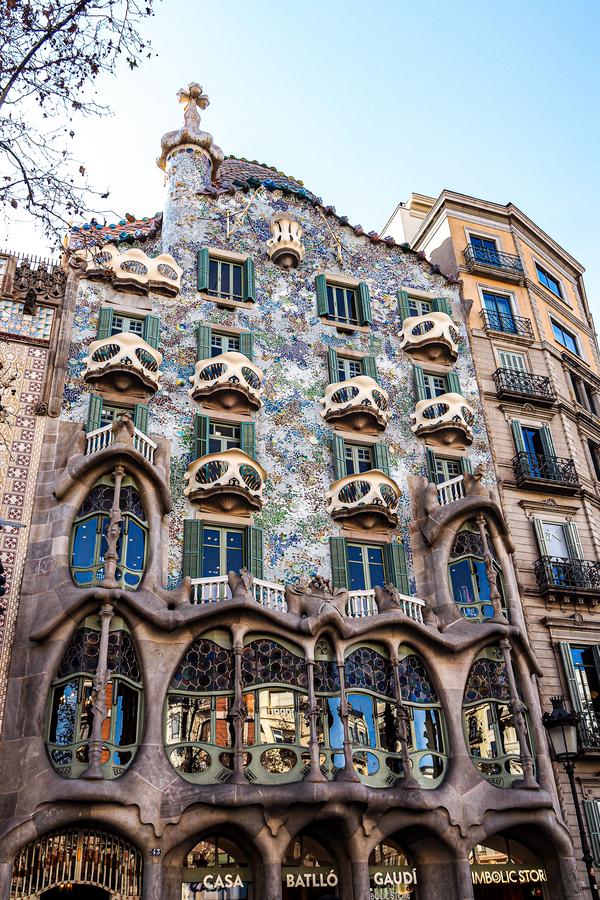
Gràcia is known above all for its network of neighbourhood squares, its annual Festa Major de Gràcia held every August, and a concentration of modernista buildings including Casa Vicens—Antoni Gaudí’s first major commission, located on Carrer de les Carolines—alongside an independent, anti-chain commercial culture that has survived significant gentrification pressure. The district also contains Park Güell at its upper edge, though the park belongs administratively to the Carmel side, its main entrance on Carrer d’Olot draws most visitors through Gràcia’s upper streets.
Best things to do in Gràcia
The single most rewarding activity in Gràcia is moving slowly between its squares—Plaça del Sol, Plaça de la Virreina, Plaça de la Fontana, and Plaça de la Vila de Gràcia—pausing at each to observe daily neighbourhood life, then visiting Casa Vicens (open to visitors with a timed ticket) before browsing the independent bookshops and vintage clothing stores on Carrer de Verdi and Carrer de Torrent de l’Olla.
- Visit Casa Vicens, Gaudí’s 1885 Moorish-influenced house on Carrer de les Carolines
- Attend the Festa Major de Gràcia in August, when residents decorate entire streets with elaborate handmade installations
- Browse the Mercat de l’Abaceria (Mercat de Gràcia) on Travessera de Gràcia
- Walk up Carrer de Verdi past independent cinemas, cafes, and galleries
- Explore the weekend antiques and flea stalls around the market perimeter
Where to eat and drink in Gràcia
Gràcia’s food scene is anchored by long-standing Catalan taverns, Middle Eastern and South Asian restaurants along Carrer de Torrent de l’Olla, natural-wine bars, and vermouth cafes that fill up on weekend midmornings for the local ritual of vermut before lunch. The squares—especially Plaça del Sol and Plaça de la Virreina—are ringed with terrace bars where locals linger for hours over a single beer or glass of cava.
- Vermut culture at terrace bars on Plaça de la Virreina on Sunday mornings
- Catalan cuisine at long-running restaurants along Carrer de Muntaner’s Gràcia stretch
- Natural wine bars and craft beer spots on Carrer de Verdi
- Fresh produce and prepared foods inside Mercat de l’Abaceria on Travessera de Gràcia
Where to walk in Gràcia
The classic Gràcia walk begins at the Fontana metro station on Carrer Gran de Gràcia, follows the main commercial artery north past modernista shopfronts, detours into Plaça del Sol and Plaça de la Virreina, continues up Carrer de Verdi to the Verdi Park cinema cluster, and ends at the lower entrance path toward Park Güell on Carrer d’Olot, covering roughly two kilometres of flat to gently rising terrain.
How to get to Gràcia
Gràcia is served by three Metro L3 (green line) stations—Fontana, Diagonal (on its southern border shared with Eixample), and Lesseps at the northern edge—as well as the FGC commuter rail at Gràcia station on Carrer de Gràcia, and multiple bus lines including the V17 vertical bus on Passeig de Sant Joan and routes along Travessera de Gràcia connecting to the rest of the city.
Best time to visit Gràcia
Gràcia rewards visits year-round, but the third week of August—when the Festa Major de Gràcia transforms streets like Carrer de Verdi and Carrer de Mandoni into competition-judged decorated corridors with free live music and neighbourhood parties—offers an experience specific to this district and largely absent from tourist itineraries; spring and early autumn offer mild temperatures ideal for the district’s outdoor square culture without summer crowds.