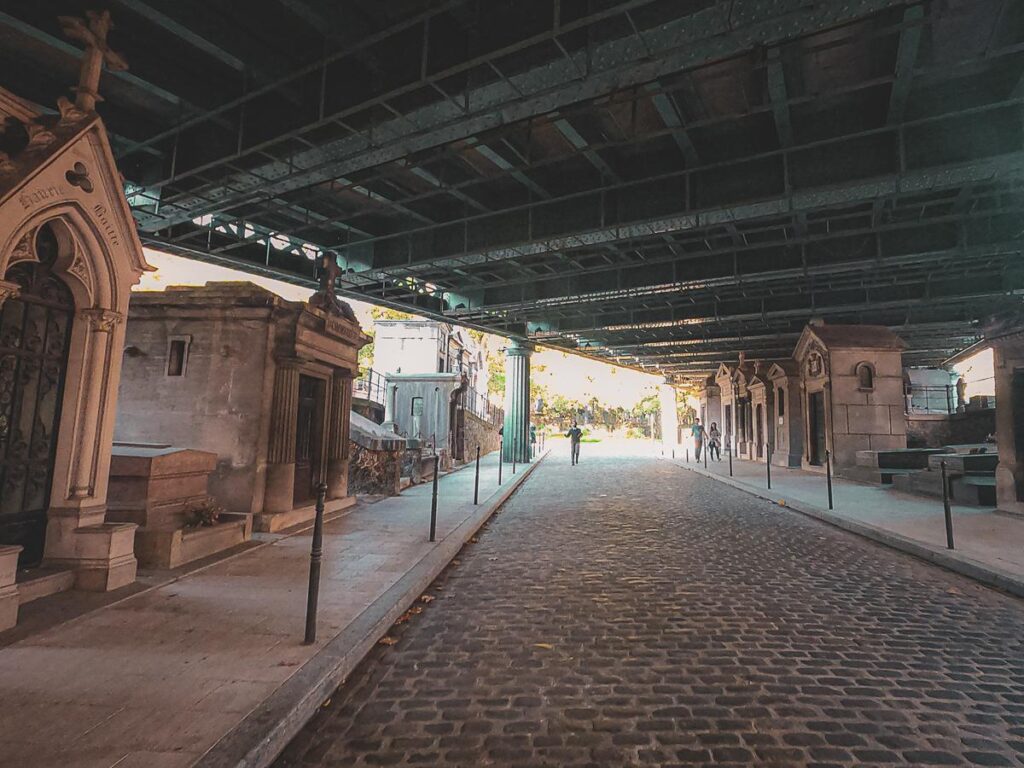
A serene homage to Parisian luminaries past.
Absolutely, here is the information you requested:
- The Montmartre Cemetery, also known as Cimetière de Montmartre, is a significant historical site located in the 18th arrondissement of Paris, France.
- Established in the early 19th century, the cemetery holds great historical and cultural significance, attracting visitors from around the world.
- It has been a source of inspiration for various artists, writers, and filmmakers, contributing to its global influence and recognition.
- The cemetery is home to the final resting places of numerous notable figures, including renowned artists, writers, and musicians, further solidifying its historical impact.
- Efforts have been made to preserve the cemetery’s architectural and cultural heritage, ensuring that future generations can continue to appreciate its significance.
- Montmartre Cemetery’s unique sculptures and tranquil atmosphere add to its allure, making it a must-visit destination for those interested in history, art, and culture.
– Cultural Authenticity: The Montmartre Cemetery in Paris maintains local traditions and cultural practices through its serene and historic ambiance, reflecting the artistic and bohemian spirit of the Montmartre neighborhood.
– Historical Significance: The cemetery holds historical importance within its cultural and national context, as it is the final resting place of numerous renowned figures, including artists, writers, and musicians, contributing to the preservation of their legacies.
– Artistic Value: Montmartre Cemetery boasts significant artistic value, with the presence of notable graves and monuments honoring influential figures from the arts, further cementing its status as a site of artistic and cultural significance.
– Social Impact: The cemetery plays a role in the community by preserving the memory of influential individuals and providing a space for reflection and commemoration, contributing to the cultural and social fabric of the area.
– Accessibility and Preservation: Efforts to preserve the cemetery have made it accessible to the public, allowing visitors to explore its rich history and artistic heritage while maintaining its tranquil and respectful atmosphere.
– Visitor Engagement: Visitors have the opportunity to engage with the cultural and historical significance of the cemetery through self-guided tours, providing an immersive experience and fostering a deeper understanding of its importance.
– Educational Value: Montmartre Cemetery offers educational opportunities by providing insights into the lives and contributions of the individuals interred there, serving as a valuable resource for learning about the local culture, history, and artistic heritage.
Sources:
– [Walk around Montmartre cemetery in Paris](https://parisjetaime.com/eng/article/walk-around-montmartre-cemetery-a787)
– [The Montmartre Cemetery You Never Knew Existed](https://sightseekersdelight.com/2406/)
– [Cimetiere de Montmartre (Montmartre Cemetery), Paris](https://www.gpsmycity.com/attractions/cimetiere-de-montmartre-(montmartre-cemetery)-5509.html)
- Montmartre Cemetery is deeply rooted in the local cultural and historical milieu of Paris, exemplifying the artistic and bohemian spirit of the Montmartre area, which is vital in maintaining cultural authenticity.
- The historical significance of the cemetery is highlighted by its status as the final resting place for many notable figures, including artists, musicians, and writers, which enriches the cultural fabric and historical narrative of Paris.
- Significant artistic value is evident in the intricate and often elaborate tombstones and memorials that commemorate and celebrate the lives of the interred, offering a visual journey through Parisian and global art history.
- Socially, the cemetery serves as a community space for remembrance and reflection, allowing for personal and collective commemoration activities, thereby reinforcing its social impact within the community.
- Accessibility is well-supported through preservation efforts that ensure the cemetery remains an approachable and respectful space for visitors wanting to explore its paths and learn about its residents.
- Visitor engagement is facilitated through the provision of self-guided tours, enhancing interaction with the site’s rich history and cultural importance, thereby offering educational and contemplative experiences.
- Educational value is provided as the cemetery acts as a historical archive, where visitors can gain insights into the lives of significant cultural figures, thereby fostering an appreciation of their contributions to the arts and society.
The Montmartre Cemetery maintains local traditions and cultural practices, reflecting the neighborhood’s bohemian spirit. It holds historical importance as the final resting place of renowned figures, contributing to the preservation of their legacies. The site boasts significant artistic value, with notable graves honoring influential figures from the arts.
Cultural Context
Montmartre Cemetery serves as a profound cultural repository reflecting the bohemian and artistic heritage of the Montmartre district in Paris. Established in 1825, it is the final resting place for many artists, writers, musicians, and intellectuals who shaped French culture during the 19th and early 20th centuries. The cemetery embodies local customs related to remembrance and respect for creative legacies, often visited by admirers paying homage to figures such as Émile Zola, Alexandre Dumas fils, and Edgar Degas. It is also a site where cultural practices like commemorative gatherings and guided tours celebrate the neighborhood’s vibrant history. The cemetery’s atmosphere preserves the spirit of Montmartre’s past as a hub for avant-garde movements and artistic innovation, linking contemporary visitors to the community’s enduring creative identity. Seasonal events and quiet moments of reflection here underscore the importance of memory and artistic contribution within Parisian culture. Thus, Montmartre Cemetery stands not only as a burial ground but as a living monument to the cultural vitality of its district and the broader French artistic tradition.
Historical Context
Montmartre Cemetery was inaugurated in 1825 to accommodate the growing population of Paris and the need for new burial grounds beyond the overcrowded city center cemeteries. It reflects the urban expansion and changing attitudes toward death and commemoration during the 19th century. Over time, the cemetery became the burial site for many notable historical figures, including painters, writers, and political activists, marking it as a place of considerable historical significance. The cemetery witnessed the evolution of Montmartre from a rural village into a vibrant urban neighborhood renowned for its artistic communities. It survived major historical events such as the Franco-Prussian War and the Paris Commune, periods during which Montmartre was a center of revolutionary activity. The cemetery’s development mirrors the social transformations of Paris, including shifts in public health policies and urban planning. By preserving the graves of influential personalities from various fields, Montmartre Cemetery offers a tangible connection to the historical narratives that shaped modern Paris. Its continued maintenance and recognition affirm its role as a key historical landmark within the city’s cultural landscape.