MenuClose

A place worth knowing

Sainte Chapelle

Attractions · Chapel in ParisUpdated

  • Google rating4.2/5
  • Typical visit1-2 hours average visit (longer if attending an evening classical music concert)
  • EntranceFree (donations welcome)
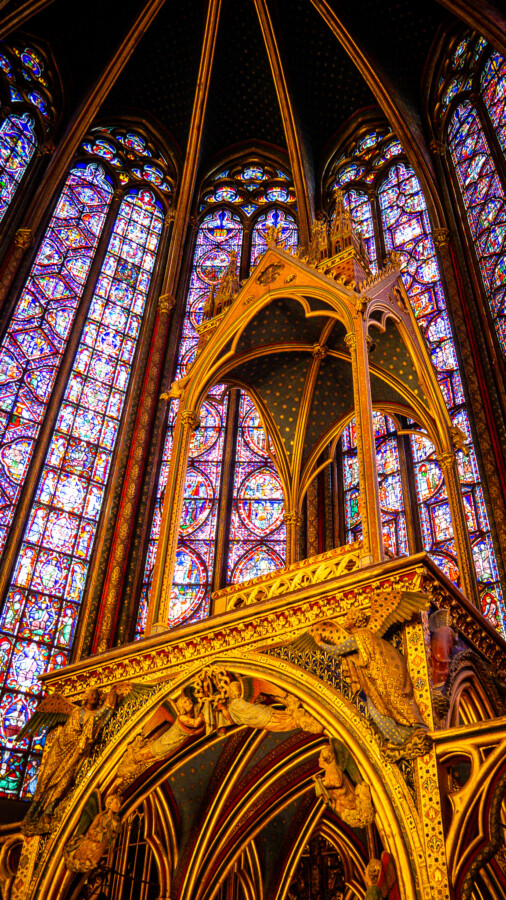
Breathtaking Gothic Architecture and Stained Glass of Sainte-Chapelle, Paris - sRGB 1365x768 medieval church.
Kyle Kroeger / ViaTravelers
  • Today (Sunday)9:00 AM – 7:00 PM
  • Typical visit1-2 hours average visit (longer if attending an evening classical music concert)
  • EntranceFree (donations welcome)
  • Google rating4.2/5
  • WebsiteOfficial site ↗
Opening hours all week
Monday
9:00 AM – 7:00 PM
Tuesday
9:00 AM – 7:00 PM
Wednesday
9:00 AM – 7:00 PM
Thursday
9:00 AM – 7:00 PM
Friday
9:00 AM – 7:00 PM
Saturday
9:00 AM – 7:00 PM
Sunday
9:00 AM – 7:00 PM
Features
  • Historic landmark
  • Cultural heritage
  • Cathedral
The short answer

Why it matters

Historic cathedral known to house Christ's Crown of Thorns.

A masterpiece of Rayonnant Gothic architecture, Sainte Chapelle stands as a luminous jewel box in the heart of Paris‘s Île de la Cité. Commissioned by King Louis IX in the 13th century to house precious Christian relics, including the Crown of Thorns, this royal chapel achieves an architectural miracle of light and space. The upper chapel features soaring 15-meter stained glass windows that dissolve the stone walls into a kaleidoscope of biblical stories told through 1,113 scenes. When sunlight filters through these meticulously restored panels, the interior transforms into an otherworldly sanctuary bathed in sapphire blues, ruby reds, and emerald greens. The more intimate lower chapel, once used by palace staff, provides a dramatic contrast with its low vaulted ceiling and rich star-painted decoration. Despite surviving the French Revolution and centuries of Parisian history, Sainte Chapelle retains its power to silence visitors who step into its transcendent play of light, color, and sacred geometry.

Cultural Context

Sainte Chapelle holds profound cultural significance as a symbol of medieval Christian devotion and royal piety in Paris. It was originally constructed to house precious Christian relics, including the Crown of Thorns, which King Louis IX acquired and enshrined within the chapel. This act elevated the chapel beyond a mere place of worship to a sacred reliquary, deeply intertwined with the religious and political identity of the French monarchy. The chapel’s location on the Île de la Cité, near the medieval Palais de la Cité, positioned it at the heart of Parisian spiritual and civic life. Over centuries, Sainte Chapelle has been a site for important liturgical ceremonies, reflecting the intertwining of faith and monarchy in medieval France. Its stained glass windows narrate biblical stories and saints’ lives, serving both as religious instruction and as a cultural treasure that conveys medieval artistry and theological symbolism. Today, Sainte Chapelle is celebrated in Parisian cultural heritage, attracting scholars and visitors who appreciate its role in shaping the religious and artistic traditions of France. The chapel is also a focal point during cultural events that honor Gothic art and French history, preserving its legacy as a living monument of faith and royal ambition. Sainte Chapelle thus remains a vital cultural landmark, embodying centuries of religious devotion and artistic achievement in Parisian society.

Historical Context

Sainte Chapelle was commissioned by King Louis IX of France, later canonized as Saint Louis, and completed in 1248 during the height of the Rayonnant Gothic period. The chapel was built to house the Passion relics Louis IX purchased from the Byzantine Emperor Baldwin II, most notably the Crown of Thorns, a relic of immense religious and political significance. The chapel’s construction was part of Louis IX’s broader efforts to assert the divine right and sanctity of his reign, situating Paris as a center of Christian power. Throughout the Hundred Years’ War and the French Revolution, Sainte Chapelle endured periods of neglect and damage, including the dispersal of its relics during the Revolution. Restoration efforts in the 19th century, led by architect Eugène Viollet-le-Duc, were crucial in preserving the chapel’s original splendor. The chapel’s history reflects broader themes in French history, such as the relationship between church and state, the impact of religious wars, and the evolution of Paris as a capital. It has witnessed key historical moments, including royal ceremonies and the shifting tides of political power in France. Sainte Chapelle remains an enduring testament to medieval religious fervor and the historical complexities that shaped Paris over the centuries.

Context

Story and significance

About

Sainte-Chapelle in Paris is a Gothic architectural marvel known for its stunning stained glass windows, housing sacred relics like the Crown of Thorns. Built in the 13th century, this historic chapel exudes beauty and is a testament to medieval craftsmanship.

Visitors can experience the enchanting play of light within its walls, revealing biblical stories in incredible color. Positioned on the historic Île de la Cité, it offers a unique glimpse into France’s rich cultural and religious heritage.

Historical significance

The chapel is significant as a royal reliquary chapel and as a landmark of Gothic art and architecture that influenced ecclesiastical design across Europe. Its stained glass and preserved fabric provide crucial evidence for medieval craftsmanship, royal patronage and the role of monumental chapels in consolidating religious and political prestige.

Historical context

Commissioned in the 13th century by the French monarchy to house important Christian relics, the chapel is a high point of the Rayonnant phase of Gothic architecture. Over the centuries it has undergone periods of damage, alteration and restoration, particularly after the French Revolution and during 19th-century conservation movements.

Cultural context

Sainte-Chapelle holds an iconic place in Parisian cultural life as a masterpiece of medieval stained glass and Gothic chapel architecture that draws visitors for both devotional history and aesthetic experience. It is appreciated by locals, scholars and tourists for its luminous interior and as part of the broader medieval ensemble on the Île de la Cité.

Architecture

Sainte-Chapelle is renowned for its soaring verticality and an extraordinary array of stained-glass windows that cover much of the upper chapel’s walls, creating intense colored light. The structure exemplifies Gothic innovations in skeletal stonework and the use of slender tracery to maximize glazed surface and narrative stained-glass programs.

Local significance

Sainte-Chapelle is prized by Parisians as a jewel of Gothic architecture and a rare surviving interior largely devoted to stained glass, representing medieval Paris’s religious and artistic heritage. It functions as an emblem of the Île de la Cité’s historical significance and is frequently included in local narratives about the city’s cultural patrimony and architectural continuity. The chapel’s visual impact and central location make it part of Paris’s civic identity and a touchstone for educational visits and heritage tourism.

Bookable experiences

Worth booking ahead in Paris

Hand-picked from the operators our guides already send readers to. Prices and availability are live on the partner site.

We earn a commission if you book through these links, at no extra cost to you. It is how we keep the guides free and independent.

Updated Data: Editorial research · Google Places ratings · Verified coordinates