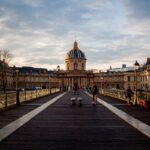
Seine River cruises offer one of the most enchanting ways to experience Paris, gliding past illuminated monuments like the Eiffel Tower, Notre-Dame, and the Louvre while enjoying commentary in multiple languages. With over 15 operators ranging from budget-friendly Vedettes to luxury dinner cruises on Bateaux Mouches, these boat tours provide unique perspectives of Paris’s UNESCO-listed riverbanks and 37 bridges.
Cultural Context
The Seine River Cruise is deeply intertwined with the cultural fabric of Paris, reflecting the city’s longstanding relationship with the river as a source of inspiration, commerce, and daily life. The Seine has historically been a muse for countless artists, writers, and musicians, from Impressionist painters like Claude Monet and Edgar Degas to literary figures such as Victor Hugo and Ernest Hemingway. Cruising the Seine offers an immersive experience into Parisian customs, as the riverbanks are lined with iconic landmarks, bustling markets, and vibrant street life that encapsulate the rhythms of Parisian culture. Seasonal events, such as the annual Paris Plages where parts of the riverbanks transform into beach-like leisure areas, highlight the Seine’s role in contemporary community celebrations. The cruise also intersects with local traditions like the illumination of monuments during national holidays, including Bastille Day, allowing visitors to witness cultural festivities from a unique vantage point on the water. This experience is not only a journey through the city’s geography but also a passage through its living cultural heritage, showcasing how the Seine continues to be a central artery in the daily and ceremonial life of Parisians. The cruise thus serves as a moving cultural tableau, offering travelers insight into the enduring relationship between the Seine and the identity of Paris itself.
Historical Context
The Seine River has been a vital artery for Paris since ancient times, shaping the city’s development from its origins as the Roman settlement of Lutetia around the 1st century BCE. Historically, the river facilitated trade, transportation, and defense, with the Île de la Cité serving as the nucleus of medieval Paris. Over centuries, the Seine witnessed significant events such as the construction of the Pont Neuf in 1607, the oldest standing bridge in Paris, symbolizing the city’s architectural and urban evolution. The riverbanks were also the stage for revolutionary moments, including the 1789 French Revolution, when crowds gathered near the river to demand change. During the 19th century, Baron Haussmann’s extensive urban renewal projects transformed the cityscape, with the Seine remaining central to the reorganization of Parisian boulevards and public spaces. The river has seen both the grandeur of imperial parades and the devastation of wartime occupations, notably during World War II when the bridges were strategic points of conflict. Today, the Seine River Cruise allows visitors to traverse a living chronicle of Parisian history, passing by landmarks that narrate the city’s evolution from a medieval stronghold to a modern metropolis. This historical continuity makes the Seine more than a waterway; it is a witness to the unfolding story of Paris across two millennia.