Shakespeare And Co

Shopping · Bookshop in ParisUpdated

  • Google rating4.7/5 (32,000 reviews)
  • Typical visit1-3 hours (longer for avid readers)
  • EntranceFree
Historic entrance of Shakespeare and Company bookstore in Paris, showcasing its antiquarian charm
  • Today (Friday)10:00 AM – 8:00 PM
  • Typical visit1-3 hours (longer for avid readers)
  • EntranceFree
  • Google rating4.7/5 32,000 reviews
  • WebsiteOfficial site ↗
Opening hours all week
Monday
10:00 AM – 8:00 PM
Tuesday
10:00 AM – 8:00 PM
Wednesday
10:00 AM – 8:00 PM
Thursday
10:00 AM – 8:00 PM
Friday
10:00 AM – 8:00 PM
Saturday
10:00 AM – 8:00 PM
Sunday
10:00 AM – 8:00 PM
Quiet times
"{}"
Busy times
"{}"
Accessibility
"{"note": "Historic building has significant accessibility limitations", "layout": "Narrow aisles and low doorways throughout", "nearby": "Cafe next door is more accessible", "assistance": "Staff helpful but space very limited", "alternatives": "Staff can bring books down from upper floors", "wheelchair_access": "Ground floor accessible, upper floors via steep stairs only"}"
The short answer

Why it matters

A legendary Left Bank bookshop founded in 1951 overlooking Notre-Dame, known for its tumbledown charm and tradition of hosting writers.

Shakespeare and Company is a legendary English-language bookstore on Paris‘s Left Bank, facing Notre-Dame across the Seine. Founded in 1951 by George Whitman, this literary institution has hosted countless writers through its Tumbleweed program, served as a meeting place for the Lost Generation’s successors, and continues to enchant book lovers with its maze-like interior, reading nooks, and extensive collection of new and antiquarian books.

Cultural Context

Shakespeare and Company holds a unique place in Parisian cultural life as more than just a bookstore; it is a vibrant literary hub that embodies the spirit of expatriate and avant-garde culture. Founded in 1951 by American George Whitman, the shop became a sanctuary for writers, poets, and artists from around the world, fostering a tradition of literary exchange and creative freedom. It is deeply intertwined with the legacy of the Lost Generation, echoing the earlier Shakespeare and Company bookstore operated by Sylvia Beach in the 1920s, which was a meeting place for literary giants such as Ernest Hemingway, James Joyce, and F. Scott Fitzgerald. Today, the store continues to celebrate this rich heritage by hosting readings, workshops, and community events that emphasize the importance of literature as a living, evolving cultural practice. The shop also upholds a tradition of hospitality, famously allowing aspiring writers and travelers to stay overnight in exchange for helping out in the store and reading a book daily, fostering a sense of global literary community and cultural exchange. Shakespeare and Company thus remains a beacon of intellectual openness and artistic diversity on the Left Bank, embodying Paris’s enduring role as a crossroads of cultural creativity and dialogue. It is an essential destination for those interested in the cultural dynamics of literary history and contemporary artistic practice in Paris.

Historical Context

Shakespeare and Company’s historical roots trace back to the original bookstore founded by Sylvia Beach in 1919, which played a pivotal role in the literary modernism movement by publishing James Joyce’s landmark novel “Ulysses” in 1922. The current Shakespeare and Company was established in 1951 by George Whitman under the name ‘Le Mistral’ before adopting the original bookstore’s name in the 1960s to honor its predecessor. Situated on Paris’s Left Bank, the store quickly became a haven for post-war American and European writers, including Allen Ginsberg, Anaïs Nin, and William S. Burroughs. During the 1950s and 1960s, it was part of the vibrant bohemian scene that defined the Latin Quarter, a neighborhood synonymous with artistic experimentation and intellectual freedom. The store survived various cultural and economic shifts, maintaining its status as a literary landmark through decades marked by political upheaval and social change in France. Its history is also marked by its commitment to nurturing emerging writers and serving as a repository of rare and out-of-print books. Over time, Shakespeare and Company evolved from a simple bookstore into a cultural institution that reflects the layered history of Paris’s literary and artistic milieus, preserving and promoting the legacy of 20th-century literary modernism and countercultural movements. This historical significance makes it a vital site for understanding the evolution of literary culture in Paris and beyond.

Context

Story and significance

About

Shakespeare and Company is an independent English-language bookstore on the Left Bank of Paris at 37 Rue de la Bûcherie, directly facing Notre-Dame Cathedral. Founded in 1951 by George Whitman as a homage to Sylvia Beach’s 1920s bookshop of the same name, the store has offered free accommodation to thousands of aspiring writers (‘Tumbleweeds’) in exchange for working in the shop, reading a book a day, and writing a one-page autobiography. The narrow, book-crammed rooms with vintage typewriters and sleeping nooks upstairs have become a literary pilgrimage site.

Historical significance

Shakespeare and Company holds profound historical significance as a beacon of literary modernism and expatriate culture in 20th-century Paris. Its origins link directly to Sylvia Beach’s original bookstore, which was instrumental in the publication and promotion of groundbreaking works like James Joyce’s “Ulysses,” marking a watershed moment in literary history. The current incarnation, established by George Whitman in 1951, continued this legacy by nurturing generations of writers and artists who shaped post-war literature and countercultural movements. The bookstore became a sanctuary for Beat Generation writers, surrealists, and other avant-garde figures, playing a crucial role in the transatlantic exchange of ideas during a period of significant social and political transformation. Its operation through decades of upheaval, including the Cold War and the cultural revolutions of the 1960s, underscores its resilience and importance as a site of intellectual freedom and artistic experimentation. The legacy of Shakespeare and Company extends beyond Paris, influencing global literary culture by fostering a community that values creativity, open dialogue, and the preservation of literary heritage. The store’s historical role as a publisher, meeting place, and cultural incubator cements its status as an iconic institution, whose impact reverberates through contemporary literature and cultural history. This enduring historical significance makes Shakespeare and Company an essential landmark for understanding the evolution of modern literary culture worldwide.

Historical context

Shakespeare and Company’s historical roots trace back to the original bookstore founded by Sylvia Beach in 1919, which played a pivotal role in the literary modernism movement by publishing James Joyce’s landmark novel “Ulysses” in 1922. The current Shakespeare and Company was established in 1951 by George Whitman under the name ‘Le Mistral’ before adopting the original bookstore’s name in the 1960s to honor its predecessor. Situated on Paris’s Left Bank, the store quickly became a haven for post-war American and European writers, including Allen Ginsberg, Anaïs Nin, and William S. Burroughs. During the 1950s and 1960s, it was part of the vibrant bohemian scene that defined the Latin Quarter, a neighborhood synonymous with artistic experimentation and intellectual freedom. The store survived various cultural and economic shifts, maintaining its status as a literary landmark through decades marked by political upheaval and social change in France. Its history is also marked by its commitment to nurturing emerging writers and serving as a repository of rare and out-of-print books. Over time, Shakespeare and Company evolved from a simple bookstore into a cultural institution that reflects the layered history of Paris’s literary and artistic milieus, preserving and promoting the legacy of 20th-century literary modernism and countercultural movements. This historical significance makes it a vital site for understanding the evolution of literary culture in Paris and beyond.
Cultural context

Shakespeare and Company holds a unique place in Parisian cultural life as more than just a bookstore; it is a vibrant literary hub that embodies the spirit of expatriate and avant-garde culture. Founded in 1951 by American George Whitman, the shop became a sanctuary for writers, poets, and artists from around the world, fostering a tradition of literary exchange and creative freedom. It is deeply intertwined with the legacy of the Lost Generation, echoing the earlier Shakespeare and Company bookstore operated by Sylvia Beach in the 1920s, which was a meeting place for literary giants such as Ernest Hemingway, James Joyce, and F. Scott Fitzgerald. Today, the store continues to celebrate this rich heritage by hosting readings, workshops, and community events that emphasize the importance of literature as a living, evolving cultural practice. The shop also upholds a tradition of hospitality, famously allowing aspiring writers and travelers to stay overnight in exchange for helping out in the store and reading a book daily, fostering a sense of global literary community and cultural exchange. Shakespeare and Company thus remains a beacon of intellectual openness and artistic diversity on the Left Bank, embodying Paris’s enduring role as a crossroads of cultural creativity and dialogue. It is an essential destination for those interested in the cultural dynamics of literary history and contemporary artistic practice in Paris.

Architecture

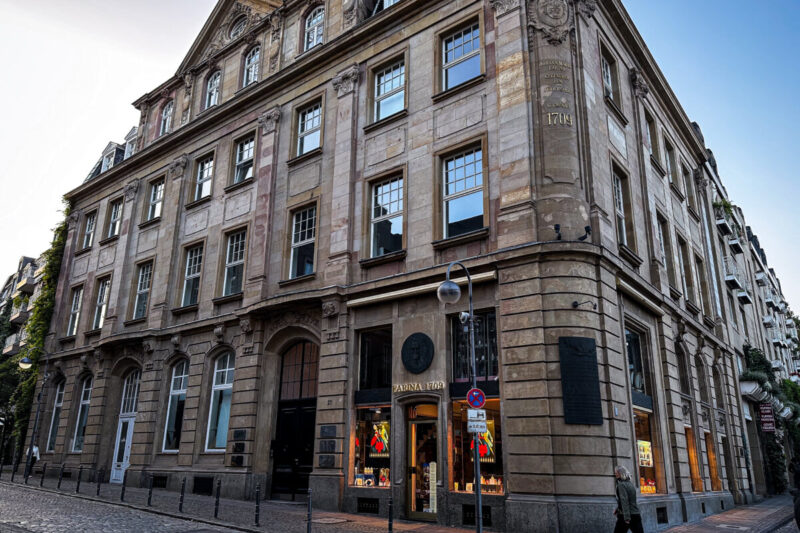
The building housing Shakespeare and Company is emblematic of the traditional Parisian architectural style characteristic of the Latin Quarter, with its modest, narrow façade and classic stonework that blends seamlessly into the historic urban fabric of the area. Located at 37 Rue de la Bûcherie, the structure dates back to the 17th century, featuring typical Parisian elements such as tall windows with wrought-iron balconies and a steeply pitched slate roof. Inside, the bookstore is renowned for its labyrinthine interior, where floor-to-ceiling wooden bookshelves, ladders, and cozy reading nooks create an intimate and almost theatrical atmosphere. The architectural design emphasizes a sense of discovery and immersion, with books stacked in every available space, including staircases and window sills, evoking the feel of an old-world library. The store’s layout reflects an organic growth rather than a formal plan, mirroring the eclectic and bohemian spirit of its patrons. Additionally, the presence of a small upstairs apartment for guests adds a unique residential element to the space, blending commercial and domestic architecture. This combination of historic Parisian exterior and whimsical, densely packed interior spaces contributes to the store’s charm and enduring appeal. The architecture of Shakespeare and Company is not only functional but also deeply symbolic, representing the layered history and cultural richness of Paris’s literary tradition.

Local significance

To the local Parisian community, Shakespeare and Company represents a cherished cultural landmark that embodies the city’s rich intellectual and artistic heritage. It serves as a gathering place for locals and expatriates alike, fostering a sense of community through its inclusive and welcoming atmosphere. The bookstore’s tradition of hosting readings, literary discussions, and cultural events contributes significantly to the vibrant cultural life of the Latin Quarter, an area historically known for its universities, cafés, and artistic milieu. For many Parisians, Shakespeare and Company is a symbol of the city’s commitment to preserving spaces dedicated to literature and free expression amidst rapid urban and economic changes. The shop’s hospitality toward travelers and emerging writers also reflects Paris’s longstanding reputation as a haven for creative individuals seeking inspiration and connection. Local residents often regard the bookstore as a living museum of literary history and a vital resource for discovering both classic and contemporary works. Its proximity to the Sorbonne University and other academic institutions further enhances its role as a cultural bridge between scholarly and popular literary worlds. Shakespeare and Company’s enduring presence contributes to the identity of the Left Bank as a historic center of learning and creativity, making it an indispensable part of local daily life and cultural memory.

Experience

Make the most of it

Local tips
  • Museum cafes often serve quality local food
  • Gift shops have unique souvenirs
  • Visit during weekdays for fewer crowds
  • Late night openings frequently have special events
  • Special exhibitions require separate tickets
  • Check for combo tickets with nearby attractions
  • Members get free entry and skip lines
Hidden gems nearby
  • Staff recommendations for must-see pieces
  • Rooftop terraces often have great city views
  • Secret passages between galleries
  • Archive rooms sometimes open for special tours
  • Lesser-known wings have amazing collections
  • Free guided tours at specific times
  • Hidden courtyards perfect for photos
Special features
  • Shakespeare and Company is distinguished by several unique features that set it apart from conventional bookstores. Its most notable characteristic is its role as a living literary community, where visitors are invited to engage with the space beyond mere browsing and purchasing. The store maintains a tradition of hosting writers in residence, offering them a place to live and write in exchange for helping around the shop, a practice that has welcomed hundreds of aspiring authors and travelers over the decades. The interior itself is a physical embodiment of literary history, with thousands of books spanning multiple genres, languages, and eras, including rare editions and out-of-print works. The store’s labyrinthine shelves and cozy corners create an atmosphere reminiscent of a private library or writer’s den. Additionally, the walls are adorned with photographs, quotes, and memorabilia that celebrate literary figures and the shop’s storied past. Shakespeare and Company also organizes frequent cultural events such as readings, book launches, and workshops, fostering an active community of readers and writers. Another distinctive feature is its location directly opposite Notre-Dame Cathedral, offering visitors a striking view and linking the literary space to one of Paris’s most iconic landmarks. These elements combine to make Shakespeare and Company not just a bookstore but a dynamic cultural institution and pilgrimage site for bibliophiles worldwide.
Editorial scores

How we rate it

Authenticity8/10
Accessibility score8/10
Family-friendly score7/10
Off-the-beaten-path6/10

Editorial scores on a 10-point scale, judged against places of the same kind.

Last reviewed Data: Editorial research · Google Places ratings · Verified coordinates