MenuClose

A place worth knowing

Tokyo Skytree

Attraction · Tourist attraction in TokyoUpdated

  • Google rating4.4/5
  • Typical visit90-120 minutes average visit (longer if shopping, dining, or visiting the aquarium/planetarium)
  • EntranceAdmission required — check https://www.tokyo-skytree.jp/ for tickets
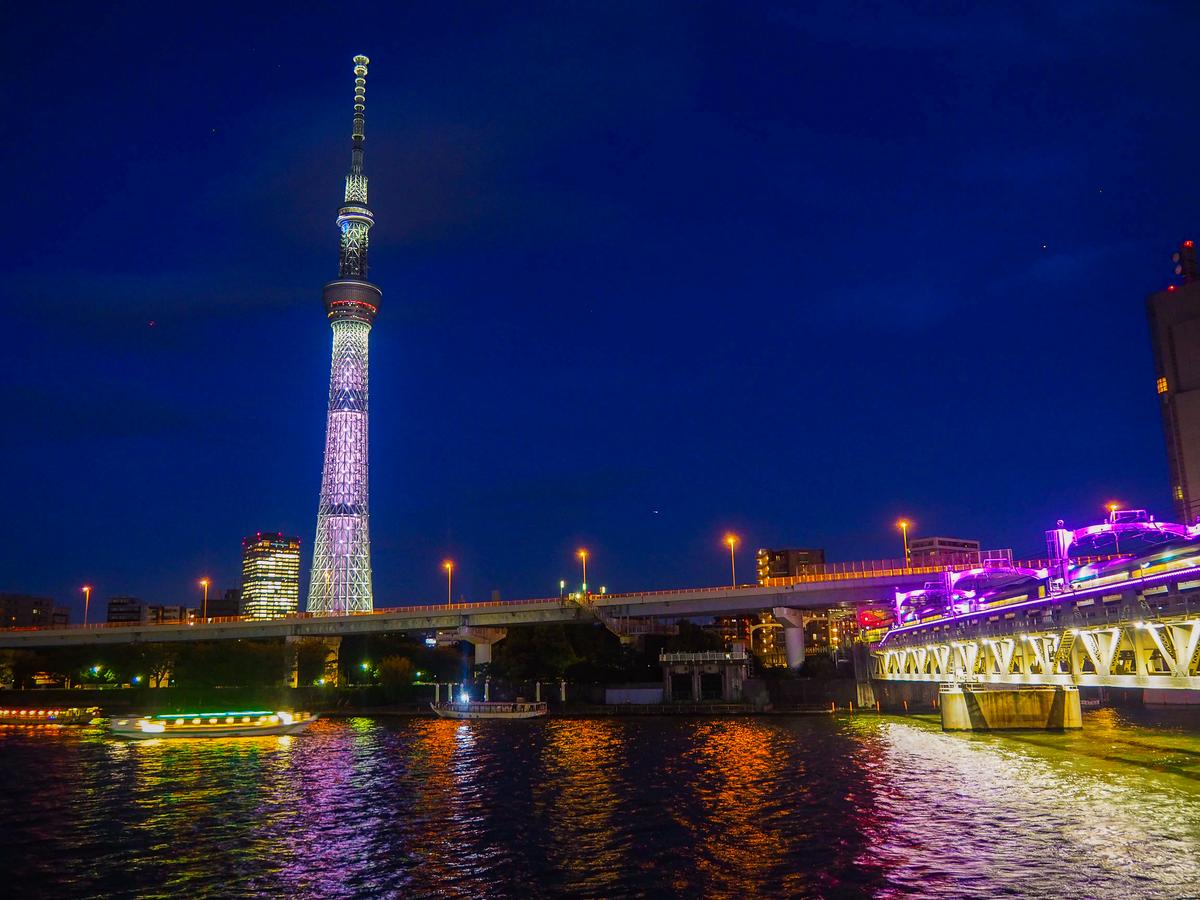
Tokyo Skytree illuminated at night, reflecting on Sumida River, Tokyo, Japan.
  • Today (Saturday)9:00 AM – 9:00 PM
  • Typical visit90-120 minutes average visit (longer if shopping, dining, or visiting the aquarium/planetarium)
  • EntranceAdmission required — check https://www.tokyo-skytree.jp/ for tickets
  • Google rating4.4/5
  • WebsiteOfficial site ↗
Opening hours all week
Monday
10:00 AM – 9:00 PM
Tuesday
10:00 AM – 9:00 PM
Wednesday
10:00 AM – 9:00 PM
Thursday
10:00 AM – 9:00 PM
Friday
10:00 AM – 9:00 PM
Saturday
9:00 AM – 9:00 PM
Sunday
9:00 AM – 9:00 PM
Features
  • Cultural attraction
  • Excellent views
  • Iconic architecture
The short answer

Why it matters

Japan's soaring blend of tradition and innovation.

  • Cultural Authenticity: Tokyo Skytree, a modern landmark, does not embody traditional Japanese practices directly, but its surrounding area, Tokyo Skytree Town, melds traditional Edo culture with modern elements, offering a broad cultural experience.
  • Historical Significance: Representing Japan’s technological and architectural advancements, Tokyo Skytree symbolizes Tokyo and Japan’s modern identity, marking its place in contemporary cultural history.
  • Artistic Value: Though primarily noted for its architectural stature, Skytree does not feature significant traditional artistic works, yet the surrounding facilities may showcase contemporary art forms.
  • Social Impact: As a new symbol of national pride and a prominent part of Tokyo’s skyline, Tokyo Skytree supports the local economy and enhances community identity, playing a vital role in tourism.
  • Accessibility and Preservation: Tokyo Skytree is highly accessible to the public. It offers varied entertainment options while maintaining the structure effectively and preserving its status as a key architectural and cultural landmark.
  • Visitor Engagement: The structure and its surrounding complex provide immersive experiences that interact with modern Japanese culture, making it a part of the community and visitor activities.
  • Educational Value: Tokyo Skytree provides educative insights into modern engineering, architecture, and urban planning, while its town offers additional context on the contemporary lifestyle and cultural practices in Japan.

Tokyo Skytree soars above Japan’s capital as the tallest structure in the country and the second tallest in the world, reaching an impressive 634 meters (2,080 feet). Completed in 2012, this ultramodern communications and observation tower combines cutting-edge engineering with traditional Japanese aesthetic influences, notably its neo-futuristic design inspired by ancient temple architecture and samurai swords. The tower houses two spectacular observation decks—Tembo Deck at 350 meters and Tembo Galleria at 450 meters—offering breathtaking 360-degree panoramas of Tokyo’s vast urban landscape, with views extending to Mount Fuji on clear days. Beyond its observation functions, Tokyo Skytree anchors a vibrant commercial complex featuring premium shopping at Solamachi mall, diverse dining options, the Sumida Aquarium, and Planetarium Tenku. Especially captivating at night when illuminated in alternating color schemes, the tower has become an essential symbol of contemporary Tokyo and represents Japan’s harmonious blend of technological innovation and cultural tradition.

Cultural Context

The Tokyo Skytree holds profound cultural significance as a modern symbol of Japan’s fusion of tradition and innovation. Beyond being a towering landmark, it embodies the Japanese aesthetic principle of blending nature and technology, inspired by the traditional five-story pagoda design, which symbolizes resilience and harmony with the environment. The Skytree is situated in the Sumida Ward, an area rich with Edo-period history, and serves as a contemporary beacon that connects Tokyo’s past with its future. It plays a central role during cultural celebrations such as the New Year’s countdown and seasonal illuminations, where the tower is lit in colors reflecting traditional Japanese festivals and seasonal changes, reinforcing local customs. Additionally, the Skytree’s proximity to famous cultural sites like Asakusa and the Sumida River enhances its role as a cultural hub, inviting visitors to explore both historical and modern facets of Tokyo. The tower also supports local artisans through retail spaces that showcase traditional crafts, thus promoting the preservation of Japanese cultural heritage. In this way, the Tokyo Skytree is not only an architectural marvel but also a vibrant cultural icon that resonates deeply with both residents and visitors, celebrating Japan’s enduring cultural identity in a rapidly evolving urban landscape.

Historical Context

Tokyo Skytree’s history is rooted in Japan’s post-war economic resurgence and technological advancement. Construction began in July 2008 and was completed in February 2012, with its official opening to the public on May 22, 2012. The tower was developed by Tobu Railway and served as a replacement for the aging Tokyo Tower, which had become insufficient for modern digital broadcasting needs. The name ‘Skytree’ was chosen through a public contest, reflecting a collective national pride and involvement. The height of 634 meters was deliberately selected as a numerical play on the old provinces of Musashi (6), Sagami (3), and Shimotsuke (4), historically linked to the Tokyo region. Architecturally and technologically, the Skytree was designed to withstand earthquakes and typhoons, reflecting Japan’s ongoing efforts to build resilient infrastructure in a disaster-prone region. The tower has since become a landmark of the Heisei era, symbolizing Japan’s commitment to innovation and safety. Over time, it has evolved from a broadcasting tower into a multifaceted destination encompassing observation decks, shopping, dining, and cultural exhibitions. Tokyo Skytree’s history is thus intertwined with Japan’s modernization narrative and the nation’s response to the demands of the 21st century.

Context

Story and significance

About

Nestled in Sumida City, Tokyo, the Skytree is not merely an observation deck but a symbol of Japan’s harmonious blend of tradition and technological marvel. As the world’s tallest freestanding broadcasting tower, it offers an unmatched 360-degree panorama of the sprawling metropolis below, presenting a breathtaking spectacle day and night.

More than a viewpoint, it stands as a cultural landmark, embodying the Japanese spirit of innovation and elegance. Visitors spend hours immersed in its captivating views, enlightening exhibitions, and the serene beauty of the nearby Sumida River. Its allure goes beyond Tokyo sightseeing.

Historical significance

The Skytree is significant as a technological and urban landmark demonstrating Japan’s broadcasting evolution and postwar economic development. It has cultural resonance as a contemporary icon on Tokyo’s skyline and as part of the city’s efforts to revitalize the Sumida River area and attract international tourism.

Historical context

Built in the early 21st century to replace older transmission towers and to meet digital broadcasting needs, the tower represents Japan’s efforts to update communications infrastructure as urban skylines grew taller. Its development was tied to technological advances in broadcasting and urban redevelopment of the Sumida waterfront area.

Cultural context

Tokyo Skytree is a major Tokyo landmark and visitor attraction, popular with both locals and tourists for panoramic views, dining, and shopping in adjacent commercial complexes. It functions as a symbol of modern Tokyo and a gathering place for events, while also serving everyday purposes for broadcasting and telecommunications.

Architecture

Tokyo Skytree is a neo-futurist broadcasting and observation tower notable for its tapering tripod base that morphs into a cylindrical shaft, a lattice structure designed for strength and wind resistance, and the use of steel construction. Its observation decks, glass floors, and integrated commercial podiums exemplify modern mixed-use public-facing tower design.

Local significance

Tokyo Skytree is both a modern landmark and a practical part of daily life for Sumida residents, visible across the ward and used as a navigational reference. Beyond its tourist draw, the complex around the tower contains shopping, restaurants and event spaces that provide jobs and leisure options for locals. Its silhouette has become part of local identity and a symbol of postwar redevelopment and technological aspiration for Tokyoites.

Editorial scores

How we rate it

Universal appeal & authenticity10/10
Cultural richness & educational value10/10
Preservation & integrity10/10
Accessibility & visitor engagement10/10

Editorial scores on a 10-point scale, judged against places of the same kind.

Updated Data: Editorial research · Google Places ratings · Verified coordinates