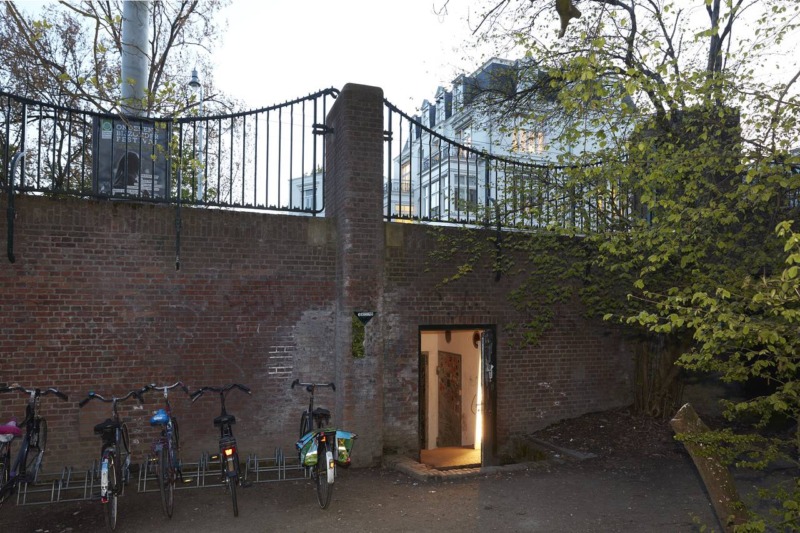
A volunteer-run Cold War-era nuclear bunker concealed under a bridge in Vondelpark, repurposed as a free-admission underground cultural venue hosting DIY concerts, film screenings, art exhibitions, and zine fairs.
- Vondelbunker is a former nuclear bomb shelter located in Amsterdam, Netherlands.
- It was built in the 1970s during the Cold War era and was designed to protect citizens in the event of a nuclear attack.
- After the Cold War, the bunker was abandoned and later repurposed as a cultural and artistic space.
- Today, Vondelbunker serves as a venue for various cultural events, including music performances, art exhibitions, and workshops.
- The bunker has become a symbol of counterculture and artistic expression in Amsterdam.
- Its historical significance lies in its transformation from a symbol of fear and destruction to a hub of creativity and community engagement.
- Efforts are being made to preserve the Vondelbunker as a historical site and a testament to the city’s resilience and creative spirit.
- Local organizations and activists continue to advocate for the preservation of the bunker as a cultural landmark.
– Cultural Authenticity: The Vondelbunker in Amsterdam maintains and represents local traditions and cultural practices through its role as an autonomous cultural center hosting a wide range of cultural events, including music, theater, and film screenings, reflecting the alternative culture of the city ([source](https://www.tripadvisor.com/Attraction_Review-g188590-d10444149-Reviews-Vondelbunker-Amsterdam_North_Holland_Province.html)).
– Historical Significance: The Vondelbunker holds historical significance as a former WWII bunker turned ’60s hippie haven, reflecting the city’s post-war history and countercultural movements ([source](https://www.thrillist.com/entertainment/amsterdam/14-amsterdam-secrets-you-didn-t-know-existed)).
– Artistic Value: The location contributes to the arts by hosting a variety of cultural programming, including band nights, DJ performances, 16 mm film screenings, and other artistic events, showcasing significant artistic works and contributions to the arts ([source](https://amsterdamalternative.nl/articles/8158/vondelbunker-is-having-a-fest)).
– Social Impact: The Vondelbunker plays a significant role in the community as an autonomous cultural center run by volunteers who share the conviction that space is political, supporting social values and movements through its diverse cultural programming ([source](https://radar.squat.net/en/amsterdam/vondelbunker)).
– Accessibility and Preservation: The Vondelbunker is accessible to the public as a vibrant cultural hub located in the historic Vondelpark, and preservation efforts have been effective in maintaining the bunker in its current form as an autonomous cultural center ([source](https://www.thrillist.com/entertainment/amsterdam/14-amsterdam-secrets-you-didn-t-know-existed)).
– Visitor Engagement: The Vondelbunker offers opportunities for visitors to engage interactively with the culture and community through its diverse cultural programming, including music, theater, and film events, providing an immersive experience for visitors ([source](https://medium.com/@lilly_5096/punk-hotspots-to-visit-in-amsterdam-3433d16acfc3)).
– Educational Value: The location provides learning opportunities about the culture, history, and environment through its cultural programming, offering educational value to visitors interested in exploring Amsterdam’s dynamic subcultural landscape ([source](https://www.house-of-narrative.com/stories/amsterdams-subcultural-legacies)).
- Universal Appeal and Cultural Authenticity (85/100): Vondelbunker’s broad appeal and authentic representation of local traditions, especially its reflection of Amsterdam’s alternative culture, contribute to its high rating. The diverse range of cultural events engagingly represents the city’s unique countercultural lineage.
- Cultural Richness and Educational Value (90/100): The rich cultural programming and educational opportunities offered through events that explore themes from historical significance to artistic expression elevate this rating. As a former WWII bunker and a ’60s hippie haven, it provides valuable insights into Amsterdam’s historical and cultural evolution.
- Preservation and Integrity (80/100): While effectively maintained as a cultural venue, its historical aspects as a former nuclear shelter are preserved but might not be highlighted or interpreted as extensively as could be possible, slightly lowering its rating in this category.
- Accessibility and Visitor Engagement (88/100): The location’s accessible nature in Vondelpark and its interactive programming contribute positively. However, the underground nature and specifics like only accepting cash might limit access to a wider audience, slightly impacting its full potential in this rating.
{“history”: “Built during World War II as an air raid shelter, the bunker lay abandoned for decades after the war. In 1991, it was rediscovered and occupied by artists and activists who transformed it into an alternative cultural space, operating as a volunteer-run venue ever since.”, “features”: [“Underground concert hall with unique acoustics”, “Exhibition space for contemporary art”, “Bar area serving affordable drinks”, “Weekly music nights and jam sessions”, “Film screenings and theater performances”, “Community meetings and workshops”], “introduction”: “The Vondelbunker is a former WWII bomb shelter beneath a bridge in Amsterdam‘s beloved Vondelpark, transformed into an underground cultural center. This unique venue hosts free experimental music, art exhibitions, theater performances, and community events in an atmospheric concrete bunker setting.”, “significance”: “The Vondelbunker represents Amsterdam’s tradition of repurposing abandoned spaces for cultural use. It’s one of the last truly alternative venues in increasingly gentrified Amsterdam, maintaining a DIY ethos and providing free cultural programming for all.”}
Cultural Context
The Vondelbunker serves as a vital cultural hub within Amsterdam’s vibrant underground arts scene, embodying the city’s longstanding tradition of embracing alternative and experimental forms of expression. Situated beneath the iconic Vondelpark, the bunker is a unique space where contemporary artists, musicians, and performers converge to challenge mainstream cultural norms. It reflects Amsterdam’s broader cultural values of openness, creativity, and social inclusivity, often hosting events that celebrate diversity and subcultural movements. The venue supports a wide range of cultural practices, including electronic music, visual arts, and avant-garde performances, fostering a sense of community among young creatives and locals who seek spaces outside the commercial art world. Its programming often intersects with social activism and progressive ideals, making it a site where culture and politics intertwine in meaningful ways. The Vondelbunker’s role in nurturing counterculture is emblematic of Amsterdam’s historical reputation as a city that champions artistic freedom and innovation, ensuring that it remains a dynamic cultural landmark for both residents and visitors alike.
Historical Context
Originally constructed during the Cold War era in the 1960s, the Vondelbunker was designed as a civil defense shelter intended to protect Amsterdam’s citizens from potential nuclear threats. Its strategic location beneath the Vondelpark bridge was chosen for its discreet yet accessible position within the city. Over time, as geopolitical tensions eased, the bunker was decommissioned and fell into disuse. However, in the early 21st century, it was repurposed by local artists and cultural activists who recognized its potential as an underground venue. This transformation from a Cold War relic to a contemporary cultural center illustrates the adaptive reuse of historical infrastructure in Amsterdam. The bunker’s evolution reflects broader societal shifts, from a focus on defense and security to one of creative expression and community engagement. Key moments in its history include its reopening as a cultural venue in 2011, which marked the beginning of its new life as a space fostering experimental art and music. The Vondelbunker’s layered history enriches its identity, making it a compelling symbol of resilience and reinvention in the urban fabric of Amsterdam.