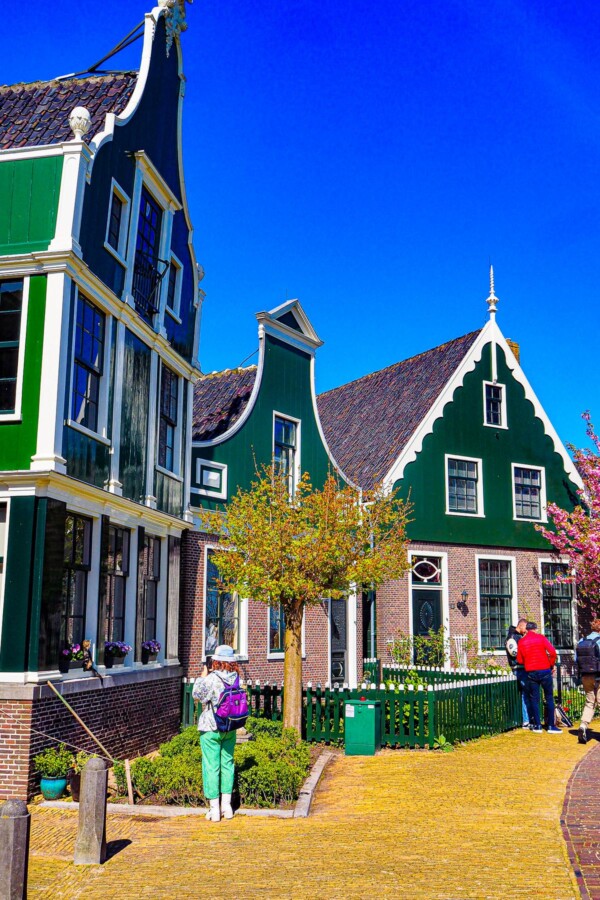
Capturing the ingenuity and character of the Netherlands’ industrial golden age, Zaanse Schans preserves a crucial chapter of Dutch heritage through its collection of historic windmills, wooden houses, and artisanal workshops. Created in the 1960s through the careful relocation of endangered structures from throughout the Zaan region, this living museum showcases the area that served as one of the world’s first industrial centers in the 17th and 18th centuries. Against a backdrop of verdant polders and waterways, visitors encounter six functioning windmills—each a testament to Dutch industrial innovation—that still saw timber, press oil, grind spices, and produce pigments using centuries-old methods. Beyond the iconic mills, the village’s wooden buildings house workshops where traditional crafts continue: the rhythmic carving of wooden clogs, the patient aging of Dutch cheeses, and the precise art of pewter casting unfold before visitors’ eyes. The meticulously preserved dwellings, with their characteristic green wooden facades and white trim, reveal how workers and merchants lived during the region’s commercial heyday. While created as a heritage conservation project and now receiving over a million visitors annually, Zaanse Schans avoids mere artifice through its authentic buildings and continuation of traditional practices. It offers a multisensory journey into the ingenuity, aesthetics, and daily life of a period when Dutch innovation helped shape global commerce and industry.
Cultural Context
Zaanse Schans serves as a vibrant cultural repository that embodies the traditional Dutch way of life from the 17th and 18th centuries, a period often referred to as the Dutch Golden Age. This open-air museum showcases the customs, crafts, and livelihoods of the Zaan region, which was one of the first industrialized areas in the world. The site preserves and promotes local traditions such as wooden clog making, cheese production, and traditional windmill operation, allowing visitors to witness these artisanal practices firsthand. Seasonal celebrations like the annual Zaanse Schans Festival highlight regional music, dance, and culinary traditions, fostering a deep appreciation for Dutch rural heritage. The community actively engages in preserving intangible cultural heritage, including storytelling and folk art, which reflect the values and social fabric of the Zaan people. Through these living traditions, Zaanse Schans offers a unique window into the cultural identity of the Netherlands, emphasizing sustainability, craftsmanship, and community cohesion. It remains a place where cultural continuity is honored and shared with both locals and international visitors alike.
Historical Context
Zaanse Schans is historically significant as a preserved industrial landscape that dates back to the early 17th century, a time when the Zaan region became a powerhouse of Dutch industry. The area was pivotal during the Dutch Golden Age, with over 600 windmills operating by 1670 to power sawmills, oil mills, and other manufacturing processes. This concentration of wind-powered industry made the Zaan one of the earliest industrialized regions in the world, predating the Industrial Revolution in Britain. The site includes original and reconstructed buildings such as warehouses, workshops, and traditional homes, many dating from the 18th and 19th centuries. Key historical figures associated with the Zaan include Cornelis Corneliszoon, who invented the wind-powered sawmill in 1597, revolutionizing timber production. Over time, the area evolved from a bustling industrial hub to a heritage site when many windmills were dismantled or fell into disrepair in the 20th century. Efforts beginning in the 1960s led to the restoration and preservation of the remaining structures, transforming Zaanse Schans into a museum village that educates visitors about the region’s industrial and social history.