The best things to do in Siena are exploring Piazza del Campo, touring the Siena Cathedral complex, seeing the civic frescoes inside Palazzo Pubblico, and choosing at least one panoramic viewpoint. With a full day, you can also visit Santa Maria della Scala, learn how the Contrade shape daily life, walk the Fortezza Medicea, and try distinctly Sienese dishes and sweets.
I first visited Siena while studying abroad in Florence, when the city was an easy day trip from Florence. Since moving to Amsterdam, I have returned to Siena on later trips through Tuscany. Every visit has left me with the same thought: I should have stayed longer.
That repeat perspective shapes this guide. Siena is compact enough to cover on foot, but the hills, museum collections, Cathedral complex, and neighborhood culture reward a slower pace. Most of the street photographs below are from my own visits, and the embedded video was filmed for the ViaTravelers YouTube channel.
Ticket prices, opening hours, temporary closures, and Palio information were last verified on July 23, 2026. Always check the linked official site before traveling, especially around religious holidays and Palio dates.
Siena Quick-Planning Guide
| Planning question | Practical answer |
|---|---|
| How long do you need? | One full day covers the essential sights. Two days or an overnight stay gives you time for museums, quieter streets, and a more relaxed meal. |
| Top priorities | Piazza del Campo, the Duomo complex, Museo Civico, and one viewpoint. |
| Best viewpoint | Torre del Mangia for the highest central panorama; Facciatone for a Cathedral-complex visit; Fortezza Medicea for a free and less strenuous option. |
| What should be booked? | Book the Gate of Heaven in advance. Torre del Mangia tickets are sold only for the day of your visit. |
| Palio dates | July 2 and August 16. Activities begin several days before each race. |
| Getting around | Walk, but expect steep streets, steps, and uneven paving. |
| Driving | Park outside the restricted historic center. Do not follow navigation software through ZTL entrances. |
| Best short visit | Duomo complex, Piazza del Campo, and either Museo Civico or one viewpoint. |
Jump to:
- Why Siena is worth visiting
- 1. Piazza del Campo
- 2. Palazzo Pubblico and Museo Civico
- 3. Torre del Mangia
- 4. Siena Cathedral complex
- 5. Santa Maria della Scala
- 6. Basilica of San Domenico
- 7. Contrade and Palio culture
- 8. Fortezza Medicea
- 9. Historic lanes and green valleys
- 10. Sienese food and wine
- One-day Siena itinerary
- Practical travel tips
- Frequently asked questions
Why Siena Is Worth Visiting

Siena is worth visiting for its unusually coherent medieval cityscape, major works of Italian art, distinctive civic traditions, and manageable size. Its historic center is a UNESCO World Heritage Site that has preserved much of the Gothic character developed between the 12th and 15th centuries.
The city’s importance goes beyond attractive brick streets. During the medieval Republic of Siena, artists including Duccio di Buoninsegna, Simone Martini, and Ambrogio and Pietro Lorenzetti helped shape Italian and European painting. Their work remains visible in the Cathedral museum, Palazzo Pubblico, and other collections across the city.
Siena also developed around civic institutions that remain unusually visible. Piazza del Campo was the political center, the Cathedral represented religious power, Santa Maria della Scala cared for pilgrims and residents, and the Contrade organized neighborhood life. Seeing these places together gives the city more coherence than a checklist of isolated monuments.
You will also notice black-and-white she-wolf symbols around Siena. They refer to a local foundation legend that links the city to Senio and Aschio, traditionally described as sons or descendants of Remus. It is civic mythology rather than established history, but it remains part of Siena’s visual identity.


My practical view: Siena works as a day trip, but it feels different after the tour groups leave. Staying into the evening gives you time to return to Piazza del Campo, notice the Contrada emblems, and walk without rushing between timed entries.
1. Start in Piazza del Campo

Piazza del Campo is the natural starting point for a first visit. The shell-shaped civic square slopes toward Palazzo Pubblico and is divided into nine brick sections, traditionally associated with the Council of Nine that governed Siena during a prosperous period of the medieval Republic.
Do not treat the Campo as a place to photograph and immediately leave. Walk the outer curve, look back toward the Palazzo Pubblico, and then sit on the brick pavement for a few minutes. The unusual slope, open center, and consistent building line make more sense from ground level than they do in a photograph.
At the upper edge is Fonte Gaia, or the Fountain of Joy. Jacopo della Quercia completed the original marble fountain in the early 15th century. The sculpture visible outside today is a later copy; the surviving original panels are protected inside Santa Maria della Scala.
The restaurants around the Campo are convenient, but part of the bill pays for the setting. That can be worthwhile for a drink or a slower evening meal. For better-value everyday cooking, compare menus on the streets leading away from the square.
Allow: 30 to 60 minutes without a meal, plus additional time for Palazzo Pubblico or the tower.
2. See Siena’s Civic Art Inside Palazzo Pubblico
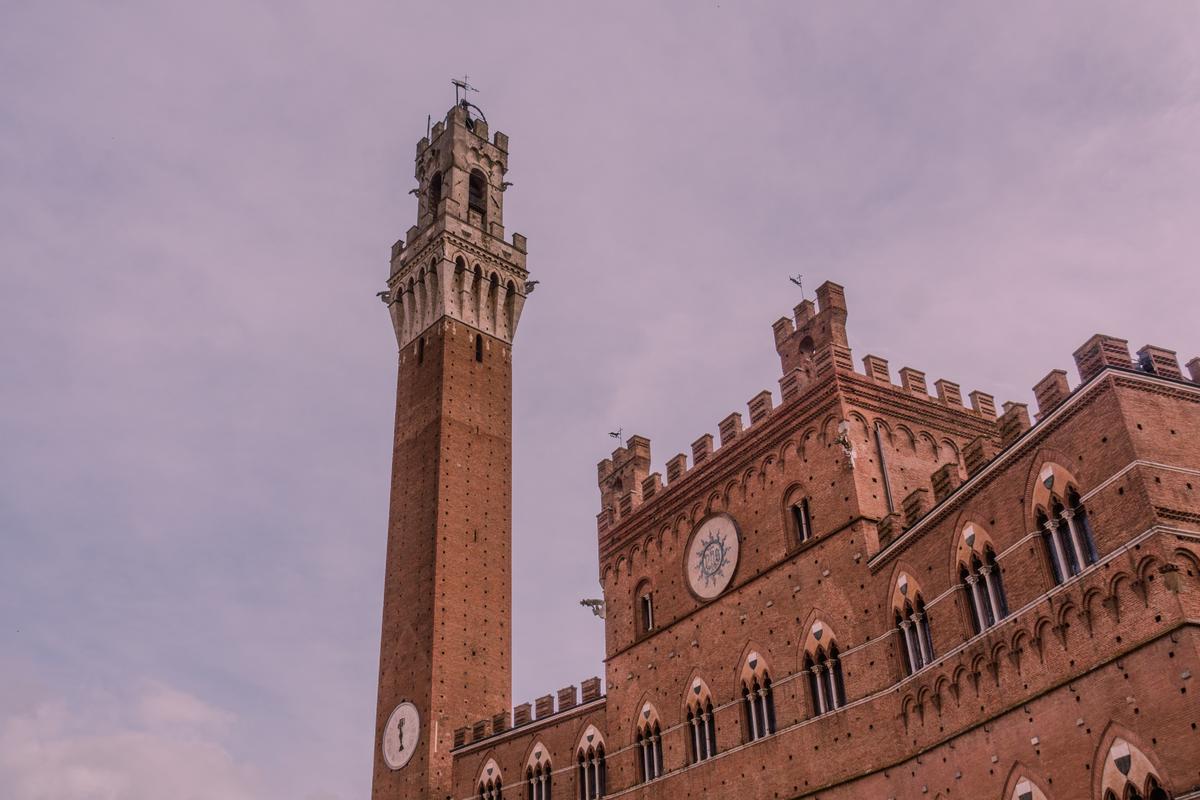
Palazzo Pubblico is not merely the photogenic building beneath Torre del Mangia. It remains Siena’s town hall and contains the Museo Civico, one of the best places to understand how medieval Siena represented power, responsibility, war, and public life.
The most important rooms include Simone Martini’s Maestà and Ambrogio Lorenzetti’s Allegory and Effects of Good and Bad Government. Lorenzetti’s fresco cycle is especially useful because it connects government with visible consequences: safe streets, productive land, trade, fear, violence, and social breakdown.
The museum is relatively compact, but the frescoes deserve more than a quick circuit. Allow at least 45 to 75 minutes. The official Museo Civico ticket page lists current individual and combined admission options.
As of July 2026, standard Museo Civico admission is €10. A €15 combined ticket includes the museum and Torre del Mangia, while a €20 combination includes the museum, tower, and Santa Maria della Scala. Tickets involving the tower must be bought at the physical ticket office on the day of the visit.
3. Climb Torre del Mangia—If the Stairs Suit You

Torre del Mangia rises directly above Palazzo Pubblico and offers the most dramatic central view over Piazza del Campo, the Cathedral, Siena’s roofs, and the surrounding Tuscan countryside.
The experience requires roughly 400 steps and has no elevator. The upper passages are narrow, and the climb is a poor choice for anyone uncomfortable with confined stairways, heights, or significant exertion.


The ticket rule matters: Torre tickets cannot be reserved. They are released at the Palazzo Pubblico ticket office for that day, and each ascent is limited to 25 people at 45-minute intervals. If climbing the tower is a priority, go to the ticket office when it opens and secure a later time before starting the Cathedral complex.
As of July 2026, an individual Torre ticket costs €10. Tickets can sell out, particularly on busy weekends and summer days.
Which Siena Viewpoint Should You Choose?
| Viewpoint | Best for | Effort and access | Ticket situation |
|---|---|---|---|
| Torre del Mangia | The highest central panorama and a direct view down into Piazza del Campo | About 400 steps, narrow passages, no elevator | €10; same-day physical purchase; limited timed ascents |
| Facciatone | Combining a rooftop view with the Cathedral museum and seeing more of the Duomo complex | Stairs and a narrow upper terrace; not step-free | Included in the OPA SI Pass |
| Fortezza Medicea | A free, lower-effort sunset walk and wider countryside views | Gentler than the towers, although Siena’s approach streets remain hilly | Free |
With only half a day, choose one viewpoint rather than spending valuable time queuing for both the Torre and Facciatone.
4. Give the Siena Cathedral Complex Enough Time

Siena Cathedral is not a single quick church visit. The wider monumental complex includes the Cathedral, Piccolomini Library, Museo dell’Opera, Facciatone panorama, Crypt, Baptistery, and the optional Gate of Heaven roof route.
Independent visitors should begin with the official Opera Duomo visitor information. The OPA SI Pass is usually the most sensible ticket when you intend to see several parts of the complex. It is valid for three consecutive days, although most travelers complete the main route in two to three hours.
As of July 2026, the pass costs €14 during standard periods and €16 when the marble floor is uncovered. The Gate of Heaven ticket costs €21 and includes the wider complex. Religious services and special events can alter Cathedral access, especially on Sundays and holidays.
Siena Cathedral
The Cathedral’s exterior combines white, green-black, and red marble with sculpture, mosaics, pinnacles, and a large rose window. Inside, striped columns lead toward an ornate dome, Nicola Pisano’s carved pulpit, chapels, sculpture, and an elaborate marble pavement.


The floor is one of the main reasons to time a visit carefully. Much of it is protected for part of the year. In 2026, the extended uncovering periods run from June 27 through July 31 and August 18 through November 15.
The Cathedral is an active place of worship. Dress respectfully, keep voices low, and do not treat a worship entrance as a way around paid cultural access.
Piccolomini Library

The Piccolomini Library opens from the Cathedral nave and is included in the complex ticket. Its walls contain a remarkably complete fresco cycle associated with Pinturicchio, depicting episodes from the life of Enea Silvio Piccolomini, who became Pope Pius II.
The room also holds illuminated choir books, but the strongest impression comes from the combination of painted architecture, narrative scenes, ceiling decoration, and preserved color. Even travelers with limited interest in church interiors should give it time.
Museo dell’Opera and the Facciatone

The Museo dell’Opera preserves major works created for the Cathedral, including surviving panels from Duccio’s monumental Maestà, sculpture, liturgical objects, and Duccio’s stained-glass rose window.
The museum route also leads to the Facciatone, the tall wall left from Siena’s unfinished attempt to create a much larger Cathedral. The planned expansion was interrupted in the 14th century after structural problems, economic strain, and the Black Death changed the city’s trajectory.

Access to the upper panorama is capacity-controlled, and queues form inside the museum. Go to the viewpoint early in your museum visit if the line is short. The stairway and terrace are narrow, so this is not a suitable alternative to the Torre for every traveler.
Crypt and Baptistery
The Crypt contains medieval wall paintings discovered during modern restoration work beneath the Cathedral area. The Baptistery of San Giovanni sits lower on the slope and contains a celebrated baptismal font with work by artists including Donatello, Jacopo della Quercia, and Lorenzo Ghiberti.
These sites deepen the visit, but they also add steps and walking. Travelers with only two hours should prioritize the Cathedral, Piccolomini Library, museum, and either the Facciatone or another part of the complex that best matches their interests.
Ticket recommendation: Buy the official OPA SI Pass when you are comfortable touring independently. A third-party option makes more sense when you want a guided explanation, a bundled activity, or a booking interface you already use.
Disclosure: ViaTravelers may earn a commission from qualifying bookings made through the link above, at no additional cost to you.
5. Cross the Piazza to Santa Maria della Scala
Santa Maria della Scala stands directly opposite the Cathedral and is one of Siena’s most useful museums for understanding the city beyond church architecture. The complex served for centuries as a hospital, charitable institution, and place of care for pilgrims traveling the Via Francigena.
Its layered interior contains the frescoed Pellegrinaio halls, chapels, archaeological collections, underground spaces, temporary exhibitions, and surviving original sculptures from Fonte Gaia. This is where the fountain’s weathered medieval panels can be studied at close range.
Santa Maria della Scala is also a practical alternative when the Cathedral is especially crowded or when weather makes a longer outdoor itinerary uncomfortable. Art-focused travelers could easily spend two hours here; a selective visit takes about 60 to 90 minutes.
As of July 2026, full admission is €9. From March 15 through October 31, the museum is generally open daily from 10:00 am to 7:00 pm, with shortened hours on both Palio dates. Check the official Santa Maria della Scala visitor page for current access.
The museum’s visitor route is accessible with elevators and staff assistance in certain passages. Wheelchairs are available on request, making this one of the more workable major cultural sites for travelers with limited mobility.
Readers who plan trips around collections may also find inspiration in our guide to the best museums in Europe.
6. Visit the Basilica of San Domenico and Fontebranda

The Basilica Cateriniana di San Domenico provides a deliberate contrast with the Cathedral. Its large brick exterior and relatively restrained interior feel severe beside the Duomo’s marble, mosaics, and sculptural detail.
The church is closely associated with Saint Catherine of Siena, a major religious and political figure of the 14th century. The Chapel of Saint Catherine contains important works connected with her life, while the basilica preserves relics traditionally identified as her head and a finger.
This remains an active church and pilgrimage site. Visit quietly, dress appropriately, and avoid photographing worshippers or religious observances without permission. Check the official Basilica Cateriniana website before visiting.
From the basilica, descend toward Fontebranda, one of Siena’s historic fountains, and the Sanctuary-House of Saint Catherine. The return route is steep, but it reveals how dramatically the historic center rises and falls between ridges and valleys.
Allow: 30 to 45 minutes for the basilica, or about 75 minutes when adding Fontebranda and the Catherine sites.
7. Learn How the Contrade Shape Siena
Siena’s 17 Contrade are often reduced to the teams that participate in the Palio. That misses their deeper role. Each Contrada is a defined neighborhood community with its own identity, colors, emblems, patron saint, church or oratory, museum, elected leadership, social spaces, and year-round activities.
As you walk, look for animal symbols, flags, decorative lamps, boundary markers, and small fountains used in Contrada ceremonies. The emblems include the Goose, Snail, Dragon, Owl, Giraffe, Porcupine, Panther, She-Wolf, and others.
The official Contrade history from Visit Siena explains how these institutions support children, older residents, social gatherings, charitable work, cultural memory, and neighborhood maintenance. They are living communities, not historic clubs maintained solely for visitors.
Palio di Siena Dates and Visitor Context
The two annual Palios culminate in races on July 2 and August 16. The program extends across four days and includes the horse allocation, trial races, Contrada processions, blessings, civic ceremonies, and the historical procession before the race.
Ten of the 17 Contrade race in each Palio. The race itself lasts only a few minutes, but the event’s meaning comes from the preparation, rivalry, religious practices, and neighborhood participation surrounding it.
The center of Piazza del Campo can be entered without a race ticket, but spectators may wait for hours in intense summer conditions with limited ability to leave once access is controlled. Paid grandstands, windows, and balconies offer different levels of comfort and visibility.
If your trip overlaps a Palio, use the official Comune di Siena Palio information. Expect major crowding, altered museum hours, route restrictions, and temporary changes in how the Campo functions. Weather or safety conditions can also change the schedule.
8. Walk the Fortezza Medicea

The Fortezza Medicea, also called the Forte di Santa Barbara, was built after Florence brought Siena under Medici control in the 16th century. Its military scale and geometry contrast with the narrower medieval streets closer to Piazza del Campo.
Today, the ramparts and surrounding green space function as a public park used for walking, running, community events, and seasonal concerts. It is one of the easiest places to step away from the densest visitor routes without leaving the city.
The views are lower than those from the Torre or Facciatone, but the visit is free and the open ramparts are less constricted. Go in the late afternoon for softer light across Siena’s roofs and the surrounding hills.
The fortress is also close to the Stadio-Fortezza car park and the northern approach to the center, making it an efficient first or final stop for drivers.
9. Wander Siena’s Historic Lanes and Green Valleys


Some of Siena’s best moments happen between the named attractions. Via di Città, Banchi di Sopra, Via del Porrione, and the smaller side streets reveal palace facades, Contrada symbols, craft shops, arches, steep passages, and sudden views over the valleys inside the city walls.
Do not rely entirely on the most direct route between the Campo and Cathedral. Turn down one or two side streets, but watch your footing: paving is uneven, and a route that looks short on a map may include a substantial descent followed by an equally substantial climb.
For a greener break, walk toward Orto de’ Pecci in the valley below the central ridge. The area provides a rare view back toward the Palazzo Pubblico from beneath the built-up center and helps explain Siena’s unusual topography.
Pinacoteca Nazionale Update for 2026

The Pinacoteca Nazionale di Siena ordinarily contains one of the city’s most important collections of Sienese painting, with works spanning the medieval and Renaissance periods. However, the main Via di San Pietro building has been closed since January 26, 2026, for energy-efficiency, renovation, and accessibility work.
During the closure, Palazzo Chigi Piccolomini alla Postierla is open on a limited schedule as an alternative site. As of July 2026, it opens Thursday through Saturday from 9:00 am to 7:00 pm and Monday, Sunday, and holidays from 9:00 am to 1:30 pm. It is closed Tuesday and Wednesday. Admission is €4, payment is card-only, and the building is not accessible to visitors with disabilities.
Check the official Pinacoteca visitor notice before building an itinerary around either location. Do not rely on older guides that list the main Pinacoteca as normally open.
10. Try Sienese Food and Regional Wine

Siena is a good place to move beyond a generic “Italian food” order. The local menu overlaps with wider Tuscan cooking, but several dishes and sweets have a particularly strong connection to Siena and its province.
- Pici: Thick, hand-rolled pasta commonly served with garlic and tomato, breadcrumbs, cheese and pepper, or a meat ragù.
- Crostini neri: Toast topped with a savory chicken-liver mixture, with recipes varying by kitchen.
- Ribollita and pappa al pomodoro: Bread-based Tuscan dishes that make practical use of vegetables, beans, tomato, and unsalted bread.
- Cinta Senese: Pork from the black-and-white belted breed associated with the Sienese countryside, served as cured meat, sausage, or a cooked dish.
- Ricciarelli: Soft almond sweets dusted with powdered sugar and strongly associated with Siena.
- Panforte and panpepato: Dense sweets made with nuts, candied fruit, honey, and spices.
- Cavallucci: Firm, spiced biscuits traditionally made with nuts and candied fruit.

Cantucci are common across Tuscany rather than uniquely Sienese, so prioritize ricciarelli or panforte when you want a souvenir closely linked to the city.
Wine lists often cover the wider province and surrounding Tuscan regions, including Chianti Classico, Brunello di Montalcino, Vino Nobile di Montepulciano, and Vernaccia di San Gimignano. Ask for a smaller regional pour or tasting rather than assuming the most expensive bottle is the best match for your meal.
A useful restaurant check is specificity. A menu that identifies the pasta sauce, producer, pork breed, wine denomination, or seasonal ingredients gives you more information than one relying on generic “Tuscan” descriptions.
A Realistic One-Day Siena Itinerary
This route prioritizes the Duomo complex, the Campo, civic art, and one viewpoint without pretending you can properly see every museum in a few hours.
- 9:30 am: Arrive and walk toward Piazza del Campo. Use the quieter morning streets to orient yourself.
- 10:00 am: Buy a same-day Torre del Mangia ticket. Choose an afternoon ascent. Skip this step if you prefer the Facciatone or do not want a strenuous climb.
- 10:15 am–12:45 pm: Tour the Duomo complex. Prioritize the Cathedral, Piccolomini Library, Museo dell’Opera, and Facciatone. Add the Crypt or Baptistery according to your interests and available time.
- 12:45–2:00 pm: Have lunch away from the busiest edge of the Campo. Look for pici, seasonal soup, Cinta Senese, or a concise local menu.
- 2:00–3:15 pm: Explore Piazza del Campo and Museo Civico. Spend time with the Lorenzetti frescoes rather than treating the museum as a passage to the tower.
- 3:15 or 4:00 pm: Climb Torre del Mangia. Follow the time printed on your ticket. Replace this with Santa Maria della Scala if the tower sells out or the stairs do not suit you.
- 4:30–6:00 pm: Choose one secondary area. Visit Santa Maria della Scala, walk to San Domenico and Fontebranda, or explore the historic lanes and Orto de’ Pecci.
- 6:00 pm onward: Walk to the Fortezza or return to the Campo. Staying for dinner lets you experience Siena after many day visitors have departed.
Sunday adjustment: The Cathedral generally opens later to cultural visitors on Sundays and public holidays. Reverse the morning order by starting with the Campo, Museo Civico, or Santa Maria della Scala, then visit the Duomo after lunch.
Practical Siena Travel Tips for 2026
How Much Time Should You Spend in Siena?
- Three to four hours: Visit Piazza del Campo and the Duomo complex, then choose one additional museum or viewpoint.
- One full day: Add Museo Civico, a viewpoint, lunch, and time to walk through the historic center.
- Two days or two nights: Add Santa Maria della Scala, San Domenico, the Fortezza, slower meals, and more time in the Contrade.
A half-day visit is worthwhile, but it requires deliberate choices. A full day is the better minimum for a first trip.
2026 Siena Ticket Snapshot
| Attraction or pass | Current adult price | Important condition |
|---|---|---|
| OPA SI Pass | €14 standard; €16 during floor-uncovering periods | Valid for three consecutive days; includes Cathedral, Library, museum, Facciatone, Crypt, and Baptistery |
| Gate of Heaven ticket | €21 | Includes the Cathedral roof route and wider complex; advance booking is advisable |
| Cathedral only | €7 standard; €10 during floor periods | Less useful when you want the Library, museum, or panorama |
| Museo Civico | €10 | Online purchase available |
| Torre del Mangia | €10 | Same-day physical purchase only; limited ascent slots |
| Museo Civico + Torre | €15 | Must be purchased at the ticket office because it includes the tower |
| Santa Maria della Scala | €9 | Accessible visitor route; combined city-museum tickets available |
| Museo Civico + Torre + Santa Maria | €20 | Useful for a museum-heavy full day or two-day visit |
| Palazzo Chigi Piccolomini | €4 | Temporary Pinacoteca alternative; card-only payment; limited opening days |
Prices were verified July 23, 2026 and can change. Use the official attraction pages before purchasing.
Getting to Siena From Florence
Siena is an achievable day trip from Florence by public transport. Regional buses commonly arrive near Piazza Gramsci, which is relatively close to the historic center. Trains arrive at Siena station below the center, where escalators and local transport reduce part of the uphill approach.
Check current schedules with Autolinee Toscane and Trenitalia. Do not rely on an old blog timetable, particularly on Sundays, holidays, or during strikes.
The bus is often more convenient for a central arrival, while the train may fit an existing rail itinerary better. Compare the complete door-to-door journey rather than the published travel time alone.
Parking and the Siena ZTL
Siena’s historic center is largely pedestrianized and protected by a limited-traffic zone. Unless your hotel has provided explicit access instructions and registered your vehicle, do not drive past a ZTL camera.
Useful official car parks include:
- Il Campo: Convenient for Piazza del Campo and the southern center.
- Duomo: Convenient for the Cathedral and Santa Maria della Scala.
- Santa Caterina: Connected toward the Cathedral hill by mechanized ramps and escalators.
- San Francesco: Escalator-linked and useful for the eastern center.
- Stadio-Fortezza: Convenient for the Fortezza and northern approach.
- La Stazione: Farther from the monuments but often less expensive, with onward access toward the center.
Review locations, rates, and accessibility services on the official Siena parking page. Rates and capacity can change during events.
Accessibility and Limited Mobility
Siena presents real accessibility challenges. The center is hilly, many streets are cobbled, and several historic monuments contain narrow stairs or level changes that cannot be fully adapted.
- Siena Cathedral: A dedicated ramp provides access on the left side of the building.
- Wider Duomo complex: The Museo dell’Opera, Crypt, and Baptistery currently lack complete disabled-access systems.
- Torre del Mangia: Approximately 400 stairs and no elevator.
- Santa Maria della Scala: The full museum route is accessible, with elevators, staff assistance, seating, accessible restrooms, and wheelchairs on request.
- Palazzo Chigi Piccolomini: The temporary Pinacoteca alternative is not currently accessible to visitors with disabilities.
- Parking assistance: San Francesco, Santa Caterina, and station facilities have mechanized connections, and official parking information lists an on-request taxi service for disabled visitors.
Contact individual sites before traveling when step-free access is essential. “Accessible entrance” does not necessarily mean every room, terrace, or connected monument is reachable.
Best Time to Visit Siena
Late spring and early autumn generally provide a better balance of daylight, walking conditions, and visitor levels than the busiest summer weeks. Winter is quieter and suits museum-focused trips, although opening hours are shorter and some attractions close on additional weekdays.
Visit during the Palio period only when the event itself is a priority. The atmosphere is unlike an ordinary Siena visit, but the tradeoffs include intense crowds, higher accommodation demand, altered museum hours, and restricted movement around the Campo.
Art-focused travelers may prefer the Cathedral floor periods in 2026: June 27–July 31 and August 18–November 15. Those dates also attract additional visitors, so allow more time.
Frequently Asked Questions About Siena
Is Siena worth visiting?
Yes. Siena is worth visiting for its preserved medieval cityscape, Piazza del Campo, Cathedral complex, Sienese art, Contrada culture, and food. One full day covers the essentials, but an overnight stay provides a calmer experience.
How many days do you need in Siena?
Plan one full day for Siena’s main attractions. Two days are better when you want to visit Santa Maria della Scala, San Domenico, additional museums, and the Fortezza without rushing.
Can you visit Siena as a day trip from Florence?
Yes. Siena is a practical day trip from Florence by regional bus, train, guided tour, or car. Buses commonly arrive closer to the historic center, while the train station is below the central hill.
What are the Palio di Siena dates?
The Palio races take place on July 2 and August 16 each year. The wider festival lasts four days, and weather or safety conditions can change the final schedule.
Do you need tickets for Siena Cathedral?
Cultural visits to Siena Cathedral and its connected monuments require a ticket. The OPA SI Pass covers the Cathedral, Piccolomini Library, Museo dell’Opera, Facciatone, Crypt, and Baptistery for three consecutive days.
Can you drive into Siena’s historic center?
Most visitors should not drive into Siena’s historic center because it is protected by a limited-traffic zone. Park outside the walls or use hotel access instructions that explicitly authorize and register your vehicle.
Is Siena accessible for travelers with limited mobility?
Siena is partly accessible, but its hills, cobbles, stairs, and historic buildings create limitations. Santa Maria della Scala has an accessible museum route, while Torre del Mangia and several parts of the Duomo complex are not step-free.
Final Thoughts on Visiting Siena
My earliest Siena visits were shaped by Florence: arrive, see the Campo and Cathedral, then return before the day ended. Later trips made the weakness of that approach clear. Siena is compact, but it is not shallow. Its civic art, neighborhood institutions, museums, food, and steep urban landscape become more meaningful when they are not compressed into a race between landmarks.
For a first visit, prioritize the Campo, the Duomo complex, Museo Civico, and one viewpoint. Stay overnight when your itinerary allows it. The quieter evening streets and the chance to return to the same square at a different hour add more than another hurried attraction.
Continue planning with our Italy itinerary for seven to ten days, compare the best tours in Italy, or pair Siena with the best things to do in San Gimignano.