The best castles in the Netherlands for most travelers are De Haar Castle for architecture and gardens, Muiderslot for medieval history near Amsterdam, Loevestein for its fortress and prison stories, Hoensbroek for families, and Paleis Het Loo for Dutch royal history. Each offers a substantially different visit, so the right choice depends on whether you value intact medieval defenses, furnished rooms, formal gardens, or atmospheric ruins.
Dutch castle architecture includes fortified water castles, country estates, royal palaces, defensive ruins, and later reconstructions built around medieval remains. This guide covers all of those categories but states clearly when a property is not a conventional castle museum.
Use this list alongside our Netherlands destination guide and Netherlands itinerary. Some readers search for castles in Holland, but Holland refers specifically to North and South Holland rather than the entire country; our guide to the difference between Holland and the Netherlands explains the terminology.
Visitor information was checked in July 2026. Opening days, exhibitions, maintenance work, and tour access can change, so use the official link in each entry before traveling.
Quick Picks: Which Dutch Castle Should You Visit?
- Choose De Haar Castle for the most elaborate architecture, richly decorated interiors, and extensive formal grounds.
- Choose Muiderslot for a compact medieval castle that works well as a day trip from Amsterdam.
- Choose Loevestein for a full fortress complex with military, political, and prison history.
- Choose Hoensbroek Castle for furnished rooms, family activities, and comparatively good accessibility.
- Choose Paleis Het Loo for royal apartments, Orange-Nassau history, and formal Baroque gardens.
- Choose Valkenburg Castle for hilltop ruins and a visit that can be combined with the Velvet Cave.
Castles in the Netherlands Compared
| Castle | Area | Best for | Access snapshot |
|---|---|---|---|
| De Haar Castle | Haarzuilens, Utrecht | Architecture, interiors, and gardens | Castle and gardens open daily; timed entry advised |
| Muiderslot | Muiden, North Holland | Medieval history near Amsterdam | Museum open daily |
| Loevestein Castle | Poederoijen, Gelderland | Fortress and political history | Open daily; steep castle stairs |
| Hoensbroek Castle | Hoensbroek, Limburg | Families and furnished rooms | Open daily with several annual closure dates |
| Paleis Het Loo | Apeldoorn, Gelderland | Royal history and gardens | Normally Tuesday through Sunday, plus selected Mondays |
| Heeswijk Castle | Heeswijk-Dinther, North Brabant | Brabant history and interiors | Tuesday through Sunday |
| Ammersoyen Castle | Ammerzoden, Gelderland | Medieval authenticity | Tuesday through Sunday from April through October |
| Doorwerth Castle | Doorwerth, Gelderland | Period rooms and wooded estate | Open year-round Tuesday through Sunday |
| Huis Bergh | ’s-Heerenberg, Gelderland | Large medieval complex and art | Full reopening scheduled for September 19, 2026 |
| Slot Zuylen | Oud-Zuilen, Utrecht | Lived-in interiors and literary history | Seasonal Wednesday–Sunday or Friday–Sunday schedule |
| Doornenburg Castle | Doornenburg, Gelderland | Outer ward and fortified layout | Museum visits and events follow scheduled ticket dates |
| Radboud Castle | Medemblik, North Holland | West Frisian medieval history | Tuesday through Sunday; advance booking recommended |
| Duivenvoorde Castle | Voorschoten, South Holland | Historic collection and estate park | Limited museum days; park open daily |
| Valkenburg Castle | Valkenburg, Limburg | Hilltop ruins and cave history | Open daily with seasonally changing hours |
| Teylingen Castle | Voorhout, South Holland | Authentic castle ruins | Weekend opening; closed in winter |
| Duurstede Castle | Wijk bij Duurstede, Utrecht | Castle island and surviving towers | Conditional Sunday access from April through October |
| Breda Castle | Breda, North Brabant | Nassau and Renaissance history | Guided tours only |
| Kasteel Rijckholt | Gronsveld, Limburg | Exterior architecture and regional routes | No regular museum admission; confirm access directly |
How These Castles Were Selected
The ranking considers historical significance, architectural interest, the quality of the interiors or grounds, family appeal, and how practical the site is to visit. A large building does not rank highly simply because it looks impressive in photographs.
Access also matters. Museums with dependable opening hours rank ahead of private venues that can only be seen during an occasional tour. Limited-access properties remain on the list when their history or architecture is significant, but their restrictions are stated plainly.
18 Best Castles in the Netherlands to Visit
1. De Haar Castle
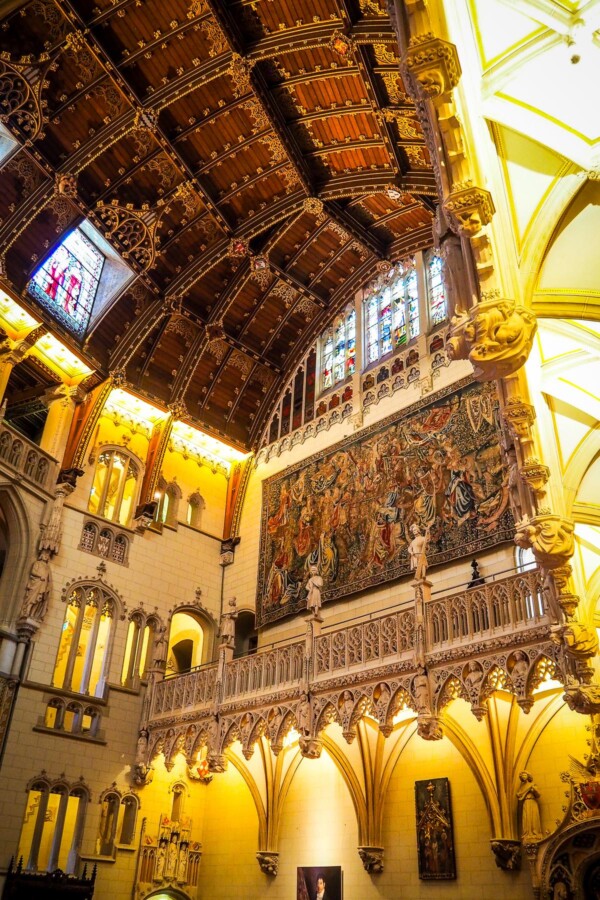
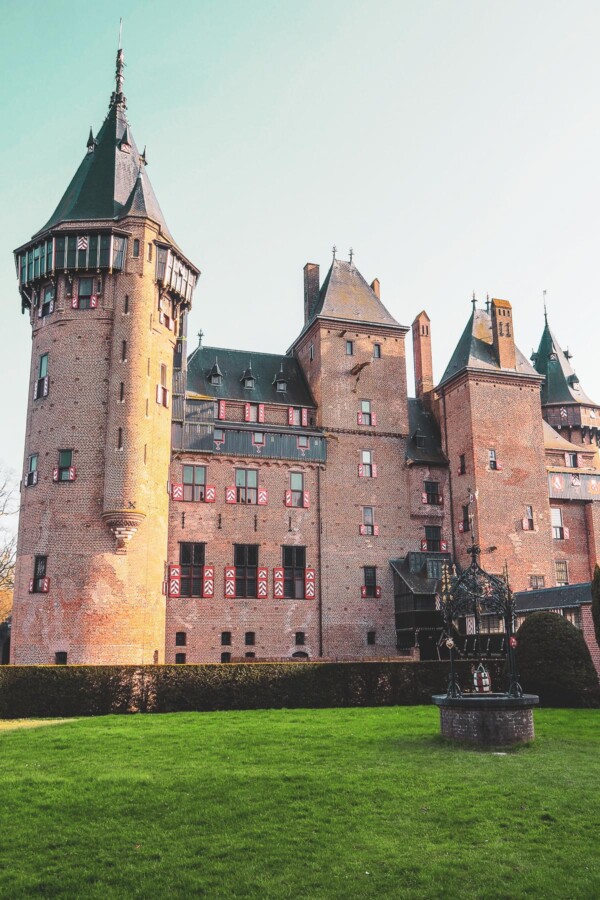
De Haar is the strongest all-around choice for travelers who want elaborate rooms, towers, bridges, gardens, and a full-scale castle estate in one visit. A stone tower existed here around 1250, but most of the present neo-Gothic castle comes from Pierre Cuypers’ reconstruction for Étienne van Zuylen and Hélène de Rothschild between 1890 and approximately 1912.
That history makes De Haar different from an untouched medieval fortress. Cuypers retained medieval foundations and surviving walls while designing a highly theatrical residence equipped for late-19th-century life. The contrast between the great hall, private rooms, red-brick exterior, and formal grounds makes it one of the most complete castle visits in the country.
De Haar is near Haarzuilens in the province of Utrecht. The castle normally opens daily from 11:00 a.m. to 5:00 p.m., with earlier opening during regular school holidays. The gardens open earlier, and the walk from the parking area takes about 20 minutes. Time slots are used, so advance booking is sensible. Check the official De Haar opening calendar before leaving.
The ViaTravelers video below gives a clearer sense of the castle’s scale, interiors, and surrounding estate.
2. Muiderslot

Muiderslot is the best choice for a recognizably medieval castle close to Amsterdam. The castle dates to 1285 and has the compact defensive elements many visitors expect: a moat, drawbridge, corner towers, battlements, courtyard, and enclosed gardens.
The museum interprets both the Middle Ages and the castle’s later association with writer P.C. Hooft. Free Dutch and English audio tours are available, including a version designed for children. Routes through the building and gardens vary in length, making the visit manageable for families that do not want to spend an entire day inside one attraction.
Muiderslot currently opens daily from 10:00 a.m. to 5:00 p.m. It is a useful addition to an Amsterdam stay, particularly after covering the central attractions in our guide to the best things to do in Amsterdam. Review the official Muiderslot visitor information for tickets, transport, and accessibility.
3. Loevestein Castle
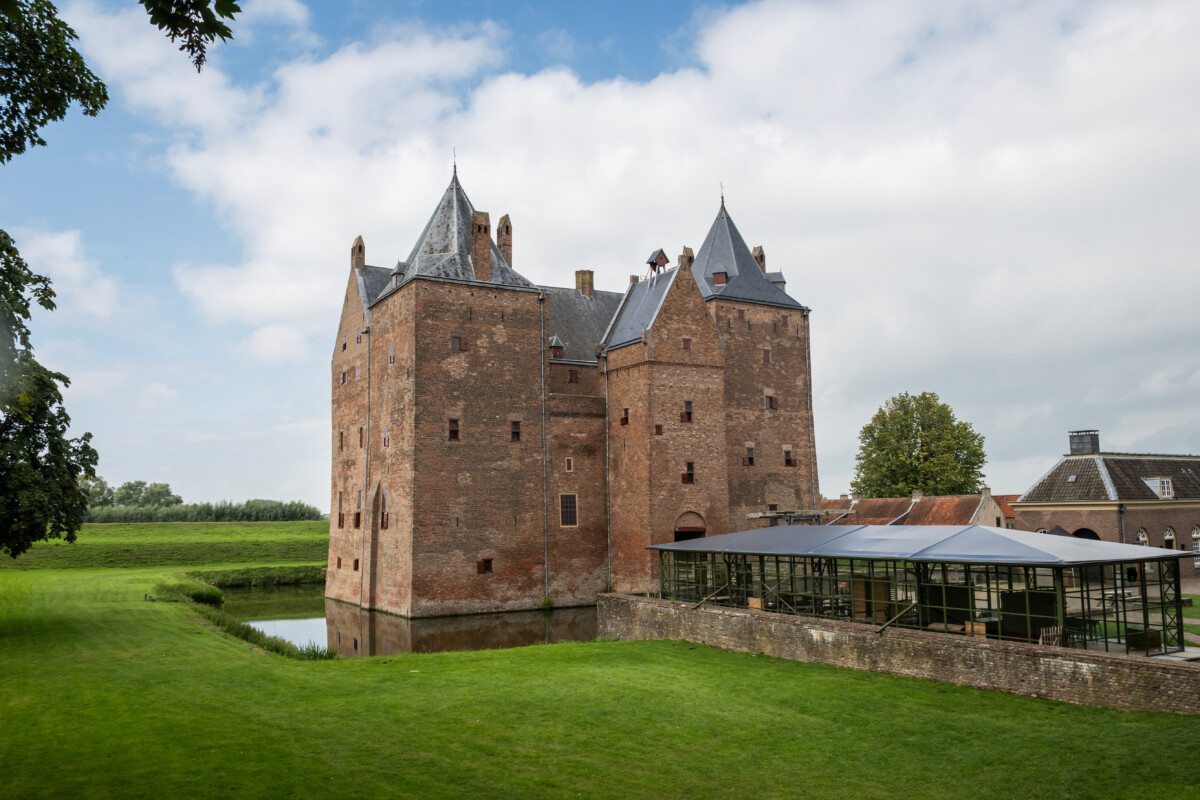
Dirc Loef van Horne built Loevestein in 1358 where the Maas and Waal rivers meet. The original toll castle later became part of a larger fortified complex and was used as a state prison. Its best-known prisoner was jurist Hugo Grotius, who escaped with help from his family and a book chest in 1621.
The visit extends beyond the main castle. Visitors can explore the fortress, outer bailey, soldiers’ village, ramparts, exhibitions, and family activities connected with medieval defenses and the Dutch Waterline. That range makes Loevestein more rewarding than a brief exterior photo stop.
Loevestein opens daily from 10:00 a.m. to 5:00 p.m., apart from several holiday closures. The fortress and permanent exhibition offer some wheelchair access, but the castle itself has steep stairs and is not wheelchair accessible. See the official Loevestein ticket and accessibility information.
4. Hoensbroek Castle
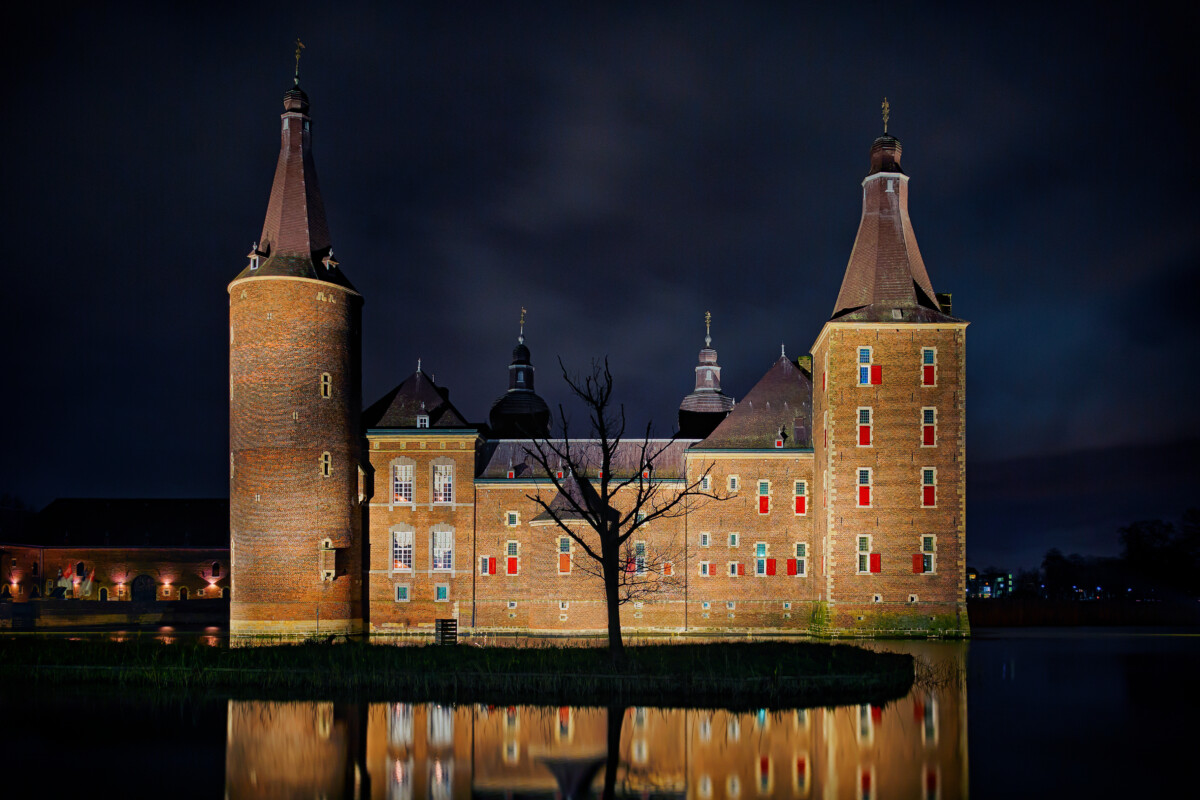
Hoensbroek is one of the largest and most family-oriented castle museums in the Netherlands. The complex developed in several construction phases and preserves roughly seven centuries of history. More than 40 authentically arranged rooms show changes in noble life between the medieval period and the 18th century.
Children can follow interactive stories and activities rather than moving through a sequence of static rooms. Hoensbroek also has a lift and a designated wheelchair route, making a larger part of the castle accessible than at many medieval properties.
The castle is normally open every day from 10:00 a.m. to 5:30 p.m., with several listed closure dates around New Year, Carnival, private events, and Christmas. Online tickets currently receive a discount. Confirm the date and accessibility route on the official Hoensbroek visitor page.
5. Paleis Het Loo
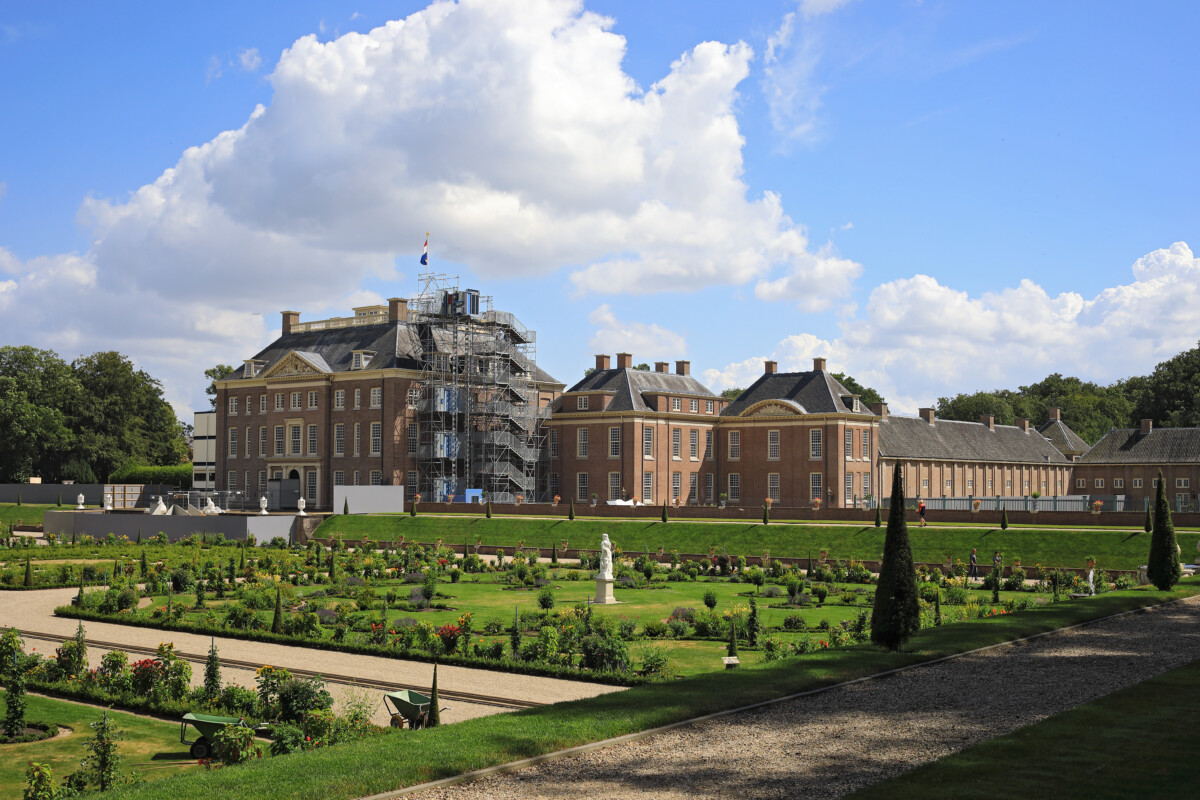
Paleis Het Loo is a royal palace rather than a medieval defensive castle, but it belongs on this list because it provides one of the country’s strongest historic-house visits. In 1684, Stadtholder Willem III and Princess Mary bought Het Oude Loo and commissioned a new summer residence beside it. The palace was expanded after they became King and Queen of England, Scotland, and Ireland in 1689.
The visit focuses on royal apartments, personal objects, the House of Orange-Nassau, carriages, rooftop views, and symmetrical Baroque gardens. It offers a useful counterpoint to the thick walls, narrow stairs, and military displays found in the medieval castles elsewhere in this guide.
Paleis Het Loo normally opens Tuesday through Sunday from 10:00 a.m. to 5:00 p.m., plus selected Mondays during holidays. The palace is also one of the major landmarks in the Netherlands. Check the official 2026 opening calendar before your visit.
6. Heeswijk Castle
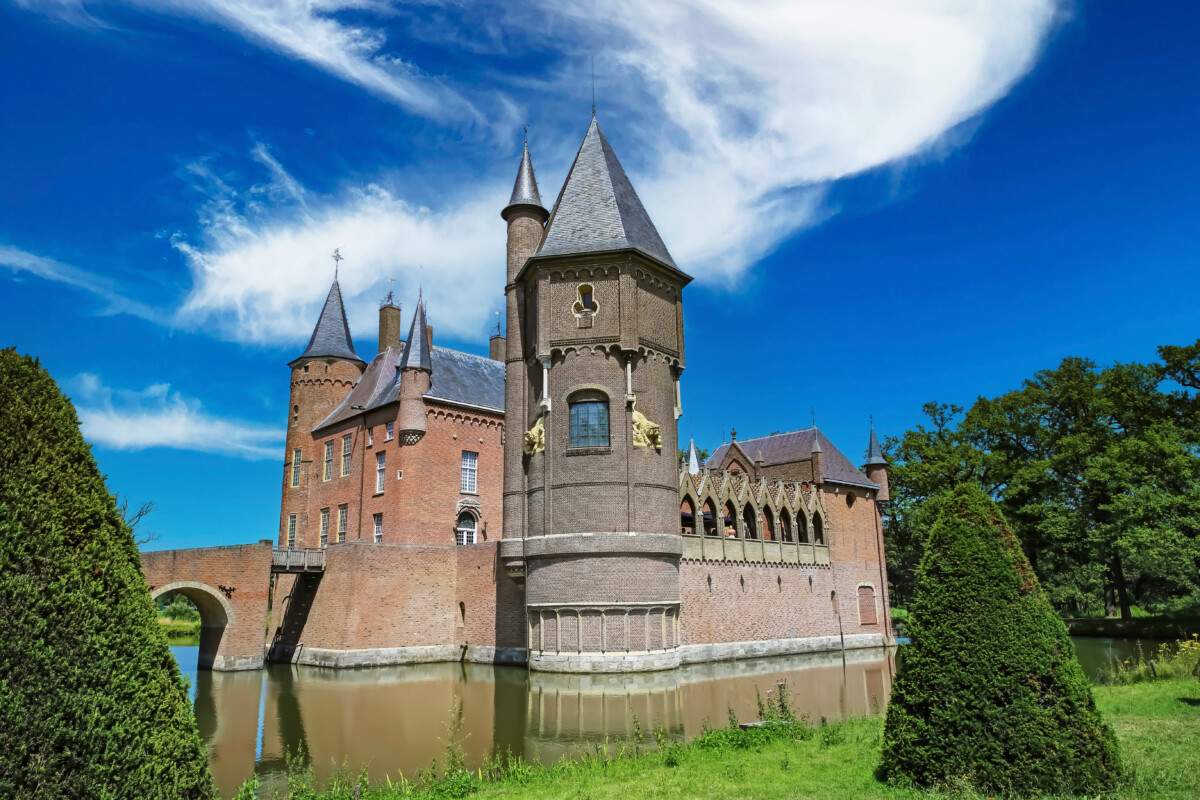
Heeswijk Castle traces its history to around 1080, although repeated destruction, rebuilding, and enlargement produced the structure seen today. A major 1835 renovation transformed it into the residence and workplace of André, Baron van den Bogaerde, who served as the king’s first provincial governor in North Brabant after Belgian independence.
The rooms, collections, towers, moat, and surrounding estate give the visit more depth than the current article’s brief description suggests. Heeswijk works particularly well for travelers based around ’s-Hertogenbosch or exploring North Brabant by car or bicycle.
The castle opens Tuesday through Sunday from 10:00 a.m. to 5:00 p.m.; ticket sales and food service close earlier. Advance reservations are recommended. Use the official Heeswijk visitor page for current exceptions and ticket availability.
7. Ammersoyen Castle
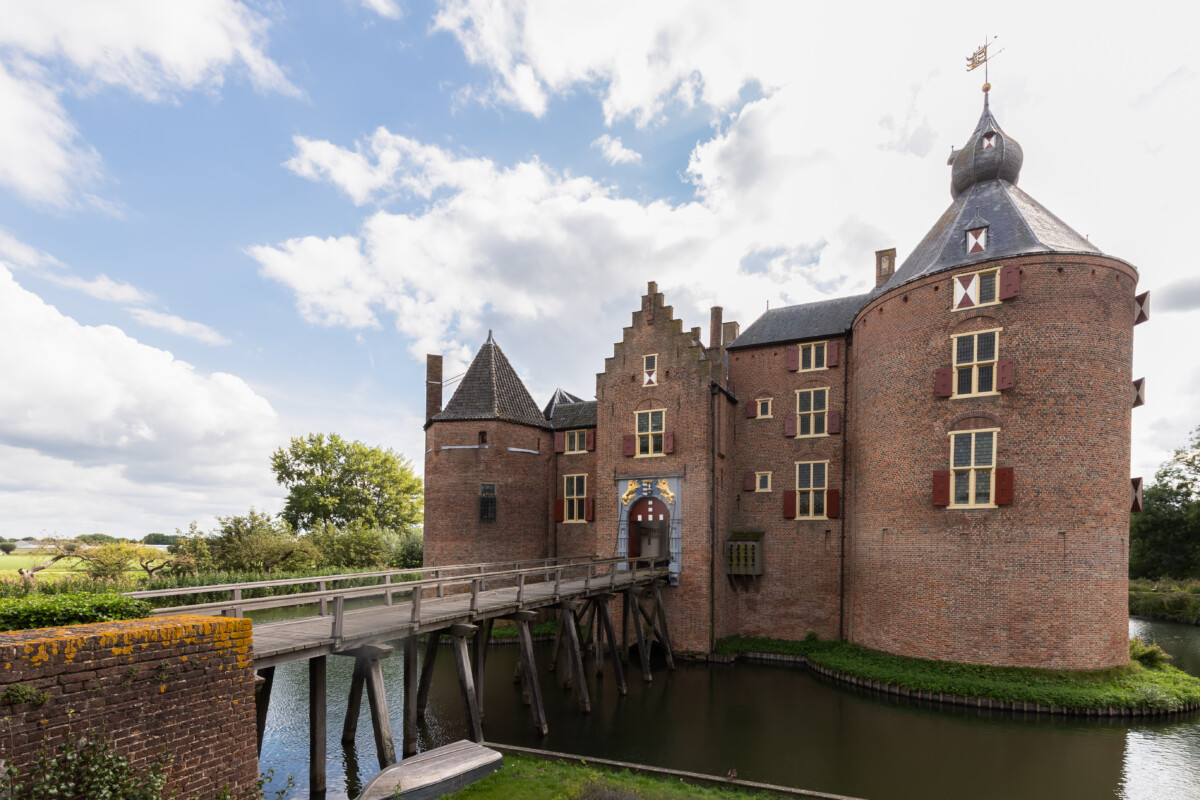
Ammersoyen is one of the strongest options for visitors interested in medieval castle design. Four round corner towers, a gatehouse, outer ward, moat, wall stairs, and a six-meter-high Great Hall preserve the logic of a fortified residence more clearly than many heavily remodeled country houses.
Archaeological objects recovered around the castle add substance to the rooms. Visitors can also see details such as latrines, cellar spaces, defensive passages, and the remains of a medieval brewing oven. Children’s activities and guided tours make the site approachable without reducing it to a costume attraction.
Ammersoyen normally opens Tuesday through Sunday from April through October, from 11:00 a.m. to 5:00 p.m. Consult the official Ammersoyen visitor page for seasonal dates and events.
8. Doorwerth Castle
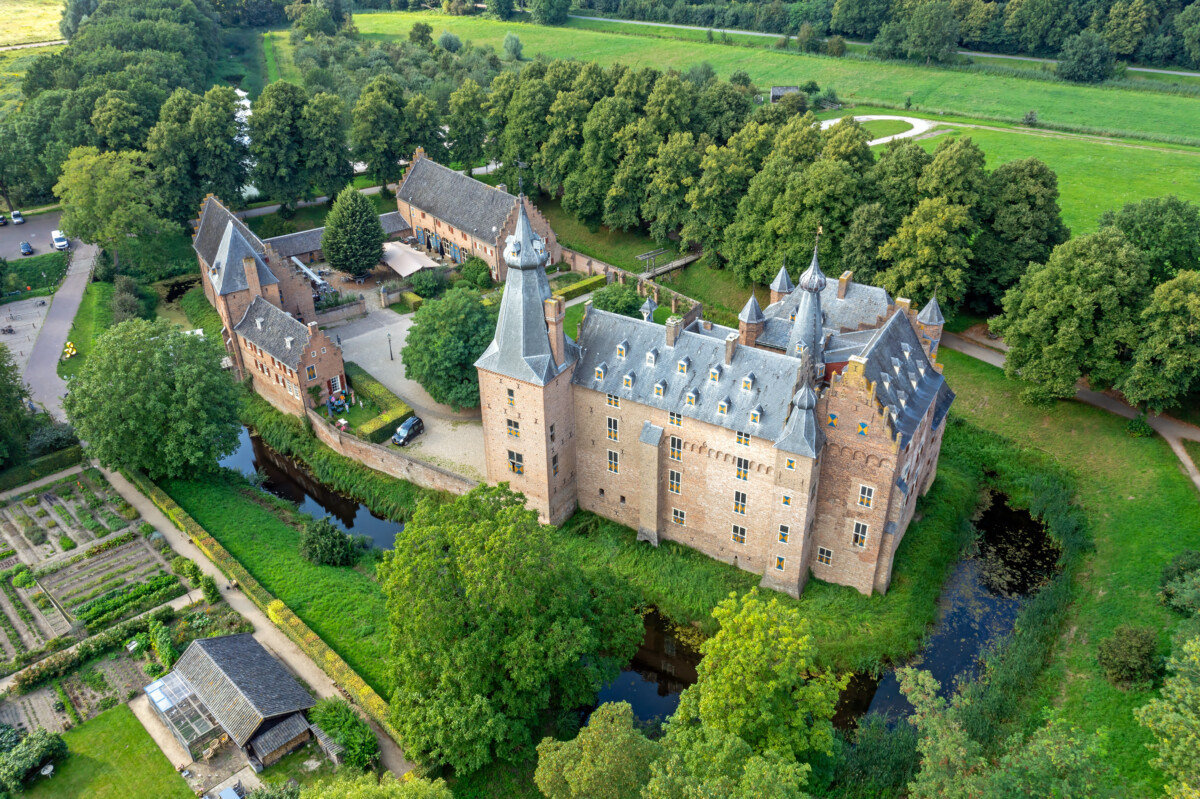
Doorwerth Castle has more than seven centuries of history, but its current appearance largely reflects the 17th century. The gatehouse, coach house, stables, kitchen garden, and wooded estate make it a good choice for travelers who want a historic building and a substantial outdoor setting.
Inside are period rooms, an armor room, and exhibitions covering the castle, forestry, and hunting in the Netherlands. Children can handle or try on selected interpretive items, while adults get enough social and landscape history to make the rooms more than a decorative backdrop.
Doorwerth opens year-round from Tuesday through Sunday, generally from 11:00 a.m. to 5:00 p.m., with extra Mondays during some school holidays. Advance booking is recommended. Review the official Doorwerth opening information.
9. Huis Bergh
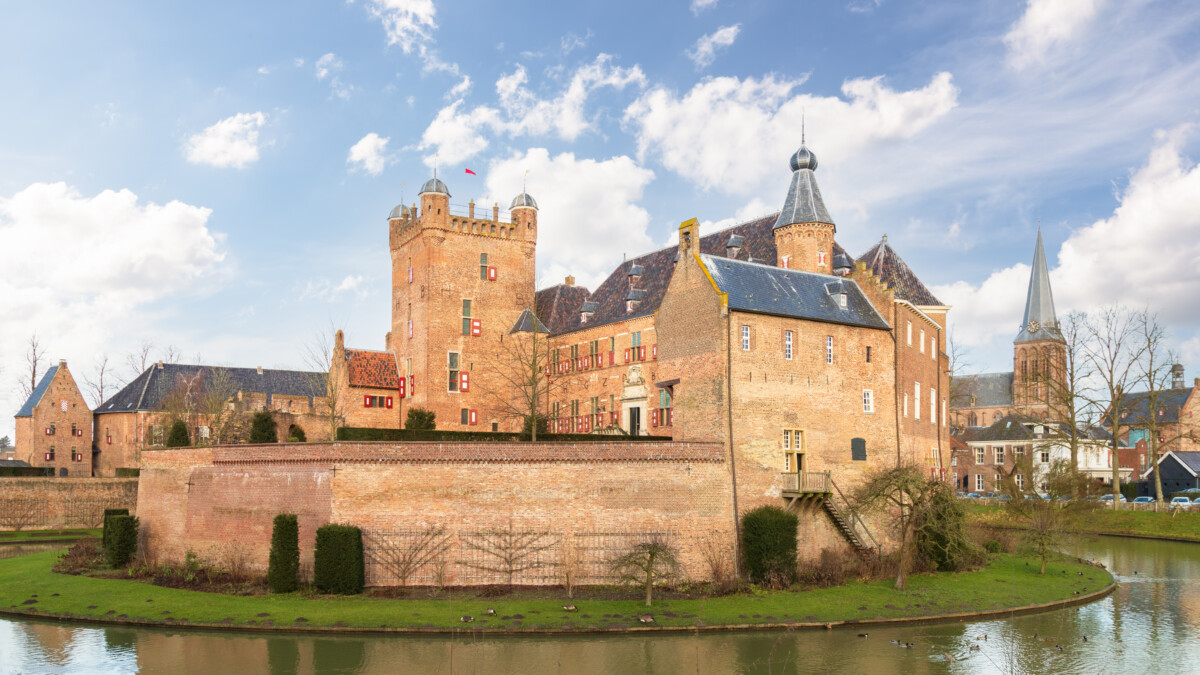
Huis Bergh is one of the largest castle complexes in the Netherlands and houses a significant collection of medieval and early Renaissance art. Its walls, tower, courtyard, and location in the historic town of ’s-Heerenberg make it an important stop for travelers exploring the eastern Netherlands.
Access requires special attention in 2026. The castle has been undergoing extensive restoration and is scheduled to reopen fully on September 19, 2026. Limited activities, walks, or special previews may occur before that date, but the old assumption that visitors can simply arrive for a standard museum tour is no longer reliable.
Check the official Huis Bergh reopening and ticket information before adding it to a fixed itinerary. This section should be reviewed again after the September reopening.
10. Slot Zuylen
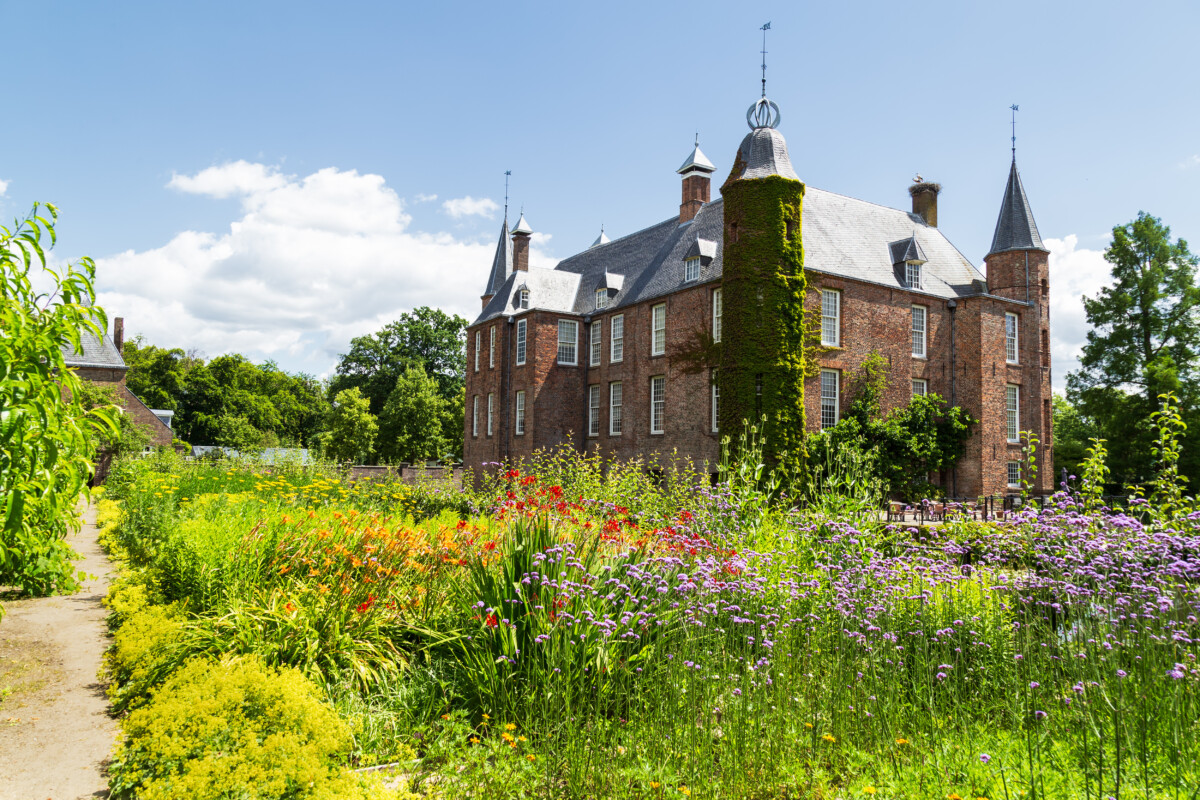
Slot Zuylen is an intact house museum, not the ruin described in the previous article. The site began in the 13th century and remained inhabited until 1952. Its rooms, furnishings, gardens, family stories, and association with writer Belle van Zuylen provide a more domestic view of aristocratic life than the country’s large military castles.
A free audio tour and guided visits help explain the rooms without requiring extensive prior knowledge of Dutch history. Its location in Oud-Zuilen also makes it easy to combine with Utrecht rather than planning a separate cross-country trip.
From April through October, the castle normally opens Wednesday through Sunday from 11:00 a.m. to 5:00 p.m. In the low season, it generally opens Friday through Sunday. The final castle entry is at 4:30 p.m. Confirm the schedule on the official Slot Zuylen times and prices page.
11. Doornenburg Castle
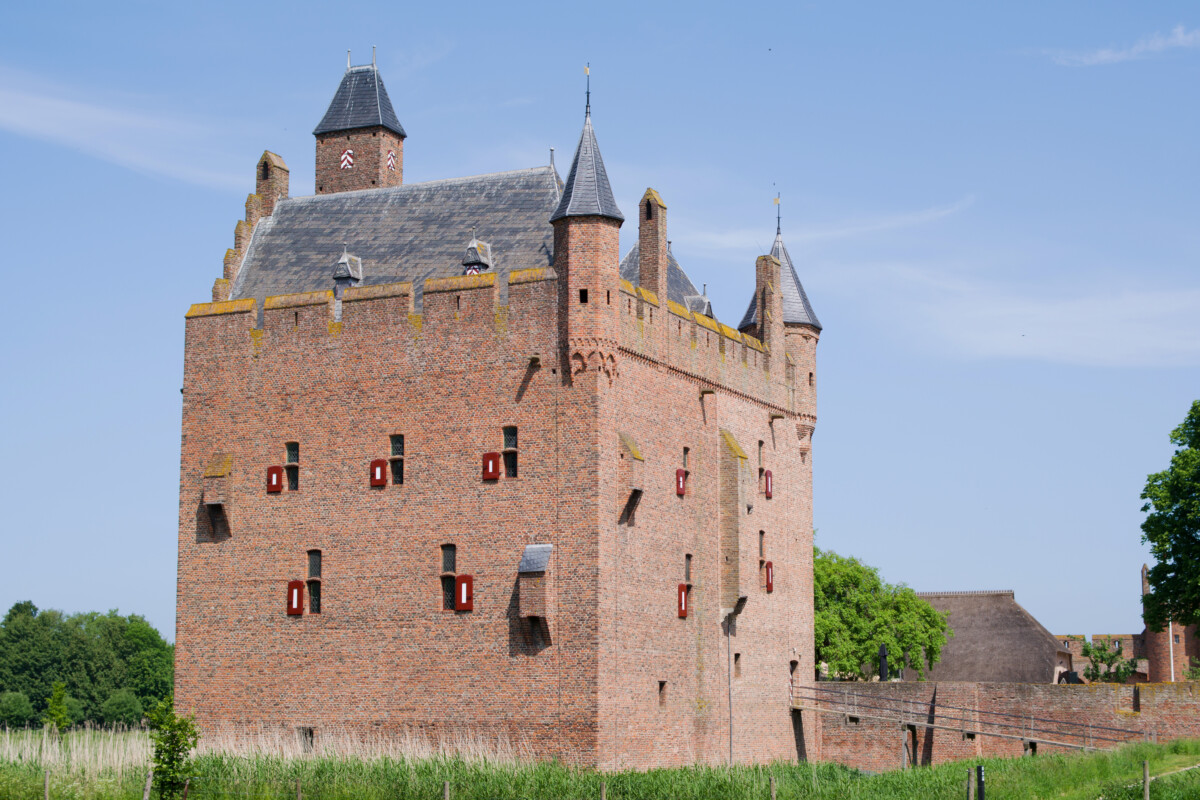
The site of Doornenburg Castle held a fortified house by the ninth century, although the first documented lord of Doornenburg appears in 1295. The large outer ward was constructed during the 14th century and completed in the 15th, creating the two-part castle plan visible today.
The wooden connection between the main castle and outer ward is one of the complex’s defining features. Doornenburg is especially worthwhile for visitors who want to understand how service buildings, defensive walls, domestic rooms, and the main residence worked together.
Museum visits, tours, concerts, and historical events follow a scheduled calendar rather than a simple daily timetable. Check the official Doornenburg agenda and ticket page before traveling.
12. Radboud Castle
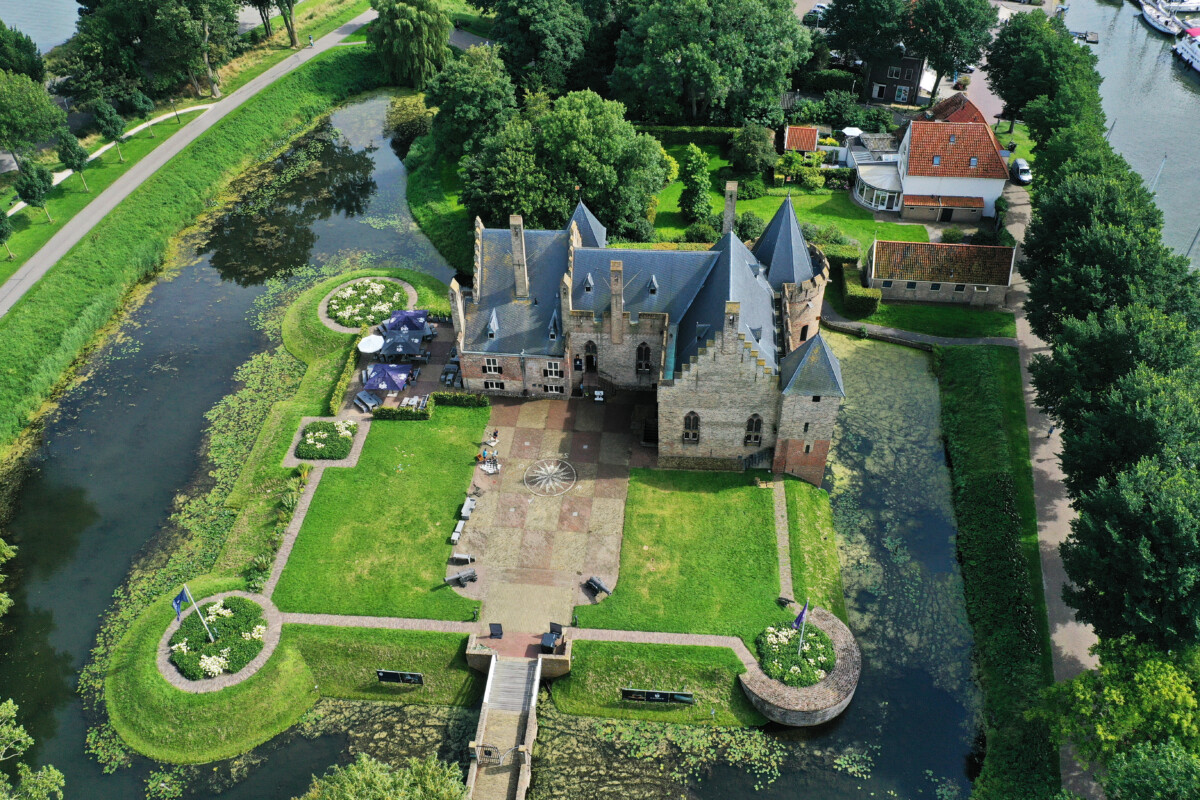
Count Floris V ordered Radboud Castle as one of five strongholds intended to extend and secure his authority in West Friesland. The castles were built rapidly in the 1280s, and Radboud, completed around 1288, is the only one that remains.
The harbor-side setting in Medemblik, surviving medieval fabric, battlements, temporary exhibitions, and family activities make Radboud a useful stop in North Holland. It is smaller than De Haar or Hoensbroek, but the historical purpose is more direct and easier to understand.
Radboud normally opens Tuesday through Sunday from 11:00 a.m. to 5:00 p.m. The museum warns that it may close early on quiet days, so advance booking is recommended. The historic stairs and thresholds make the building inaccessible to visitors with significant mobility limitations. See the official Radboud opening page.
13. Duivenvoorde Castle
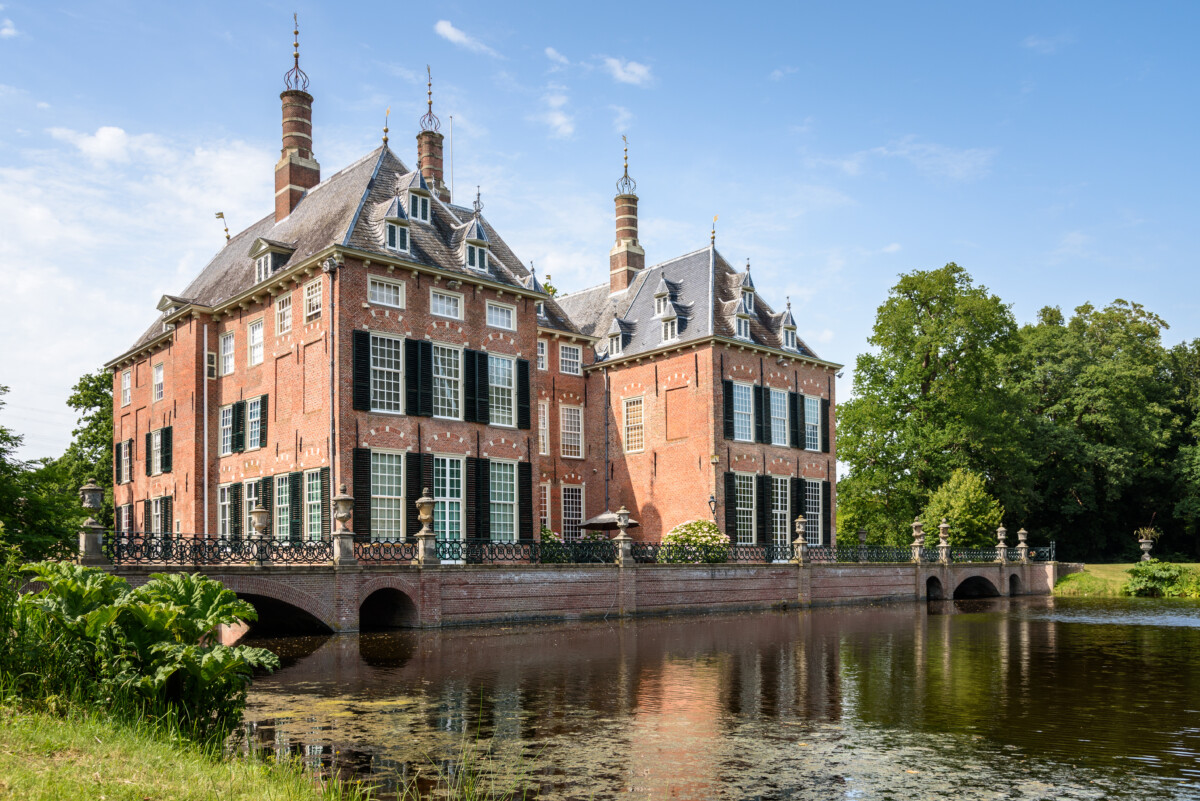
Duivenvoorde celebrates 800 years of recorded history in 2026. The first reference to “Duvenvoirt” dates to 1226, when the site was still a square defensive tower. Successive families expanded the building, and its present exterior took shape largely in the 17th century.
The museum preserves a family collection, historic interiors, portraits, and evidence of the medieval tower. The surrounding walking park adds enough value to justify visiting even when the museum has a limited schedule.
In 2026, the castle museum and estate shop normally open Thursday, Saturday, and Sunday, with selected extra summer dates. The walking park opens daily. Check the official Duivenvoorde calendar, especially if you want to see the anniversary exhibition rather than only the park.
14. Valkenburg Castle
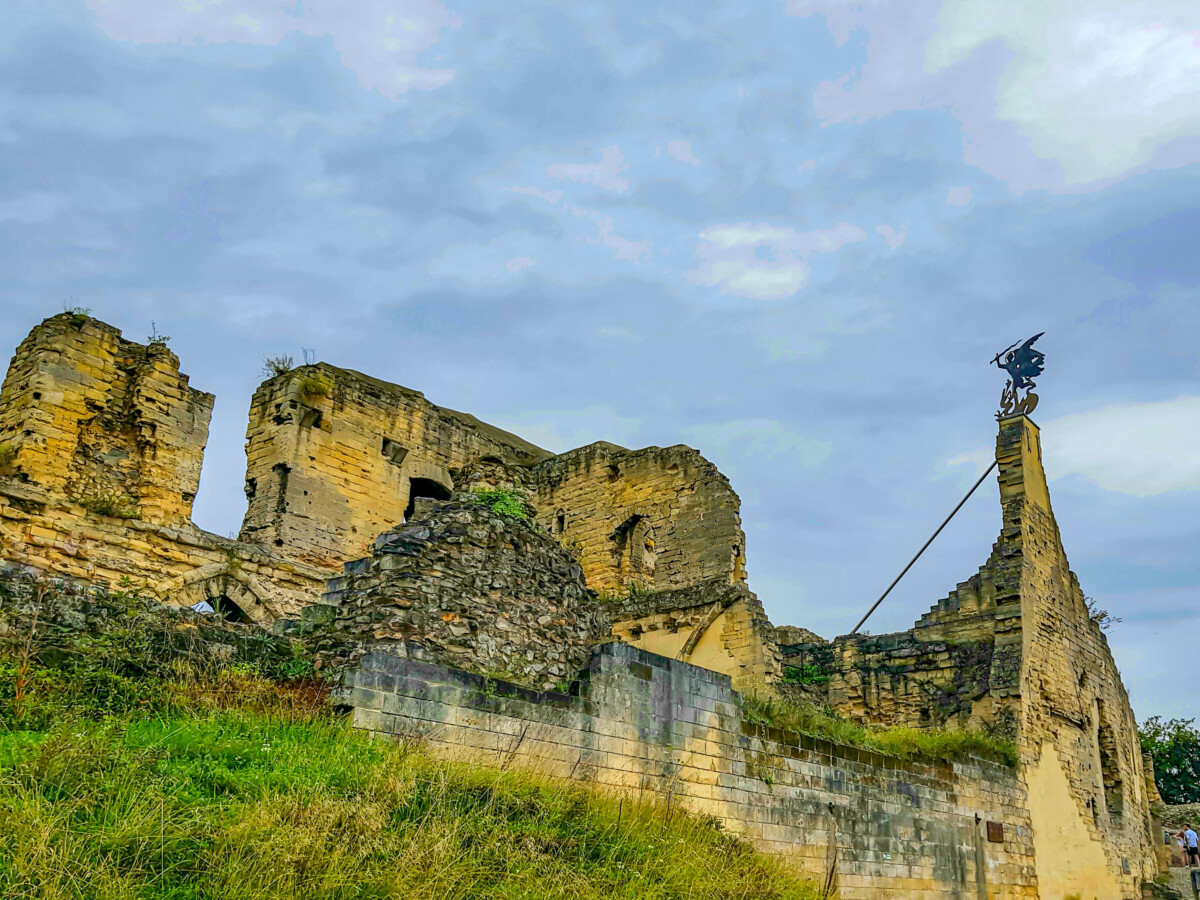
Valkenburg’s ruins occupy a hill above the town and are promoted as the only hilltop castle in the Netherlands. The site’s history reaches back to the 11th century. After repeated sieges and rebuilding, Stadtholder Willem III ordered the final destruction of the fortress in December 1672.
Visitors can move through the remains of the Great Hall, defensive towers, dungeon, chapel, artillery room, and passages connected with the Velvet Cave. The elevation gives the ruins a different character from the lowland water castles found elsewhere in the country.
The ruins open seven days a week, but hours and cave-tour times change by season. The cave is accessible only with a tour, while the castle ruins are only partially accessible to wheelchairs and wheeled mobility aids. Check the official Valkenburg hours and tour schedule.
15. Teylingen Castle
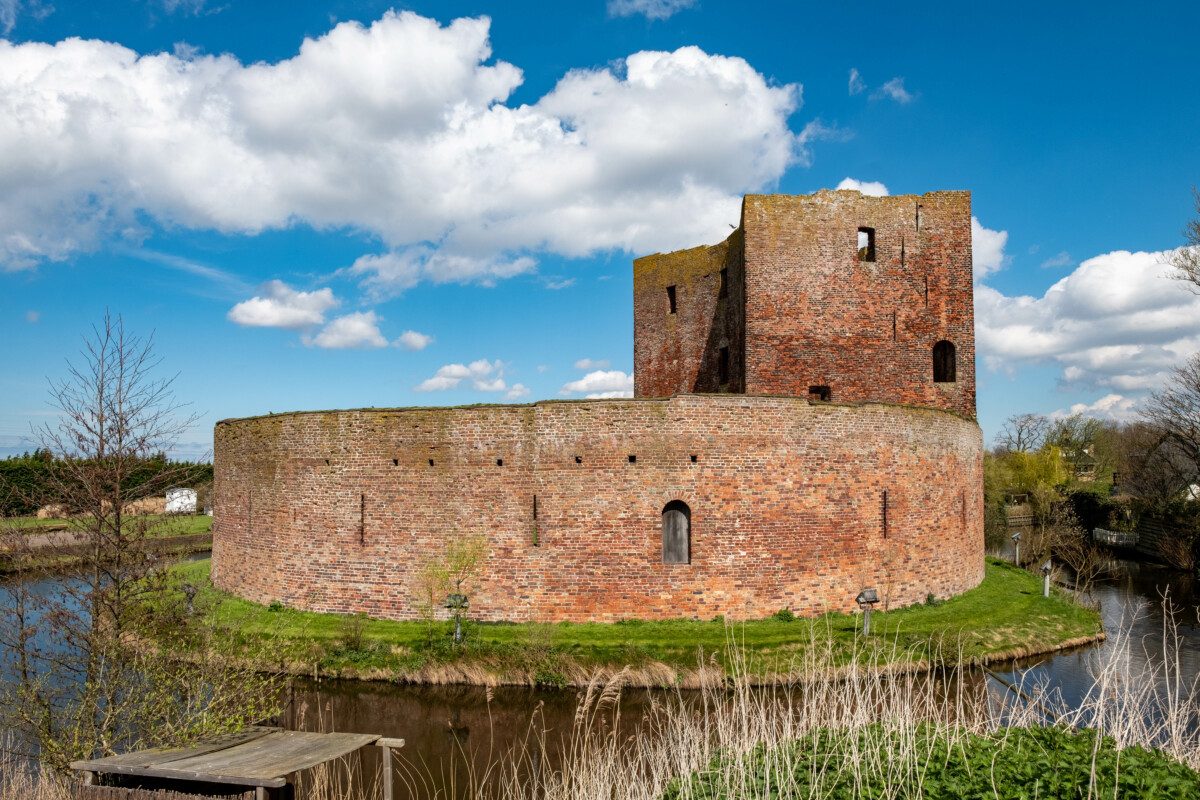
Teylingen is a 13th-century ring-castle ruin with a residential tower and gatehouse. It once protected the Rhine dike and the road toward Haarlem and is associated with Jacoba of Bavaria, who lived here during the final part of her life.
The site does not contain the lavish furnished rooms or armor collection described in the old article. Its value comes from the surviving circular walls, tower, archaeological form, and the ability to see the structure without a later residential facade disguising its defensive plan.
The ruins normally open Saturday and Sunday from 11:00 a.m. to 5:00 p.m. and close during the winter months. They are not wheelchair accessible. Verify the season on the official Monumentenbezit visitor page.
16. Duurstede Castle
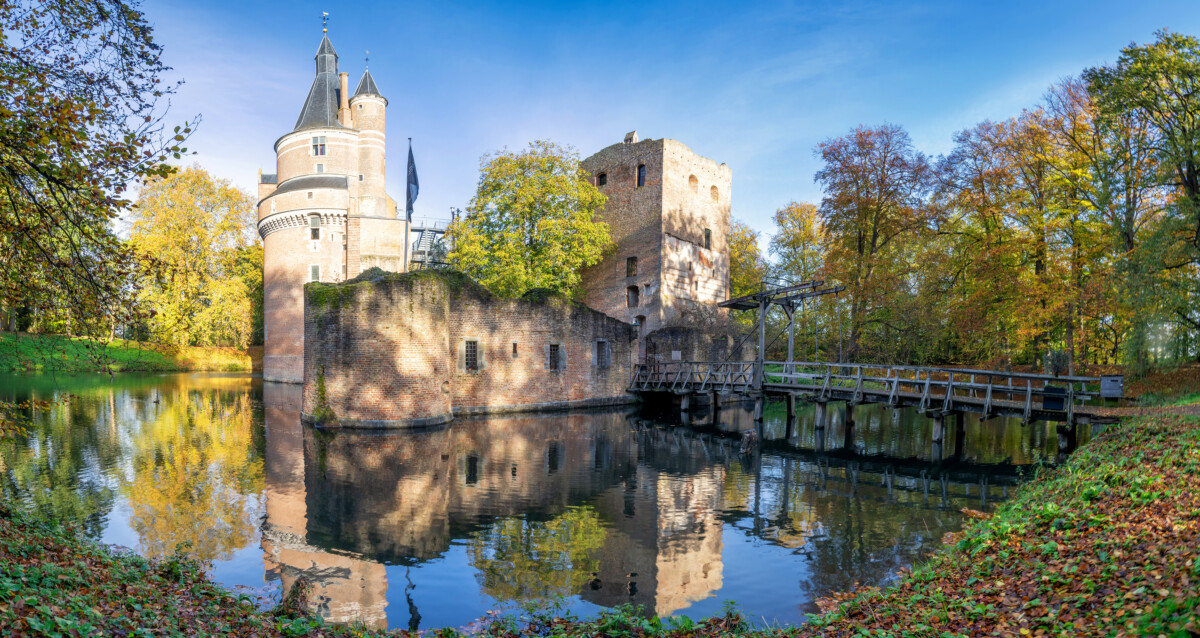
Duurstede Castle occupies a wooded island beside the historic center of Wijk bij Duurstede. The surviving residential tower, later Burgundian tower, courtyard, moat, drawbridge, and landscape park create an atmospheric setting even though much of the medieval complex has disappeared.
This is primarily an event venue, not a standard museum. Visits to the building normally require an appointment. From April 1 through November 1, the castle island and courtyard are generally open on Sundays from 11:00 a.m. to 5:00 p.m., but only when no private event is taking place.
Do not make a special journey without checking the official Duurstede public-opening page. The park and exterior can still work well as part of a broader visit to Wijk bij Duurstede.
17. Breda Castle
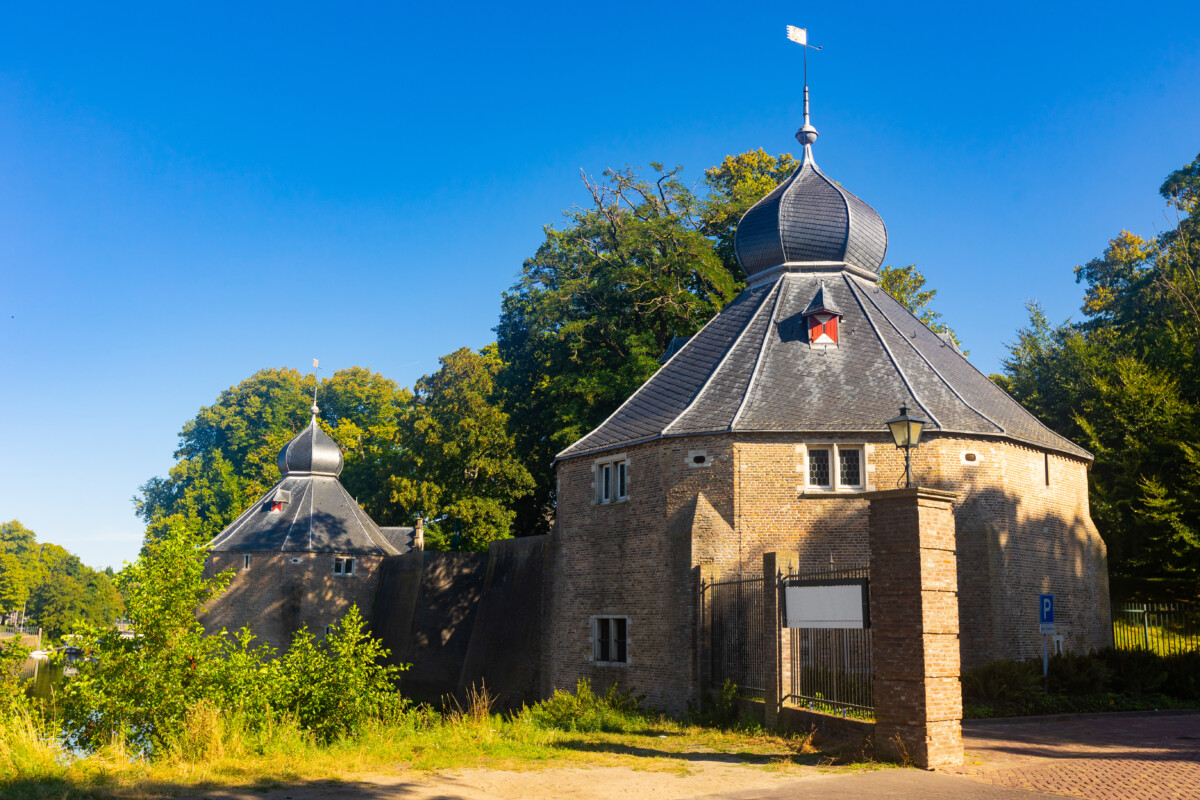
A castle was established at Breda by the end of the 12th century and later transformed into the Dutch ancestral seat of the Nassau family. Hendrik III of Nassau converted the complex into an important Renaissance palace during the 16th century, bringing Italian architectural influences to the Low Countries.
The Royal Military Academy has occupied the castle since 1826. It is military property rather than a freely accessible municipal museum, so visitors cannot simply walk through the gate during normal sightseeing hours. The main building can be viewed from Park Valkenberg, while the Spanjaardsgat water gate remains visible in the city center.
Interior and grounds access is available through scheduled tours by Gilde de Baronie. Tour routes depend on military access, and visitors aged 13 and older must carry the identification specified during registration. Bags are restricted. Check the current Breda Castle tour dates and conditions.
18. Kasteel Rijckholt

Kasteel Rijckholt lies south of Maastricht in the South Limburg hills. Historical records name landowners here from the 11th century, while the oldest surviving part of the present complex is a tower built during the 14th century and reconstructed after its destruction in 1489.
The property now has a hospitality and events function rather than a regular museum operation. The old article’s description of routinely touring furnished rooms and an armor collection could not be substantiated. Treat Rijckholt as an exterior heritage stop or a feature on a regional walking or cycling route, not as a destination with guaranteed admission.
Confirm permission and current use through the Visit Zuid-Limburg listing for Kasteel Rijckholt before entering private areas.
Best Castle Day Trips From Amsterdam
Muiderslot for the Easiest Medieval Castle Day
Muiderslot is usually the most practical choice when the castle itself is the priority. It is closer to Amsterdam than most entries on this list, opens daily, has a manageable route, and provides a recognizably medieval experience without requiring a full regional road trip.
De Haar Castle With Utrecht
De Haar works best as part of a Utrecht day rather than as a hurried stop between unrelated cities. Allow enough time for the parking walk, timed castle entry, interiors, and gardens. Adding central Utrecht creates a fuller day, but trying to combine De Haar and Muiderslot by public transport can make the schedule unnecessarily tight.
Slot Zuylen With Utrecht
Slot Zuylen is smaller and more domestic than De Haar. It fits travelers interested in interiors, family history, and the Vecht region rather than monumental scale. Its limited weekly schedule makes advance planning more important.
For trips that extend beyond one day, compare the castles with our broader guide to weekend trips from Amsterdam.
How to Plan a Dutch Castle Route
- Use Utrecht as a base for De Haar, Slot Zuylen, and central Utrecht’s historic sights. Add Duurstede only after confirming public access.
- Group Ammersoyen, Doorwerth, Doornenburg, Huis Bergh, and Loevestein into separate Gelderland days rather than attempting all five at once.
- Combine Hoensbroek and Valkenburg for a Limburg history trip. Rijckholt works only as an additional exterior stop after access has been confirmed.
- Pair Duivenvoorde or Teylingen with Leiden, The Hague, or the South Holland coast.
- Combine Radboud Castle with Medemblik and other destinations around the IJsselmeer.
Our guide to the best places to visit across the Netherlands can help fill the rest of a province-based route.
Practical Tips for Visiting Dutch Castles
- Check the official calendar again on the day before your visit. Weddings, private events, maintenance work, and seasonal closures can override standard hours.
- Reserve a time slot at major museums when one is offered. De Haar, Heeswijk, Doorwerth, and Radboud explicitly encourage advance planning.
- April through October provides the widest selection of open ruins, gardens, and seasonal houses. Major museums such as De Haar, Muiderslot, Loevestein, Hoensbroek, Doorwerth, and Paleis Het Loo operate through much or all of the year.
- Expect stairs, uneven floors, thresholds, narrow passages, and cobbled courtyards. Accessibility varies by building, and an accessible ground floor does not guarantee access to towers or upper rooms.
- Allow at least two hours for the larger museums. De Haar, Loevestein, Hoensbroek, and Paleis Het Loo can occupy half a day when the grounds and exhibitions are included.
- Check Museumkaart acceptance on the official ticket page. Participation is common but not universal, and some sites still require a reserved time slot or booking fee.
Which Dutch Castle Should You Choose?
Start with De Haar when architecture and gardens matter most. Choose Muiderslot for medieval atmosphere near Amsterdam, Loevestein for the fullest fortress story, Hoensbroek for a family visit, or Paleis Het Loo for royal history. Ammersoyen and Teylingen are stronger choices when medieval structure matters more than ornate decoration.
Limited-access sites require more care. Huis Bergh needs a post-reopening check, Duurstede depends on its event calendar, Breda requires a guided tour, and Rijckholt should not be treated as a normal museum.
After choosing a route, compare hotels in the Netherlands or consider an overnight stay from our guide to affordable castle hotels in Europe.
Subscribe to the free ViaTravelers newsletter for practical destination guides and trip-planning updates.
Frequently Asked Questions
Does the Netherlands have castles?
Yes. The Netherlands has hundreds of fortified castles, country houses, royal residences, and castle ruins. Many now operate as museums, while others remain private homes, event venues, hotels, or archaeological sites.
What is the largest castle in the Netherlands?
De Haar Castle near Utrecht is widely described as the largest castle in the Netherlands. Its medieval foundations are genuine, but most of the castle visitors see today comes from Pierre Cuypers’ neo-Gothic reconstruction between 1890 and approximately 1912.
Which castle in the Netherlands is easiest to visit from Amsterdam?
Muiderslot is usually the most practical medieval castle to visit from Amsterdam. It opens daily, has a compact museum route, and is close enough to combine with Muiden or other destinations southeast of the city.
Can you go inside castles in the Netherlands?
Yes, many Dutch castles have public interiors. De Haar, Muiderslot, Loevestein, Hoensbroek, Heeswijk, Ammersoyen, Doorwerth, Slot Zuylen, Radboud, and Paleis Het Loo offer regular museum access, while Breda, Duurstede, and Rijckholt have restrictions.
What is the best time to visit castles in the Netherlands?
April through October offers the widest choice because seasonal ruins, gardens, and smaller house museums are more likely to be open. Major museums operate for much or all of the year, and weekdays outside school holidays are usually less busy.
Which Dutch castle is best for children?
Hoensbroek, Muiderslot, and Loevestein are the strongest family choices. They combine castle rooms with audio tours, games, interactive displays, outdoor space, or activities designed for children.