MenuClose

A place worth knowing

Amsterdamse Bos

Parks · Park in AmsterdamUpdated

  • Google rating4.5/5 (8,000 reviews)
  • Typical visit2-4 hours, longer if exploring all features (e.g., goat farm, rowing, swimming).
  • EntranceFree
Cyclists on a scenic trail in Amsterdamse Bos
Kyle Kroeger / ViaTravelers
  • Today (Monday)Open 24 hours
  • Typical visit2-4 hours, longer if exploring all features (e.g., goat farm, rowing, swimming).
  • EntranceFree
  • Google rating4.5/5 8,000 reviews
  • WebsiteOfficial site ↗
Opening hours all week
Monday
Open 24 hours
Tuesday
Open 24 hours
Wednesday
Open 24 hours
Thursday
Open 24 hours
Friday
Open 24 hours
Saturday
Open 24 hours
Sunday
Open 24 hours
Accessibility
"{"parking": "Multiple parking areas with disabled spaces. Grote Vijver and Bosbaan entrances recommended.", "terrain": "Mix of paved and unpaved paths. Stick to asphalt paths for guaranteed access. Maps show accessible routes.", "transport": "Bus 170, 172 from Amsterdam have wheelchair access. Bike rental includes adapted bikes.", "activities": "Wheelchair-accessible boat tours available. Goat farm has accessible viewing areas.", "facilities": "Accessible toilets at visitor center and main restaurants. Pancake house is wheelchair accessible.", "wheelchair_access": "Most main paths are asphalt or semi-paved and wheelchair accessible. Some nature trails are not suitable."}"
The short answer

Why it matters

A 1,000-hectare purpose-built forest park three times the size of Central Park, offering rowing, goat-farm visits, an open-air theatre, and a 2,000-metre Olympic rowing course — all a 20-minute cycle from the city centre.

Amsterdamse Bos presents a masterful blend of designed wilderness spanning three times Central Park’s size yet remains off most tourist itineraries. This vast forest park, born from a 1930s employment project, represents Dutch landscape engineering at its finest—seemingly natural woodland thoughtfully sculpted with meadows, lakes, and over 150 indigenous species. Beyond mere recreation space, the Bos offers authentic cultural insights through traditional Dutch dairy farms, seasonal festivals, and the historic 1928 Olympic rowing course still actively used. Visit during early morning to encounter locals beginning their day with rowing, cycling, or wild swimming, providing a window into genuine Amsterdam outdoor culture. The contrast between meticulously planned elements and wild spaces embodies the Dutch relationship with cultivated nature, offering photographers diverse landscapes from misty forest scenes to expansive meadow vistas within minutes of the capital.

Cultural Context

Amsterdamse Bos embodies the Dutch mastery of landscape engineering and social welfare, born as a 1930s unemployment relief project that transformed barren polder land into Europe’s largest urban forest, demonstrating how public works can create lasting cultural infrastructure. The park represents Dutch values of democratized nature access, with free entry ensuring all social classes can experience wilderness within minutes of the capital. Traditional Dutch dairy farming continues at authentic farms like Geitenboerderij Ridammerhoeve, where visitors witness cheese-making traditions and interact with farm animals, maintaining agricultural heritage within urban boundaries. The historic 1936 Bosbaan rowing course hosts international competitions and daily training sessions, embedding Olympic sporting culture into Amsterdam’s recreational landscape. Wild swimming at Grote Vijver reflects Dutch pragmatic attitudes toward natural recreation, where unofficial swimming spots become beloved community gathering places despite lacking formal facilities. The park’s deliberate mix of designed landscapes and wild spaces exemplifies Dutch environmental philosophy that views nature as both resource and refuge, creating spaces where Amsterdam residents practice rowing, cycling, horseback riding, and forest bathing as essential components of balanced urban living.

Historical Context

Amsterdamse Bos originated during the Great Depression as an ambitious unemployment relief project, employing thousands of workers from 1934-1937 to hand-dig lakes and plant over one million trees on reclaimed polder land 4 meters below sea level. The forest’s creation represented progressive social policy that transformed economic crisis into permanent public infrastructure, establishing a model for government intervention that balanced immediate employment needs with long-term community benefits. The 1936 completion of the Bosbaan marked the world’s first purpose-built artificial rowing course, hosting the 1937 European Championships and establishing Amsterdam’s international sporting reputation that continues through regular World Championships. Post-war development expanded the park from its initial 800 hectares to over 1,000 hectares, making it three times larger than Central Park and among Europe’s largest urban forests. The 1960s counterculture movement adopted the Bos as a gathering place for festivals and protests, embedding it within Amsterdam’s liberal social movements. Environmental restoration efforts in the 1990s enhanced biodiversity, creating habitats for over 150 bird species and establishing the park’s “Big Five” wildlife attractions. Today’s park represents nearly a century of continuous adaptation, from Depression-era employment project to 21st-century ecological preserve that serves 4.5 million annual visitors.
Context

Story and significance

About

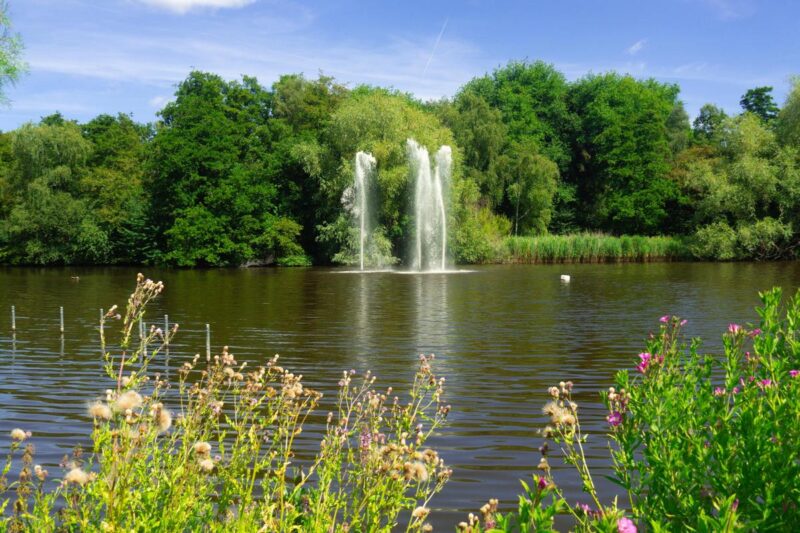
Amsterdamse Bos is a large man-made park and recreational forest on the edge of Amsterdam and Amstelveen, offering dense woodlands, open meadows, waterways and winding paths. Popular activities include cycling, rowing on the lakes, picnicking, horse riding and visiting small cultural sites and farms within the park. It’s a favored escape from the city’s built environment, with clearly marked trails and seasonal events such as outdoor theatre and local markets. Bring comfortable shoes and a bike if you want to cover more ground; parts of the park are quite extensive and can feel very rural.

Historical significance

Amsterdamse Bos represents one of Europe’s most successful Depression-era public works projects, demonstrating how government intervention can create permanent cultural assets from economic crisis, establishing a model for social welfare programs worldwide. The forest’s construction employed over 20,000 workers during the 1930s unemployment crisis, transforming desperate circumstances into lasting environmental infrastructure that continues benefiting millions of visitors annually. The Bosbaan’s role as the world’s first purpose-built rowing course revolutionized international competitive rowing, hosting multiple World and European Championships that established technical standards still used globally. The park’s evolution mirrors Amsterdam’s social history: from 1930s workers’ project to 1960s counterculture gathering place to 21st-century ecological preserve, each era adding layers of cultural meaning. The preservation of traditional dairy farming within an urban forest creates a unique historical continuity, maintaining agricultural practices that predate the forest itself and demonstrating successful integration of rural heritage within modern recreational planning. The site’s transformation from underwater polder to thriving forest ecosystem showcases Dutch hydraulic engineering excellence and environmental management capabilities that influence urban forestry projects internationally. Today, Amsterdamse Bos stands as a testament to visionary planning that anticipated urban recreation needs decades before other cities recognized the importance of accessible wilderness within metropolitan areas.

Historical context

Amsterdamse Bos originated during the Great Depression as an ambitious unemployment relief project, employing thousands of workers from 1934-1937 to hand-dig lakes and plant over one million trees on reclaimed polder land 4 meters below sea level. The forest’s creation represented progressive social policy that transformed economic crisis into permanent public infrastructure, establishing a model for government intervention that balanced immediate employment needs with long-term community benefits. The 1936 completion of the Bosbaan marked the world’s first purpose-built artificial rowing course, hosting the 1937 European Championships and establishing Amsterdam’s international sporting reputation that continues through regular World Championships. Post-war development expanded the park from its initial 800 hectares to over 1,000 hectares, making it three times larger than Central Park and among Europe’s largest urban forests. The 1960s counterculture movement adopted the Bos as a gathering place for festivals and protests, embedding it within Amsterdam’s liberal social movements. Environmental restoration efforts in the 1990s enhanced biodiversity, creating habitats for over 150 bird species and establishing the park’s “Big Five” wildlife attractions. Today’s park represents nearly a century of continuous adaptation, from Depression-era employment project to 21st-century ecological preserve that serves 4.5 million annual visitors.
Cultural context

Amsterdamse Bos embodies the Dutch mastery of landscape engineering and social welfare, born as a 1930s unemployment relief project that transformed barren polder land into Europe’s largest urban forest, demonstrating how public works can create lasting cultural infrastructure. The park represents Dutch values of democratized nature access, with free entry ensuring all social classes can experience wilderness within minutes of the capital. Traditional Dutch dairy farming continues at authentic farms like Geitenboerderij Ridammerhoeve, where visitors witness cheese-making traditions and interact with farm animals, maintaining agricultural heritage within urban boundaries. The historic 1936 Bosbaan rowing course hosts international competitions and daily training sessions, embedding Olympic sporting culture into Amsterdam’s recreational landscape. Wild swimming at Grote Vijver reflects Dutch pragmatic attitudes toward natural recreation, where unofficial swimming spots become beloved community gathering places despite lacking formal facilities. The park’s deliberate mix of designed landscapes and wild spaces exemplifies Dutch environmental philosophy that views nature as both resource and refuge, creating spaces where Amsterdam residents practice rowing, cycling, horseback riding, and forest bathing as essential components of balanced urban living.

Architecture

Amsterdamse Bos showcases 1930s landscape architecture influenced by English romantic park design, creating seemingly natural environments through meticulous engineering on reclaimed polder land that required sophisticated drainage systems to maintain dry ground 4 meters below sea level. The iconic entrance pavilions designed in functionalist style serve as gateway structures, with the Grand Café’s modernist concrete forms contrasting dramatically with the naturalistic forest beyond. The Bosbaan rowing course represents exceptional hydraulic engineering, its 2,300-meter length requiring precise water level management and wind protection through strategic tree planting that creates ideal rowing conditions. Traditional Dutch farm buildings preserved within the park, including authentic thatched-roof structures at Geitenboerderij Ridammerhoeve, demonstrate vernacular agricultural architecture integrated seamlessly into recreational landscapes. The network of over 50 kilometers of paths and cycling routes follows carefully planned sight lines that create discovery moments while maintaining orientation within the vast forest. Bridge designs throughout the park range from simple wooden footbridges to elaborate steel structures spanning the rowing course, each engineered to handle specific traffic types while maintaining visual harmony with natural surroundings. The visitor center’s contemporary glass and wood construction exemplifies modern sustainable architecture that provides transparency between built and natural environments.

Local significance

For Amsterdam residents, the Bos functions as the city’s green lungs and communal backyard, where multiple generations of families maintain traditions of Sunday cycling, seasonal swimming, and forest celebrations that strengthen neighborhood bonds across southern Amsterdam. Local rowing clubs train here daily, with early morning mist creating atmospheric conditions that have launched numerous Olympic careers from these waters. The wild swimming culture at Grote Vijver represents Amsterdam’s informal approach to public space, where unregulated swimming spots become cherished community assets managed through unwritten local customs and seasonal rituals. Neighborhood schools use the forest as an outdoor classroom for environmental education, with children learning to identify native plants, observe wildlife, and understand ecosystem relationships through hands-on exploration. The goat farm serves as a cultural bridge connecting urban children to agricultural heritage, with many Amsterdam families maintaining weekly visits that teach food production and animal care. Local running and cycling clubs have mapped hundreds of training routes through the forest, creating an informal network of fitness communities that gather at specific landmarks for group activities. The park’s role during COVID-19 lockdowns reinforced its essential function as mental health infrastructure, providing space for safe social interaction and nature connection when urban life became restricted.

Experience

Make the most of it

Local tips
  • Amsterdammers cycle weekends avoid Saturday afternoon peak crowds
  • Swimming pools for children open May-August temperature dependent
  • Scottish Highlander cows Schinkelbos area wildlife spotting
  • Barbecue grills allowed certain conditions perfect picnic area
  • Play Island Grote Vijver lake children who can swim safely
Hidden gems nearby
  • Trim route 14 simple sports facilities outdoor fitness free
  • Interactive wildlife exhibition first floor visitor center children
  • Bird watching nature observation throughout 1000-hectare park
  • Ridammerhoeve farm goats lambs chickens pigs cows horses
  • Seven different walking routes explore various park sections
Special features
  • The Bosbaan stands as the world's oldest artificial rowing course, stretching 2,300 meters with 8 lanes that host international championships while serving daily training for Olympic athletes and recreational rowers. Grote Vijver offers Amsterdam's most beloved wild swimming spot, where locals gather for unofficial swimming in natural pond waters surrounded by meadows perfect for sunbathing and picnicking. The authentic Geitenboerderij Ridammerhoeve goat farm produces artisanal cheeses on-site, allowing visitors to witness traditional cheese-making, bottle-feed baby goats, and collect fresh eggs directly from chicken coops. Over 150 bird species inhabit the diverse ecosystems, with the park promoting its "Big Five" wildlife spotting opportunities including highland cattle, foxes, and rare bird species. The historic tram line operates vintage carriages through the forest on summer weekends, offering nostalgic journeys that connect different park attractions. An extensive network of bridleways accommodates horseback riding, with multiple stables offering lessons and guided forest rides through dedicated equestrian trails. The Japanese Garden hidden within the forest provides contemplative spaces designed according to traditional principles, offering surprising moments of zen tranquility within the Dutch landscape.
Editorial scores

How we rate it

Authenticity4/10
Accessibility score9/10
Family-friendly score8/10
Off-the-beaten-path6/10

Editorial scores on a 10-point scale, judged against places of the same kind.

Bookable experiences

Worth booking ahead in Amsterdam

Hand-picked from the operators our guides already send readers to. Prices and availability are live on the partner site.

We earn a commission if you book through these links, at no extra cost to you. It is how we keep the guides free and independent.

Updated Data: Editorial research · Google Places ratings · Verified coordinates