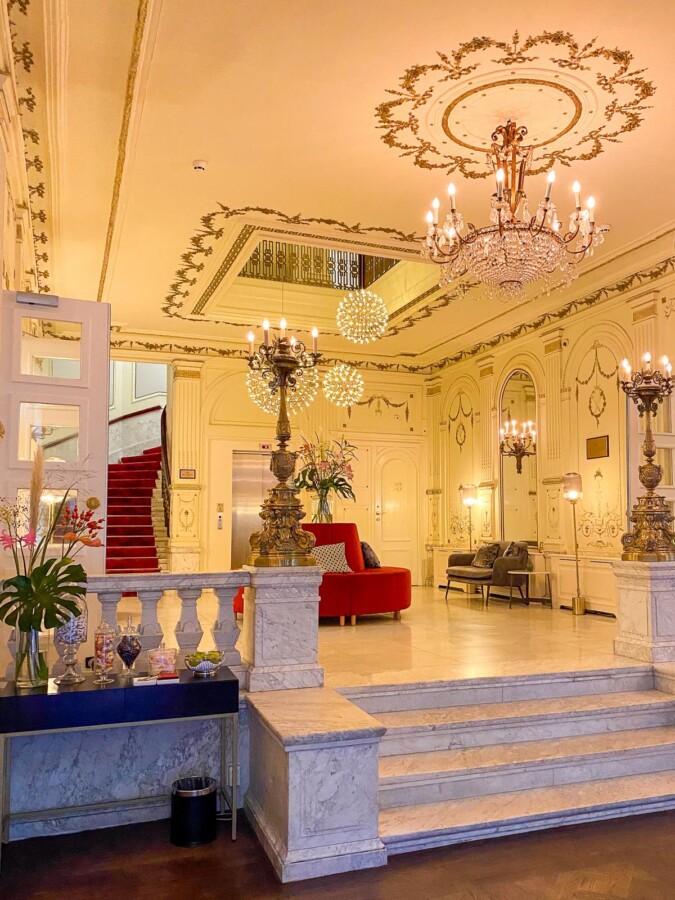
Situated along Amstelveenseweg in Amsterdam‘s Oud-Zuid neighborhood, Restaurant Blauw stands as one of the city’s premier destinations for authentic Indonesian cuisine. Despite its name meaning “blue” in Dutch, the restaurant features a striking interior with bold red walls, black and white accents, and high ceilings that create a contemporary dining space. Blauw has earned its reputation through its exceptional rijsttafel (“rice table”), a colonial-era tradition offering a stunning array of small dishes that showcase the diverse flavors of the Indonesian archipelago. The menu includes classics such as sate kambing (goat satay) and daging rendang (spiced beef), alongside thoughtfully crafted vegan options. The restaurant’s combination of traditional Indonesian recipes with modern presentation appeals to both locals and tourists seeking a genuine yet refined cultural dining experience. Its proximity to Vondelpark makes it an ideal destination after a day of exploration, though advance reservations are highly recommended.
Cultural Context
Restaurant Blauw stands as one of the Netherlands’ most culturally significant Indonesian restaurants, embodying the complex post-colonial relationship between Dutch and Indonesian cultures. Founded by Chef Hendra, who makes annual pilgrimages to Indonesia to discover new flavors and maintain authentic connections to the archipelago’s diverse culinary traditions, Blauw has earned international recognition including praise from the Michelin Guide, Lonely Planet, and Gault & Millau. The restaurant represents the evolution of Indonesian cuisine in the Netherlands—a legacy of Dutch East Indies colonial history that resulted in over 400,000 people of Indonesian heritage living in the Netherlands today. Unlike the colonial-era “rijsttafel” tradition created for Dutch colonists, Blauw focuses on authentic street food elevated to fine dining, celebrating Indonesia’s incredible diversity through dishes from across the 17,000-island archipelago. With locations in both Amsterdam and Utrecht, Blauw serves as a cultural bridge, preserving Indonesian culinary heritage while adapting to Dutch dining culture, making traditional dishes like rendang, gulai domba, and house-made sambals accessible to both the Indonesian diaspora and Dutch locals seeking authentic flavors from the former Dutch East Indies.
Historical Context
Restaurant Blauw was established in 2007 and has since become a celebrated culinary institution in Amsterdam, particularly known for its authentic Indonesian and Southeast Asian cuisine. The restaurant’s inception coincided with a growing appreciation in the Netherlands for its colonial-era connections to Indonesia, reflected in the popularity of Indonesian rijsttafel (rice table) dining experiences. Over time, Restaurant Blauw has evolved from a modest eatery into a sophisticated venue that honors traditional recipes while incorporating contemporary culinary techniques. Its presence in the Oud-Zuid neighborhood, a historically affluent district, aligns with the area’s reputation for cultural diversity and gastronomic innovation. The restaurant’s evolution mirrors Amsterdam’s broader historical narrative of embracing multicultural influences, especially those linked to the Dutch East Indies, which shaped much of the country’s cultural and culinary heritage. Restaurant Blauw continues to celebrate this history by offering dishes that are both authentic and adapted to modern tastes, making it a living testament to the enduring legacy of Indonesian cuisine in the Netherlands. This historical context enriches the dining experience, connecting patrons not only to flavors but also to centuries of shared history and cultural exchange.