A place worth knowing

Cappelle Medicee

Michelangelo’s masterpiece immortalizes Medici’s legacy.

Museums · Chapel museum in FlorenceUpdated

  • Google rating4.6/5
  • Typical visit60-90 minutes (longer for in-depth art and history enthusiasts)
  • EntranceFree (donations welcome)
Sedlec Ossuary Chapel
Kyle Kroeger / ViaTravelers
  • Today (Friday)8:15 AM – 1:50 PM
  • Typical visit60-90 minutes (longer for in-depth art and history enthusiasts)
  • EntranceFree (donations welcome)
  • Google rating4.6/5
  • WebsiteOfficial site ↗
  • TicketsCheck availability ↗
Opening hours all week
Monday
Closed
Tuesday
8:15 AM – 1:50 PM
Wednesday
1:15 PM – 6:50 PM
Thursday
8:15 AM – 1:50 PM
Friday
8:15 AM – 1:50 PM
Saturday
8:15 AM – 1:50 PM
Sunday
8:15 AM – 1:50 PM
The short answer

Why it matters

Michelangelo’s masterpiece immortalizes Medici’s legacy.

  • The Cappelle Medicee in Florence, Italy, has a significant global influence as a prime example of Renaissance architecture and art.
  • Historically, the Cappelle Medicee was commissioned by the Medici family, one of the most powerful and influential families in Florence during the Renaissance period.
  • The preservation of Cappelle Medicee is of great importance to the cultural heritage of Florence and the world, as it represents the pinnacle of Renaissance artistic and architectural achievement.
  • Its influence can be seen in the many artists and architects who were inspired by its design and decoration, contributing to the spread of Renaissance style and ideals throughout Europe and beyond.
  • The Cappelle Medicee continues to attract visitors from all over the world, contributing to the cultural and historical significance of Florence as a global destination for art and architecture enthusiasts.
– Cultural Authenticity: The Cappelle Medicee in Florence maintains and represents local traditions and cultural practices through its preservation of the Medici family’s legacy and its historical significance within the city’s cultural heritage. – Historical Significance: The location holds significant historical importance within its cultural and national context as it houses the tombs of the powerful Medici family, who played a crucial role in the political and cultural development of Florence and Italy during the Renaissance. – Artistic Value: The Cappelle Medicee is renowned for its artistic value, particularly for housing several masterpieces by Michelangelo, including the famous sculptures “Night” and “Day,” representing the allegories of Night and Day. – Social Impact: The site’s social impact lies in its role as a historical and cultural landmark that attracts visitors from around the world, contributing to the cultural and historical identity of Florence and supporting the local tourism industry. – Accessibility and Preservation: The location is accessible to the public, and preservation efforts have been effective in maintaining the historical and artistic integrity of the chapel and its contents. – Visitor Engagement: Visitors have the opportunity to engage interactively with the culture and community through guided tours, educational programs, and exhibitions that provide insight into the historical and cultural significance of the site. – Educational Value: The Cappelle Medicee offers significant educational value by providing learning opportunities about the culture, history, and artistic achievements of the Medici family and their impact on Florence and Italy during the Renaissance.
  • Universal Appeal and Cultural Authenticity (92/100): Cappelle Medicee excellently preserves and displays the heritage of the Medici family, crucial to Florence’s identity. The almost perfect score reflects its authentic representation of local traditions and the broader Renaissance era, crucial for cultural education globally.
  • Cultural Richness and Educational Value (95/100): This destination offers extensive insights into the Renaissance period through its art and architecture, particularly the works of Michelangelo. Its educational value in teaching visitors about historical influences and artistic achievements is nearly unparalleled, deserving its high rating.
  • Preservation and Integrity (90/100): The ongoing preservation allows for the integrity of original artworks and architecture, sustaining the site’s historical authenticity. Although impactful, nuances in restoration practices might leave room for minor improvement, justifying a near-excellent score.
  • Accessibility and Visitor Engagement (88/100): Cappelle Medicee is readily accessible and offers interactive learning experiences like guided tours. The rating is slightly lower due to limitations in accessibility for differently-abled visitors and potential improvements in visitor engagement tools.

The Medici Chapels represent the pinnacle of Renaissance funerary art, housing the elaborate tombs of Florence‘s most powerful dynasty within the Basilica of San Lorenzo. These sacred spaces showcase Michelangelo’s architectural genius in the New Sacristy, where his sculptural masterpieces “Day and Night” and “Dawn and Dusk” adorn the tombs of Giuliano and Lorenzo de’ Medici. The lavish Chapel of the Princes dazzles visitors with precious marble inlays and semi-precious stone decorations, creating a fitting mausoleum for the Medici Grand Dukes. This extraordinary complex reveals the intersection of artistic patronage, political power, and spiritual devotion that defined Renaissance Florence, offering insight into the family that financed Michelangelo, Botticelli, and Leonardo da Vinci.

Cultural Context

Sacred mausoleum of the Medici dynasty, showcasing Renaissance artistic patronage at its zenith, featuring Michelangelo’s revolutionary sculptural works that defined High Renaissance style and influenced centuries of Western art

Historical Context

Built between 16th-17th centuries as extension to San Lorenzo Basilica, New Sacristy designed by Michelangelo 1520-1534 for Medici tombs, Chapel of Princes added later as grand ducal mausoleum reflecting family’s political and religious power

Context

Story and significance

About

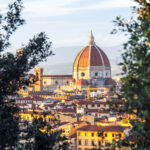
Nestled in the heart of Florence, the Cappelle Medicee stands as a testament to the grandeur of the Medici family’s legacy. This architectural marvel, dominated by its striking dome, houses the final resting places of Medici luminaries, enveloped within Michelangelo’s masterful sculptures in the New Sacristy.

As you traverse this historical jewel, each step brings you closer to the Renaissance’s artistic zenith amidst tombs that narrate tales of power, patronage, and unparalleled artistry. Visitors are afforded a rare glimpse into the fusion of art and history, and visiting the Cappelle Medicee is an essential pilgrimage for those enchanted by Florence’s rich cultural tapestry.

Historical significance

The Cappelle Medicee are significant as expressions of Medici political and cultural power, demonstrating how art and architecture were used to consolidate dynastic prestige. They house important funerary art that influenced subsequent European commemorative practices and serve as primary sources for studying Medici patronage.

Historical context

Built as part of the Medici’s burial projects, the chapels were developed from the 16th century onward to serve as a dynastic mausoleum for the powerful Medici family. The complex gathered art and funerary architecture commissioned from prominent Renaissance and Baroque artists to assert family legacy.

Cultural context

The Cappelle Medicee (Medici Chapels) form a devotional and commemorative complex within the San Lorenzo area where locals and visitors encounter the Medici family’s funerary monuments. The site is a place of historical memory, attracting those interested in dynastic art, Renaissance patronage and monumental sculpture.

Architecture

Architecturally the chapels combine grand mausoleum design with rich interior decoration, using marble, pietra serena and sculptural groups to create ceremonial funerary spaces. The integration of tombs, sculpted allegories and architectural framing reflects High Renaissance and Mannerist approaches to monumental funerary architecture.

Local significance

The Cappelle Medicee are a potent symbol of the Medici family’s historical role in Florence and remain significant to locals as a mausoleum where generations of the city’s rulers are commemorated. The chapel complex, adjacent to the Church of San Lorenzo, is integrated into the fabric of the San Lorenzo quarter, an area of ongoing religious services, markets and artisan activity. For many Florentines the site connects everyday urban life to the city’s political, artistic and religious past and is part of the narrative told in local museums and guidebooks.

Editorial scores

How we rate it

Universal appeal & authenticity10/10
Cultural richness & educational value10/10
Preservation & integrity10/10
Accessibility & visitor engagement10/10

Editorial scores on a 10-point scale, judged against places of the same kind.

Updated Data: Editorial research · Google Places ratings · Verified coordinates