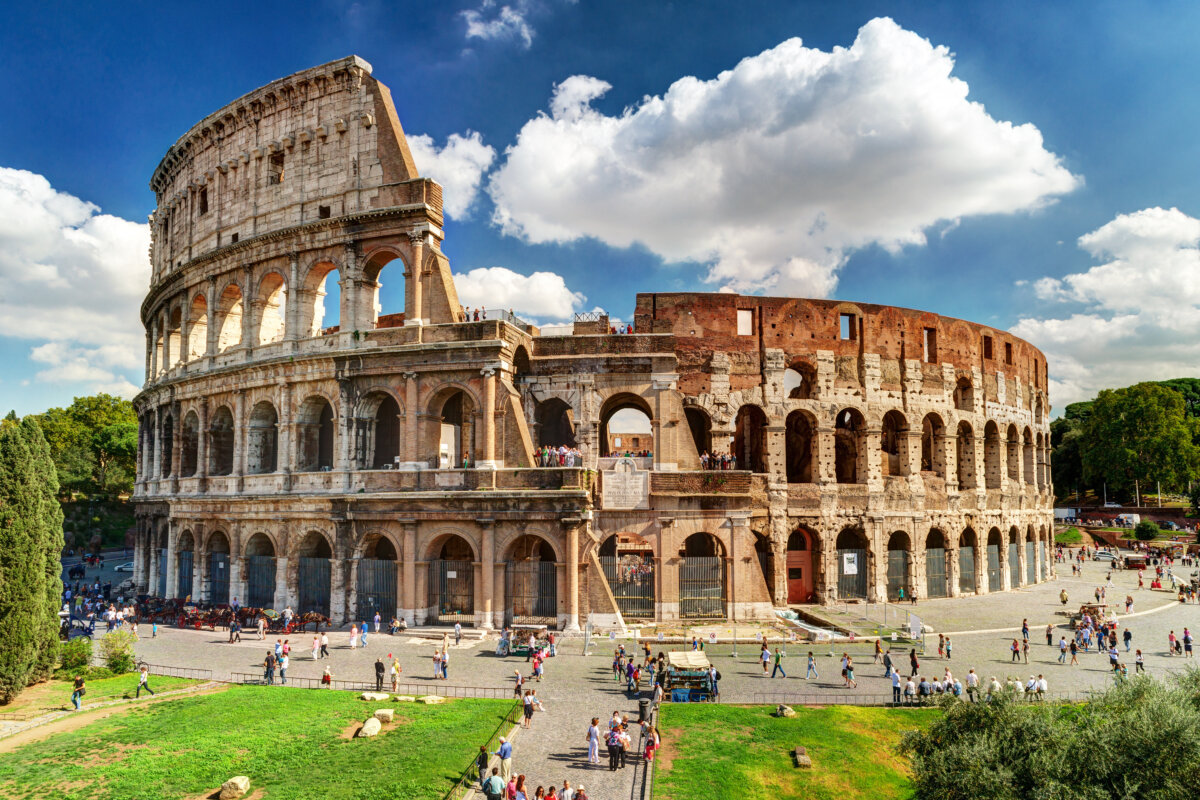
The Colosseum stands as ancient Rome‘s architectural triumph, a massive amphitheater where gladiatorial contests and public spectacles unfolded before crowds of up to 80,000 spectators. Completed in 80 CE under Emperor Titus, this iconic oval structure showcases ingenious Roman engineering with its complex system of vaults, arches, and travertine limestone façade. Despite centuries of damage from earthquakes and stone-robbers, the partially ruined Colosseum remains Rome’s most recognizable landmark and a testament to the grandeur of the Roman Empire. Visitors can explore multiple levels, walk where gladiators once prepared for battle, and imagine the roaring crowds that once filled this UNESCO World Heritage site.
Cultural Context
Largest ancient amphitheatre ever built symbolizing Roman Empire might and engineering prowess, hosted gladiatorial contests animal hunts public executions, UNESCO World Heritage Site attracting 7 million annual visitors, icon of ancient Rome and eternal city
Historical Context
Built 70-80 AD under Flavian emperors Vespasian and Titus on site of Nero’s palace lake, inaugurated with 100-day games, seated 50000-80000 spectators for blood sports, ceased entertainment use early medieval era, survived earthquakes fires and stone robbing